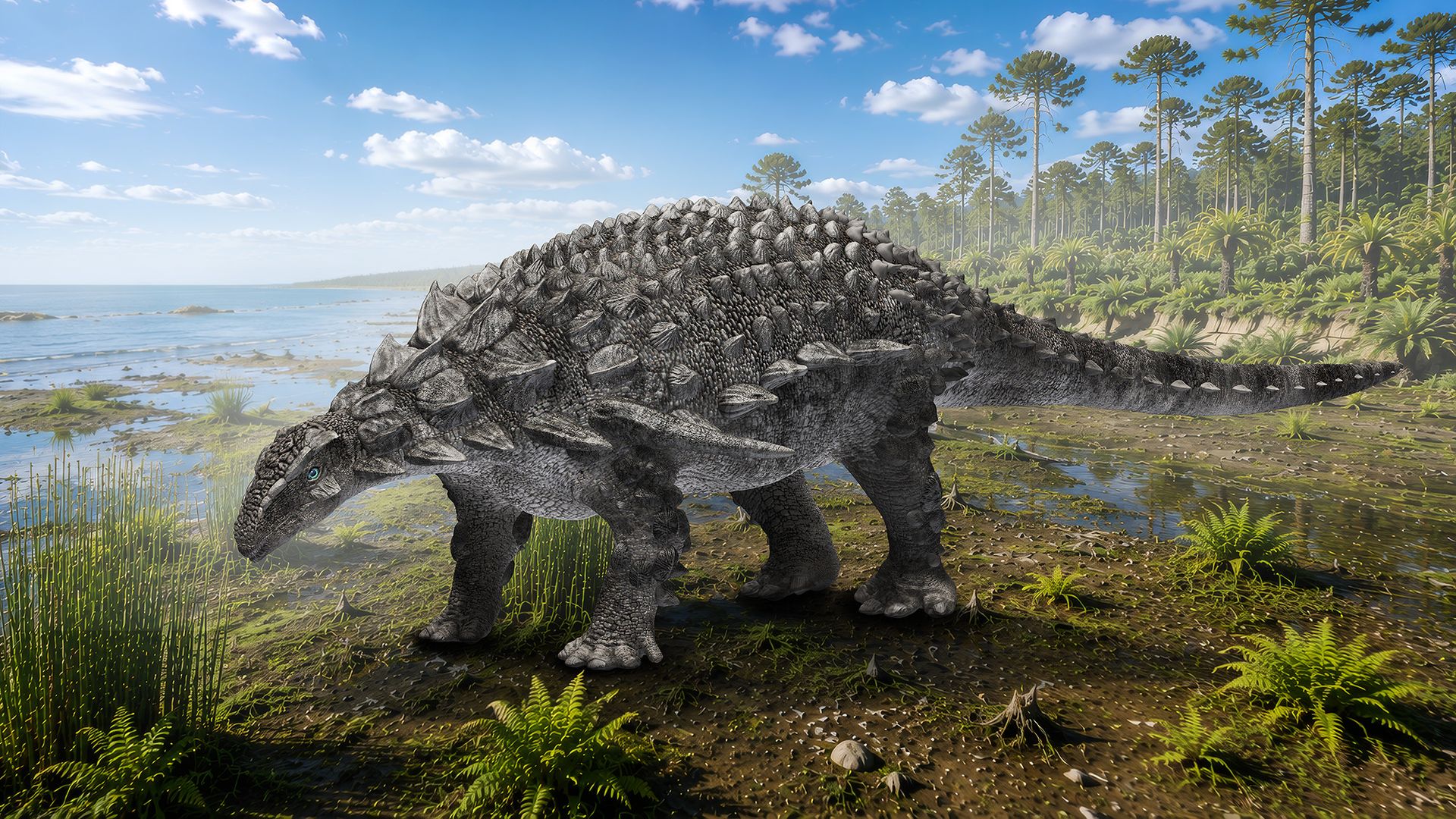
Rare fossils discovered in Japan more than 30 years ago are from a new species of armored dinosaur — one whose ancestors likely reached Asia by trekking across a land bridge, a new study finds.
The newly named dinosaur, a type of nodosaurid, is now one of just three species of its kind found in Asia to date. The scarcity of nodosaurids in Asia, and the fact that the newly described beast is similar anatomically to those from North America, hint that its species likely arose from a migration from North America to Asia via the Bering Land Bridge, an ancient strip of land that connected present-day Alaska and Russia, researchers reported in the February 2027 issue of the journal Cretaceous Research.
"It's super cool to see [the specimen] getting a new look and a new name," said Victoria Arbour, manager of research and collections at the Royal B.C. Museum in Canada. Arbour was not involved in the new work.
Nodosaurids are armored dinosaurs covered in bony plates. They are closely related to ankylosaurids, but they lack the heavy tail clubs ankylosaurids used to protect themselves from predators. Nodosaurid fossils have primarily been found in North America and Europe, though a few have been uncovered in Asia.
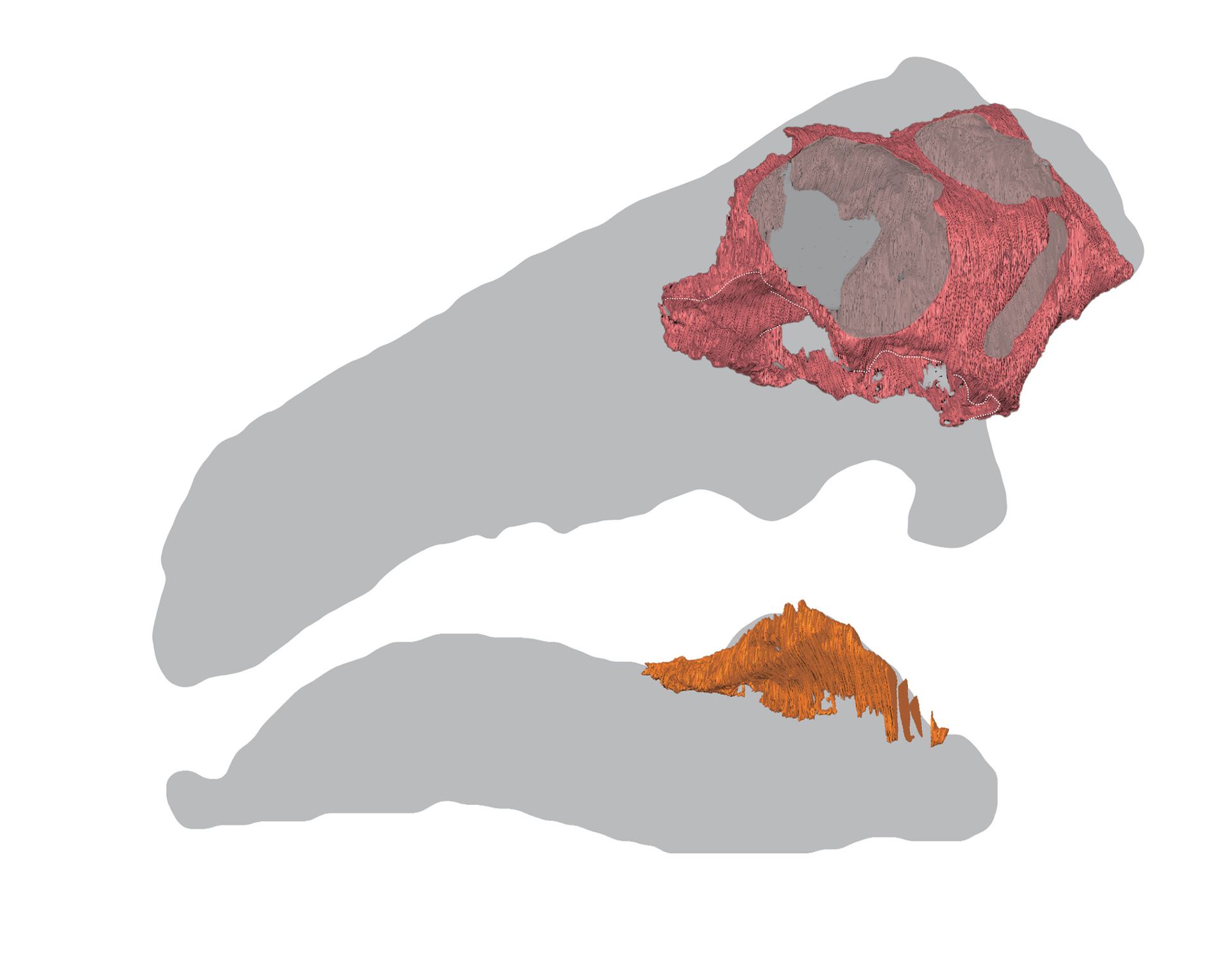
In the new study, a team of researchers revisited one such fossil specimen originally discovered in 1995 on Hokkaido, the northernmost main island of Japan. The scientists performed computed tomography (CT) scans of the fossils, which are somewhere between 93 million and 100 million years old, and include the back of the skull, part of the lower jaw, and several teeth and bony plates.
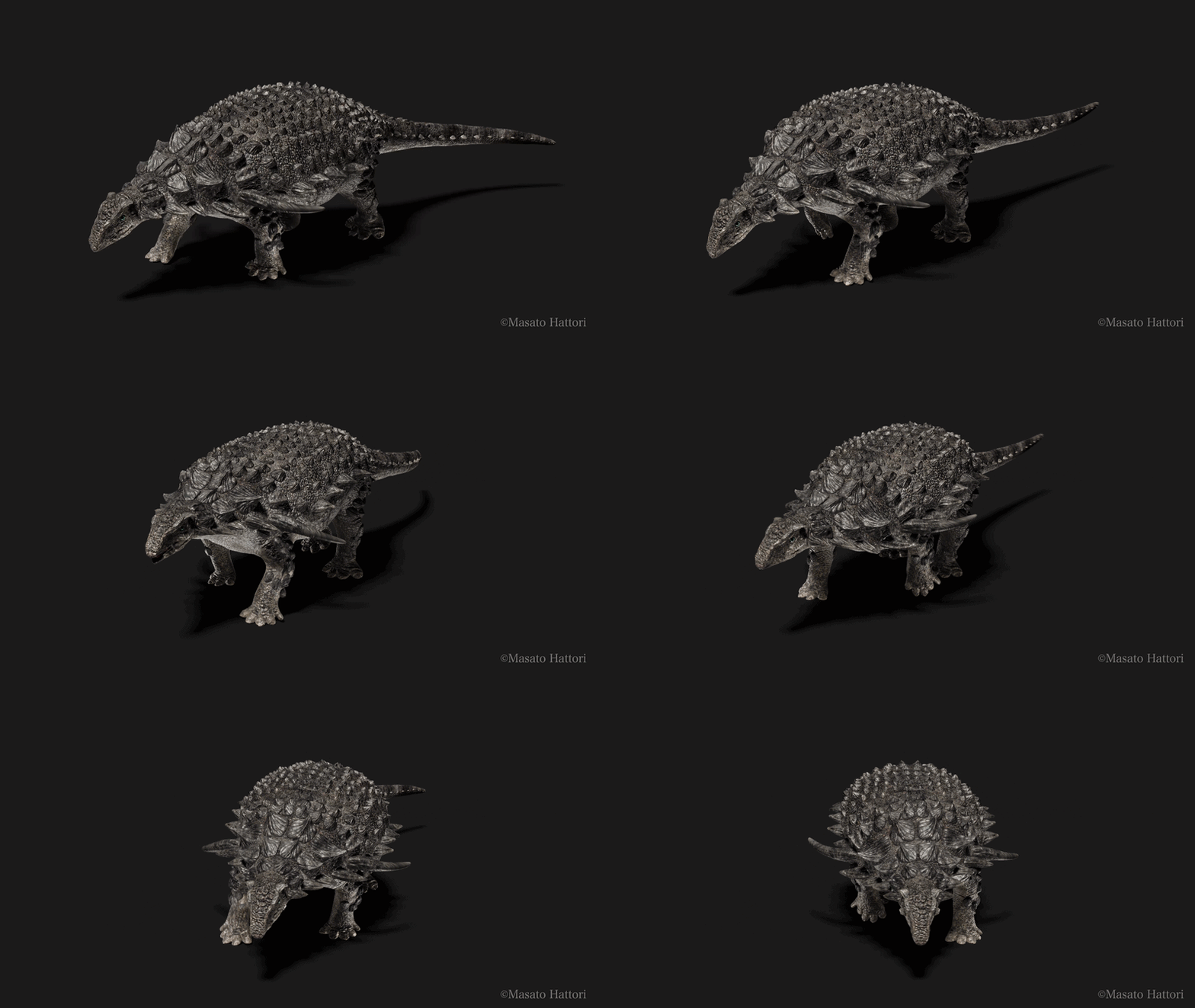
CT scanning enables researchers to make digital 3D models of specimens, and "lets you just get more information than you'd be able to have otherwise, because you can look inside without breaking [the fossil]," Arbour told Live Science.
Based on the CT scans and an anatomical analysis, the team determined that the fossils represented a new species of nodosaurid, which they dubbed Nipponopelta yezoensis. "Nippon" refers to Japan, and "pelta" means "shield" in Greek. "Yezo" is the traditional name for Hokkaido.
N. yezoensis is closely related to North American nodosaurids, the team found. The dino's ancestors may have migrated from North America to Asia via a land bridge in what is now the Bering Strait 100 million to 110 million years ago.
Coastal dinosaur?
A separate team of scientists originally uncovered the N. yezoensis specimen in marine sediments — rocks that formed under ancient seas. Nodosaurids didn't live in the ocean, so the findings suggest that after the animal died, its corpse may have been swept out to sea along a river or estuary and eventually sank to the ocean floor.
Several other nodosaurid fossils have been found in similar marine deposits, suggesting the creatures lived along coastlines. That may have helped them migrate along the Bering Land Bridge and disperse by following the coast, study co-author Darla Zelenitsky, a dinosaur paleobiologist at the University of Calgary, told Live Science.
Nipponopelta yezoensis would have walked on four legs, eaten plants, and lived in a coastal region, researchers suggest. (Image credit: Genya Masukawa)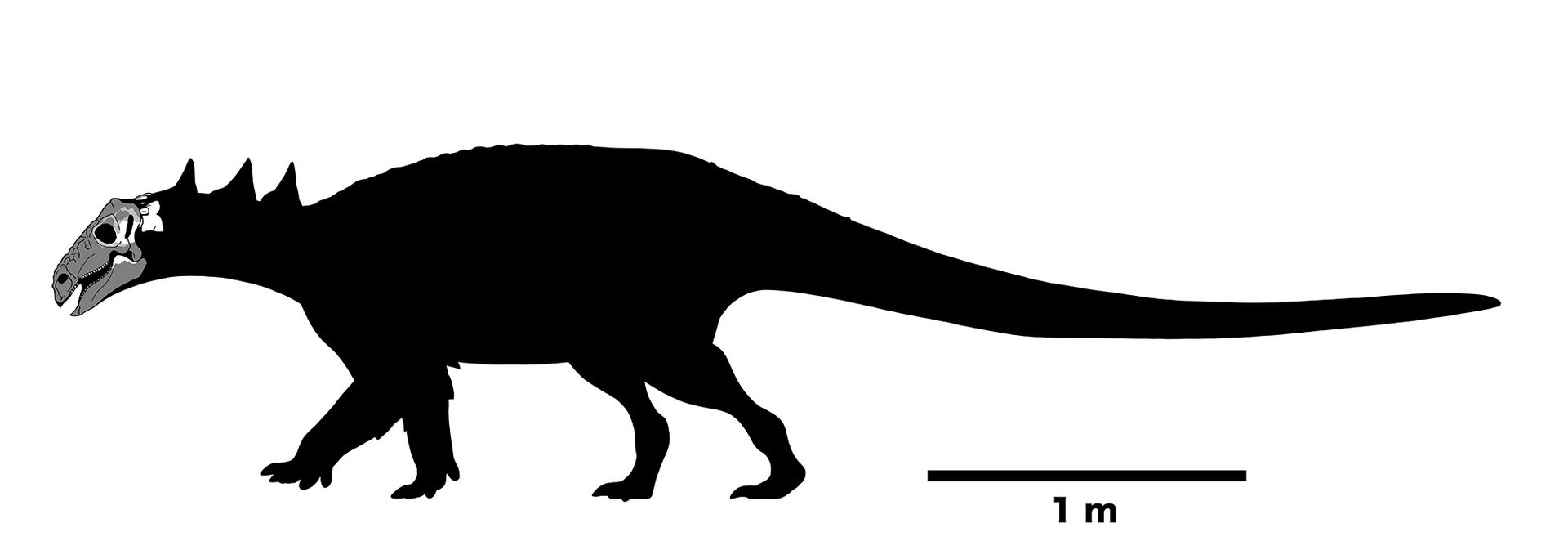
But just because nodosaurids are most commonly found in coastal environments doesn't mean that they couldn't have lived further inland as well, said Jordan Mallon, a paleontologist at the Canadian Museum of Nature who was not involved in the research. Upland and mountainous regions tend to produce few fossils because erosion wears down rocks in these biomes, Mallon told Live Science. So it's possible nodosaurids lived there, even if there's no fossil record of these armored dinosaurs at these locations.
"The nature of the fossil record is that it's patchy and incomplete," Mallon said. "It's very hard to tell a comprehensive story when you've only got a few pages out of a phone book's worth of time."
Related Stories- Sleeping Dragon: How This Dinosaur Got Preserved in 3D
- Armored dinosaur could withstand the impact of a high-speed car crash, thanks to the 'bulletproof vest' over its plate armor
- 'So weird': Ankylosaur with 3-foot spikes sticking out of its neck discovered in Morocco
It's also not clear from the fossil record why so few nodosaurid species have been found in Asia compared with North America, Zelenitsky said. While several ankylosaurid species have been found further inland in Asia, few nodosaurid fossils have been unearthed on the continent.
"It could be the rock record, or just that [nodosaurids] weren't able to diversify as much in Asia," Zelenitsky said.
In future studies, "I hope that we find more of this animal," Mallon said. "It incites us to keep digging so that we can learn more about this animal and test some of our ideas about just what it is."