College football's upcoming 2026 season will likely be defined by an elite tier of playmakers at running back, wide receiver and tight end, a collection of talents capable of tilting games the moment the ball touches their hands. This isn't just about production anymore -- it's about instant stress on defenses. Every snap brings the threat of a house call, a contested catch in traffic, or a tight end splitting seams like a wideout.
From workhorse backs who can carry offenses for four quarters to receivers who turn slants into sprints past the secondary, the sport's best skill players are more complete than ever. Tight ends, too, have evolved into matchup nightmares who force coordinators into uncomfortable personnel decisions before the opening whistle.
This group of playmakers doesn't just fit systems -- they bend them. And as the 2026 season unfolds, the national title picture will likely run through the hands of these difference-makers across the Power Four.

1. Jeremiah Smith, WR, Ohio State
Smith is the kind of talent that comes around once in a generation. The gaudy NFL comparisons aren't premature -- they're warranted. He combines the size, physicality, speed and ball skills of some of the NFL's most dominant receivers over the last 20 years, making him nearly impossible to defend in one-on-one situations. Whether it's winning contested catches, creating separation downfield or taking over a game in the biggest moments, Smith checks every box.
And he's still only scratching the surface. Despite already looking like college football's most unstoppable receiver, Smith's ceiling remains incredibly high. As polished as he is now, his best football is still ahead of him -- and that's a frightening reality for every team that will lose sleep over developing coverage schemes to try and halt his efforts.
College football's most experienced offenses: Ranking all 138 FBS units ahead of the 2026 season Cody Nagel

2. Malachi Toney, WR, Miami
Toney effortlessly takes over football games and managed to do so as a true freshman last fall. Miami's star immediately looked like one of the nation's best receivers, finishing with 1,211 receiving yards on a program-record 109 catches, earning FWAA Offensive Freshman of the Year honors and becoming the chief playmaker of a championship-caliber offense. Toney's game is built on acceleration, natural playmaking instincts and a rare understanding of space. He's a nightmare in the slot, dangerous after the catch and versatile enough to impact games as a runner, returner and even occasional passer. Miami doesn't have to manufacture touches for him -- he creates opportunities on his own.
.@CanesFootball star WR Malachi Toney is the 2025 CBS Sports CFB Freshman of the Year 🙌 🔗 https://t.co/I9p0PUIjcn pic.twitter.com/DhfgaiAvup
— CBS Sports College Football 🏈 (@CBSSportsCFB) December 10, 2025

3. Kewan Lacy, RB, Ole Miss
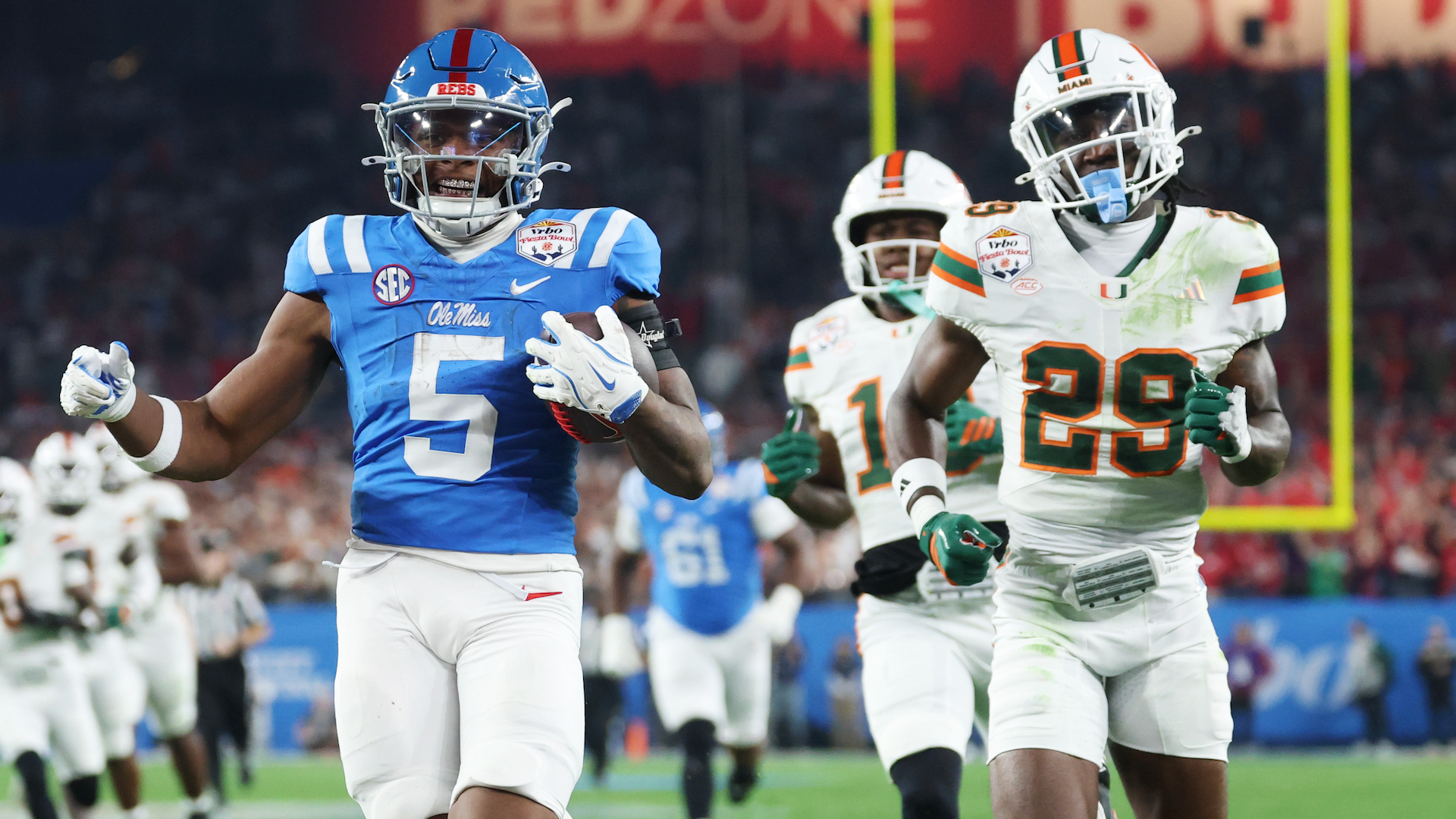
The Rebels return an ultra-productive offensive weapon after Lacy's breakout campaign established him as a household name across the SEC. A powerful between-the-tackles runner with elite burst in the open field, Lacy has the complete skill set coaches covet from a feature back. He's capable of handling 25-plus touches on a Saturday and still producing explosive plays deep into the fourth quarter.
Lacy's high level of consistency might be his best attribute. Week after week, he delivered against top competition while serving as the focal point of Ole Miss' offense. He enjoyed seven multi-touchdown outings and scored in every game but one. With the Rebels again expected to contend for a playoff berth, Lacy will be front and center in the national spotlight. If he replicates last season's production and Ole Miss remains in the championship conversation, don't be surprised if Lacy emerges as a top-end Heisman contender and the nation's top running back.

4. Cam Coleman, WR, Texas
At 6-foot-3 with NFL-level ball skills and a massive catch radius, Coleman gives the Longhorns what every national title-contending program needs -- a true No. 1 who can stretch opposing secondaries and win on third down. He's physically gifted like Smith at Ohio State and moves fluidly through his routes, similar to Toney's feel for getting open at Miami. For Steve Sarkisian's offense, the fit is obvious, and Texas was forced to out-bid others for the portal's top wideout this cycle. Coleman arrives with proven SEC production and immediately elevates Texas' ceiling in the passing game. Defenses already have enough problems accounting for the Longhorns' skill talent, and Coleman adds another layer of stress with his ability to command double coverage.

5. Ahmad Hardy, RB, Missouri
Perhaps the most valuable player nationally, few starters are more important to their team's success in 2026 than Missouri's veteran running back. Assuming he's back to full strength after suffering a gunshot wound this offseason, the Tigers will lean heavily on one of the SEC's most productive offensive weapons after a sensational 2025 campaign that saw Hardy lead the conference in rushing and emerge as a Doak Walker Award finalist. Hardy rushed for more than 1,500 yards and 16 touchdowns last season, proving he could carry an offense against elite competition.

6. Isaac Brown, RB, Louisville
Few players have the ability to change a game with a single touch like Brown, Louisville's electric ballcarrier and one of college football's premier home-run threats. He's averaging more than 7.5 yards per carry during his career and producing explosive plays at an eye-popping rate. Even while battling injuries in 2025, Brown still piled up 884 rushing yards in just nine games and averaged 8.8 yards per attempt, numbers that underscore just how dangerous he is whenever he finds daylight.
What separates Brown from other elite backs is his acceleration. He reaches top speed in a hurry, turns missed tackles into chunk gains and forces defenses to account for him on every snap. Louisville's offense is built around getting the ball into his hands in space, and for good reason. Brown is the type of player who can flip momentum instantly and remains one of the ACC's most explosive weapons heading into the new season.

7. Duce Robinson, WR, Florida State
As Mike Norvell takes over offensive play-calling duties with a new quarterback in tow, Florida State's attack needed a proven difference-maker on the perimeter, and that's exactly what Robinson brings as a red zone threat and third-down specialist. The most physically imposing receiver in the ACC, Robinson gives the Seminoles a matchup problem that defenses simply can't replicate in practice.
At 6-foot-6 with heightened athleticism, he's capable of winning contested catches, stretching the field vertically and creating favorable opportunities around the goal line when Florida State needs a big play. His importance goes beyond statistics. Robinson's presence changes how defenses align and creates favorable matchups for everyone around him. For an offense looking to reestablish itself among the ACC's best, having a go-to target with NFL-caliber traits is invaluable.
REC
YDS
AVG
TD
2023 (USC)
16
351
21.9
2
2024 (USC)
23
396
17.2
5
2025 (Florida State)
56
1,081
19.3
6

8. Cam Cook, RB, West Virginia
The former Jacksonville State star arrives at West Virginia after leading the FBS in rushing with 1,659 yards and 16 touchdowns last fall, production that turned him into one of the most coveted backs in the transfer portal. Cook isn't just a volume runner, either. He combines vision, patience and outstanding contact balance with enough burst to turn routine carries into explosive plays. His every-down versatility makes him especially dangerous.

9. Charlie Becker, WR, Indiana
Becker came on strong down the stretch for the Hoosiers last season, taking advantage of extended playing time in the wake of injury. He blossomed into a go-to target in the CFP for Fernando Mendoza, and Becker averaged a conference-leading 19.9 yards per catch last season, finishing with 679 yards and four touchdowns. Scouts are salivating over Becker's verified speed and big-play ability -- he was tracked with 13 "50-50" catches last season in 17 attempts.

10. Trey'Dez Green, TE, LSU
Green is the rare tight end who forces defensive coordinators to rethink coverage structure before the ball is even snapped. He's a force in the run game, too, given his strength at the line of scrimmage. LSU's rising weapon blends wide receiver athleticism with traditional tight end size, creating a mismatch problem that Lane Kiffin plans to exploit this fall. At 6-foot-7 with elite burst and long-stride acceleration, Green can detach from the line, win vertically down the seam and punish smaller defenders after the catch. Like many potential first-round tight ends, LSU can line Green up in-line, flex him out or move him across formations without tipping intentions.

11. KJ Duff, WR, Rutgers
If Duff were playing at a school inside the top 25, he would already be a well-known name at this point. Duff brings a security blanket presence, elevating the Scarlet Knights' passing game and giving Rutgers a legitimate No. 1 target. His ability to high-point the football and finish through contact makes him a constant mismatch on the perimeter. Duff dominated last season despite defenses in the Big Ten knowing Rutgers' offense runs through him on passing downs.

12. Terrance Carter Jr., TE, Texas Tech
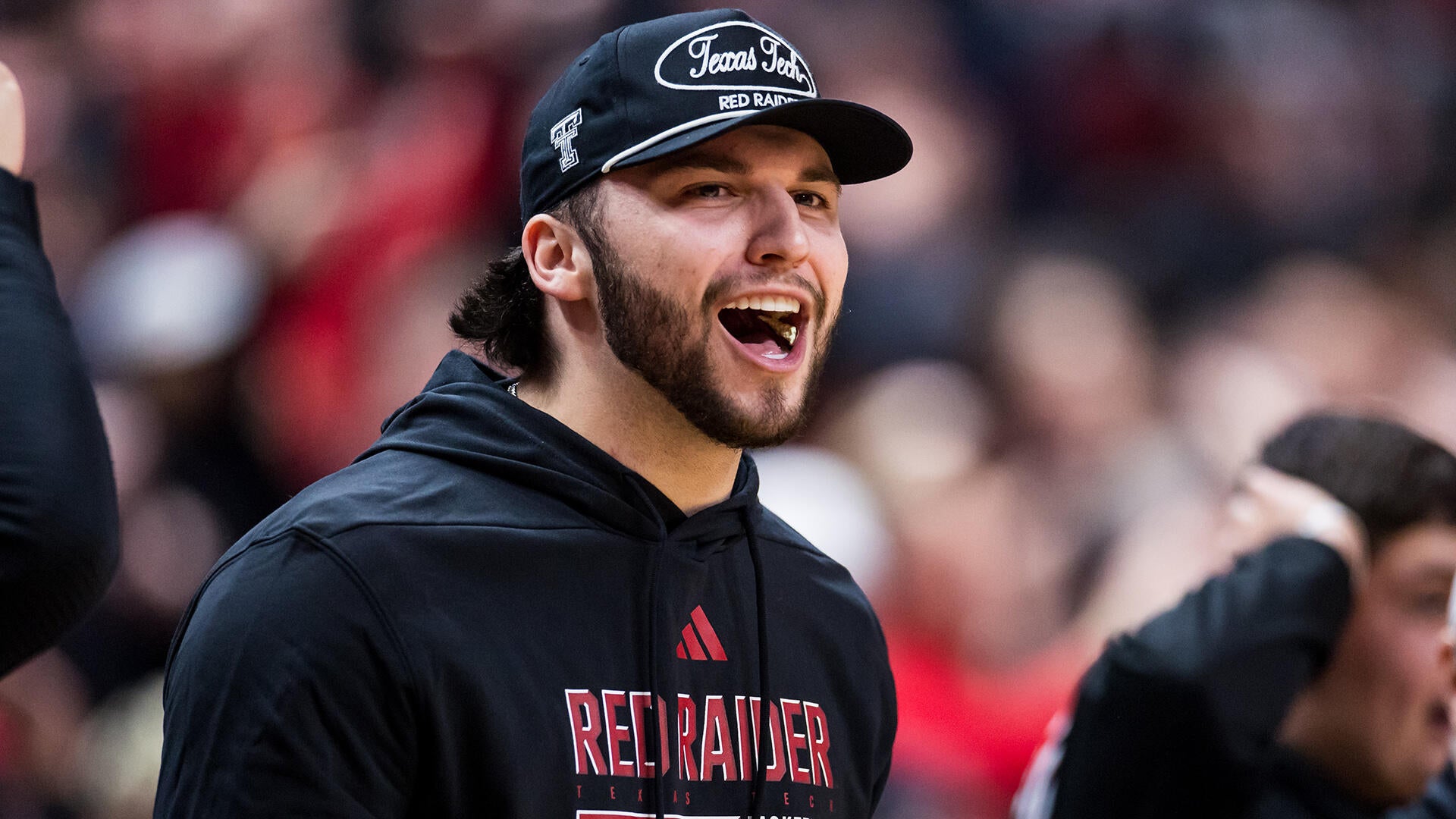
Carter impacts the game in multiple phases without needing volume to matter. At Texas Tech last season, after two years at Louisiana, Carter emerged as a reliable seam stretcher and red-zone finisher, pairing soft hands with the ability to separate from linebackers in space. His frame allows him to box out defenders, while his route feel makes him more receiver than traditional in-line tight end. Carter also brings dependable blocking effort, keeping him on the field in all situations. In a system built for vertical stress, he's a true mismatch weapon.

13. Caleb Hawkins, RB, Oklahoma State
No longer buried in obscurity at North Texas, Hawkins becomes a featured Power Four running back this season, and it couldn't have come at a better time for Oklahoma State, a program in transition under Eric Morris. Under the tutelage of Morris last season with the Mean Green, Hawkins showed an ability to handle heavy workloads while still breaking off chunk gains when defenses overcommitted. He runs with natural balance through contact, is rarely brought down by the first defender and consistently turns modest creases into extended runs. His vision in zone concepts stands out, but it's his versatility in the passing game that elevates him into the upper tier nationally. In addition to 1,434 yards rushing last season, Hawkins swiped 32 receptions for 370 yards and four scores.

14. Dakorien Moore, WR, Oregon
What makes Moore unique is his quick-twitch movement off the line, route polish and instant acceleration that shows up the moment the ball is snapped. He doesn't need space to create separation -- he manufactures it with sudden cuts and explosive bursts out of breaks. Moore is equally dangerous on vertical routes and quick hitters, staples of the Oregon offense that the Ducks will retain in a new era of sorts following Will Stein's departure to Kentucky. In Oregon's fast-paced offense, Moore is a true all-around weapon and nearly impossible to game-plan for in 2026.

15. LJ Martin, RB, BYU
BYU's entire identity tilts around this guy's production. A physical, downhill runner with enough burst to hit the second level, Martin gives the Cougars balance in an offense that can't afford to become one-dimensional. When he's rolling, BYU controls tempo, keeps defenses honest and opens the play-action game for its quarterback. His ability to handle volume carries while still generating explosive runs makes him more than a feature back -- he's the stabilizing force that determines whether BYU contends or merely competes in the Big 12 race after nearly reaching the playoff last fall.
Best of the rest
16. Jamari Johnson, TE, Oregon: For Oregon tight end Jamari Johnson, the physical tools have always been obvious, but opportunity is finally catching up. At 6-foot-6 with soft hands and natural body control, he gives the Ducks a mismatch option who can stress linebackers and safeties alike. Johnson's expanded role in the passing game following Kenyon Sadiq's NFL entry could turn him into a reliable red-zone and seam threat.
17. Wyatt Young, WR, Oklahoma State: North Texas transfer wideout Wyatt Young instantly becomes the Cowboys' new No. 1 target in the passing game. He's a crisp route runner with dependable hands and the quickness to separate in tight coverage, which fits perfectly in the Cowboys' expected system under their new coach. After a statistically noteworthy campaign last fall, what will elevate Young's profile nationally is opportunity in the Big 12 on a weekly stage.
18. Antwan Raymond, RB, Rutgers: Keep tabs on Antwan Raymond at Rutgers, a player with a chance to lead the Big Ten in rushing this fall. Raymond's known for his power, but he's not just a between-the-tackles grinder either -- his vision and burst allow him to turn modest lanes into meaningful gains. For a program built on controlling tempo and shortening games, Raymond's value is clear. If Rutgers is going to climb in the Big Ten hierarchy, it starts with his production.
Top 5 Plays: Antwan Raymond 🏈 @antwanraymond8 | #CHOP pic.twitter.com/XsUjMqCIWY
— Rutgers Football 🪓 (@RFootball) May 24, 2026
19. DeSean Bishop, RB, Tennessee: A compact, explosive runner with sharp-cut ability, Tennessee's DeSean Bishop excels in space, but that's not his only strength. Tennessee has leaned on perimeter speed in recent years, but Bishop adds interior balance, forcing defenses to respect the run between the tackles. His value goes beyond raw production -- he helps sustain drives, sets up play-action and keeps the offense ahead of schedule.
20. Dierre Hill, RB, Oregon: Another ballcarrier with flair, Dierre Hill at Oregon is a natural space player -- quick to the edge, decisive through lanes and dangerous once he hits the second level. In Oregon's system, that skill set is amplified, especially on perimeter runs and designed outlets in the passing game. His value isn't just in yardage, but in forcing defenses to widen, creating easier interior opportunities for others, and keeping the Ducks' offense unpredictable.
21. Ryan Coleman-Williams, WR, Alabama: Two years ago, Alabama's Ryan Coleman-Williams was one of the nation's top true freshmen pass-catchers, but his development has been inconsistent since that breakout performance during a win over Georgia. That said, the talent is there for a player with sprinter speed to potentially lead the SEC in receiving yards this fall. At his best, Coleman-Williams has first-round potential as a top wideout off the board.
22. Chris Henry Jr., WR, Ohio State: Rarely does a true freshman make one of these top-player lists, but Chris Henry Jr. at Ohio State is different. This program consistently signs five-star monsters on the outside, and Henry is next in line to star alongside Smith. His performance during the Buckeyes' spring game was merely a glimpse at his ability, and he's going to play heavy snaps in his first season.
23. Mario Craver, WR, Texas A&M: Mario Craver separates cleanly at all three levels and consistently wins before the catch point. What elevates him into elite territory is his turn-and-go ability. Texas A&M needs a receiver who can sustain drives on money downs after losing KC Concepcion to the NFL, and Craver checks that box. He should get plenty of targets from Marcel Reed after the Aggies signed former Alabama wideout Isaiah Horton to help out.
24. Braylon Staley, WR, Tennessee: There are growing expectations in Knoxville that Braylon Staley will have an All-American-like season at Tennessee after showcasing his skills last fall. He's one of several emerging young playmakers for the Vols, who are loaded at the position. A quick, instinctive receiver with natural separation skills, Staley is expected to carve out a meaningful role in an offense that thrives on tempo and perimeter exploitation.
25. Elyiss Williams, TE, Georgia: Williams represents the next wave of Georgia's tight end dominance, and his ability is already turning heads inside the program. At 6-foot-7 with length and natural athleticism, Williams is the kind of mismatch weapon Kirby Smart's offense has consistently maximized at the position. As his role expands in 2026, Williams has the traits to become a red-zone problem.
26. Danny Scudero, WR, Colorado: One of Colorado's most important portal additions, Danny Scudero has a chance to quickly elevate his game in the Big 12 within an offense built to throw the football. A smooth route runner with extreme production in his collegiate career, Scudero fits naturally into a passing attack that prioritizes tempo and spacing. He's not just a deep threat, either. Scudero's chain-moving expertise led to a nearly 1,300-yard season at San Jose State in 2025. who can stabilize drives on third down. If he builds chemistry early and earns trust in key situations from quarterback Julian Lewis, Scudero could be the leading wideout in the conference.
Add CBS Sports on Google Join the Conversation comments