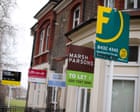
 The number of available homes to rent is 3% higher than a year ago, according to Rightmove Photograph: Yui Mok/PAThe number of available homes to rent is 3% higher than a year ago, according to Rightmove Photograph: Yui Mok/PAPrivate rents in Great Britain stop rising for first time since 2017
More landlords having to cut prices to secure tenants, Rightmove data shows
Average private rents have stopped rising in Great Britain after almost a decade of increases, as more landlords cut their prices to secure a tenant, data shows.
The typical advertised private rent outside London for properties coming on to the market remained flat at £1,370 a calendar month in the first three months of 2026, according to the property website Rightmove.
It is the first time since 2017 that rents have not increased in the first three months of a year compared with levels at the end of the previous year.
The findings showed that affordability remained stretched, Rightmove said, amid evidence that more tenants were hitting the “ceiling” of what they could afford to pay.
Jeremy Leaf, an estate agent in north London and former residential chair of the Royal Institution of Chartered Surveyors, said after the Iran war began on 28 February tenants were even more concerned about the rising cost of living than they were before.
However, the war has also caused some people to relocate from the Middle East to the UK, boosting demand in parts of the “prime” rental market, according to the estate agent Chestertons.
Colleen Babcock, Rightmove’s property expert, said: “It’s still early days, but the most immediate shift due to the war in Iran has been some significant increases to borrowing costs for landlords, which may filter through to the market at a later stage.”
Rightmove said landlords were having “to position rents correctly for the current market”. About 26% of rental listings were being reduced in price while they were advertised – the highest proportion recorded since Rightmove began tracking this metric in 2012.
After several years in which demand for rental properties hugely outstripped supply in some areas, lower tenant demand and a wider choice of properties appear to be easing competition for rental homes and reducing the upwards pressure on rents.
Rightmove said the number of available homes to rent was 3% higher than a year ago, adding that supply was at its highest level for this time of year since 2021.
The average advertised rent in London rose by 0.7% during the first quarter to £2,736 a calendar month, though this was still lower than the record reached in the summer of 2025.
Rightmove said there had been “no major signs of changes” to the way the rental market operated before the Renters’ Rights Act came into effect on 1 May 2026. This will abolish section 21 of the Housing Act, which allows landlords to evict tenants without providing a justification to the court.
Charities have claimed that increasing numbers of landlords were evicting tenants at the last minute before the law came into force. However, Rightmove said: “There has been no surge in newly listed homes for rent ahead of 1 May.”
Explore more on these topicsShareReuse this content