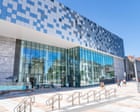
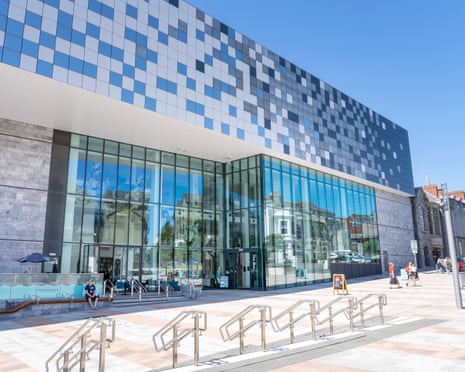
 Since opening, the Box has welcomed more than 1.3 million visitors. Photograph: One Plymouth/Art Fund/PASince opening, the Box has welcomed more than 1.3 million visitors. Photograph: One Plymouth/Art Fund/PAPlymouth’s the Box wins 2026 Art Fund museum of the year award
‘Ambitious and welcoming’ venue that opened in 2020 praised for ‘reimagining what being a museum can mean’
The Box in Plymouth has won the prestigious Art Fund museum of the year award, the largest such prize in the world, for its “ambitious and welcoming approach”.
Awarding it the £120,000 prize, judges called the Box “a revelation in so many ways” and “a true jewel in the crown of the south-west”.
The Box is a museum, gallery and archive that tells the story of Plymouth through its collections of more than 2m artworks, objects and archival materials.
Since opening in 2020, it has welcomed more than 1.3 million visitors and, according to judges, has become “a leading example of what a civic museum can achieve”. It has generated more than £100m in health and wellbeing benefits, and boosted Plymouth’s economy by £244m, according to a report last year, and has engaged with 89% of the city’s schools.
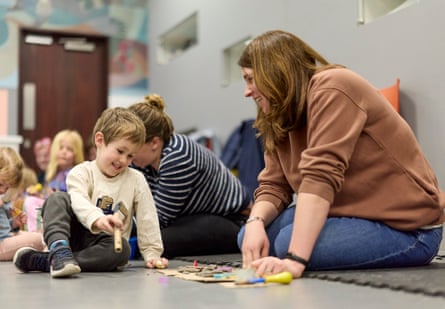 The Box was described at the ceremony as a museum ‘that genuinely belongs to the people it serves’. Photograph: David Levene/The Guardian
The prize was presented on Thursday night to Victoria Pomery, the chief executive of the Box, by the broadcaster June Sarpong, one of the judges, at a ceremony onboard the Cutty Sark, Royal Museums Greenwich, in London.
“What stood out so strongly with the Box was the sense of pride and connection it has created across Plymouth,” Sarpong said. “From local groups such as the Windrush community to its partnerships with the university, it is a museum that genuinely belongs to the people it serves.
“Through exhibitions that uncover overlooked histories to welcoming spaces for learning and creativity, the Box is reimagining what being a museum can mean.”
Jenny Waldman, the Art Fund director and chair of the judges, said the Box’s social and economic impact demonstrated what long-term investment in culture could achieve.
“They’ve become more and more ambitious, inclusive and audience-focused,” Waldman told the Guardian. “And they continue to innovate, becoming more and more loved and valued by their audiences and their principal funder, the local authority.”
She said museums had a “tremendous responsibility” to care for collections for subsequent generations, and must also consider how to present them in inspiring and participatory ways.
Waldman highlighted one of the Box’s community programmes in the city’s Devonport district. “They sent a postcard to every resident inviting them to the Box for a community project, and got a massive response, and gathered a number of artefacts of social history for the collection.”
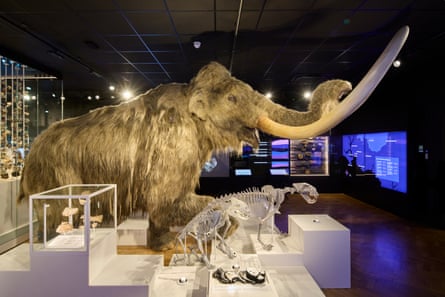 The museum’s natural history display draws on its collections of more than 2m objects. Photograph: David Levene/The Guardian
The Box opened after a £48m capital investment and aimed to be “nationally known and locally loved”. Since then, it has used Plymouth’s collections to narrate the city’s past while amplifying overlooked voices.
Its 2025 programme included the exhibition When Will We Be Good Enough? by Osman Yousefzada, which engaged with colonial histories, and Jyll Bradley’s Running and Returning, which explored archives and accessibility.
Jeremy Deller’s event Hello Sailor! – developed with the Box as part of his project The Triumph of Art for the National Gallery – also brought the museum’s collections into the public realm.
This summer, its two big shows are Echoes of Us, featuring works from the government art collection by artists including Barbara Hepworth and Chris Ofili, and Gillian Ayres: A Life in Colour, spanning seven decades of the abstract painter’s work.
The Box was one of five finalists, alongside the Fitzwilliam Museum (Cambridge), the National Gallery (London), Norwich Castle Museum and Art Gallery (Norwich) and V&A East Storehouse (London). Each of these will receive £20,000.
“They are innovative, forward-thinking and pushing the boundaries of what a museum is and can achieve,” Waldman said. “They prove that investment in culture brings economic and social returns.”
Explore more on these topicsShareReuse this content