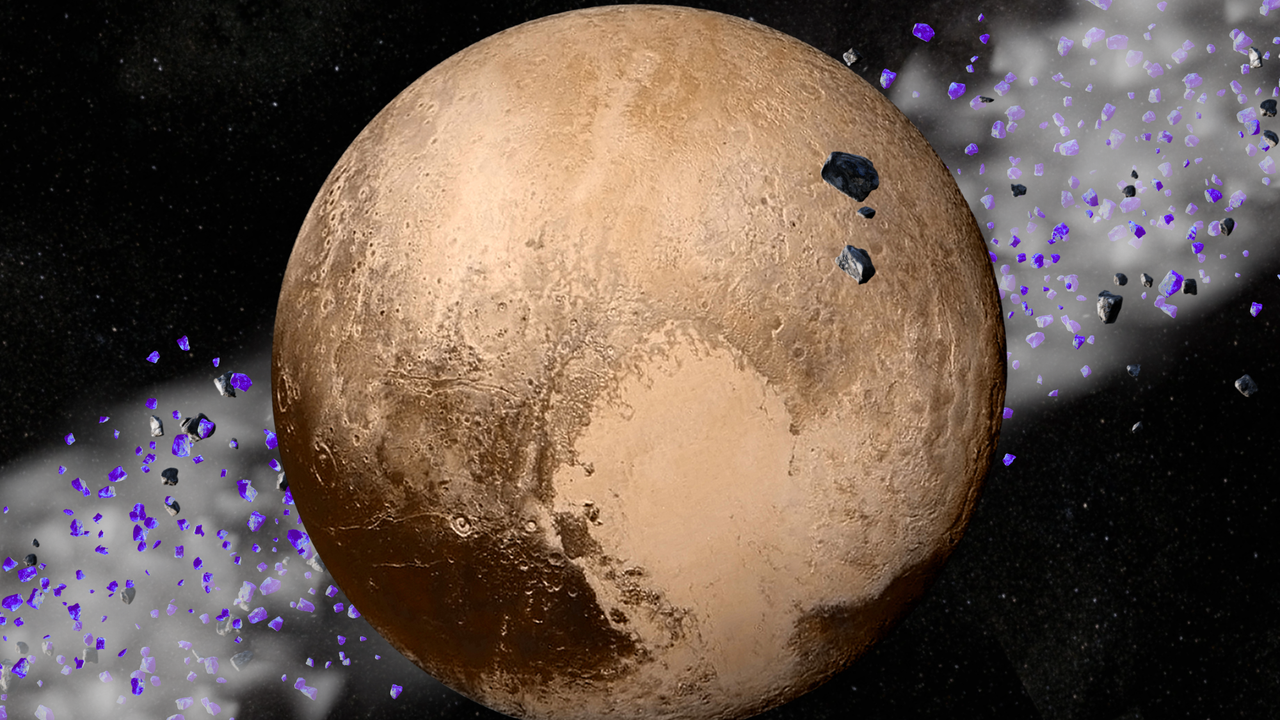
Unpopular opinion time, but someone has to say it: I think Pluto being reclassified as a dwarf planet was a great thing for our understanding of the solar system and for the former planet itself. Let me try to convince you, too.
First, a little background. The Pluto planet controversy began exactly 20 years ago on Aug. 24, 2006, when the International Astronomical Union (IAU) reclassified the solar system's (former) ninth planet as a dwarf planet.
The reason for the change was the result of the discovery of worlds similar to Pluto in the Kuiper Belt, the ring of icy bodies and debris extending out beyond the orbit of Neptune. It suddenly became necessary to determine if these bodies are planets or whether the definition of what a planet is needs to be reshaped. The IAU decided on the latter. Pluto took the hit.
The 2006 definition developed for the IAU by the Uruguayan astronomers Julio Ángel Fernández and Gonzalo Tancredi says a planet is "a celestial body in the solar system that is in orbit around the sun, has sufficient mass to assume hydrostatic equilibrium [it is round or nearly round], and it has 'cleared the neighborhood' around its orbit." That meant a new definition had to be introduced for large round bodies orbiting the sun, one that meets these first two criteria, but fails to meet the the third. Thus, dwarf planets were defined by the IAU as: "an object in orbit around the sun that is large enough to pull itself into a nearly round shape but has not been able to clear its orbit of debris." Pluto fell out of the planet category and into the dwarf planet category because, as it orbits the sun out beyond Neptune, other bodies cross its orbital path. Thus, Pluto hasn't cleared its neighborhood. Not a planet then, sorry. But don't feel too bad. It is a good thing, honestly.
Pluto helped put dwarf planets on the cosmic map
The redefinition of Pluto has had a strange effect on the general public and even some scientists, who seem to "feel sorry" for the former planet, almost as if it has somehow been demoted. There are several Change.Org petitions and petitions on other sites that demand to restore Pluto's planethood. One of these, established in 2024, has over 1,000 signatures. Some petitions to make Pluto a planet again fundamentally misunderstand why Pluto isn't a planet anymore. Take this one on slightly tongue-in-cheek petition on iPetitions, which states: "Pluto should not have its planet rights taken away form {sic] it just because it is small, so is Daniel, but that doesn't make him not a human anymore! This is a very urgent matter! This is an EMERGENCY!!" I don't know who Daniel is, but I do know that Pluto being reclassified as a dwarf planet really exemplified how diverse the solar system actually is.
When we think of the solar system, we think of the planets orbiting the sun, and the moons orbiting their planets. Maybe we picture the occasional visit by an asteroid or comet. The reclassification of Pluto ensures that the general public can't really ignore the fact that there are many solar system bodies with sizes between planets and asteroids that are no less important than the planets themselves. Many of these dwarf planets exist far from the sun, and don't visit the inner solar system — meaning they don't get blasted by high levels of solar radiation. Likewise, they generally haven't been affected by geological processes, meaning that the material they are composed of is unspoiled. Thus, dwarf planets could act as time capsules that allow us to study the matter that existed in the solar system when planets like Earth started to form. We shouldn't ignore dwarf planets when we talk about the solar system, and as the king of the dwarfs, Pluto ensures we can't. Its change in status made the study of Kuiper Belt objects seem equally as important as the study of moons and planets. There is also a really simple and logistical reason not to make Pluto a planet again. Though the IAU currently recognizes only five dwarf planets — Ceres, Pluto, Haumea, Makemake and Eris — astronomers think there are as many as 100 of them still waiting to be discovered. If we let Pluto back into the planet party, then all these other dwarf planets should be allowed back in too, right? Keeping Pluto a dwarf planet better defines what a planet is and prevents an awkward situation in the future in which schoolchildren (and the rest of us) would have to remember upwards of 100 planets.
Don't 'feel sorry' for Pluto
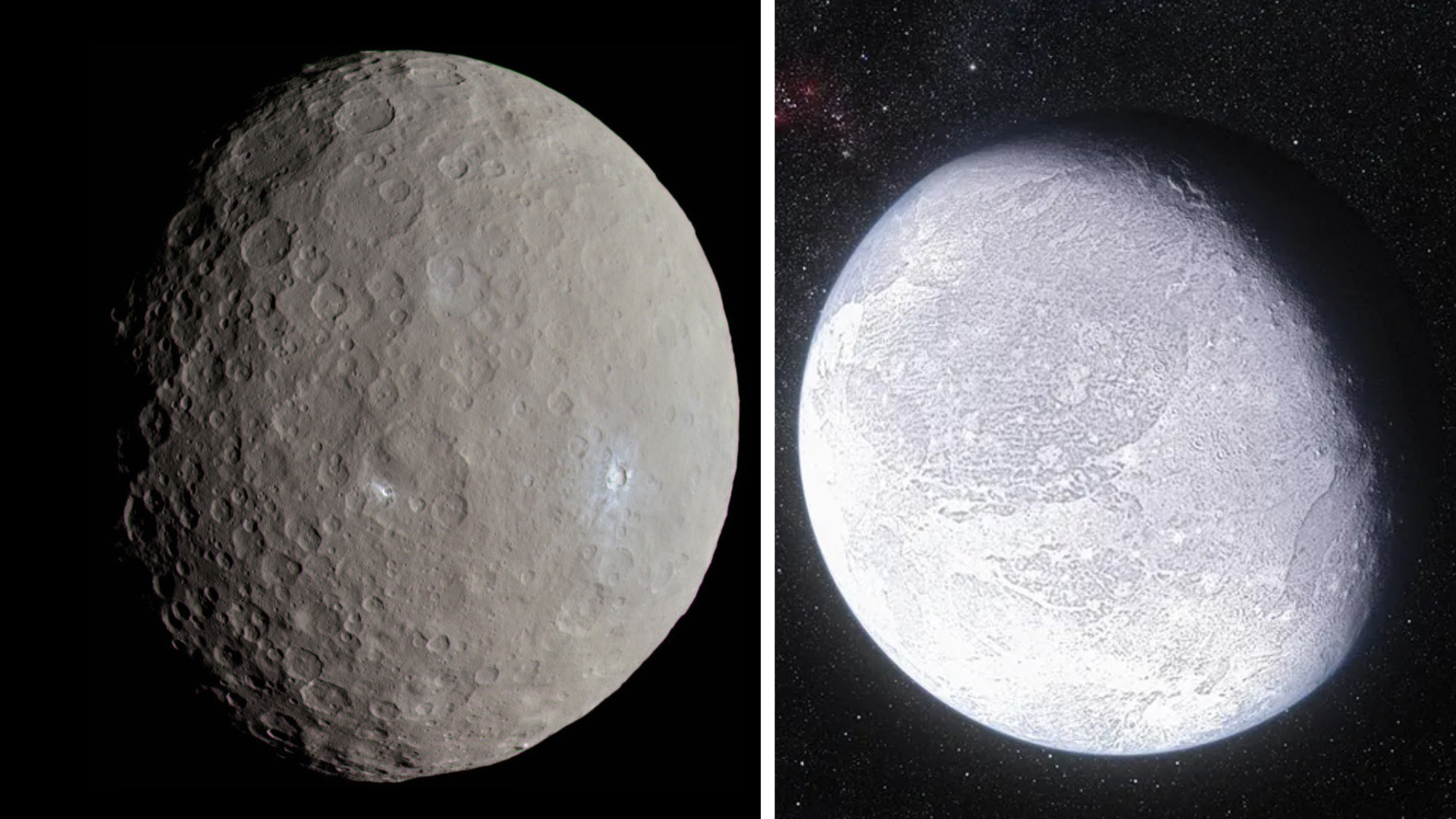
If you are going to feel sorry for any dwarf planet, maybe it should be Ceres. The closest dwarf planet to Earth, it was discovered in 1801, 129 years before Pluto, and was therefore the first dwarf planet to be discovered (though it was not defined as such initially).
Pluto has really stolen Ceres' thunder as the solar system's most prominent dwarf planet. Spare a thought for Eris as well. Also located beyond the orbit of Neptune, this dwarf planet is 1,445 miles (2,326 kilometers) wide, making it just a hair smaller than the largest solar system dwarf planet, Pluto, which is 1,477 miles (2,377 km) across. But Eris is actually more massive than Pluto, making it the most massive dwarf planet in the solar system, and Eris never even got the chance to be called a planet. Where is the petition for Ceres or Eris, eh? Nowhere, that's where.
But seriously, there is something crucial to remember in all this: The redefinition of Pluto as a dwarf planet took away none of the former planet's wonder or beauty.
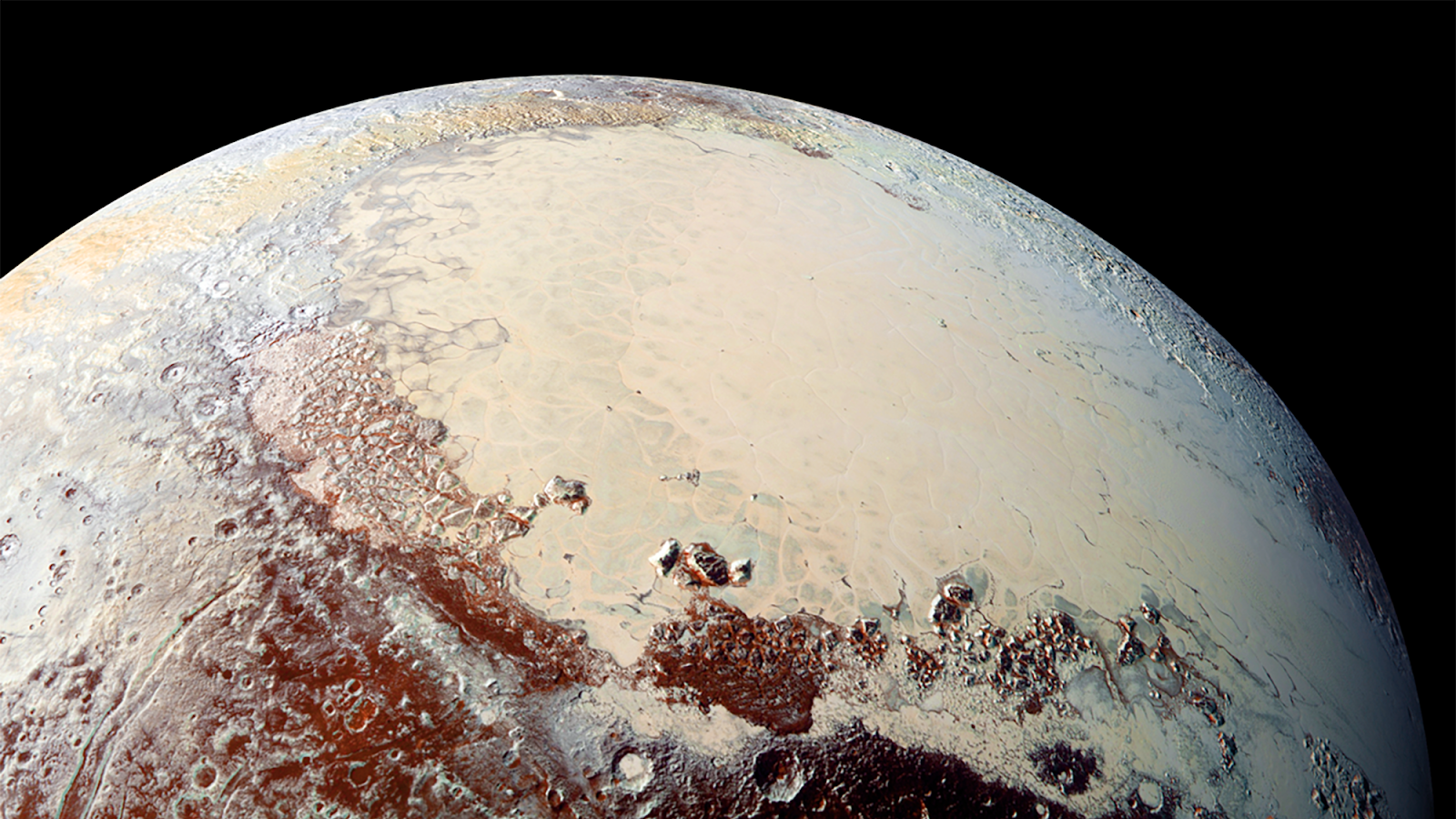
Is the bright heart-shaped plain of Sputnik Planitia, composed of squishy nitrogen ice, any less spectacular because it belongs to a dwarf planet? Are the towering 11,000-foot-high (3,350 m) ice mountains of Pluto any less majestic because they rise from the surface of a dwarf planet, not a planet? What about the blue haze that envelops the dwarf planet? Or Pluto's regions of shifting ice that show the former planet to be far more active than we once thought? Are they less scientifically fascinating?
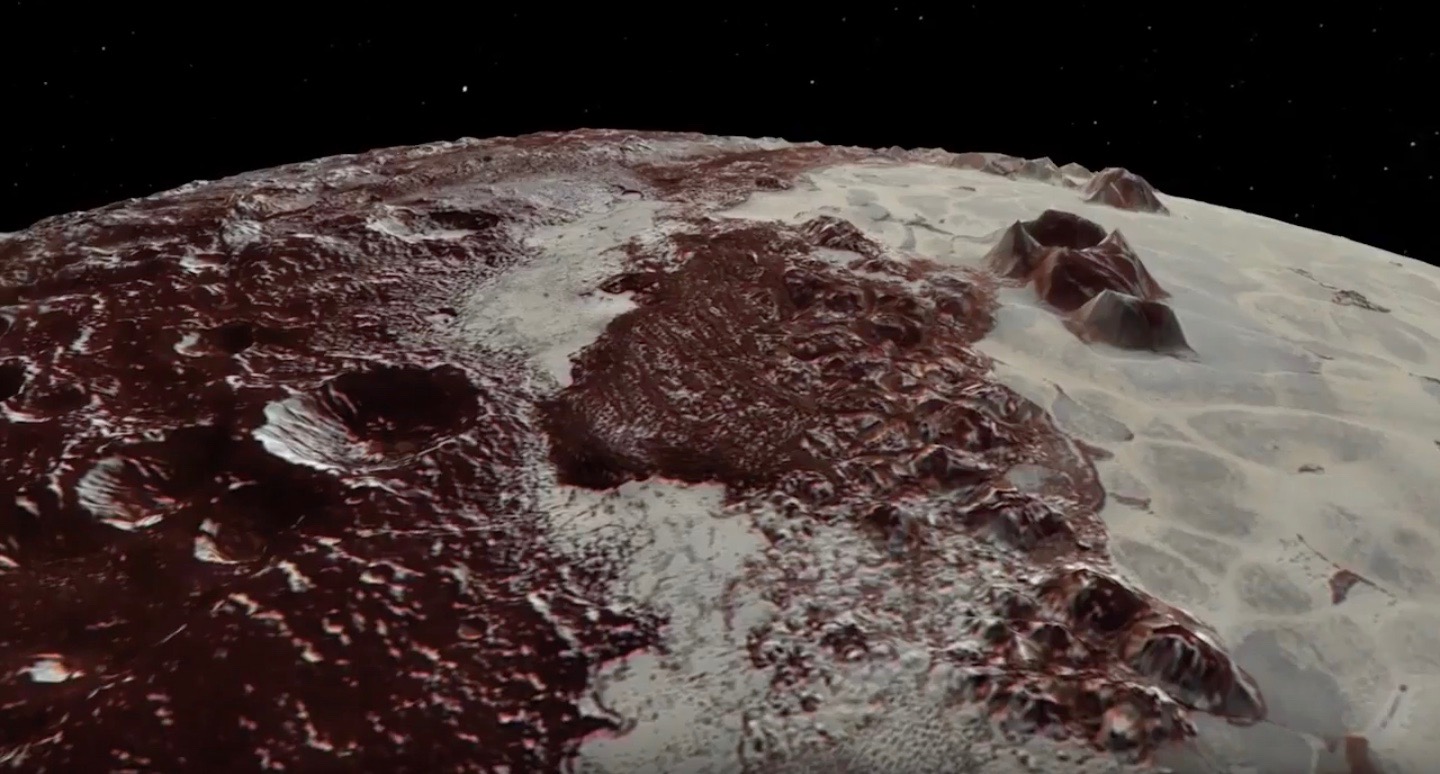
Were the observations made by NASA's New Horizons spacecraft less monumental for humanity, or less of an impressive scientific achievement, because this was only a nine-year trip to a dwarf world? Of course, the answer to all of the above questions is definitely no.
Pluto may not be the ninth planet, but it still sits at the forefront of dwarf planets in our minds and helped to define a whole population of solar system bodies.
Let's give Pluto its due.