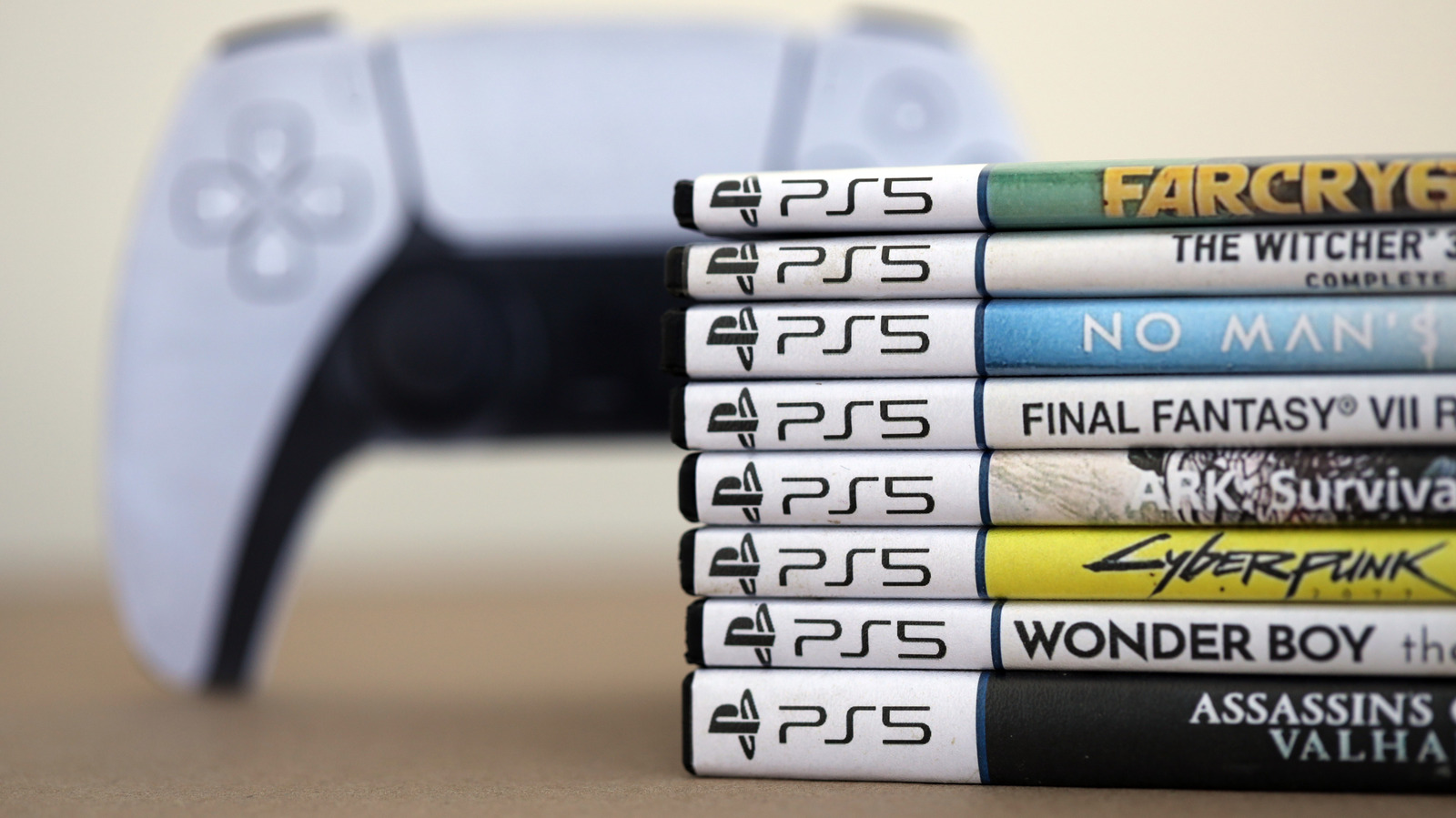
Killing game discs is an anti-consumer move that only benefits Sony.
By Kris Holt July 3, 2026 8:30 am EST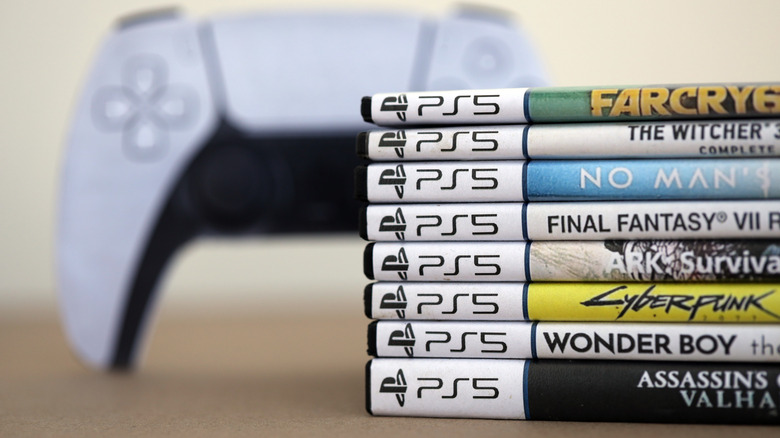 Mehaniq/Shutterstock
 So, that's it then. As of 2028, game discs will be a thing of the past for PlayStation. And after previously attempting to do so five years ago — before a backlash prompted it to reverse course — Sony is finally shuttering the digital storefronts on PS3 and PlayStation Vita. It doesn't seem like the company will back down this time. Both of these decisions are terrible for the future of physical media and game preservation.
Sony has been moving in this direction for a very long time, really since it started selling digital games two decades ago. The digital-only PSP Go from 2009 and PS5 Digital Edition 11 years later were both clear indications of where things were going.
As important as I believe game preservation is, I begrudgingly have to admit I'm complicit in this shift to an all-digital future. I bought a PS5 with a disc drive back in 2020 along with a physical version of Deathloop. That remains the only game disc I purchased for the console. I can't tell you the last time I put a PS4 disc in my PS5 either. The same goes for other game systems — I don't have any physical Xbox games and own just two Switch cartridges. PC gaming, of course, has long been digital-only.
"This is a natural direction for Sony Interactive Entertainment to adapt to consumer trends as the general preference for digital media significantly outpaces physical discs," Sid Shuman, senior director of Sony Interactive Entertainment's content communications team, wrote on the PlayStation Blog. "This transition will enable us to align more closely with how most of our community prefers to access and play games today."
The numbers back up Sony's claim. The company said that, in its last fiscal year (April 2025-March 2026), nearly four-fifths of full game purchases for PS4 and PS5 were bought digitally. Between January and March of 2026, the latest quarter for which we have sales figures, that rose to 85 percent. Some third-party publishers have reported even higher ratios for digital vs. physical sales. Over the same April-March period, Capcom said 93 percent of its game sales were digital copies. It expects that to grow to around 95.4 percent in the current fiscal year.
There have been other signs the landscape is shifting. The initial physical editions of Grand Theft Auto VI will have a code in a box (partly so Rockstar Games can prevent leaks of the most highly-anticipated game in years). Nintendo is charging more for physical editions of some first-party games than it is on the eShop. But killing game discs for an entire platform is a seismic change.
There are a lot of reasons why going digital-only makes sense for Sony. Not having to manufacture and distribute discs streamlines its operation. It now seems all but certain that PS6 will not feature a disc drive that players can use to run physical PS4 or PS5 games. Not having to include a disc drive in any PS6 variant may at least help mitigate soaring costs of other components that have forced Sony to increase PS5 prices.
Still, ending production of discs is fundamentally an anti-consumer decision that puts more power in Sony's hands. This is going to make things worse for players, who (among other things) will soon no longer have the option of trading in or selling their PlayStation games. If the majority of PS6 titles and future PS5 games are going to take place on the PlayStation Store, that gives Sony more control of pricing. The second-hand market for new PlayStation titles will evaporate.
While Sony and third-party publishers might still offer collectors editions that come with physical goodies (like pins, art books and steel cases), these will still just have a digital game code in a box. Players may not be able to lend their friend their copy of a game either. That ties into concerns around not being able to pass transfer one's game collection to others.
The problems with killing game discs
 Roberto Vincenzo Minasi/Unsplash
 While there are other issues to consider here — like the impact on people who lack a fast, stable internet connection and companies that specialise in physical games — nixing discs entirely is terrible for game preservation. The closure of the PS3 and Vita stores is testament to that. The last time the company tried to shut those digital storefronts, VGC looked at the data and determined that around 2,200 digital-only games would no longer be available to purchase. Of those, 138 were not available on other platforms, meaning they'd essentially disappear.
Those exact figures may have shifted over the last five years, but they illustrate the game preservation problem. It's not unfathomable that digital-only games from more recent generations will meet a similar fate. Having a game on a disc means you can still play it. For instance, Microsoft has delisted Forza Horizon 4, but you can buy a second-hand copy and play it on Xbox One or Xbox Series X.
Archiving digital-only games, even for research purposes, is a complex issue. While Video Game History Foundation director Frank Cifaldi described the death of PlayStation game discs as "unfortunate news," he said in a statement that there were broader concerns when it comes to archiving new games:
Museums and archives have been preparing for this future for a while, with the expectation that putting discs on a shelf isn't going to be a long-term solution for preserving new games. What continues to baffle us is what the industry expects institutions like ours to do about it.
If platform owners are deciding to eliminate physical media and older digital storefronts, then we'd also like to see trade groups like the Entertainment Software Association offer meaningful solutions for archives and museums to legally preserve digital-only content and make it accessible for research. Everyone agrees this is a serious problem, but the ESA has repeatedly opposed the efforts of cultural heritage institutions to reform digital copy protection laws to make it easier to do this work. The industry needs to meaningfully come to the table on this issue, because asking museums to download a copy of Grand Theft Auto VI and hope it'll run in 50 years is not a preservation solution.
Meanwhile, Sony also said that after it ends digital sales of PS3 and Vita games — a phase out that will take place over the next year — "players will still be able to download previously purchased content after the closing date for the foreseeable future." The last part of that sentence is ominous. It implies that, at some point, the company will turn off the PS3 and Vita servers entirely, preventing consumers from being able to download the games they've purchased
This brings us into the digital rights management (DRM) side of the equation. It's long been the case that you don't actually own any digital games you buy for modern systems. You acquire a license to play a game, and platform holders have the right to revoke your access. A Sony spokesperson told Game File this week that "[w]ith all digital content, including games, movies, and music, players are purchasing a personal license for non-commercial use."
DRM enables platform holders and publishers to restrict what players can do with their purchases, and transitioning to digital-only games will place more power in their hands. For what it's worth, PC storefronts like GOG and Itch sell DRM-free games and offer an alternative approach to the bigger players.
We don't enforce any DRM for games and stuff on @itch.io. Buy, download, and never connect to the internet again for all we care ✌️
While this shift may have been inevitable for Sony, the timing of the announcement seems questionable from a strategic perspective since it might make Xbox comparatively seem like the good guys on this particular front — right as Microsoft is once again preparing to gut its gaming division.
Xbox has confirmed that its next console, currently dubbed Project Helix, will run PC games. The brand has long been attempting to unify its experience across various platforms and, with its handhelds allowing users to install third-party PC game launchers like Steam and GOG, it stands to reason that Xbox will enable that option on Helix as well. So, the game preservation issue is perhaps slightly less of a concern in that particular ecosystem. That said, Xbox may well follow Sony by ditching game discs entirely as well.
The approaches PlayStation and Xbox have taken to game access and DRM have shifted greatly over time. Those initially seemed to come to a head 13 years ago, when the two sides were talking up the Xbox One and PS4. Microsoft initially planned to require Xbox One players to connect to the internet at least once 24 hours to keep playing their games, even offline titles. It was also going to let publishers decide whether they'd permit the sale of used games. The approach to lending Xbox One games to friends raised concerns too.
Microsoft walked many of those ideas back after Sony infamously mocked Xbox with a demonstration of how to lend PS4 games to friends: by physically handing over a boxed game.
But a lot has changed since 2013. Sony itself recently mandated a DRM check for digital game purchases, and we're now 18 months away from the company completely scrapping discs for new games. What Sony said 13 years ago might not be relevant now, but that doesn't change the fact that this move is a slap in the face to game preservation efforts and anyone who wants to actually own their games.