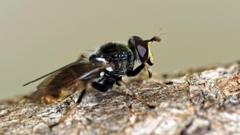

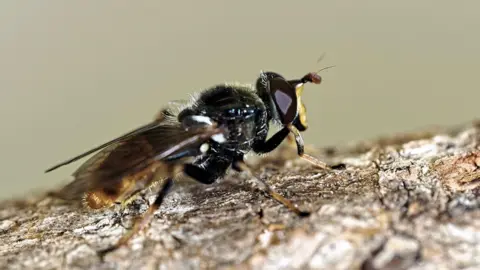
 RZSSThe pine hoverfly is one of the UK's rarest insect species
A rare fly that faced extinction could now outnumber the human population of the Cairngorms National Park - the last place in the UK where the insect survives, say conservationists.
Seven years ago, just 50 pine hoverflies were thought to inhabit a single woodland site and the species is still considered critically endangered.
But following a captive breeding programme, 30,000 have been released in the park - almost twice the number of people who live there.
Conservationists at the Royal Zoological Society of Scotland (RZSS) used jam jars and hummus pots to raise the flies' larvae before releasing the insects into the wild.
More stories from the Highlands and Islands
News from the Highlands and Islands on BBC Sounds
The pine hoverfly conservation programme was started in 2018.
It involves the Rare Invertebrates in the Cairngorms (RIC) project, Pine Hoverfly Steering Group and local landowners.
Thousands of insects have been released in batches over the years, including almost 7,000 larvae in March and more than 3,000 in October 2021.
The flies are bred in a "breeding-for-release" centre at RZSS' Highland Wildlife Park at Kincraig, near Aviemore.
Due to the conservation effort an adult fly seen in 2022 was the first to be spotted in the wild for a decade.
The species need certain conditions to be able to thrive.
In the wild, the larvae live in small holes that have rotted into old pine trees. There, they feed on a "nutritious soup" of bacteria.
Conservationists have tried to replicate these conditions using jam jars.
To make the soup in captivity, keepers mix pine wood chippings from the flies' natural habitat with rain water.
The temperature of their breeding area has to be regularly checked and damp moss is used to plug the top of the jars.
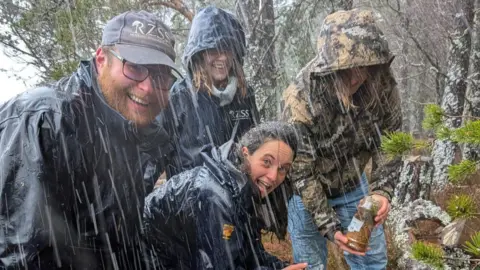 RZSSConservationists brave heavy rain to release a batch of hoverfly larvae
RZSS field conservation manager Georgina Lindsay said: "The reintroduction project is hugely important for the species."
She added: "This milestone is emblematic of so much hard work and dedication, and a tribute to collaborative work."
The RIC project aims to find out more about threatened invertebrate species and their distribution across the Cairngorms National Park.
It collaborates with landowners to protect and improve habitats.
RIC is managed by NatureScot and supported by the Scottish government's Nature Restoration Fund.