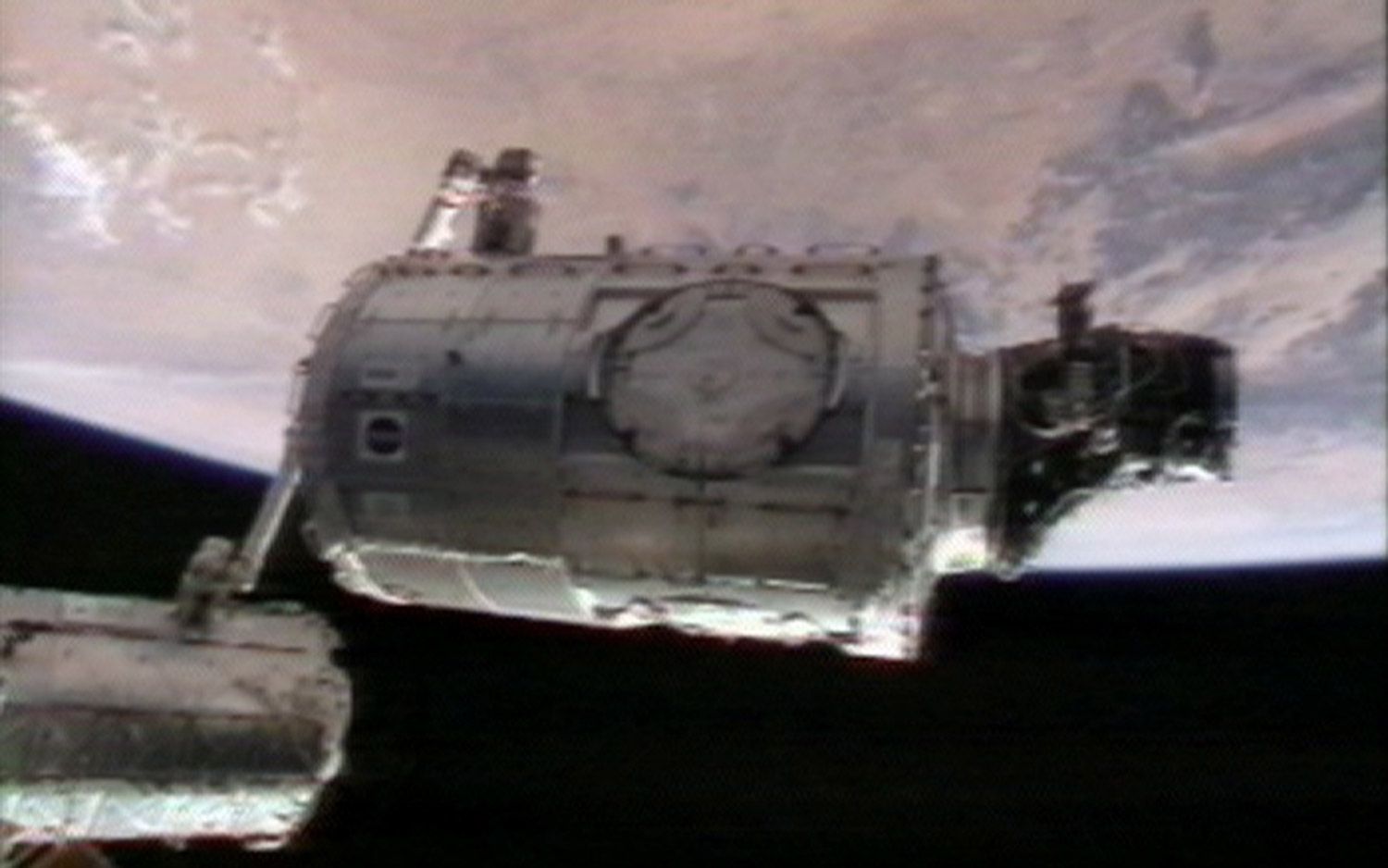
On October 23, 2007, the space shuttle Discovery launched the Harmony module to the International Space Station.
The Harmony module is a utility hub 14 feet wide and 24 feet long, or about the length of a minibus. It joins the European Space Agency's Columbus module and Japan's Kibo laboratory and serves as the crew quarters for the American astronauts.
Once it was installed, the space station grew from about the size of a three-bedroom house to something more like a five-bedroom house. When astronauts delivered Harmony to the space station, they left it temporarily attached to the Unity node.
After the shuttle left, astronauts used the space station's robotic arm to move the shuttle docking port out of the way at the Destiny module. This made room for Harmony to then dock at its permanent home next to the Destiny module.
Why it mattered
In 2007, the International Space Station was much smaller than it is today in terms of living space for its astronaut crew. The Harmony connecting module changed all that.
The STS-120 mission opened a new phase of ISS expansion by adding a vital connecting hub for future modules. Prior to Harmony's launch, the last new room addition to the ISS had occurred in 2001, when Russia's Pirs docking module (since discarded) arrived.
The Harmony module (its original name was Node 2), was the second NASA-led hub module (after the Unity, or Node 1, module) for the ISS. It was built for NASA by the Italy-based Thales Alenia Space and is covered with five "common berthing mechanisms," or connecting points for different ISS modules.
After the two-week STS-120 flight, Harmony was moved from a temporary berth at the Unity module to the forward port on the NASA's main Destiny laboratory. Once there, it served as a connection point for Europe's Columbus lab on the starboard side, and Japan's massive Kibo lab on the port side. Some of its ports have been used by visiting caargo ships and a docking port on its roof allows visiting vehicles to park there.
Inside the module are eight payload racks that include four used for avionics and four others for either stowage or crew quarters. NASA's astronaut crew quarters are based in the Harmony module. The name Harmony was selected durng a public naming contest by NASA.
Want more space history? Check out our full On This Day In Space Story archive and watch our On This Day In Space videos on YouTube.