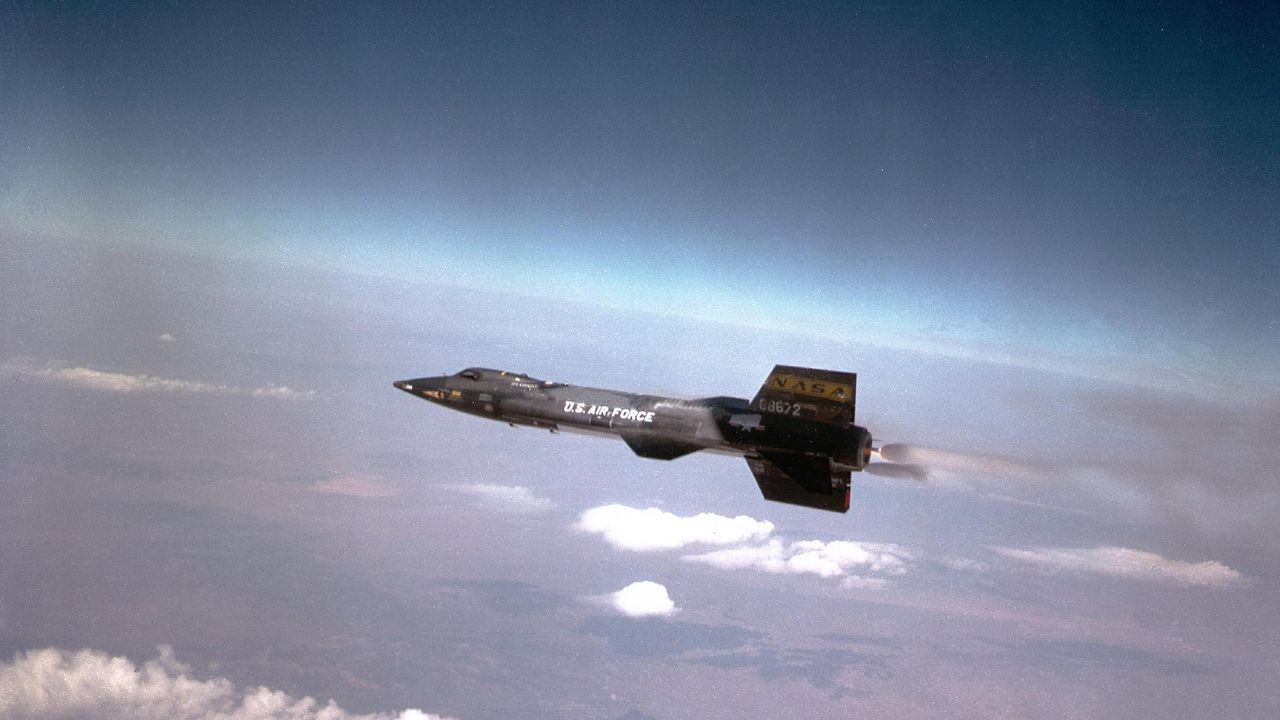
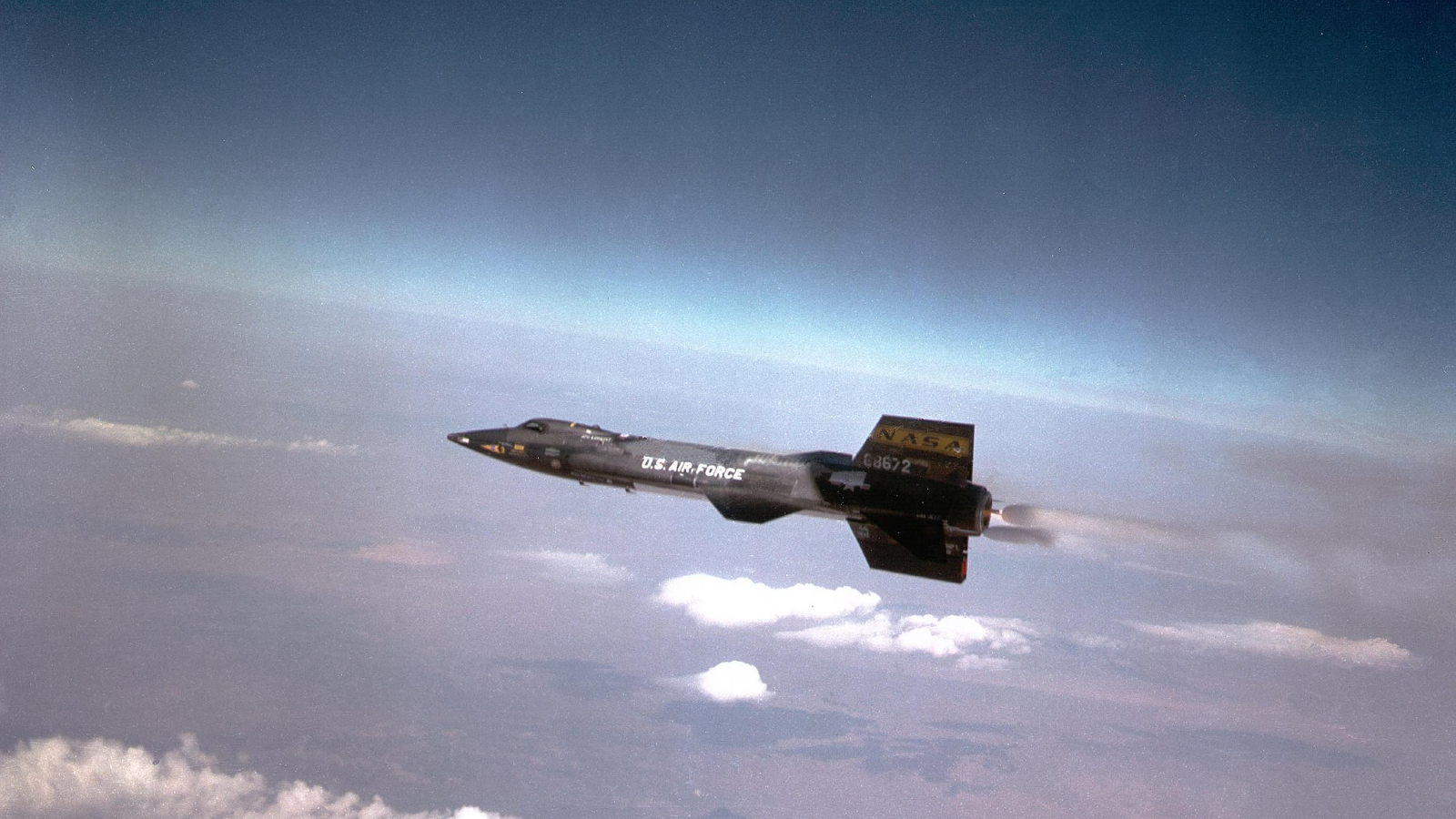
On Aug. 22, 1963, U.S. Air Force Captain Joe Walker flew an X-15 rocket plane higher than any pilot had ever flown before.
Walker reached an altitude of over 67 miles (108 kilometers). That's about 5 miles (8 km) above the edge of space! Walker experienced about five minutes of weightlessness over the course of the 11-minute flight.
This was the second and final suborbital spaceflight of the X-15 program. Walker piloted both flights and became the first person to go to space twice. For both flights, he flew in the space plane X-15 #3, which also became the first reused spacecraft to return to space.
Photos: X-15 Rocket Plane Reaches Space in Test Flights
Why it mattered
Walker's flight was part of an X-15 program that helped aerospace engineers learn how humans and vehicles operate at hypersonic speeds and transition between the atmosphere and the vacuum of space. The rocket planes tested reaction-control systems for maneuvering where the air was too thin for normal aerodynamic controls, while gathering data on heating, stability, structural loads, human performance and piloting techniques during reentry. Those lessons contributed to NASA's Mercury, Gemini and Apollo programs and, later, the development of the Space Shuttle.
Walker's Aug. 22 flight also highlighted an idea that would become increasingly important decades later: reusability. The same X-15 #3 had already carried Walker beyond the Kármán line a month earlier, making it one of the earliest demonstrations that a spacecraft could fly to space, return safely and then fly again. NASA's space shuttle became the central example of spacecraft reuse when it was introduced in the 1980s. Today, SpaceX's Falcon 9 rocket is the leader in reusable space vehicles, with nearly 600 launches of boosters that have lifted off at least once before, and counting.