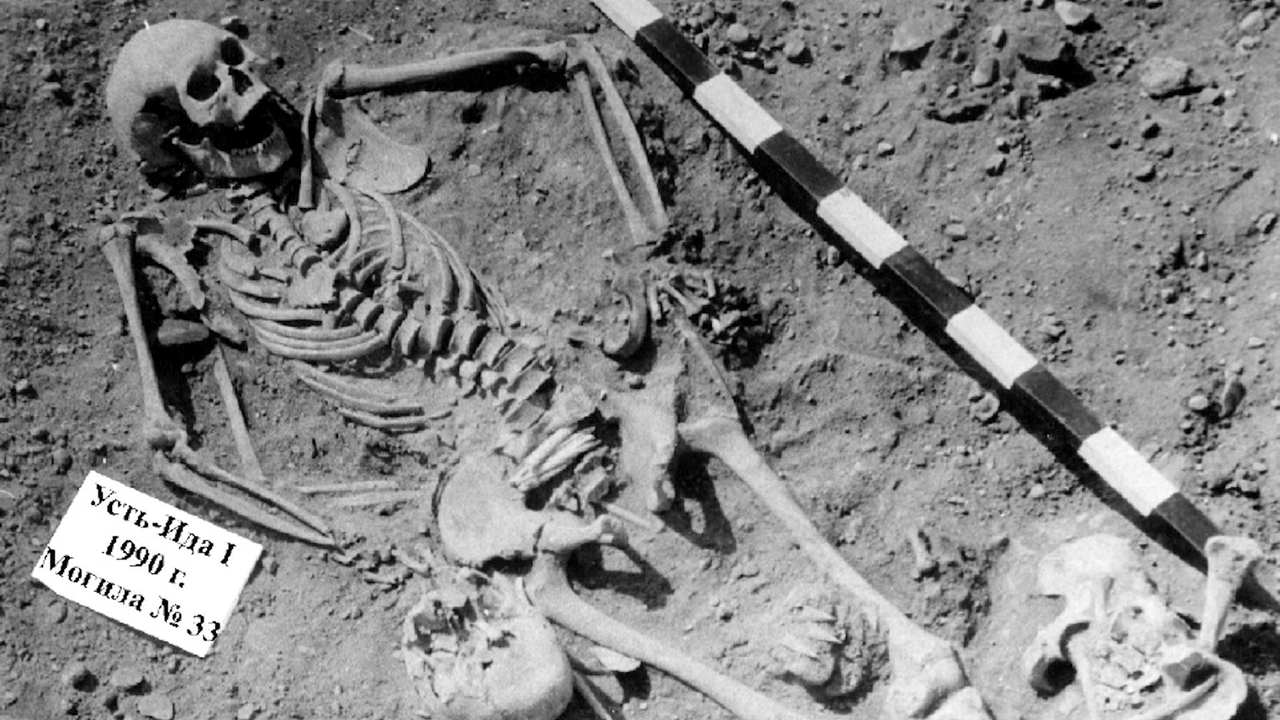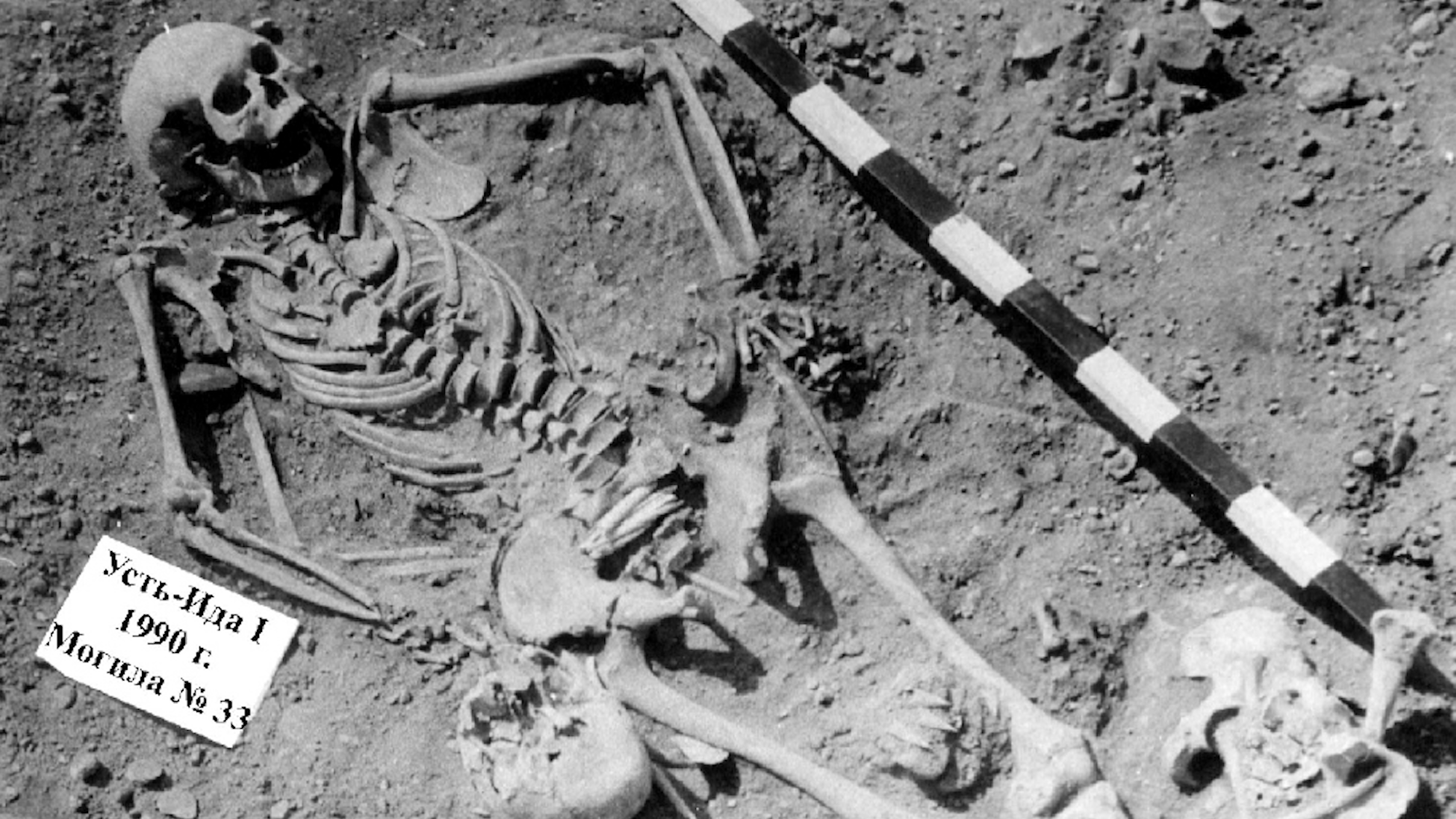
Children were the main victims of the prehistoric plague outbreaks in these hunter-gatherer communities. (Image credit: Vladimiri Bazaliiskii)
Share this article Join the conversation
Follow us Add us as a preferred source on Google Newsletter Subscribe to our newsletter
Hunter-gatherers in Siberia fell victim to lethal plague outbreaks around 5,500 years ago, marking the oldest known evidence of plague to date, a new study finds.
A research team investigating the Stone Age remains identified ancient DNA ion over a dozen individuals that came from previously unknown strains of Yersinia pestis, a bacterium that causes pneumonic, bubonic and septicemic plague.
The disease that infected these hunter-gatherers, most likely pneumonic plague, probably spilled over from wild marmots, and ravaged through family groups living around Lake Baikal, according to the study, published Wednesday (June 17) in the journal Nature.
Ancient DNA from the two newfound plague strains revealed a unique gene that codes for proteins that trigger massive immune responses, perhaps explaining why children were the most likely to die from the disease, the authors wrote in the study.
The discovery of two deadly plague outbreaks in prehistoric hunter-gatherers challenges the long-standing assumption that epidemics first occurred after the rise of agriculture, study first author Ruairidh Macleod, a researcher of ancient genomics at the University of Oxford, told Live Science.
"We got the really striking result that we found lots and lots of plague here far earlier than we expected," Macleod said. This is "the closest we'll probably ever get to a direct smoking gun demonstrating the virulence [the ability of germs to cause disease] of these early plagues."
Plague has played an extremely important part in human history and continues to infect people today. The strain of Y. pestis that affects people today still causes epidemics, predominantly in Africa, although seven human cases, on average, are reported in the U.S. each year. Nowadays, Y. pestis cases that are caught early can be treated with antibiotics.
Sign up for the Live Science daily newsletter now
Get the world’s most fascinating discoveries delivered straight to your inbox.
Contact me with news and offers from other Future brandsReceive email from us on behalf of our trusted partners or sponsors
Understanding how the disease has evolved over time is essential for gaining insight into how Y. pestis may change in the future, study co-author Eske Willerslev, an evolutionary geneticist at the University of Copenhagen, said at a news conference Tuesday (June 16), ahead of the study's publication.
Prehistoric plague outbreaks
Research suggests that plague outbreaks devastated communities long before the Black Death, the catastrophic epidemic that swept through 14th-century Europe and killed around 25 million people, or between 25% and 33% of Western Europe's population at the time.
For example, repeated plague outbreaks have been identified from between 5,300 and 4,900 years ago in farmers from what is now Scandinavia. However, whether these early plague strains were deadly or simply caused mild sickness has been hotly debated because the bacterium lacked some known disease-causing genes.
Now, a close inspection of the ancient DNA of hunter-gatherers buried in four cemeteries along the banks of the Angara River, which flows out of Lake Baikal, has provided "the best kind of evidence that we could probably hope for" that prehistoric plague strains were lethal and resulted in mass death, Macleod said.

Lake Baikal is in southeast Siberia.
(Image credit: Ralph White via Getty images)
During previous excavations of these cemeteries, researchers noticed that an unusually high number of children had been buried over a short period. There were no signs of violence or other injuries, Macleod said at the news conference, leaving the archaeologists stumped as to why so many children died.
Macleod and his team stepped in to see if ancient DNA could shed light on this mystery.
The researchers extracted ancient DNA from the teeth of 46 individuals at the four cemeteries. They checked whether any were related while also scanning for ancient DNA from known germs.
To their surprise, they identified large amounts of Y. pestis in 18 individuals. These cases spanned two distinct disease outbreaks: one lasting from around 5,596 to 5,341 years ago, and another most likely spanning 5,126 to 4,926 years ago.
Some graves contained the remains of multiple infected individuals who were buried at the same time, suggesting they died during the same outbreak. One grave belonged to three closely related young girls, while another held a nephew and aunt.
"There must have been survivors who knew these people when they were alive and what their identities were and what their biological relationships were to bury the dead and bury them in shared graves," Macleod said.
RELATED STORIES
It is currently not possible to identify plague-specific antibodies that would identify which individuals survived the outbreaks, he added.
The findings help to support the idea that prehistoric populations were impacted by plague, Aida Andrades Valtueña, a researcher who specializes in ancient pathogens at the Max Planck Institute for Evolutionary Anthropology in Germany but was not involved in the study, told Live Science in an email.
However, more complete sequencing of the plague DNA is needed to confirm that the various cases were from the same outbreak, rather than from separate infections, she noted.
Article Sources
Macleod, R., Seersholm, F. V., De Sanctis, B., Lieverse, A., Timpson, A., Schulting, R., Stenderup, J. T., Gauntiz, C., Vinner, L., Ivanova Goriunova, O., Ivanovich Bazaliiskii, V., Vasilyev, S. V., Jessup, E., Wang, Y., Bronk Ramsey, C., Thomas, M. G., Corbett-Detig, R., Iverson, A. K. N., Weber, A. W., …Willerslev, E. (2026). Lethal plague outbreaks in Lake Baikal hunter-gatherers 5,500 years ago. Nature. http://doi.org/10.1038/s41586-026-10540-5
What do you know about the Paleolithic, Mesolithic and Neolithic eras? Find out with our Stone Age quiz.
 Sophie Berdugo
Staff writer
Sophie is a U.K.-based staff writer at Live Science. She covers a wide range of topics, having previously reported on research spanning from bonobo communication to the first water in the universe. Her work has also appeared in outlets including New Scientist, The Observer and BBC Wildlife, and she was shortlisted for the Association of British Science Writers' 2025 "Newcomer of the Year" award for her freelance work at New Scientist. Before becoming a science journalist, she completed a doctorate in evolutionary anthropology from the University of Oxford, where she spent four years looking at why some chimps are better at using tools than others.
View More
You must confirm your public display name before commenting
Please logout and then login again, you will then be prompted to enter your display name.
Logout