Earlier this week, we ranked the NBA's top 15 front offices. Today, we conclude these rankings with the bottom 15. Before kicking off the first half of these rankings, we covered the traits that tend to make a successful front office. Since we're covering the less successful front offices today, let's talk about the ways in which poorly run teams tend not to embody those traits:
- They seemingly operate without a bigger-picture vision. Individual moves may work, but they do not work in conjunction with their other decisions as part of an identifiable plan.
- They are uncreative. This can manifest in a dozen ways, but essentially, they rarely execute trades or contracts in unconventional ways or successfully buck league-wide trends.
- They are stubborn. They fixate on a single player type or a cookie-cutter roster archetype without being willing to pivot when doing so proves necessary.
- They are not self-aware. They misunderstand where they stand in the broader league landscape.
- Their organization is not fully aligned. The owner has a history of meddling with basketball matters. Disagreements between front office and coaches spill into the public.
- The team is not willing to spend what it takes to win, either on player salaries or other critical resources.
- Irresponsibility. Poorly run teams act rashly in the name of short-term improvement.
The basic purpose of this exercise, again is to determine which front offices you would want to run your favorite team if you could make that choice. These are the front offices I likely would not recommend if given the choice.
Something to keep in mind here, though, is that this does not mean every front office listed here is explicitly bad. A point I hammer home every time I publish Front Office Rankings is that there are more well-run teams than poorly run teams. With that in mind, let's conclude this ranking of the NBA's best front offices, starting all the way at the bottom.

30. Sacramento Kings
February ranking: 30
On March 7, 2026, the Sacramento Kings had the worst record in the NBA with a potentially generational draft looming. This is a team that has missed the playoffs in 19 of the past 20 drafts. Losing is in their DNA at this point. If they just could have kept doing what they've been doing for the past two decades for another five weeks, they would have ended the season with the league's worst record. The Wizards did so in reality and got the No. 1 pick. The Kings finished the season on an 8-10 stretch and fell to No. 7 in the draft.
We don't punish teams for bad luck, but we certainly punish teams for bad vision. No lottery team misunderstood the assignment more than the Kings did. In a spring defined by discourse about how to fix tanking, the Kings were the tanker that didn't actually know how to tank. They were just naturally bad. Even despite a late-season surge, the Kings still finished 25th in rebounding, 26th in offense and 28th in defense. They had a negative turnover margin and a negative free-throw margin. This team had no redeeming qualities last season, which begs the question of why was Doug Christie retained as head coach? Remember, losing is no longer beneficial, and is in fact actively harmful thanks to the relegation zone.
Virtually every big contract this team signs or acquires turns out to be a mistake. They used cap space to renegotiate and extend Domantas Sabonis in 2023 rather than actually improving their first playoff team since 2006. They acquired Zach LaVine in the De'Aaron Fox trade instead of triggering a sorely needed rebuild and are now stuck with LaVine's contract. Cleveland was eager to move De'Andre Hunter's contract. The Kings couldn't get appropriate draft value for Keon Ellis because they had to use him to dump Dennis Schröder, whom they signed eight months earlier. They couldn't trade Malik Monk's contract last offseason when they wanted to create more minutes for Russell Westbrook, so they just signed Westbrook anyway. They're eating $10 million in dead DeMar DeRozan money for a contract that made no sense when it was signed.
There have been a couple of promising marginal finds lately. Nique Clifford at No. 24, Maxime Raynaud at No. 42 and the undrafted Dylan Cardwell are all legitimate NBA players. But come on. The Kings had the Coach of the Year (Mike Brown) and the Executive of the Year (Monte McNair) in the same season in 2023. Both were fired within two years, and Brown just won a championship in his first season with his new employer. This is rarified dysfunctional air, and it gives the Kings a stranglehold on the No. 30 slot.
29. New Orleans Pelicans
February ranking: 29
The Pelicans walked away from the Derik Queen trade about as unscathed as possible. Neither their pick nor Milwaukee's jumped into the top four. It was still an enormously irresponsible decision, especially since, had the Pelicans controlled the pick themselves, they could have tried to tank it into the top four. But Queen and Kingston Flemings are probably roughly equivalent as prospects, with Queen perhaps having more value by virtue of playing the scarcer position.
But failing to protect their own 2026 pick wasn't even the most irresponsible component of the Queen acquisition, and notably, the No. 8 pick wasn't even the highest 2026 draft pick they traded in pursuit of Queen. In order to get the No. 23 overall pick that they also sent to Atlanta, New Orleans had to trade the Indiana Pacers control over their own 2026 pick back. They made that trade during the 2025 NBA Finals. While Tyrese Haliburton was still playing. There was nothing to gain and everything to lose by making that trade before Indiana's season ended, and the Pelicans were punished for their recklessness by Haliburton's torn Achilles. They traded the No. 5 pick in 2026 for the No. 23 pick in 2025, and then packaged the No. 23 pick in 2025 with No. 8 in 2026 for No. 13 in 2025.
They didn't add their first veteran on a standard contract this offseason until Aug. 17... when they signed Trendon Watford for the partially guaranteed minimum. They might have had the financial flexibility below the luxury-tax line to do more if they hadn't taken on Jordan Poole's contract last offseason. That deal got them Saddiq Bey, whose value contract expires before the Pelicans figure to be good enough to benefit from it. Jamahl Mosley is a strange choice to coach a team that badly needs offensive creativity to make the clunky Zion Williamson-Derik Queen fit work. He couldn't figure out how to make the similarly awkward but more talented Paolo Banchero-Franz Wagner fit work in Orlando. It still isn't clear why they didn't just want to keep NBA Finals hero Jose Alvarado. Oh yea, and they've never paid the luxury.
The thing keeping the Pelicans out of the No. 30 spot, and really the only thing this team has going for it, is that Troy Weaver at least has a reasonable track record of identifying talent. Getting Bey wasn't worth paying Poole, but Bey is a valuable player. Queen outperformed his draft slot. The Detroit Pistons just won 60 games with a core Weaver drafted.
But identifying an actual plan here is next to impossible. Running back a 26-win team makes no sense. Even if you could justify the individual decision to keep any single player, the whole here is in desperate need of a reboot. Queen and Williamson are defensively incompatible and have redundant offensive skill sets. Trey Murphy's trade value will never be higher than it is now, while he has several years of cost control left on his deal. This team has minimal shooting and only one notable defender in Herb Jones. Until Dumars and Weaver prove they have a real vision for this team, the Pelicans are doomed to the No. 29 slot.

28. Portland Trail Blazers
February ranking: 19
These rankings have never been especially kind to Portland, but the Blazers had slowly been rising up the board from No. 25 to No. 23 to No. 19 at the deadline. Joe Cronin's two biggest moves, the Deni Avdija heist and the Damian Lillard blockbuster (and subsequent reacquisition at a drastically reduced price), both look great in hindsight. There was at least an identifiable organizational philosophy of loading up defensively. There were weaknesses -- Cronin has given out or acquired a number of overzealous contracts, and his draft record is hit or miss -- but it at least felt as though the Blazers were moving in the right direction.
But the beginning of Tom Dundon's tenure as owner -- completely independent of the relocation drama he's created -- has had terrifying basketball implications for this promising Blazers rebuild. His Carolina Hurricanes may have just won the Stanley Cup, but the NHL and NBA are different leagues. Infrastructural spending has become such a vital part of building a winning organization that even the Lakers were caught in the dust during the Buss family's mom-and-pop era, and the Blazers have none of their institutional advantages.
Portland's infamous coaching search ended with Micah Nori not only getting paid at the bottom end of the typical head coaching salary range, but signing essentially a year-to-year contract. If that's the sort of structure they're willing to give their head coach, they're just not going to be a desirable employer for top assistant coaches, scouts, analytics staffers or any other basketball operations personnel. Two of Portland's three assistant general managers from last year -- Mike Schmitz and Sergi Oliva -- have left the organization this offseason, though in fairness, Schmitz did so for a promotion.
The Ja Morant trade only makes sense as a buy-low home run swing. The actual fit is nonsensical. Portland traded for Holiday and signed Lillard a year ago. Two of its most important young players, Scoot Henderson and Shaedon Sharpe, are guards. The last thing this team needed was another guard, especially one that can't shoot on a roster that just ranked 28th in the NBA in 3-point percentage. He overlaps stylistically with Avdija and his poor shooting will make it harder for Avdija to get to the rim. Speaking of Avdija, Portland needs to create cap space to renegotiate and extend him next offseason if it wants to keep him out of 2028 free agency. Adding Morant makes that harder.
The Blazers of the past several years were far from perfect, but they were on a sensible trajectory. It's hard not feel as though that trajectory has been upended. The Morant trade was completely incongruous with their prior strategy, and Dundon's cost-cutting threatens to deprive this organization of the tools it needs to build a consistent winner.

27. Phoenix Suns
February ranking: 26
What's frustrating about this Phoenix ranking is that the Suns have actually done a good job on the margins lately. The contracts they gave Collin Gillespie and Jordan Goodwin this offseason represent very good value. Finding Oso Ighodaro and Rasheer Fleming in the second round is very strong drafting. The Jordan Ott hire was a rousing success. Even if he spends it on the wrong things, Mat Ishbia's willingness to open his wallet is quite helpful. As far as fan experience goes, he's been a great owner. Food at Suns games is cheap. He put local Suns broadcasts on over the air television, making the team accessible to fans throughout the region.
But the complete and utter lack of long-term planning here is just indefensible. This team is pathologically incapable of holding its draft capital. Trading all of its picks for Kevin Durant is one thing. He was, at that point, a top-five player in the NBA. Trading their very valuable unprotected 2031 pick for three vastly inferior, conditional picks is another. When the opposing general manager calls a pick you traded him "the most valuable asset on the market right now," you've probably miscalculated in giving it up for picks that were eventually spent acquiring Mark Williams and dumping Jusuf Nurkić.
The Miles Bridges trade was just as misguided. Think of the teams that have traded first-round picks seven years into the future this offseason. The Miami Heat did it for Giannis Antetokounmpo. The Minnesota Timberwolves did it for LaMelo Ball. These are All-Stars for teams with real championship aspirations. Even the Kessler trade involved the acquisition of a specifically requested archetype by a top-five player in the league. Giving up such an asset to appease Dončić isn't good process, but it's at least understandable.
Bridges is not. He has simply never consistently been the sort of player that contributes to high-level winning. He's never been a reliable shooter. He's not the defender or generator of rim-pressure a player with his athleticism should be, and he benefitted tremendously from playing with the sort of elite playmaker in Ball that he won't have in Phoenix. Go look at Bridges' numbers with Ball on the floor and without. The difference is startling. Bridges' true shooting fell over nine percentage points with Ball out of the game last season. And mind you, this is a Play-In Tournament team in a conference with six vastly superior on-paper opponents and a handful of young teams with significantly higher upside. They traded an incredibly valuable pick to go from being a Play-In team to still probably being a Play-In team.
Let's say the goal here is not to win a championship, but to simply put a competitive product on the floor for fans. That's a goal that this list doesn't reward, but it's one some teams genuinely hold. You could argue the Suns are doing that. They pay their players. They spend assets adding new ones. But they're not even doing that in a sustainable way. Devin Booker has four years left on a supermax contract. Dillon Brooks just extended through his age-34 season, and Bridges will probably extend in the near future as well. What happens when they decline?
They're just stuck... unless they're willing to trade new picks as soon as they unlock, and even at that point, they'll likely be so far gone that it won't matter. The Suns operate with no real understanding of their place in the broader league landscape, and it's virtually impossible to be an effective front office under those conditions. The little victories only mean so much next to a misguided big-picture vision.

26. Denver Nuggets
February ranking: 20
We only really have the last year or so to evaluate the Nuggets on ... and the last year or so has been a trainwreck. They traded an unprotected 2032 first-round pick to downgrade at forward from Michael Porter Jr. to Cam Johnson. The idea of doing so was presumably to save money, but that extra spending power did little for them on the court. All it really meant last season was having Jonas Valančiūnas instead of Dario Šarić, and Valančiūnas was hardly the impact backup center the Nuggets hoped he would be. Now he's back in Europe.
That extra financial freedom meant little for this season because they gave Christian Braun a disastrous five-year, $125 million contract extension. Denver has long been the sort of team that pays players early instead of exercising leverage in restricted free agency. This would have been the time to do it. Given Braun's offensive limitations, it's simply hard to imagine him having a good enough year to get a better offer on the open market. If he had, it would have meant he improved enough to earn it. But he's a slightly above-average defender whose offense is almost completely reliant on the presence of Nikola Jokić.
Peyton Watson trade grades: Cavaliers grab breakout wing, Nuggets have serious questions around Nikola Jokić Sam Quinn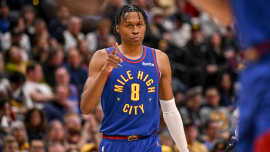
You know who wasn't reliant on Jokić last season? Peyton Watson, who broke out while Jokić was hurt last season and whom they could have signed to a rookie extension last offseason but didn't. Instead they traded him to Cleveland for a 2031 first-round pick that conveys when Jokić will be 36. If they trade that pick, it will almost certainly be for a player worse than Watson, but more likely, the second-apron restrictions already imposed upon them mean they won't be able to use that pick to add help now. The trade was made primarily to avoid a combined payroll and tax bill above $400 million, but that argument rings hollow when you remember this ownership group also owns the Los Angeles Rams, Colorado Avalanche and Chelsea FC.
Getting Tim Hardaway Jr. for the minimum and Spencer Jones on a two-way deal were really the only wins from last summer, but Hardaway is already gone, and their failure to lock Jones into a multi-year deal during the season resulted in a two-year offer sheet that pushed them into the second apron.
The Nuggets have never prioritized investing in their front office. They let Ujiri go after he won Executive of the Year, and they let Tim Connelly go after he built the foundation of their championship team. This organization is now running on the fumes of what Connelly built.

25. Milwaukee Bucks
February ranking: 24
We have to divide the Giannis Antetokounmpo saga into parts. In a vacuum, they probably handled this summer about as well as they reasonably could have. They effectively used the Boston Celtics as a scare tactic to force the Miami Heat into giving them pretty much everything. They won the negotiation. They might wind up winning the trade.
But they still got no true centerpiece, and more importantly, they got less than they would have had they seen the writing on the wall earlier. The entire NBA world saw where this was going the moment Damian Lillard tore his Achilles tendon in April 2025. The Bucks spent a year sticking their fingers in their ears and pretending not to hear the vultures circling. The field of interested teams would have been bigger had they moved last year. ESPN has reported that four separate teams made strong bids this year that fell apart when Antetokounmpo expressed an unwillingness to extend with them. One of those teams almost certainly would have taken the risk last summer, when Giannis had two years left on his deal. Had the Bucks acted sooner, they wouldn't be stuck with a bad Myles Turner contract and four more years of dead Lillard money.
Speaking of bad contracts, the Gary Trent Jr. deal is so bad that the ongoing cap circumvention investigation it triggered is arguably a more flattering explanation for it than the genuine belief that he was worth $64 million over four years. Stephen Noh's salary projection tool estimates Trent's value next season at the minimum. He was barely in the rotation for portions of last season. The Bucks made him the eighth-highest paid overall free agent this offseason despite a massive logjam at shooting guard. They themselves re-signed Ousmane Dieng for $17.3 million, and Dieng was better than Trent at almost everything for them last season. This is a completely unjustifiable contract.
A part of what killed the Antetokounmpo era was the inability to develop young, cheap talent. To their credit, the Bucks are getting better in this respect. Dieng was a nice deadline find. A.J. Green and Ryan Rollins are real organizational wins. But the big-picture strategy here has just been a mess since they won the championship. They've missed badly on two straight coach hires in Adrian Griffin and Doc Rivers. This was a front office defined by unrestrained aggression for most of Antetokounmpo's prime. They frequently traded picks, fired coaches and sacrificed financial flexibility to appease their star. Sometimes it worked. Sometimes it didn't. It's the easiest pitch a front office can throw, and generally the least creative or impressive.
Now Antetokounmpo is gone, and they've taken no real steps since that trade toward what comes next. The prudent decision here would be to start selling off the veterans with value -- Tyler Herro, Rollins while his salary is low enough to command a premium, Turner given the supply-demand issues plaguing the center position -- and building a real asset surplus while they don't control their own picks and therefore don't have to worry about the relegation zone. They haven't done so.
Whose call is that? Milwaukee has one of the more complicated leadership structures in sports. Wes Edens and Jimmy Haslam alternate five-year terms as governor, with Haslam and his scary track record with the Cleveland Browns taking over in 2028. You could perhaps get away with a lack of vision and an opaque hierarchy with a homegrown star like Giannis. The onus is now on the Bucks to prove they can build a new contender without that advantage.
24. Los Angeles Lakers
February ranking: 25
The Laker front office has historically gotten credit for two things: star acquisition and scouting. Well, it's hard to assign too much credit for the Luka Dončić trade when the Dallas Mavericks presented it to them on a silver platter. They didn't screw up the negotiation, and amazingly, they managed to keep Austin Reaves out of the deal, but that was hardly a replicable feat unless Rob Pelinka happens to have any other friends running NBA teams who want to make insane trades.
Their player-friendly reputation has taken a bit of a hit as well in light of the degradation of their relationship with LeBron James. Most of their star acquisition has boiled down to being the Lakers. Would LeBron James have chosen this organization if it played in Milwaukee?
Scouting was a real strength through the early portion of the decade, with Reaves and Alex Caruso being their crowning achievements. Yet most of the scouting staff was fired during the season. That includes Joey and Jesse Buss, who were seemingly increasingly marginalized in the years leading up their family's pending sale of the team. "I kind of felt siloed quite a bit, dating back to before, I guess, the 2023 draft," Jesse Buss told The Athletic.
Jeanie Buss disputes her family's sale of Lakers stake: What to know about dramatic off-court fight Sam Quinn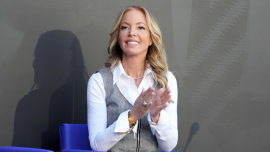
Well, the Lakers picked No. 17 overall in 2023 and 2024. They landed Jalen Hood-Schifino and Dalton Knecht, two pretty substantial busts. It would be hard at this point to consider scouting a strength anymore. It's not even clear is the scouting staff and the rest of the front office will be replenished in the near future. A report from The Athletic claims that the Lakers "cannot complete the buildout of its basketball operations department until the ownership situation is resolved."
What ownership situation? Well, Mark Walter, the owner who was supposed to Dodger-ize the Lakers, sold his majority stake in the team to Bob Iger and Josh Kushner. This has led to a squabble between Jeanie Buss and her siblings over whether or not they will sell their family's share in the team, which are attached to Jeanie's temporary status as team governor despite the family not owning the majority of the team. So for now, we don't know who's actually running the show here, but we can guess there's a messy legal battle ahead. Such drama isn't exactly helpful.
So at this point, it would be difficult to ascribe any consistent strengths to this Laker front office. Obviously, there are quite a few weaknesses. Rob Pelinka gets the mid-level exception wrong basically every year. Since the Lakers won the 2020 championship, here is how they've used their mid-level exceptions:
- 2020 (non-taxpayer): Montrezl Harrell, who was cap-dumped after one year.
- 2021 (taxpayer): Kendrick Nunn, who missed the whole following season due to injury and then played 39 bad games before getting traded during the 2022-23 campaign. Though he wound up making more, this one is especially notable considering Nunn was one of the players they seemingly chose over retaining Caruso.
- 2022 (taxpayer): Lonnie Walker IV, who had an up-and-down season that included swinging a playoff game against the Golden State Warriors. He could still only get a minimum contract with the Brooklyn Nets in the following offseason, though.
- 2023 (non-taxpayer): Gabe Vincent, who shot roughly 38% from the floor across parts of three Laker seasons.
- 2024: Unused. James offered to take a pay cut to give the Lakers room to use it, but they couldn't secure a player he approved of.
- 2025 (non-taxpayer): Divided among Deandre Ayton, whom they traded after a year despite having a hole at backup center, and Jake LaRavia, who was a negative by most of the all-in-one metrics.
The mid-level exception has mostly been the powerful player-addition tool the costly Lakers have had at their disposal for the past half-decade. They haven't once used it on a player they signed to a second contract (unless you count Avery Bradley, who left the team first). Meanwhile, they're frequently stuck with players they don't want to keep since Pelinka can't help himself from giving everyone player options. Since the 2023 offseason, 16 of the 25 standard contracts he's given out have included a player option.
This just isn't a team that's detail-oriented when it comes to contracts. Ayton, for all of his flaws, was just the starter on a team that earned a No. 3 seed. The Lakers had to swap him for Jaden Hardy, a spare scorer they have no real use for, just to create the last chunk of cap space they needed to add Quentin Grimes, Sandro Mamukelashvili and Walker Kessler in free agency. Now they're left with Kevon Looney as the only true backup center on the team, and he was nearly unplayable last year.
The Kessler acquisition was a potentially franchise-altering overpay. His contract pays him at the absolute top of the non-star center market. He has the 10th-highest average annual salary at his position, and the nine players ahead of him are former All-Stars. More distressingly, the Lakers gave up control of four of the five first-round picks available to them through trade (outright picks in 2031 and 2033 and swaps in 2028 and 2030) to get Kessler, leaving them minimal assets to find reliable, defensive-minded wings.
That made the decision to spend their cap room mid-level exception on Collin Sexton, obviously not a reliable, defensive-minded wing all the stranger. He's yet another ball-handler, where they already have an enormous surplus. The Lakers have been overemphasizing shot-creation to their detriment practically since they landed James. The most notable example was trading for Russell Westbrook in 2020, and then also letting Caruso go in favor of Nunn and Talen Horton-Tucker.
The great irony of their 2020 championship formula is that it came about by accident. They wanted to sign Kawhi Leonard. They signed the role players who were willing to wait on them ... who just happened to be exactly what they needed. Then they tore down that roster full of 3-and-D wings and never recaptured its success.
The Dončić trade was nothing short of a miracle for an aging roster that was about to begin a pretty ugly decline. It's a miracle they're currently squandering with predictable front-office shortsightedness and the same ownership drama that has surrounded this franchise for a decade.

23. Chicago Bulls
February ranking: 28
I'll confess I'm not completely comfortable with where I'm ranking the Bulls. I've moved them up every single set of rankings I've published -- from No. 30, to No. 29, to No. 28, and now, No. 23 -- without them doing all that much to earn it. It says more about the field than them.
The Arturas Karnisovas-Marc Eversley front office was a mess. So was the John Paxson-Gar Forman front office by the end. The constant in Chicago has been ownership under the Reinsdorf family. Chicago has won five playoff series since Michael Jordan retired (as a Bull) in 1998. They've paid the luxury tax only twice despite playing in the NBA's third-biggest market, their ambition seemingly limited to the Play-In Tournament.
This offseason seemingly began with yet another ownership-driven mistake. Michael Reinsdorf made it clear he wanted his new general manager to retain Billy Donovan as head coach. Donovan is a fine head coach, but the history is pretty clear about this: arranged marriages between new general managers and holdover coaches almost never work. To the team's credit, it did not allow Donovan to choose the GM, and he ultimately left before a GM was hired. So... progress.
Bryson Graham ultimately landed the job as lead exec. His track record in Chicago is to this point minimal. He gets no credit for Caleb Wilson, a gift from the lottery gods. Norm Powell and Nic Claxton were sensible veterans that filled needs who should at least help the Bulls duck the relegation zone, though it would have been nice to see a bit more vision than that. Graham developed a reputation as a keen talent evaluator with the New Orleans Pelicans, and their strong draft track record -- headlined by a 2021 class that included Trey Murphy, Herb Jones and an undrafted Jose Alvarado -- supports that notion. He was only in Atlanta for a year, but it was one in which Atlanta's new-look front office (ranked No. 14 in Part 1) received plenty of plaudits.
So Graham represents a somewhat promising blank slate with the same questionable ownership. A blank slate is more promising than the known quantities of the Karnisovas front office and the seven teams below the Bulls in these rankings.
22. Orlando Magic
February ranking: 21
The irony of the Desmond Bane trade was that it worked mostly as intended. The Magic wanted to improve their offense, primarily through shooting, without adding a defensive liability or taking usage away from Paolo Banchero or Franz Wagner. Bane was really the only high-level player available who checked those specific boxes. He played all 82 games at or around his career norms in virtually every statistical category. Four first-round picks and a swap for a non-All-Star is an overpay in the way that the New York Knicks overpaid for Mikal Bridges: it can only really make sense if you're close enough to winning a title that paying a premium for a highly specific fit is what it needs to cross the championship threshold. The Knicks were.
Where that trade went wrong for the Magic is that they were not. They completely overestimated their internal core. Some of that is admittedly due to health. They had the Eastern Conference's No. 1 seed on the ropes before Wagner got hurt again. But injuries are becoming something of a constant for Wagner and Jalen Suggs. Besides, we're now four years into the Wagner-Paolo Banchero partnership and the two have never coexisted harmoniously.
Think of the boldness that the Charlotte Hornets showed in moving LaMelo Ball after his bounce-back season. The Magic operate on the other end of that spectrum. People have been calling for them to split up Wagner and Banchero for years. By the time they actually get around to doing it, their value will have plummeted well below what it would have been had they been self-aware enough to act sooner. There's a real chance Orlando is responsible for the next Jaylen Brown-esque "wow, they only got ______ for trading _____?" sort of blockbuster.
That's what happens when you tend to operate from a position of weakness. The Magic spent years prioritizing size, defense and athleticism in almost everything they did, so by the time they were ready to invest in offense, they were looking for such a specific sort of player that the Memphis Grizzlies could hold them over a barrel for the only such player on the market. They've been so profligate with contract extensions that they are just barely below the second apron for a play-in roster this season, and that's before potentially re-signing Anthony Black next summer. When they inevitably need to trade a core piece within the next year or so, trade partners are going to use that financial crunch against them.
Ultimately, there's just not enough self-awareness in Orlando. They haven't done a good enough job of evaluating their own players and their markets, where they are as a team, and even their own blind spots in the sort of players they target. There's nothing wrong with trying to build an unconventional sort of team, but the Magic have just been far more exuberant about that team than the evidence suggests they should be. They went all-in on a group that had neither won a playoff series nor posted a top-20 offense. Now, navigating the asset limitations they've imposed upon themselves is going to be a real challenge moving forward.

21. Washington Wizards
February ranking: 22
The success or failure of Washington's rebuild probably depends on AJ Dybantsa, and while we don't give credit for winning a lottery, the Wizards certainly get credit for their steadfast strategic commitment to tanking. Now they're probably the single team best-positioned to double dip on lottery reform. They had great odds when they were tanking, yet now, they've probably improved enough to avoid the relegation zone, so they'll presumably still have strong odds while their young players get up to speed.
While the lottery picks have most of the upside, Washington's best work in the draft has come a bit later on. Kyshawn George at No. 24 overall looks like a long-term starter, and No. 21 overall pick Will Riley showed real promise in the second half of last season. No. 43 overall pick Jamir Watkins may have been the best defender on the team last season. In terms of sheer accumulation of young talent, the Wizards have done reasonably well.
Yet the best young player they've had in their system under this front office now plays for the Portland Trail Blazers. The Deni Avdija trade has quietly become one of the worst deals of the decade. They had a 23-year-old future All-Star on the best contract in the league and traded him for Bub Carrington -- who looks like little more than a backup at this stage -- and a 2029 first-round pick with capped upside. If they felt they couldn't properly tank with Avdija on the team, we need to look no further than the Utah Jazz successfully doing so with Lauri Markkanen as a response. More likely, they misevaluated their own player. Avdija averaged just under 19 points on 51-37-72 shooting in his last three months on the team. There were signs of what was coming.
The Trae Young contract simply does not make sense in the context of the aprons or the team that they're building. Remember, the Atlanta Hawks cap-dumped him out of fear that he would pick up a one-year, $49 million option. The Wizards gave him a four-year max deal. That is about as differently as two teams are ever known to have valued a single player, and if the rest of the league was closer to Washington's end of the spectrum, someone probably would have at least offered a token draft pick for Young in January. The Hawks didn't get one.
Ranking NBA's 15 worst contracts: Trae Young, De'Aaron Fox in top five, but Joel Embiid is No. 1 Sam Quinn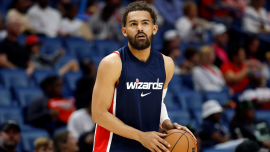
The basic concept of having Young around on a one-year prove-it deal made sense for Washington. He would have offered helpful offensive organization for a young team. But the offense will eventually need to revolve around Dybantsa and the young players, and Young has just never been much of an off-ball player. He has never taken more than two catch-and-shoot 3s per game, he has scored 106 points off of cuts in his entire career, and he's been, at times, the worst defensive player in basketball. The entire value proposition of employing Trae Young is letting him run pick-and-roll every time down the floor, and given his recent injury concerns and loss of burst, it's not even clear how effectively he'll be able to do that moving forward. This contract is going to become an albatross as he gets older and the young players need more usage.
They thankfully did not commit to a similar albatross in the form of an Anthony Davis extension, but just getting him with two years of supermax money remaining on his deal is a puzzler. By the time his contract expires, George and Alex Sarr will be on market-rate deals and most of their cap flexibility will be gone. Shouldn't they have used that flexibility on players or resources that figure to be more helpful down the line, when the recent draft picks are ready to win seriously? If there was an opportunity to cash out on Davis at a premium from one of the teams in the LeBron James derby -- and it's not clear there ever was -- then passing was a mistake.
In another era, the accumulation of young talent would be enough for a much higher ranking. In this one, managing resources and the cap means more than ever. That has been the area Washington has struggled with under Michael Winger and Will Dawkins.
20. Dallas Mavericks
February ranking: 27
Masai Ujiri's early Toronto tenure -- headlined by the first Leonard trade and 2019 championship -- is legendary. The end was far worse, with the Scottie Barnes draft pick standing out as his only major post-championship win. Letting Fred VanVleet walk for nothing was a mistake. The OG Anunoby trade is a borderline disaster that won the New York Knicks their championship, and Ujiri -- now running the show in Dallas -- compounded that mistake by overpaying Immanuel Quickley.
Ujiri clearly has a type. He's replicating his "what if everyone was 6-foot-9?" approach in Dallas, with his three biggest acquisitions for the Mavericks so far -- Zaccharie Risacher, Santi Aldama and Morez Johnson -- all falling in that basic height range. If you're going to stockpile at a specific position, forward is probably the place to do it, but at a certain point, it becomes overkill.
That's especially true on Cooper Flagg's roster, since he'll presumably be playing 35-40 minutes at one of the forward slots moving forward. Flagg's best position is probably going to be power forward. He's a better help-defender and rim-protector than he is a man-defender, yet he's probably going to have to be a small forward on this team. Remember, PJ Washington is still here and Ujiri also gave Naji Marshall an extension that frankly looks a bit rich. On paper, it's a questionable allocation of resources for a team that, thanks to Nico Harrison, doesn't have many to begin with.
Ujiri took over a team whose draft reserves were depleted by Harrison. Thus far, he's done little to replenish those reserves, and considering we're talking about the general manager who managed to trade OG Anunoby without getting a single first-round pick back, that's a concern. Kyrie Irving probably should have been traded by now, especially if there was a way for Dallas to leverage LeBron James' interest in reuniting with him into an overpay. Washington and Daniel Gafford should get moved as well. If Ujiri is hoping to juice their value with a strong month or two of basketball, fine. If he's just holding onto Harrison's contracts, that's a mistake.
Hiring Mike Schmitz as his general manager suggests that Ujiri really does plan to prioritize the draft. Schmitz made his name as a draft analyst for ESPN. He is most known at this point for Portland's pursuit of Yang Hansen, even getting suspended for two weeks for illegally contacting him before he was draft-eligible. That pick has not yet borne fruit, but other acquisitions he influenced in Portland, most notably Deni Avdija, have fared better.
Dallas should have two goals right now. The first is stockpiling picks to use on players in Flagg's age range. The second is preserving cap flexibility during Flagg's rookie deal, as he will presumably be a pretty effective recruiting tool. Thus far, the Mavericks aren't off to a great start on either front, though it's way too early too say anything definitively, and the younger players they've added certainly have upside. Ultimately, though, the question here is whether Ujiri is leaning a bit too heavily into the approach that stopped working by the end in Toronto.
19. Toronto Raptors
February ranking: 23
The Collin Murray-Boyles draft pick looks like a home run a year in, and it was a bit of a surprise in the moment. Not a single mock draft chosen for the NBA.com consensus list on draft day had Murray-Boyles going higher than No. 11, but he was frankly underdrafted at No. 9. Of course, it's not fully clear who made the call on that draft pick. Ujiri was technically fired one day after the 2025 NBA Draft.
Toronto's major problem over the last few years has been the accumulation of irresponsible contracts. Ujiri acquired or signed most of them, but the Jakob Poeltl deal was an unforced error on Bobby Webster's part. Yes, he could have become a free agent in 2026 through his player option, but even if he had, they would have had full Bird Rights in a low-cap space environment to retain him. That should not have created enough pressure to pay a declining center $28 million per year from his age-32 through age-34 seasons. He might not be worth half of that right now.
It's fair to question how they handled the initial Kawhi Leonard negotiation as well. Leonard was reportedly only willing to extend with the Raptors or the San Antonio Spurs, and nothing indicated that San Antonio was interested. To give up probably the two best first-round picks they had, plus a swap for a 35-year-old with his injury concerns was probably an overpay. This isn't a criticism of the decision to pursue Leonard. I advocated for that the moment Toronto was eliminated from the playoffs. But they had the leverage and still wound up paying a premium (assuming the deal goes through).
We're still dealing with a relatively small sample here. Webster has only been at the helm for a year, but he was also an internal promotion who played a part in some of the more questionable decisions of Ujiri's later tenure. We'll assign credit for the Murray-Boyles pick since Webster was an internal promotion, but we'll have to see how this new Raptors braintrust navigates those big role player contracts and its presumed ascension to contention around Leonard to really evaluate it any further.
18. Golden State Warriors
February ranking: 17
As frustrated as Warriors fans are with this offseason's inaction, Golden State's front office was absolutely correct not to make a big splash. There is no combination of players available with the resources at their disposal that could have made them championship contenders. The core is too old for a league this physically demanding. Letting Stephen Curry close his career on a competitive team would be nice. Sacrificing potential championship equity later for no championship equity now would be patently irresponsible.
I'm not even sure there's a specific move they should have made earlier, when Curry had a longer runway. Meeting Danny Ainge's absurd Lauri Markkanen price probably ends badly. Could they have blown the Raptors away for OG Anunoby or Pascal Siakam? Maybe, but Masai Ujiri seemingly wanted specific players for Anunoby that the Raptors did not employ, and Siakam's poor shooting in the end with the Raptors made him a questionable fit with Draymond Green. They tried to get Kevin Durant, and he said no. Jimmy Butler was great until he got hurt. I can get behind the vague sense that the Warriors should have been more aggressive in 2023 and 2024, but it's not as though there was a single, obvious inflection point they missed.
Still, the two-timelines plan was a bad idea in general, and it was executed poorly. What's fascinating about it in hindsight is the sort of players they drafted. They won a championship with cerebral, skill-based basketball, yet at the first possible moment, they jumped to choose athletic specimens James Wiseman (over Tyrese Haliburton) and Jonathan Kuminga (over Franz Wagner). It's as if they were intentionally trying to defy their own success rather than building upon it. They certainly should have traded Kuminga earlier, especially if the rumors about an Alex Caruso swap were ever true.
Several reports have suggested that Joe Lacob was the driving force behind keeping Kuminga as long as they did, and there has even been some suggestion that he is focused on building the post-Curry team. Even if that's the responsible choice, having an owner this involved in basketball matters is concerning. It's never quite clear from the outside who is making decisions here. There's been a ton of brain drain since the glory days. Jerry West is obviously gone, and Bob Myers is in Philadelphia.
I'm sympathetic to the unique constraints Mike Dunleavy Jr. is working under. Juggling the appearance of prioritizing Curry's future and the reality of preparing for Golden State's post-Curry future is no easy feat. But aside from the Butler trade, he has little to hang his hat on at this point. The declining big names he's added, like Al Horford and Kristaps Porziņģis, have been stylistic fits who have predictably missed time. The Dennis Schröder trade was a miss, and while Brandin Podziemski is a fine player, those All-Star hopes Golden State once harbored should be dashed by now. Ultimately, the Warriors are operating like a franchise waiting for Curry to retire or ask for a trade. This is a hard front office to judge until it can actually try to execute the rebuild it has been waiting for.

17. Los Angeles Clippers
February ranking: 18
For the second consecutive set of Front Office Rankings, I have elected to pretend the Aspiration scandal does not exist. It will be addressed in future editions when the matter is settled.
I'm somewhat uneasy referring to Steve Ballmer's money as a competitive advantage in light of the Aspiration investigation... but it is one. The Clippers invest every imaginable resource into winning basketball games. What the Clippers tend to get right is big-picture strategy. They were widely criticized for letting Paul George walk for nothing, but that turned out to be the correct decision. George's contract would have been bad in any CBA environment, but they were early adapters to this especially restricting one.
They pulled the rip cord on their current era at the right time, getting great returns for James Harden, Ivica Zubac and Kawhi Leonard. They lost the George trade negotiations in historic fashion, but ever since, they've negotiated trades very well. Getting a top-five pick for a non-All-Star is great business. Turning a 36-year-old All-Star into a 26-year-old All-Star is a big win. Leonard was reportedly only willing to extend with two teams, and the Clippers still convinced one of them to give up multiple unprotected picks deep in the future.
Even if the big picture ideas are sound, the problems tend to arise when it comes to actually picking the correct players. The two best players Lawrence Frank has drafted, Shai Gilgeous-Alexander and Moussa Diabaté, play for different teams. Terance Mann is the only homegrown player to really contribute to winning for the Clippers since this era began. Otherwise, even in the context of their limited draft capital, they just haven't really developed any notable youth. Keaton Wagler will be very instructive here as the first lottery pick this front office has had since 2018, and in fairness, Yanic Konan Niederhauser showed promise before getting hurt a year ago.
Swapping out Norman Powell essentially for John Collins and Bradley Beal last year made sense on paper, but it went disastrously. Powell was an All-Star. Beal played six terrible games. Collins was unspectacular. They tend to overvalue declining, big-name players Last year's roster had five former All-Stars in that range, and that's been a pretty persistent trend, especially at point guard with players like Ben Simmons, Russell Westbrook and Rajon Rondo. They love taking swings on former high draft picks with character concerns, and while Kevin Porter Jr., Kai Jones and Josh Primo had mostly uneventful tenures for them, their presence makes you wonder if the organization is putting enough emphasis on culture. All in all, it's at best a mixed bag.

16. Brooklyn Nets
February ranking: 15
Brooklyn's front office probably faces the biggest disparity between perception and reality of any in basketball. The prevailing narrative surrounding the Nets is that they've been poorly run and their outlook is bleak. True, they haven't yet found any truly foundational players, but they have a clean cap sheet and a six-pick first-round draft surplus (not including swaps, though in fairness they owe their 2027 swap to the Houston Rockets). The reality is that this is a pretty promising blank slate if you're willing to take the long view.
No front office has been unluckier than Brooklyn's. The Nets built a championship favorite that was ruined by a pandemic. They spent two years tanking and wound up with the No. 6 and 8 picks. How differently do we feel about the Nets if they had wound up with, say, Darryn Peterson and Ace Bailey out of that tank? Or AJ Dybantsa and Tre Johnson? We're not in the business of blaming teams for poor lottery results.
When the Nets sell veterans, they almost always do so at the peak of their value. They got four first-round picks and one first-round swap for Kevin Durant. Then they took Mikal Bridges, the primary player value from the Durant trade, and turned him into five picks and a swap. The other main player from that trade, Cam Johnson, was flipped for a better player, Michael Porter Jr., and an unprotected 2032 first-round pick. The Nets are as good at leveraging contenders into overpaying for their players as any team in the NBA.
Now, they're still in the bottom half of these rankings. The Nets are way better than they get credit for, but that doesn't mean they're perfect. They banked so much of their future on landing a cornerstone in either the 2025 or 2026 drafts. They didn't get a top-five pick, and it just isn't clear what their new plan is. That's a bit of a problem in light of how baffling components on their last two offseasons have been.
The degree of disaster represented by their five first-round picks last season is certainly overstated. Egor Dëmin would go behind Collin Murray-Boyles and Cedric Coward in a redraft, but he looks like a starter. The other first-round picks were between No. 19 and No. 27, all of which come with relatively low hit rates, and it's too soon to call any of them busts after just a single season. Still, spending that many picks in the same draft on on-ball players was puzzling. The Nets didn't exactly put them in a position to succeed.
The Julius Randle addition makes no sense. He's an expensive floor-raiser in his 30s. The Nets don't need their floor raised. They don't control their own pick this year, so the relegation zone isn't a concern. He overlaps positionally with Porter Jr. (whom they have neither traded nor extended, strangely). He'll take the ball out of the hands of their many young players who need it.
There was no reason for them to give mutual options to Mo Wagner and Keon Ellis. They had more than enough cap space to just pay them more and get team options. Why didn't they use their surplus cap space to try to steal a restricted free agent? This offseason made little sense. The strategy here is unclear. The Nets have gotten far more right than they're credited for, but they'll have to chart a clearer course moving forward if they want to make it into the top half of these rankings.
NBA Front Office Rankings (Part 1): The 15 best front offices in the league
Add CBS Sports on Google Join the Conversation comments