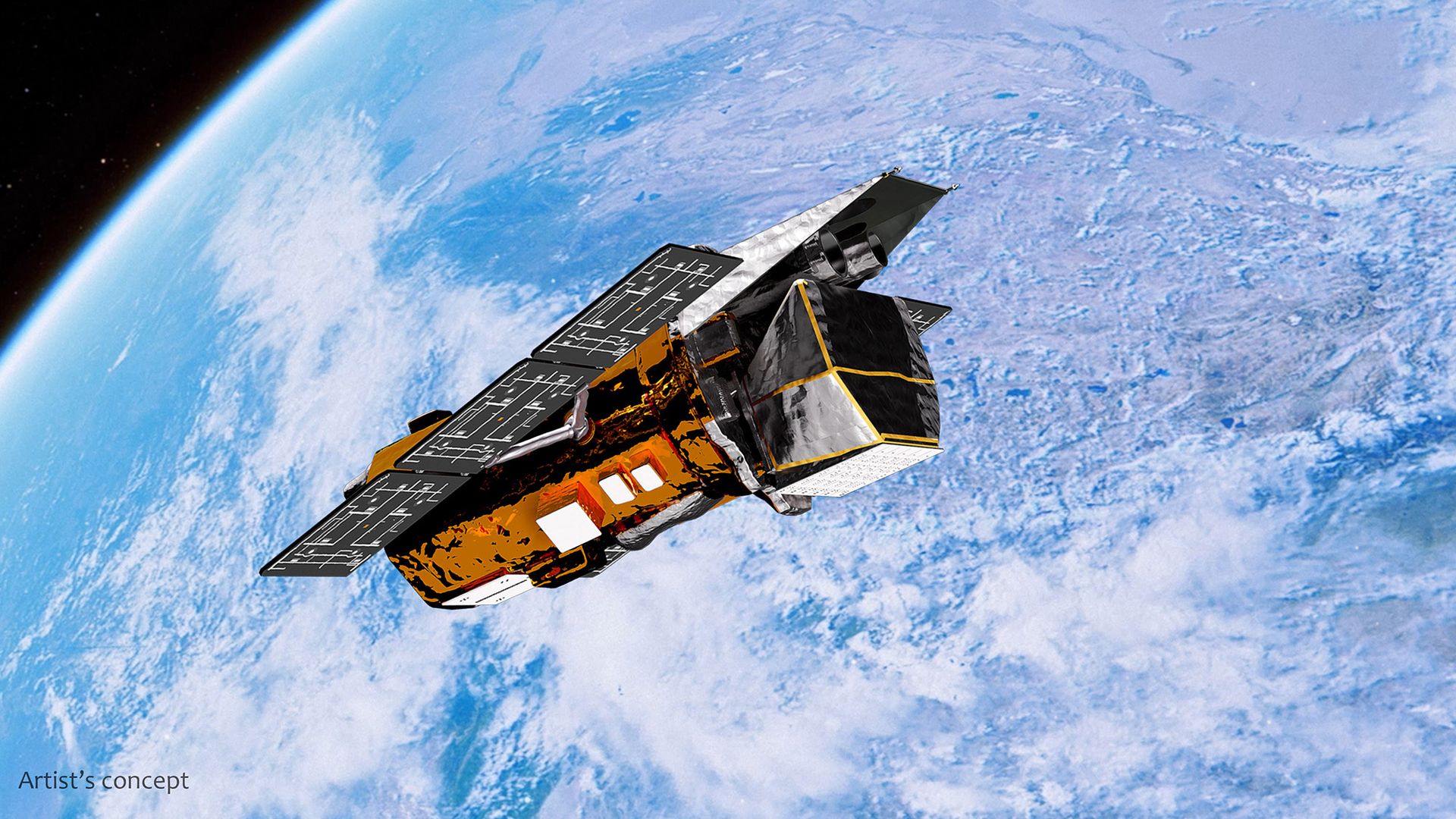
A pioneering NASA space telescope is no more. In sad news for Swifties everywhere, the Neil Gehrels Swift Observatory has officially ended its mission after more than 20 years of tracking the most powerful explosions in the universe since the Big Bang.
According to a NASA announcement, the Swift team shut down the telescope's science operations Tuesday (Oct. 20) after the observatory fell too low in its orbit to continue taking reliable measurements of the cosmos. In the coming weeks, Swift will drop even further, eventually passing a point of no return and taking a fiery plunge through Earth's atmosphere.
The observatory is the latest victim of intense solar activity, which increases the drag on satellites in Earth orbit and makes it harder for spacecraft to stay aloft. Swift has been losing altitude for a while, but the final straw came in August, when a costly mission to boost Swift's orbit with a private spacecraft failed, ending with the would-be rescue craft burning up in the atmosphere after a series of hardware malfunctions.
Swift is now beyond saving and, orbiting at just 171 miles (275 kilometers) above Earth, can no longer take reliable observations of space. NASA expects the spacecraft to break up upon reentry "in the next few weeks."
NASA knew Swift was in trouble when it went in; soon, it'll be lying on the cold hard ground. However, the Swift mission surpassed its goals by decades. According to NASA, the satellite launched in November 2004 on a primary mission intended to last just two years. In the end, Swift survived for 22 years, surpassing its intended lifespan by more than 10 times.
In that time, Swift made thousands of observations of exploding supernovas, intense gamma-ray bursts, and black-hole-related episodes of stellar destruction, contributing data to about 7,000 scientific papers, according to NASA.
An illustration of a stellar 'mega-flare' detected by Swift. The observatory excelled at catching powerful, fast-acting cosmic events. (Image credit: NASA Goddard)Related stories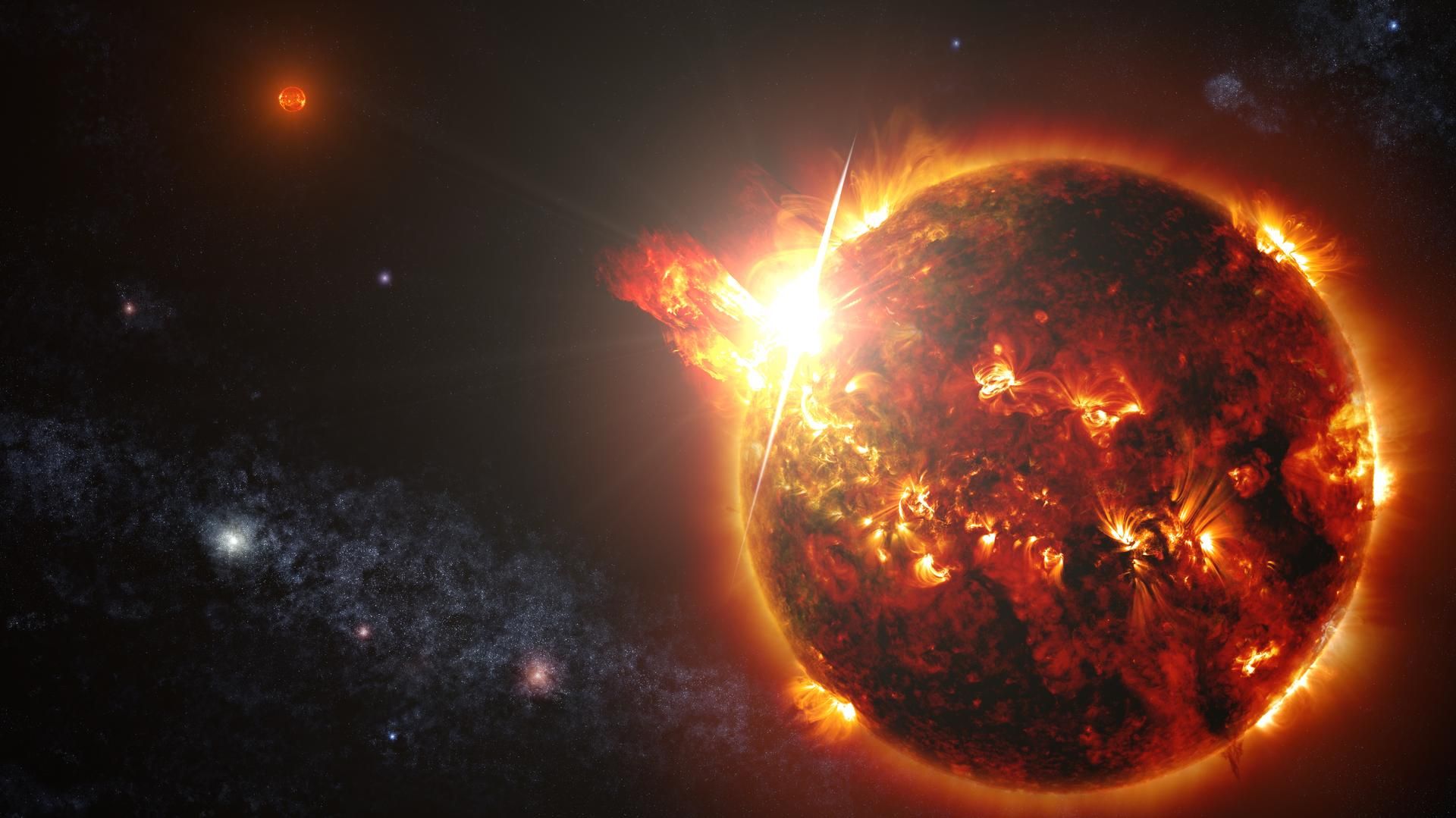
- Gamma-ray bursts reveal largest structure in the universe is bigger and closer to Earth than we knew: 'The jury is still out on what it all means.'
- Did a NASA telescope really 'see' dark matter? Strange gamma-rays spark bold claims, but scientists urge caution
- Brightest gamma-ray burst ever detected defies explanation
Designed as a multiwavelength observatory, Swift watched the sky in optical, ultraviolet and X-ray light that made it well suited to track the aftermath of powerful energy bursts. Its greatest asset, perhaps, was its rapid response time; if an explosion flashed somewhere in the sky, engineers could swivel Swift to study it within minutes, NASA said.
"Swift was designed as a satellite dedicated to studying gamma-ray bursts, outbursts that came and went so quickly that no one could target them with large telescopes to learn more," S. Bradley Cenko, the mission's principal investigator at NASA's Goddard Space Flight Center, said in the statement.
Swift's fast-acting observations "played a major role in advancing our understanding of the changing universe and was part of a revolution in astrophysics," added Shawn Domagal-Goldman, director of the Astrophysics Division at NASA headquarters.