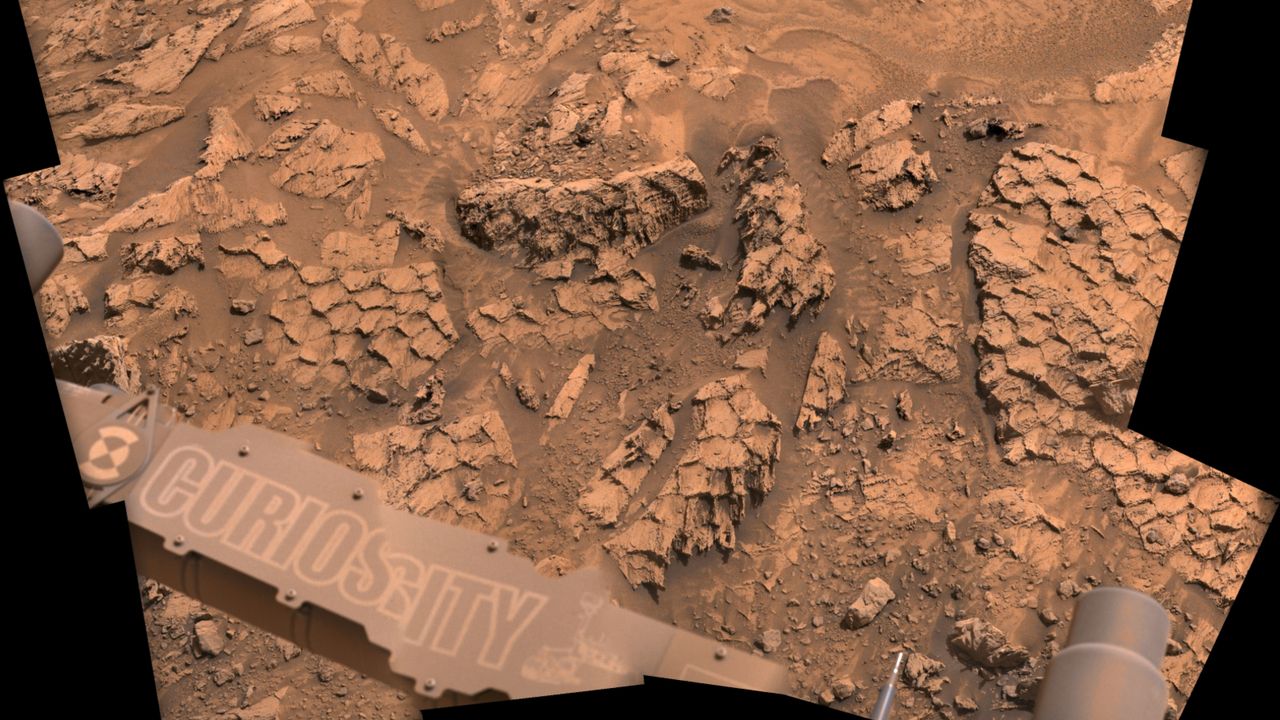
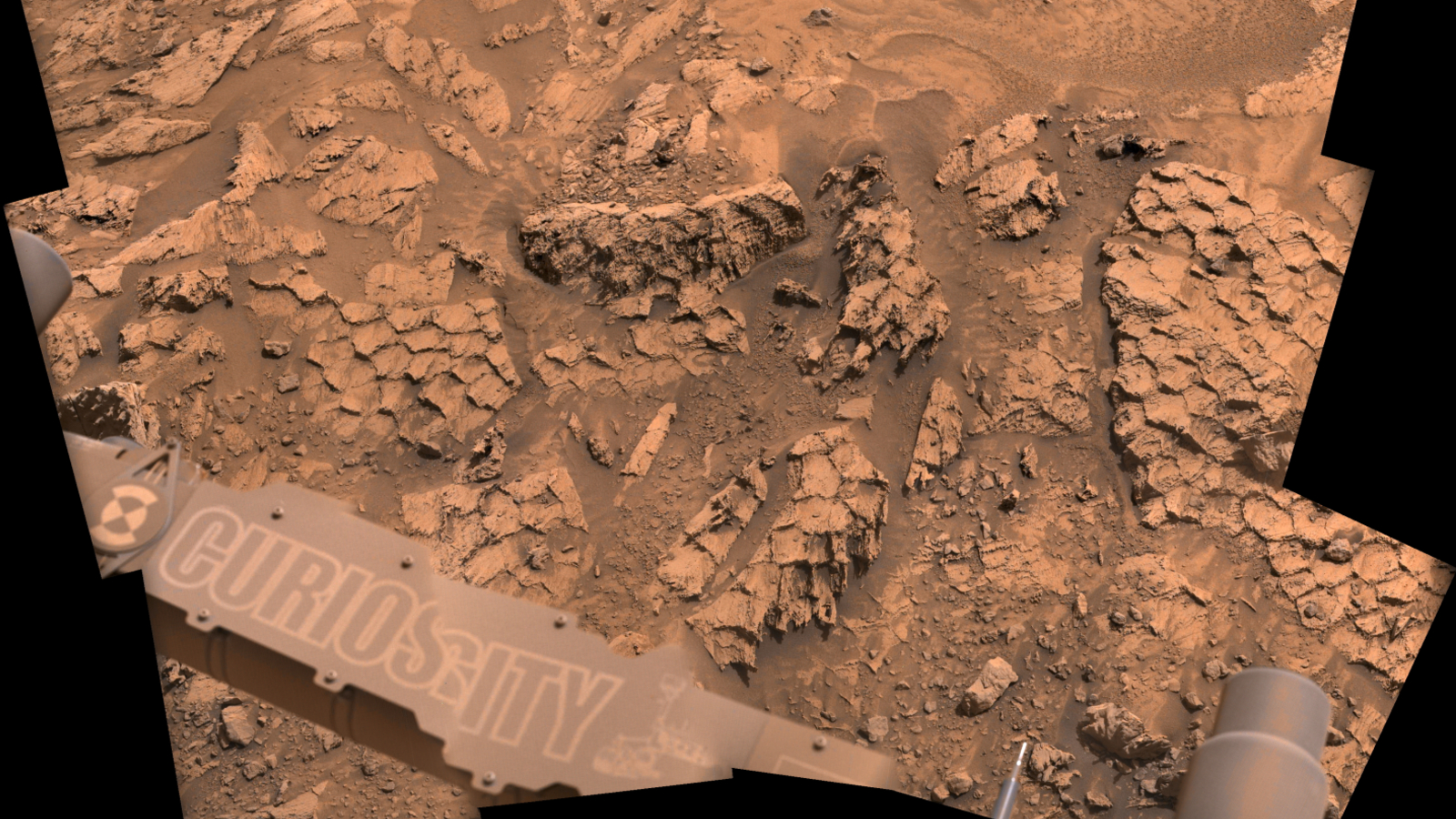
 Dozens of polygon-covered rocks, which look suspiciously like clumps of fossilized "scales" from a monstrously large reptile, surround the surface of Mars near Antofagasta in the Gale crater. (Image credit: NASA/JPL-Caltech/MSSS/Kevin M. Gill) Share this article 0 Join the conversation Follow us Add us as a preferred source on Google Newsletter Sign up for the Live Science daily newsletter now
 Get the world’s most fascinating discoveries delivered straight to your inbox.
Become a Member in Seconds
Unlock instant access to exclusive member features.
Contact me with news and offers from other Future brands Receive email from us on behalf of our trusted partners or sponsors By submitting your information you agree to the Terms & Conditions and Privacy Policy and are aged 16 or over.You are now subscribed
Your newsletter sign-up was successful
Want to add more newsletters?
Join the club
Get full access to premium articles, exclusive features and a growing list of member rewards.
Explore An account already exists for this email address, please log in. Subscribe to our newsletterA section of Mars is covered in a surprising number of features that look like clumps of giant, fossilized reptile scales, new photos reveal. But don't be alarmed — the strange structures did not originate from monstrous aliens. Instead, they may have ties to ancient water.
NASA's Curiosity rover snapped the photos of the peculiar rocks as it was driving toward Antofagasta — a relatively young, 33-foot-wide (10 meters) impact crater located on the slopes of Mount Sharp (also called Aeolis Mons), which stands in the larger Gale crater, near Mars' equator.
A pair of black-and-white photos of the "scales" was released by NASA April 14, while a close-up color image of the rocks was shared online the next day by Kevin M. Gill, a software and spaceflight engineer at NASA's Jet Propulsion Laboratory (JPL) who specializes in image processing. (The pics were captured April 7 and April 13, respectively — also called Sol 4859 and Sol 4865 in Martian time.)
The unusual shape and tight clustering of these rocks have drawn comparisons to the scales of reptiles such as crocodilians, while some commenters joked that the formations look dragon-like.
It is currently unclear how many of the scale-like rocks were photographed or how large they are, but they stretched across the ground "for meters and meters," according to an April 10 NASA blog post.
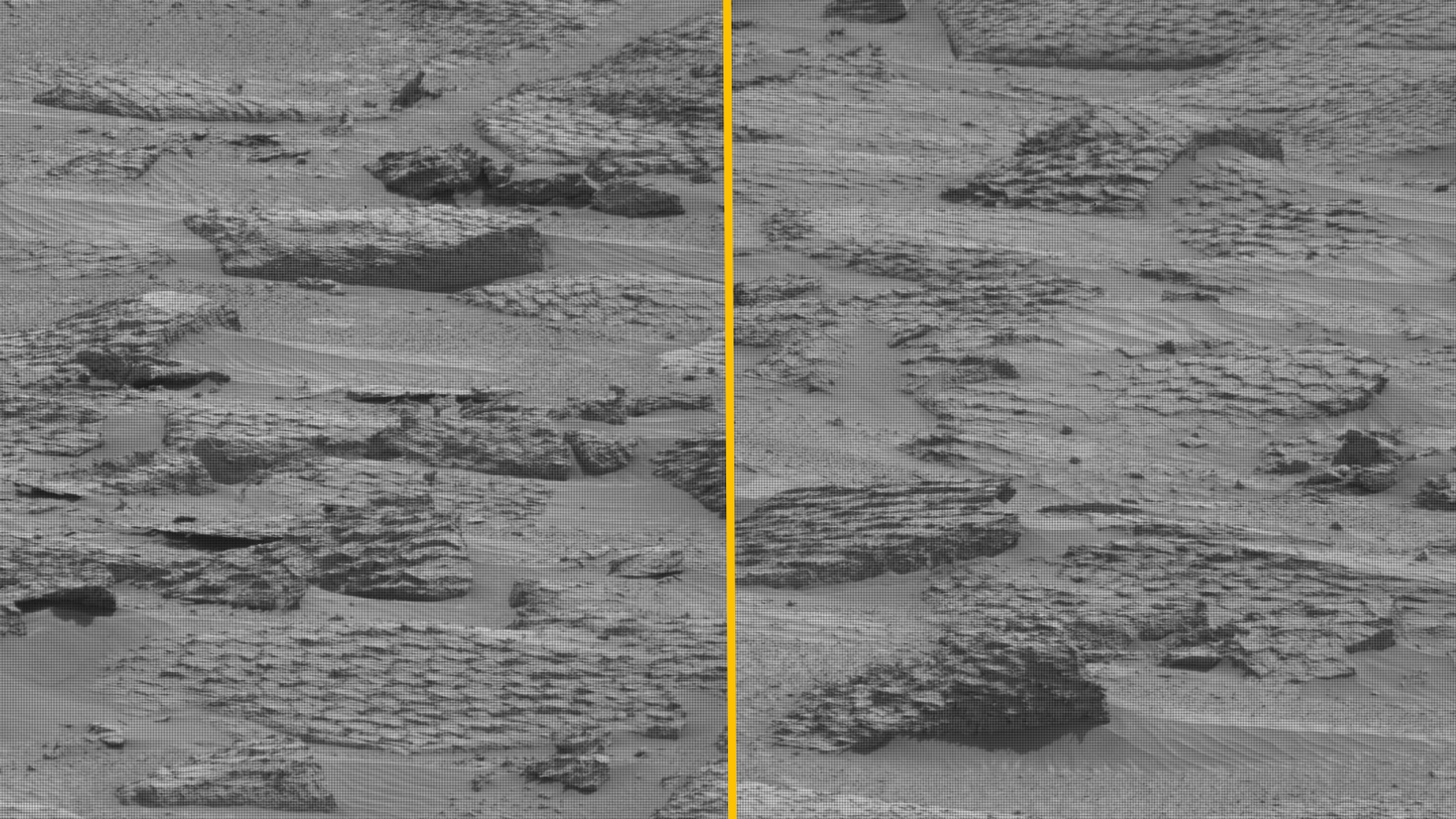
Although the researchers were not shocked to see these multifaced rocks, or "polygons," they were surprised by the sheer quantity of them in the area.
"Many of the rocks we've driven over have these incredible textures — thousands of honeycomb-shaped polygons crisscross their surface," Abigail Fraeman, a planetary scientist at JPL, wrote in the blog post. "We've seen polygon-patterned rocks like these before, but they didn't seem quite this dramatically abundant."
Sign up for the Live Science daily newsletter nowContact me with news and offers from other Future brandsReceive email from us on behalf of our trusted partners or sponsorsPolygons with a similar honeycomb-like shape have been seen before on Mars on both smaller and larger scales. In these past instances, the shapes were often tied to the drying of wet mud or ice crystals moving beneath the Martian surface. However, it is too early for scientists to tell exactly how the latest shapes formed.
Curiosity has collected "lots of images and chemical data that will help us distinguish between different hypotheses for how the honeycomb textures formed," Fraeman said.
Animal impostors
Before reaching Antofagasta, Curiosity spent the better part of a year studying a series of rocky ridges on Mount Sharp dubbed "boxwork." These features are also known as Martian "spiderwebs" because of how they zigzag across the ground, and the wandering robot recently spotted tiny, egg-like spheroids stuck to their sides. (The "webs" should not be confused with the infamous "Spiders on Mars," which are dark, arachnid-like features that litter the planet's surface.)
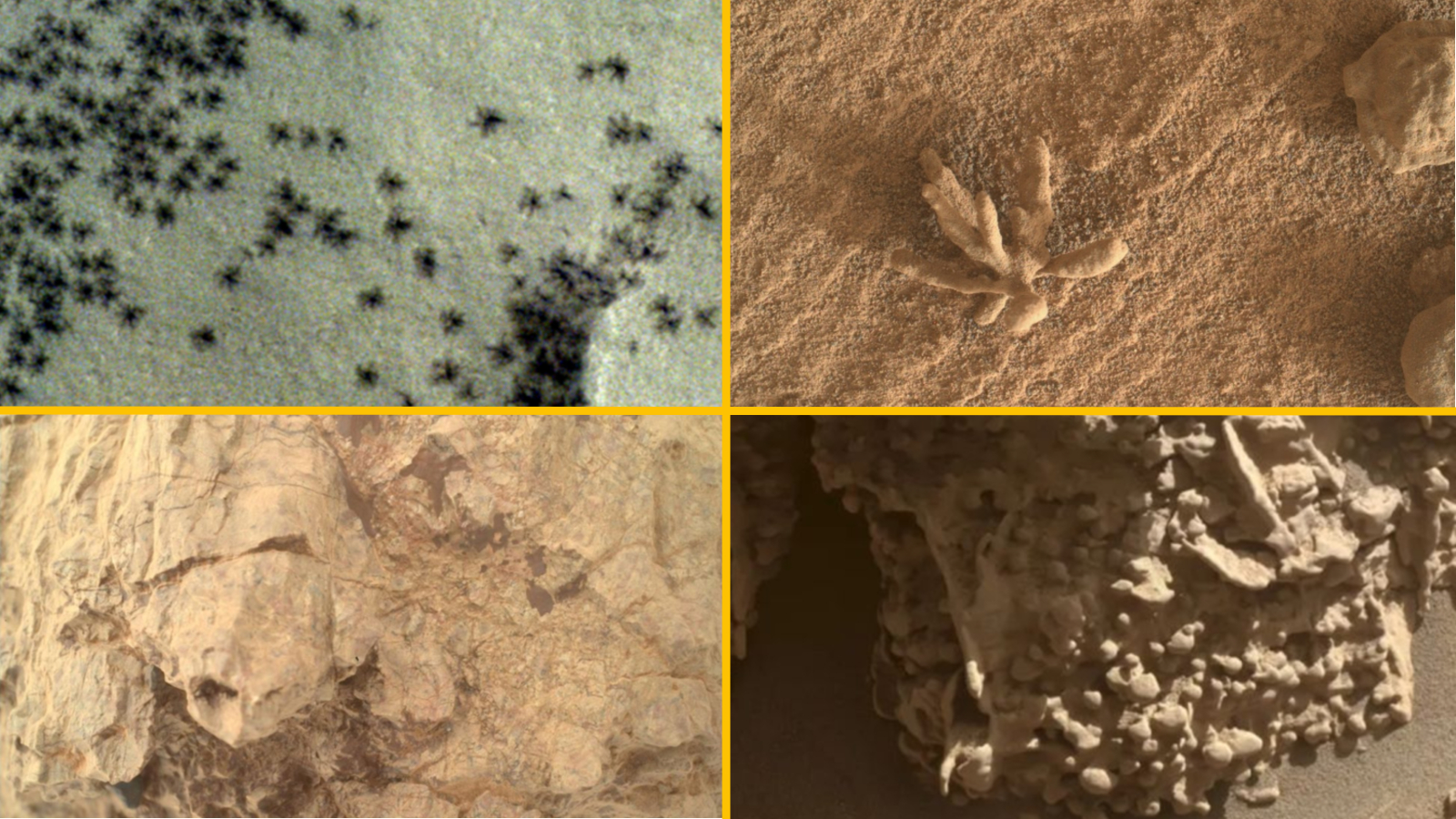
Since landing on the Red Planet in 2012, the rover has also snapped a series of other objects that look suspiciously animal-like, including a surprisingly realistic coral-like rock formation.
RELATED STORIES- A giant 'shadow' has been creeping across Mars for 50 years — and scientists aren't sure why
- Dozens of mysterious blobs discovered inside Mars may be the remnants of 'failed planets'
- 2 million black 'streaks' on Mars finally have an explanation, solving 50-year mystery
NASA's other Mars rover, Perseverance, has also seen its fair share of faux creatures since touching down in 2021, including a statuesque "turtle" poking its head out of a shell. And the fleet of spacecraft orbiting Mars has spied other unusual entities, including a "butterfly" crater and a Martian "dog" buried beneath the planet's north pole.
Most of these animal associations are the result of a phenomenon known as pareidolia, which is when the human brain sees or hears something significant in a random image or pattern.
Mars quiz: Is your knowledge of the Red Planet out of this world?
 Harry BakerSenior Staff Writer
Harry is a U.K.-based senior staff writer at Live Science. He studied marine biology at the University of Exeter before training to become a journalist. He covers a wide range of topics including space exploration, planetary science, space weather, climate change, animal behavior and paleontology. His recent work on the solar maximum won "best space submission" at the 2024 Aerospace Media Awards and was shortlisted in the "top scoop" category at the NCTJ Awards for Excellence in 2023. He also writes Live Science's weekly Earth from space series.
View MoreYou must confirm your public display name before commenting
Please logout and then login again, you will then be prompted to enter your display name.
Logout LATEST ARTICLES 1Earth quiz: What do you know about our planet's most amazing features?
- 2Diagnostic dilemma: A teen's classic diabetes symptoms didn't improve with treatment — revealing she also had a much rarer syndrome
- 3NASA shuts off another Voyager 1 instrument as humanity's most distant spacecraft prepares for risky 'Big Bang' maneuver to save power
- 4Florida is facing its most intense drought in 15 years. Here's how it got so bad and how long it will last.
- 5Neanderthal toddlers grew faster than modern humans, probably because of the harsh environment they evolved in