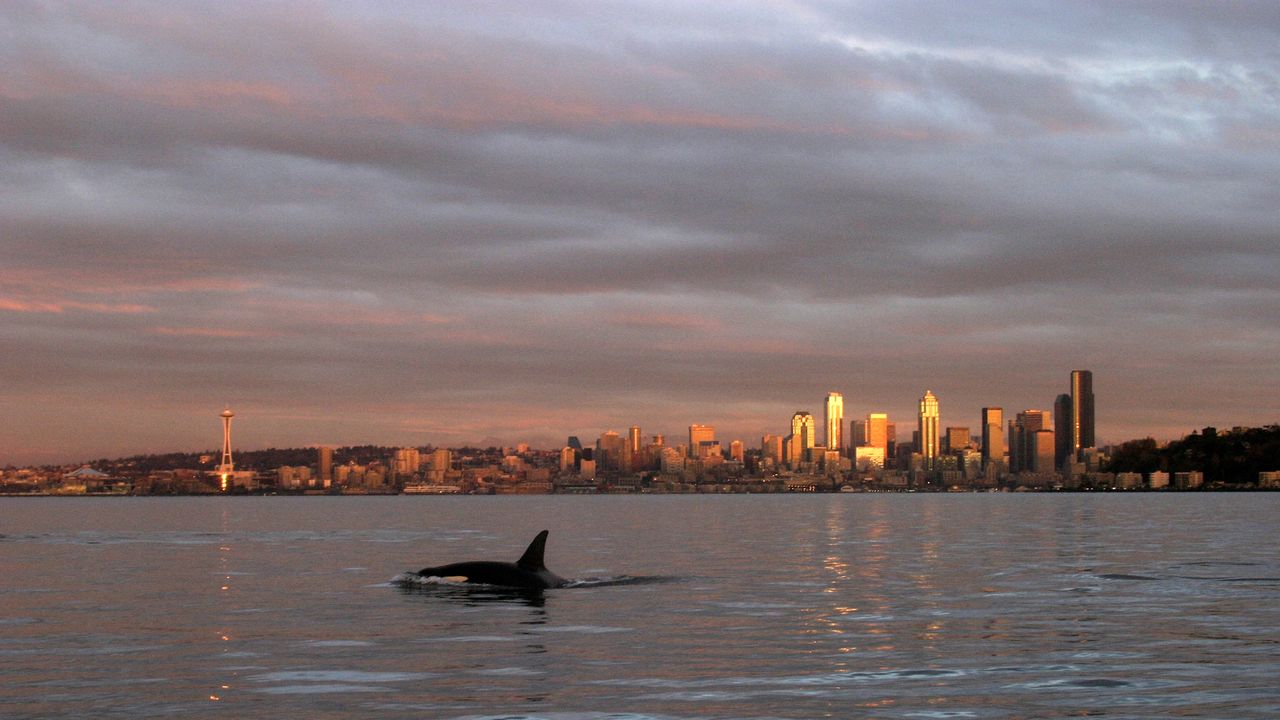
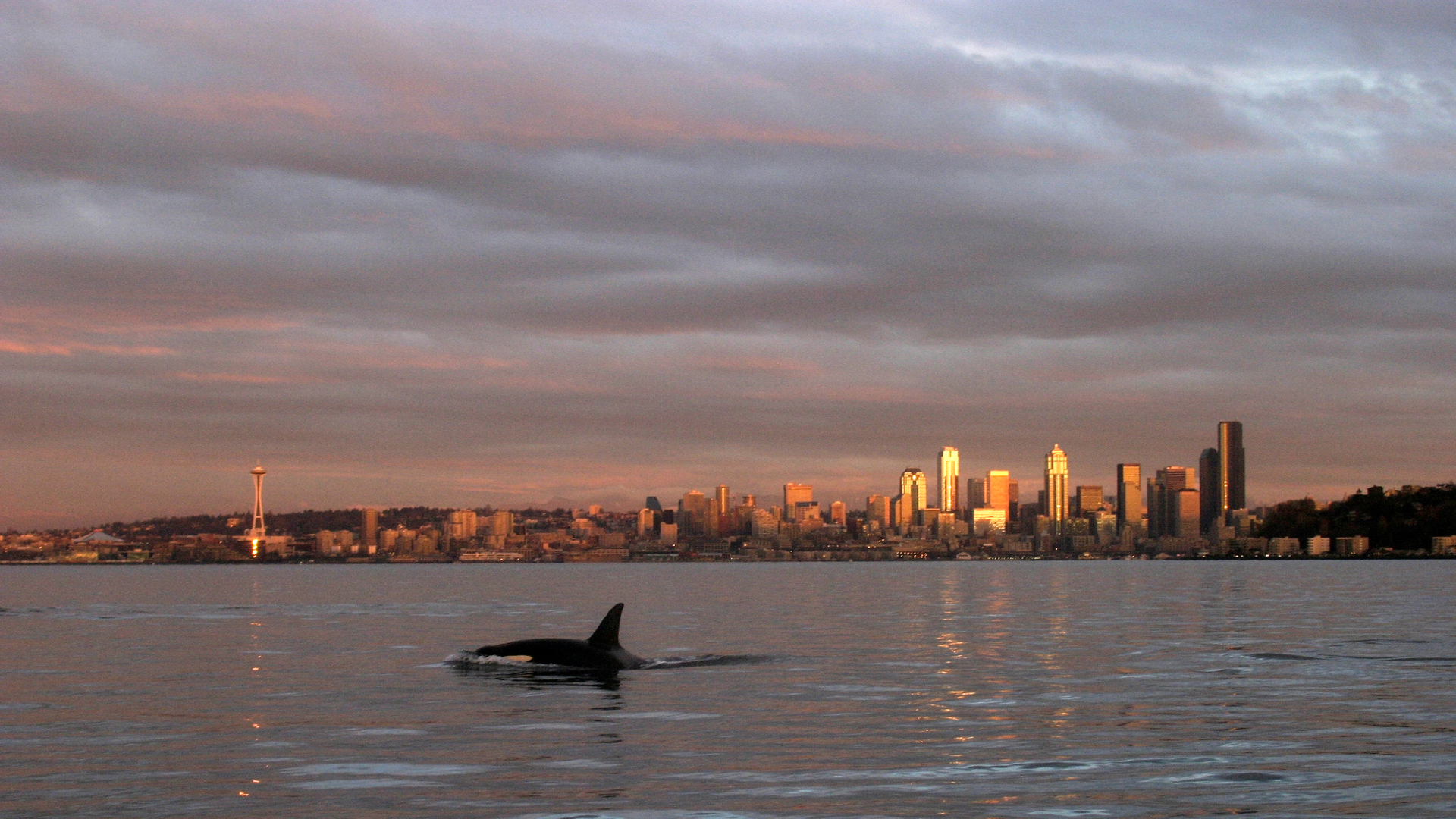
 An orca is seen in Elliot Bay near the Seattle skyline. (Image credit: Joel Rogers via Getty Images) Share this article 0 Join the conversation Follow us Add us as a preferred source on Google Newsletter Sign up for the Live Science daily newsletter now
 Get the world’s most fascinating discoveries delivered straight to your inbox.
Become a Member in Seconds
Unlock instant access to exclusive member features.
Contact me with news and offers from other Future brands Receive email from us on behalf of our trusted partners or sponsors By submitting your information you agree to the Terms & Conditions and Privacy Policy and are aged 16 or over.You are now subscribed
Your newsletter sign-up was successful
Want to add more newsletters?
Join the club
Get full access to premium articles, exclusive features and a growing list of member rewards.
Explore An account already exists for this email address, please log in. Subscribe to our newsletterScientists are scratching their heads over why three mammal-eating orcas turned up in Seattle waters in March, having apparently traveled 1,500 to 2,000 miles (2,400 to 3,200 kilometers) south from Alaska.
"It's extremely rare to have previously undocumented killer whales show up in local waters, so it's been very exciting to see them, and right now we have more questions than answers," Monika Wieland Shields, the director of the Orca Behavioral Institute, a Seattle-based non-profit research organization, told Live Science in an email.
Killer whales (Orcinus orca) tend to travel within established ranges and return to the same areas and hunting grounds over years and even generations. If these orcas are in fact well outside their usual range, their presence could signal that something has shifted in prey availability, ocean conditions or the whales' own behavior.
"We really have no idea what compels an individual whale to travel outside of their regular territory!" Wieland Shields said. "Thanks to decades of research and the ability to identify individual whales through photo ID, we know all of the individuals and families that regularly visit this region, including their approximate ages and family relationships. … Without this work, we wouldn't even know that these new visitors are unusual!"
A shift in whale populations
Two types of orca subspecies live in the Salish Sea between Washington and Canada: endangered fish-eating Southern resident killer whales and mammal-eating Bigg's killer whales.
These groups' range have changed dramatically over the past few years as a result of shifts in food availability, Wieland Shields said.
Sign up for the Live Science daily newsletter nowContact me with news and offers from other Future brandsReceive email from us on behalf of our trusted partners or sponsors"The Southern Residents no longer have abundant, reliable wild salmon to feed on here, so they've shifted their travel patterns elsewhere," Wieland Shields said. "Bigg's killer whales are here in ever-increasing numbers because the populations of their primary prey in the region — harbor seals, harbor porpoise[s] and Steller sea lions — are all booming."
RELATED STORIES- Incredible, first-of-their-kind images show an orca being born in Norway — and the rest of its pod forming a protective circle
- Chewed-up orca fins on Russian beach point to cannibalism, and scientists say it may explain why some pods are so tight-knit
- Orcas are adopting terrifying new behaviors. Are they getting smarter?
Experts think this could be why the new pod, identified as Bigg's killer whales, is so far south.
"I am inclined to agree with a report that they may be following some food options," Heather Hill, a psychologist focusing on marine mammal behavior at St. Mary's University in San Antonio, told Live Science in an email. "They can be indicators of [the] health of an area — the whole food chain idea. Studying the different pods also helps us understand their social dynamics, such as how they share the same space with other transients or residents."
For Seattle-based Wieland Shields, the pod's arrival raises many more questions. "Until we have further acoustic and/or genetic evidence, we don't know exactly which population they are from, and we have no idea how long they will stay."
Think you know your orcas? Test your knowledge with our orca quiz!
 Kenna Hughes-CastleberryContent Manager, Live Science
Kenna Hughes-Castleberry is the Content Manager at Live Science. Formerly, she was the Content Manager at Space.com and before that the Science Communicator at JILA, a physics research institute. Kenna is also a book author, with her upcoming book 'Octopus X' scheduled for release in spring of 2027. Her beats include physics, health, environmental science, technology, AI, animal intelligence, corvids, and cephalopods.
View MoreYou must confirm your public display name before commenting
Please logout and then login again, you will then be prompted to enter your display name.
Logout LATEST ARTICLES 1Changing 'just one DNA letter' in female mice triggers growth of male genitalia
- 2Aoshima: Japan's tiny 'Cat Island' where felines hugely outnumber humans
- 3Artemis II returns LIVE: NASA prepares for Artemis II crew's perilous return to Earth at record-breaking speeds
- 4AI war games almost always escalate to nuclear strikes, simulation shows
- 5Ancient Korean society practiced human sacrifice and high inbreeding, researchers find