The calendar has flipped to June and the All-Star break is only a month away. The trade deadline is less than two months away. We're into the meat of the baseball season now, when things become real and we find out which teams are really contenders and which teams are just pretenders that had a hot start. The season is fully coming into focus.
With that in mind, here are three trends worth knowing about as we enter the season's third month.

Boston's home woes
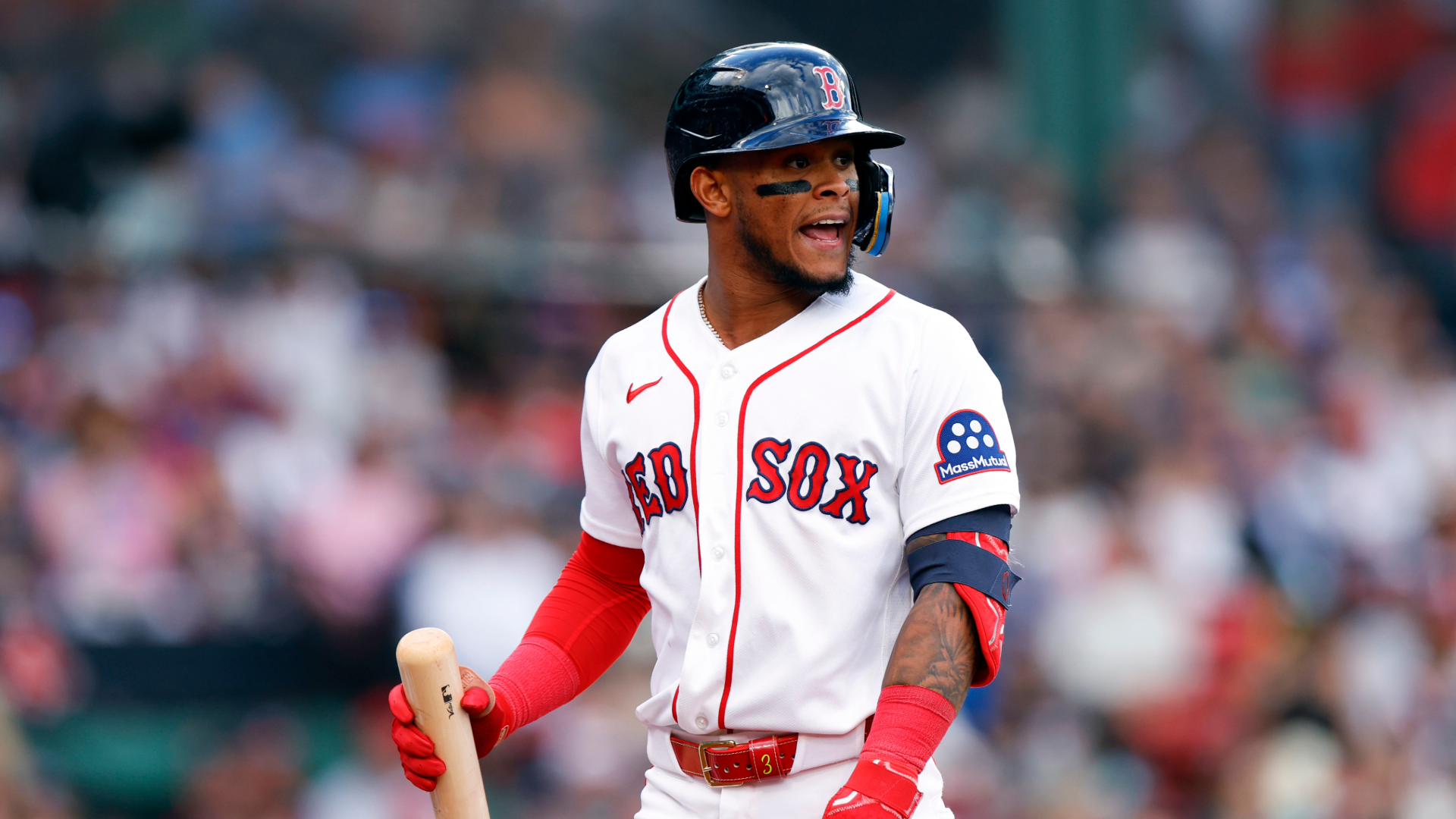
More than two months into the season, the Red Sox remain in the AL East cellar and they've won more than two games in a row just once in the last month. That was a three-game sweep against the Royals, a last-place team with the American League's second-worst run differential. Mostly because they lack power and lineup depth, the Red Sox have been unable to put together any sort of extended winning stretch.
It is no surprise that Royals sweep came in Kansas City, not at Fenway Park. Entering play Tuesday, the Red Sox had baseball's worst record (10-21) and sixth-worst run differential (-27) at home this season. Only the Rockies (-60), Athletics (-56), Angels (-38), Reds (-31), and Giants (-30) have been outscored by more runs at home. Not the best company to keep, Red Sox.
"This is just the normal play-at-Fenway thing. It's the same story over and over again. Sick of it. And I think everybody in here is sick of it. We've got to find a way to be better," Isiah Kiner-Falefa told the Boston Globe about the team's home problems earlier this month. "... It's just a different vibe at home. We've got to figure out a way to make it small like how it is on the road. We were becoming a really close team and we've got to find a way to bring that back home."
Boston started 9-20 at home, the franchise's worst record through 29 home games since 1932. Here are the Red Sox's ranks at home and also a comparison to their road numbers:
Red Sox at homeMLB rankRed Sox on roadRuns scored per game
3.29
30th
4.48
Runs allowed per game
4.10
19th
4.06
tOPS+ (hitters)
94
26th
105
tOPS+ (pitchers)
98
14th
103
tOPS+ compares players and teams to themselves, not the rest of the league like regular old OPS+. Red Sox hitters having a 94 tOPS+ at home means they have been 6% worse at home (park-adjusted) than they are overall, and a 105 tOPS+ on the road means their hitters have been 5% better on the road than they are overall.
The run prevention is more or less even. The offense is the problem. The Red Sox struggle to put runs on the board at Fenway Park, even though it is one of the most unique and hitter-friendly parks in baseball. The Green Monster turns fly outs into doubles and the short wall in right field creates a lot of ground rule doubles. It's a great place to hit, but not for the Red Sox in 2026.
Boston has pitched well this season, or at least well enough to contend in the watered-down American League. The offense is well short of what you need to reach the postseason, though, and that is especially true at home. Opposing teams should dread going into Fenway Park. It should be a nightmare and has been for most of its history. This year, it's a nightmare for the Red Sox themselves.
The hidden cost of the Patrick Bailey trade

 Patrick Bailey CLE • C • #16 BA0.154R9HR2RBI9SB2 View Profile
 One month and one day ago, the Giants kicked off the trade season when they sent catcher Patrick Bailey to the Guardians for a competitive balance draft pick (No. 29 in 2026) and lefty pitching prospect Matt "Tugboat" Wilkinson. San Francisco wanted more offense from the catcher position and Bailey, a .224/.282/.329 hitter in four years with the Giants, wasn't providing it.
The Giants are getting slightly more offense from their catchers since the trade -- Eric Haase, Jesus Rodriguez, and Daniel Susac have combined to hit .224/.287/.345 during that time -- but that has come with a price. Bailey is a two-time Gold Glover and one of the best defensive catchers in baseball, if not the best, and San Francisco's pitching has gone south without him.
Here are the Giants' pitching numbers with Bailey behind the plate and all other catchers going into Tuesday's game:
BaileyOther catchersInnings
238 ⅓
354 ⅓
ERA
3.63
5.00
OPS allowed
.671
.778
Strikeout rate
21.7%
19.7%
Walk rate
10.1%
10.7%
Framing runs
+4
+2
Catcher ERA really isn't a good metric at all, as it gives the catcher way too much credit for outcomes that largely have to do with the pitcher's execution and the other eight fielders. The most important number there is framing runs. Bailey has provided twice as much value as San Francisco's other catchers in one-third fewer innings. That shows up in the strikeout and walk numbers too.
Even as good as the stats are today, it's still difficult to pin down how much a catcher helps his pitching staff. He can be the best framer (Bailey is as good a framer as anyone) and the best game caller, but, at the end of the day, he's not throwing the pitch. That said, I don't think it's unreasonable to say the Giants have experienced a pretty big defensive downgrade since the trade.
The thing is, I liked the Bailey trade for the Giants and thought they did very well. That's a very good draft pick (plus more than $3 million in bonus pool money) and Wilkinson is a solid prospect who should enjoy pitching in spacious Oracle Park. I'm an offense-first guy and Bailey can't hit, and ABS challenges chip away at some of the value of his framing. I liked the trade for the Giants.
Catcher defense does matter, though, and, coincidence or not, San Francisco's pitching staff has been much worse off without Bailey behind the plate. Susac has impressed in limited time around an injury and perhaps he's the future at catcher. For sure, though, Giants pitchers are feeling the loss of Bailey, particularly when it comes to borderline pitches being called strikes.
Michael Soroka's reinvention

 Michael Soroka ARI • SP • #34 ERA3.28WHIP1.15IP74BB17K72 View Profile
 Every offseason, every team looks for a free-agent bargain, and very few succeed. That's just the nature of the beast. It's safe to say the Diamondbacks hit the jackpot with right-hander Michael Soroka, however. On Sunday, Soroka held the Nationals -- the highest scoring team in baseball! -- to one run in seven innings. It was the 10th time in 13 starts that he allowed no more than two runs.
"He's healthy," D-backs manager Torey Lovullo said after Sunday's game about Soroka's season (via MLB.com). "I think that's the most important thing. When he has good health, he's going to go out there and he's going to follow a game plan and keep us in a baseball game. But it's been pretty dominant. He's been really, really good."
Still only 28, it has been only seven years since Soroka was the NL Rookie of the Year runner-up with the Braves in 2019. He made 29 starts and threw 174 ⅔ innings with a 2.68 ERA that season, and his 0.72 HR/9 was the lowest among qualified starters. Injuries, most notably a pair of Achilles tears, derailed Soroka after that. He pitched in only 35 MLB games from 2020-24.
Soroka now is a much different pitcher than the Soroka who was so good in 2019. That year, he was a classic sinkerballer who also worked with a slider, a changeup, and the occasional four-seam fastball. These days, Soroka leans heavily on his sweeper, which he sets up with a four-seamer. He also has a changeup and a cutter. The sinker is now his fifth-most used pitched.
"He's an entirely different pitcher. Personality is still the same. Still a kid, full of energy and excitement and loves to compete. The arsenal, the delivery, it's all changed," D-backs pitching coach Brian Kaplan told the Arizona Republic in April. "(With the Braves) he never really had the swing and miss, and then after the second Achilles, he just got into the headspace that he wanted to redefine who he was and how his stuff worked, and to his credit, I think he's starting to see that come together now."
The D-backs gave Soroka a one-year deal worth $7.5 million in December and they've already gotten their money's worth, even if his performance slips or he gets injured. The latter could happen because that's baseball, but there's no reason to think the former is imminent. Soroka's under-the-hood numbers (3.06 FIP and 3.89 xERA) are in line with that 3.28 ERA.
Arizona continues to hang around the wild-card race and Soroka has been a significant reason for it. He's lifted the rotation at a time when Brandon Pfaadt pitched his way to the bullpen and then Triple-A, and Corbin Burnes suffered a setback. Soroka reinvented himself as a pitcher and has put himself in position to sign for a lot more than $7.5 million after this season.
Add CBS Sports on Google Join the Conversation comments