Get the world’s most fascinating discoveries delivered straight to your inbox.
Become a Member in Seconds
Unlock instant access to exclusive member features.
Contact me with news and offers from other Future brands Receive email from us on behalf of our trusted partners or sponsors By submitting your information you agree to the Terms & Conditions and Privacy Policy and are aged 16 or over.You are now subscribed
Your newsletter sign-up was successful
Want to add more newsletters?
Join the club
Get full access to premium articles, exclusive features and a growing list of member rewards.
Explore An account already exists for this email address, please log in. Subscribe to our newsletter 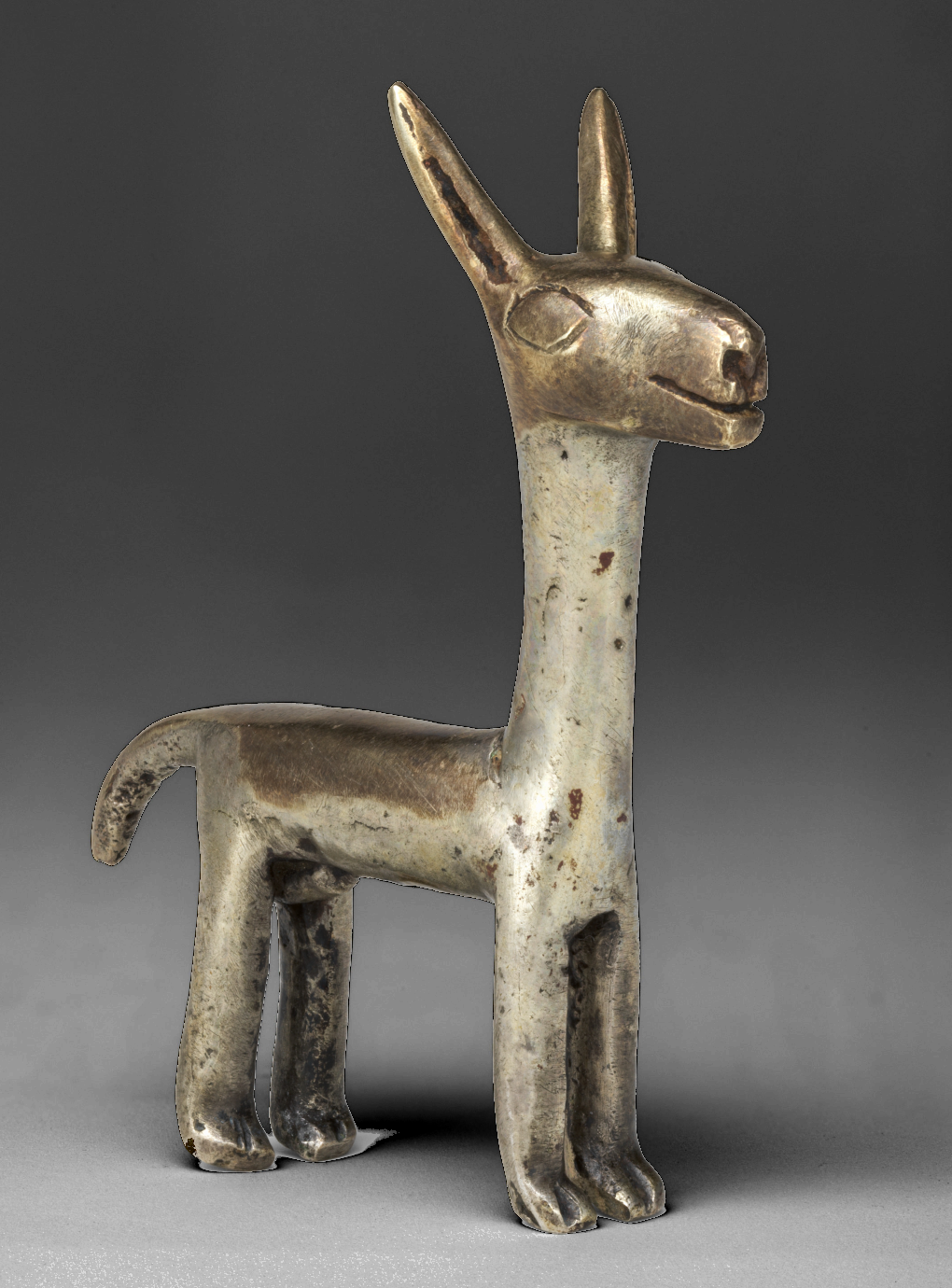
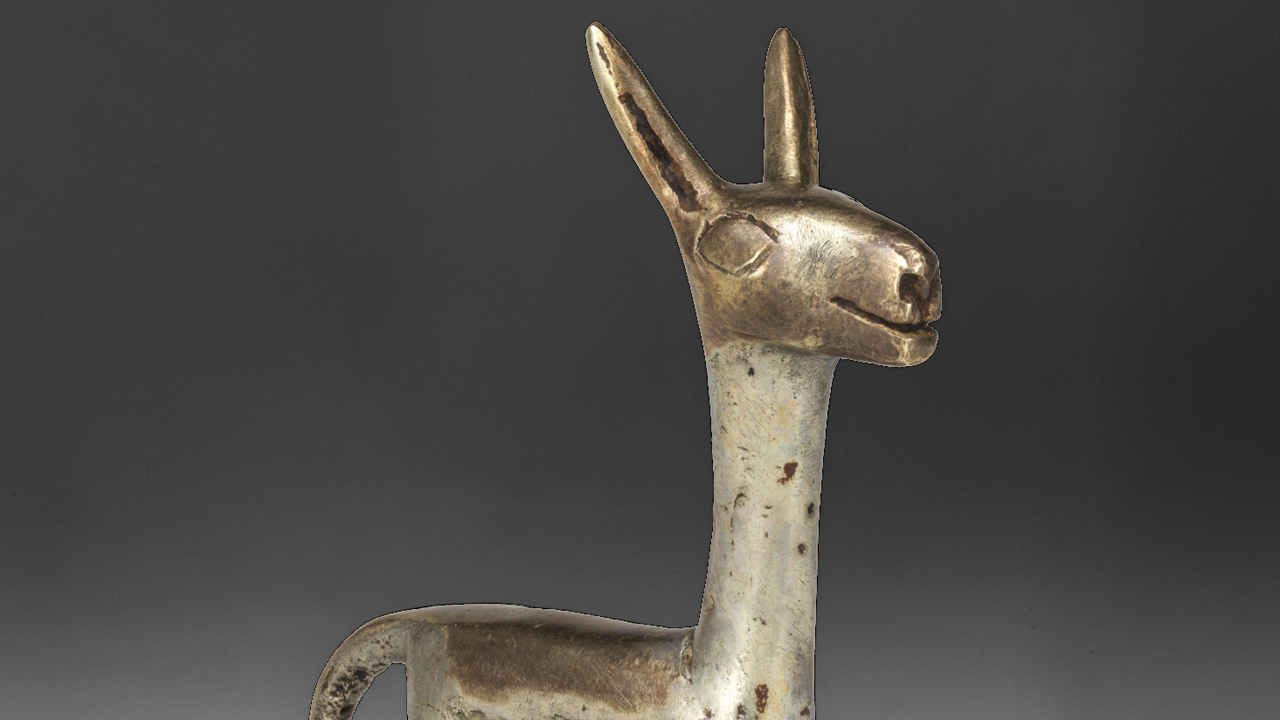
Name: Miniature camelid effigy
What it is: A silver-alloy llama figurine
Where it is from: South America
When it was made: 1400 to 1535
This figurine of a small male camelid was made by the Inca as a "huaca" — a sacred being, site or object revered by their society. The quadruped was probably intended to be a llama (Lama glama), but it may represent the other camelid species domesticated by Andean people: the alpaca (Lama pacos or Vicugna pacos).
The Inca raised llamas and alpacas for a wide variety of purposes. They were used to carry goods long distances, and people ate the animals' meat, wove clothes from their wool, turned their bones into musical instruments, sewed hides to make shoes, collected their droppings for fuel and fertilizer, and consumed their fat for medicinal purposes. Llamas were also key to some ancient rituals.
This figurine may have been created for the Inca ritual called "capac hucha," a Quechua term meaning "royal obligation," according to The Met. This annual celebration in Cuzco, which was founded around the 12th century as the capital of the Inca Empire, involved sacrifices of llamas, maize and children to mark important events such as a drought, the death of a ruler, or the expansion of the empire.
MORE ASTONISHING ARTIFACTS- Altar to Sol: A rare 1,900-year-old monument dedicated to the Roman god of light and used in a secret underground ritual
- Idol of Pomos: A 5,000-year-old fertility figurine from Cyprus that wears a miniature version of herself on a necklace
- Beadnet dress: A 4,500-year-old ancient Egyptian funeral 'gown' that was in vogue during the Old Kingdom
Among the artifacts that archaeologists have discovered at capac hucha sites are metal and shell figurines, some of which had been "dressed" with textiles and feathers and were thought to have been imbued with sacred power. And one of the three "Children of Llullaillaco" — Inca child mummies discovered in 1999 — was buried with 11 camelid figurines made from silver, gold and shell, revealing the importance of llama effigies in death.
The close association between llamas and the Inca can even be seen in contemporary cinema. In Disney's "The Emperor's New Groove" (2000), a ruler named Kuzco is transformed into a llama that looks more than a bit like the 600-year-old miniature camelid effigy.
For more stunning archaeological discoveries, check out our Astonishing Artifacts archives.
Sign up for the Live Science daily newsletter nowContact me with news and offers from other Future brandsReceive email from us on behalf of our trusted partners or sponsors TOPICS Kristina KillgroveStaff writer
Kristina Killgrove is a staff writer at Live Science with a focus on archaeology and paleoanthropology news. Her articles have also appeared in venues such as Forbes, Smithsonian, and Mental Floss. Kristina holds a Ph.D. in biological anthropology and an M.A. in classical archaeology from the University of North Carolina, as well as a B.A. in Latin from the University of Virginia, and she was formerly a university professor and researcher. She has received awards from the Society for American Archaeology and the American Anthropological Association for her science writing.
View MoreYou must confirm your public display name before commenting
Please logout and then login again, you will then be prompted to enter your display name.
Logout LATEST ARTICLES 1Antarctica's sea ice suddenly started shrinking a decade ago — and deep-diving robots are revealing why
 - 2How likely are you to find a message in a bottle?
- 3Astronomers map one of the largest structures in the universe, hidden behind the Milky Way's 'Zone of Avoidance'
- 4Hubble revisits stunning Trifid Nebula after 30 years, and spots a growing jet of energy — Space photo of the week
- 5Why do cats and dogs shake their heads?