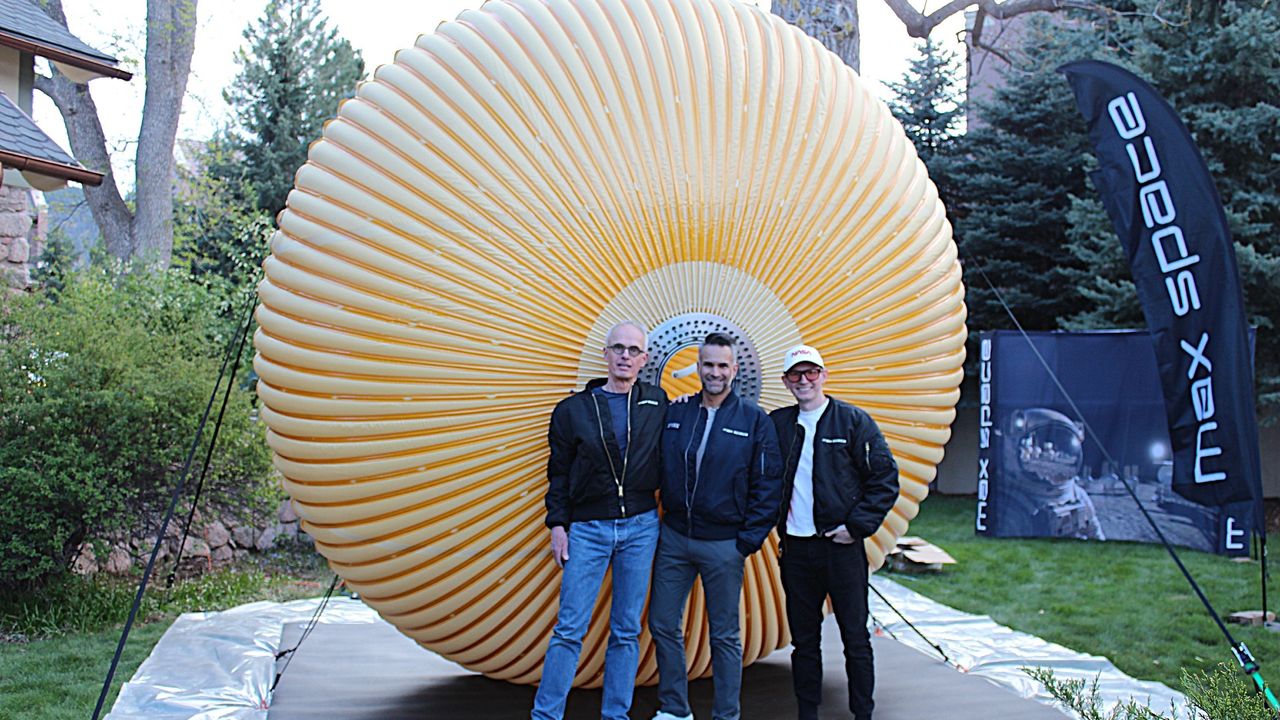
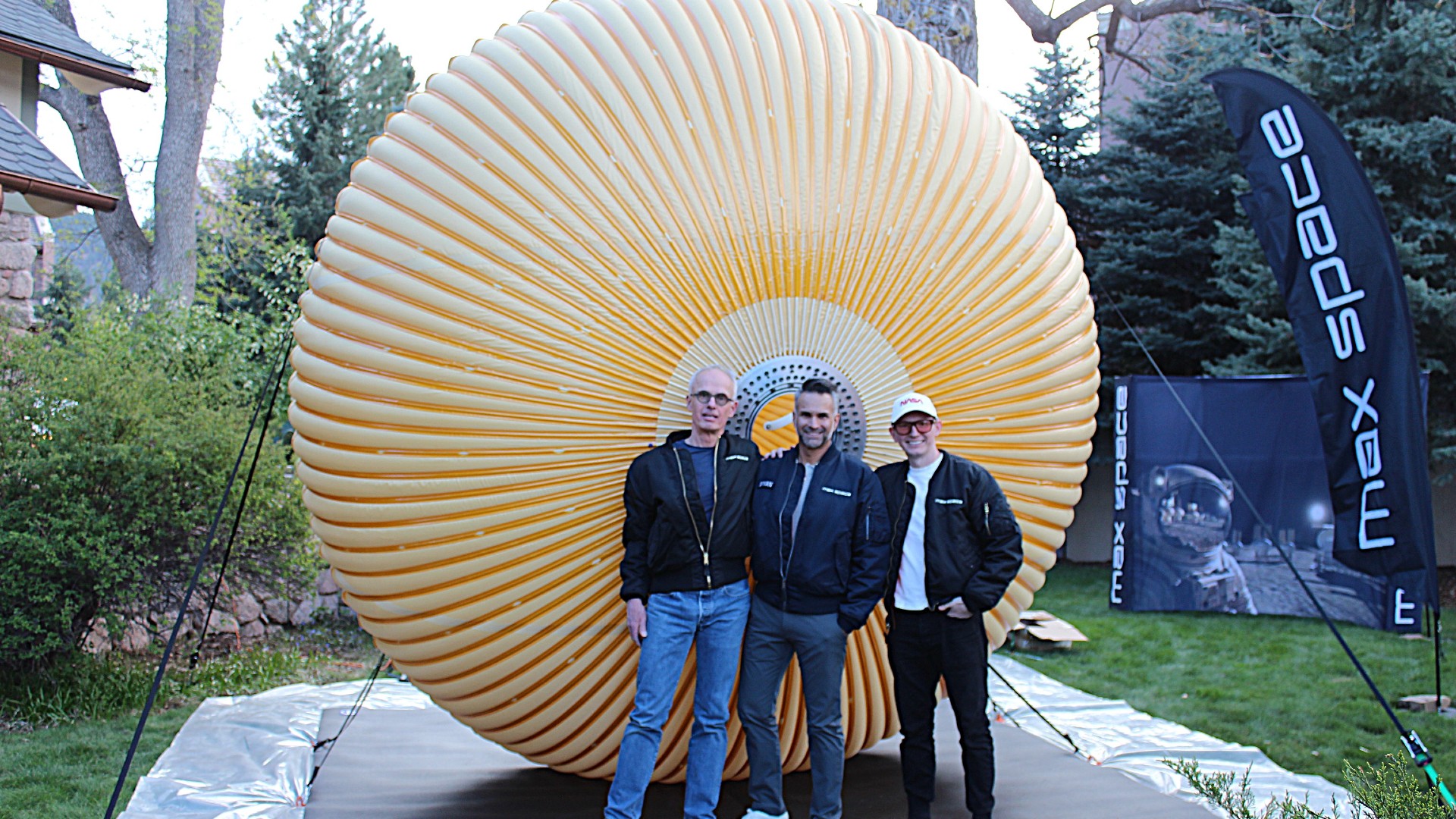
 Expandable space patrol, left to right: Maxim de Jong, Max Space co-founder and chief technology officer, Saleem Miyan, co-founder and CEO, and Aaron Kemmer, Max Space co-founder and chairman. (Image credit: Future/Barbara David) Share this article 0 Join the conversation Follow us Add us as a preferred source on Google Newsletter Get the Space.com Newsletter
 Breaking space news, the latest updates on rocket launches, skywatching events and more!
Contact me with news and offers from other Future brands Receive email from us on behalf of our trusted partners or sponsors By submitting your information you agree to the Terms & Conditions and Privacy Policy and are aged 16 or over.You are now subscribed
Your newsletter sign-up was successful
Want to add more newsletters?
An account already exists for this email address, please log in. Subscribe to our newsletterCOLORADO SPRINGS, Colorado — Next-generation space habitats for low Earth orbit, the moon and beyond are on display here at the Space Foundation's 41st annual Space Symposium.
Max Space has unveiled a large sub-scale version of their expandable habitat, giving viewers a real look at how best to offer far greater habitable volume for future space endeavors. "This is more than a model," said Saleem Miyan, co-founder and CEO of Max Space, based in Florida. "It is a physical demonstration of a new approach to space infrastructure, far greater habitable volume, lower launch mass and logistics burden, scalable architecture for commercial low Earth orbit stations, lunar surface systems, and future deep space missions."
Practical readiness of materials
Many refer to what's called Technical Readiness Levels (TRL's) of their products being readied for use in space.
Max Space relies heavily on its over three decades of material science expertise, referring to and also refers to that knowhow as PRM's - the Practical Readiness of Materials, said Miyan. "And they are truly ready for long duration space flights and lunar habitation," he said.
The next era of space habitation will not be built with small thinking, Miyan said.
Strategic partnership
In February a new strategic partnership was announced between Voyager Technologies and Max Space.
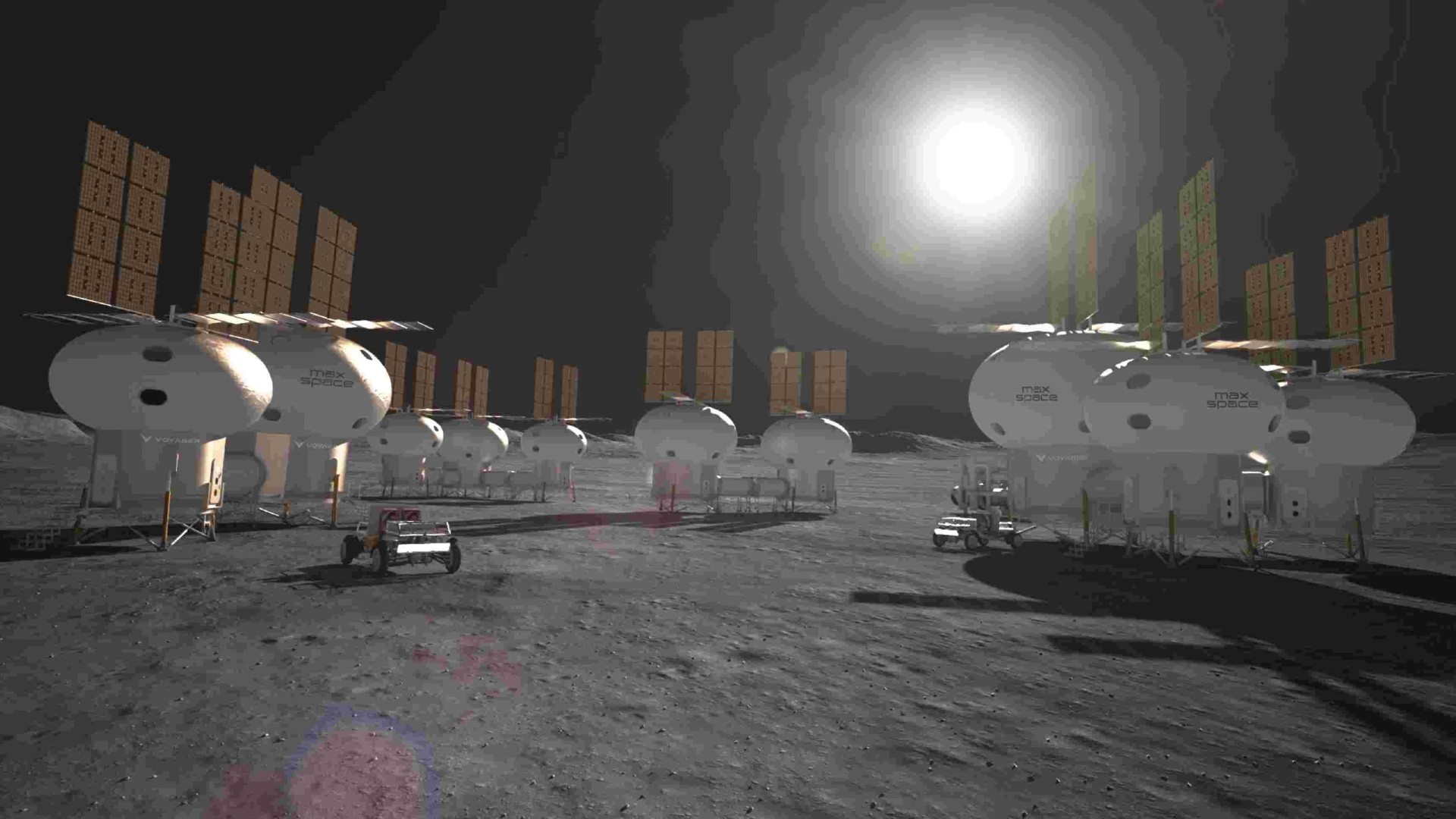
Get the Space.com NewsletterContact me with news and offers from other Future brandsReceive email from us on behalf of our trusted partners or sponsors"This technology reflects a fundamental shift in how humanity will live and work in space," said Dylan Taylor, chairman and CEO of Voyager — a defense and space technology company. Sustained operations on the moon "require infrastructure designed for endurance, scalability and industrial execution," he said in a press statement.
"The moon is no longer a single destination or a flags-and-footprints exercise," Taylor added. It is the next operational domain in a growing space economy, he said.
Phased development path
Max Space has been an early pioneer in expandable structure development.
The company's lightweight expandable habitat launches compactly and expands 20 times larger once deployed in orbit or other destination, allowing a large, fully equipped habitat to launch on a single SpaceX Falcon 9 rocket.
The strategic partnership blueprints a phased development path, including ground validation and in-space demonstrations later this decade. That development path's goal is to enable operational moon and Mars capabilities aligned with NASA's exploration timelines.
For more on Max Space, visit the company's website.
 Leonard DavidSpace Insider Columnist
Leonard David is an award-winning space journalist who has been reporting on space activities for more than 50 years. Currently writing as Space.com's Space Insider Columnist among his other projects, Leonard has authored numerous books on space exploration, Mars missions and more, with his latest being "Moon Rush: The New Space Race" published in 2019 by National Geographic. He also wrote "Mars: Our Future on the Red Planet" released in 2016 by National Geographic. Leonard has served as a correspondent for SpaceNews, Scientific American and Aerospace America for the AIAA. He has received many awards, including the first Ordway Award for Sustained Excellence in Spaceflight History in 2015 at the AAS Wernher von Braun Memorial Symposium. You can find out Leonard's latest project at his website and on Twitter.
View MoreYou must confirm your public display name before commenting
Please logout and then login again, you will then be prompted to enter your display name.
Logout MORE FROM SPACE... 1A new Earthrise: An Apollo historian experiences Artemis 2
- 2SpaceX fires up next-gen 'Version 3' Starship ahead of landmark May test flight (photos)
- 3How do supergiant exoplanets form? James Webb Space Telescope finds a clue
- 4Space combat was 'critical to mission success' in US war in Iran, Space Force chief says
- 5The 7 best sci-fi movie soundtracks of all time


