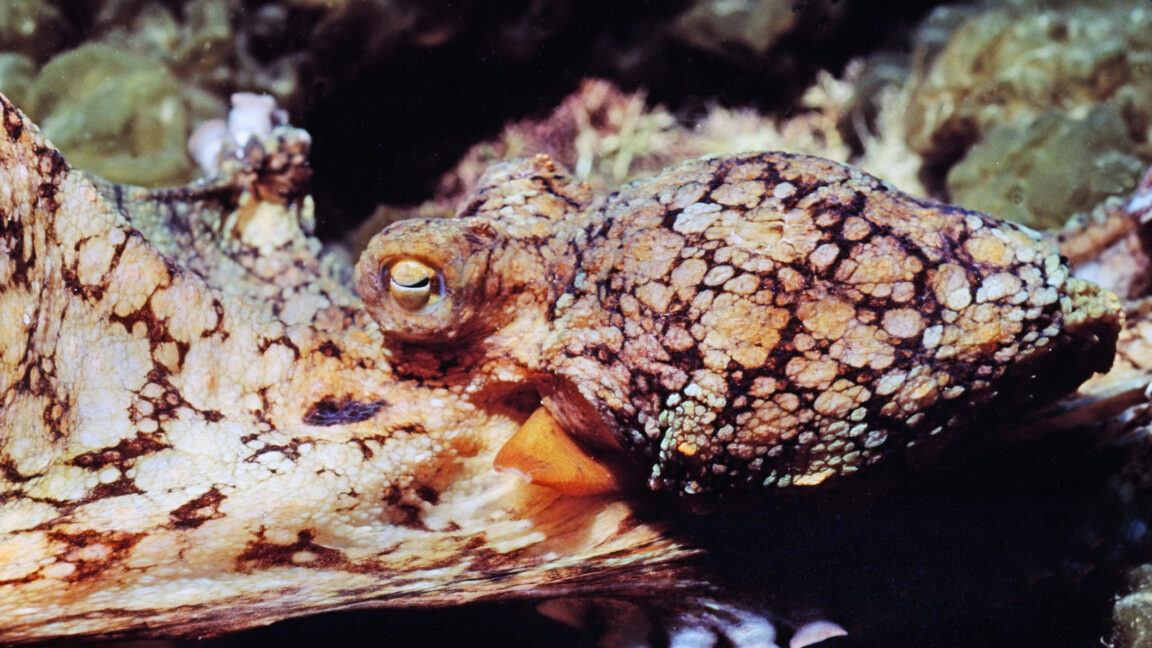
Octopuses are one of the most alien creatures on Earth. The lack of bones makes them amazing shapeshifters, most of them can change color like chameleons, and they pump blue copper-based blood through their bodies using three distinct hearts. They rely on a decentralized nervous system, where two-thirds of their neurons reside in their arms, allowing each limb to independently taste, touch, and make decisions for itself.
Now, a team of scientists led by Pablo S. Villar, a molecular biologist at Harvard University, for the first time took a close look at octopuses' sex life. It turned out it was just as weird.
Love in the dark
The deep ocean is a challenging place to find a partner, especially since octopuses are solitary animals that wander the seafloor alone, mating only during highly infrequent encounters. The exact mechanics of their reproduction when they do find each other have long puzzled biologists. We knew that male octopuses don't rely on flashy plumage or complex mating calls and that they use a specialized appendage called the hectocotylus—basically a modified tentacle—to identify females.
.jpg)


