Where is it? Lake Powell, Utah [37.47537121, -110.70474226]
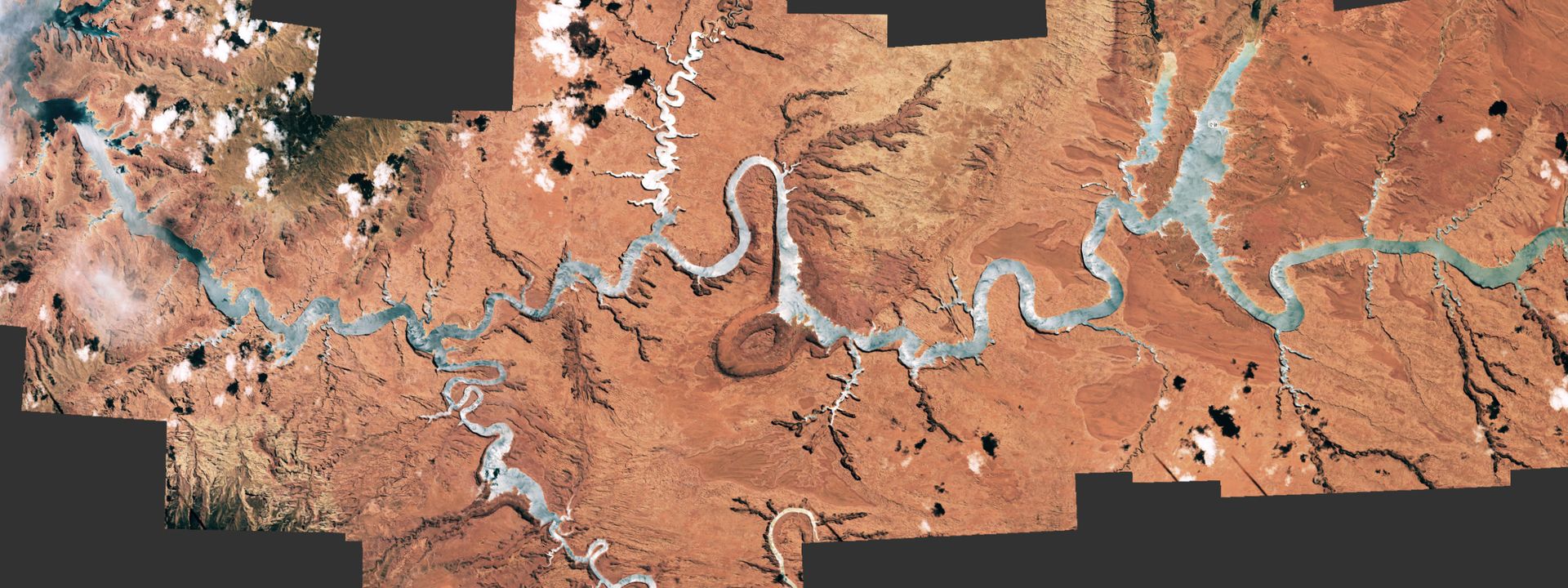
What's in the photo? A "sunglint" transforming a reservoir into a giant silver river
Who took the photo? An unnamed astronaut on board the International Space Station
When was it taken? 2016
This eye-catching astronaut photo mosaic shows a rare "sunglint" transforming a snaking reservoir into a giant silver river.
The winding waterway at the heart of this image is a section of Lake Powell in southern Utah. The artifical reservoir starts around 70 miles (110 kilometers) southwest of the town of Moab and ends roughly 60 miles (100 km) northeast of the Grand Canyon in Arizona. When full, Lake Powell holds up to 1.2 billion cubic feet (33.3 million cubic meters) of water, making it the second-largest reservoir in the U.S. — close behind the nearby Lake Mead, which stretches across the Arizona-Nevada border.
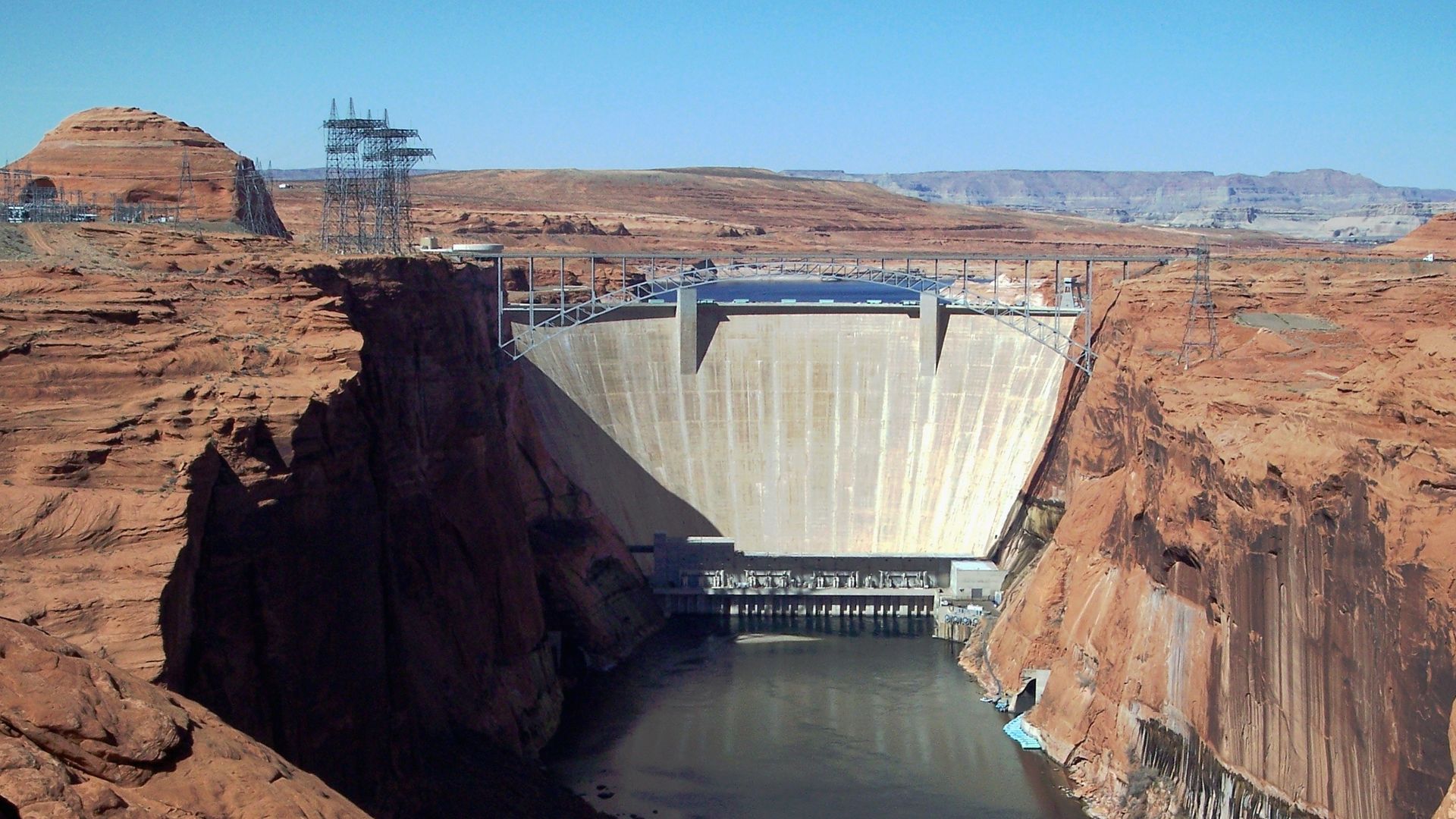
Lake Powell is located on the Colorado River, inside a steep ravine known as Glen Canyon. The reservoir emerged in the 1960s, following the construction of the Glen Canyon Dam, which caused water levels to rise by around 200 feet (60 meters) over the next two decades. In addition to generating hydroelectric power, the artificial lake has become a popular tourist destination. (Lake Mead is also located along the Colorado River and was created by the construction of the Hoover Dam.)
This image mosaic, which stitches together several astronaut photos into a single image, was captured during a sunglint, according to NASA's Earth Observatory. This phenomenon occurs when sunlight bounces off a reflective surface directly into the line of sight of an observer in orbit, such as a satellite or an astronaut, giving the object a metallic, mirror-like gleam.
Normally, this effect would be visible only across a small section of the lake. But by combining photos taken as the sunglint moved along the reservoir's length, the entire body of water was illuminated.
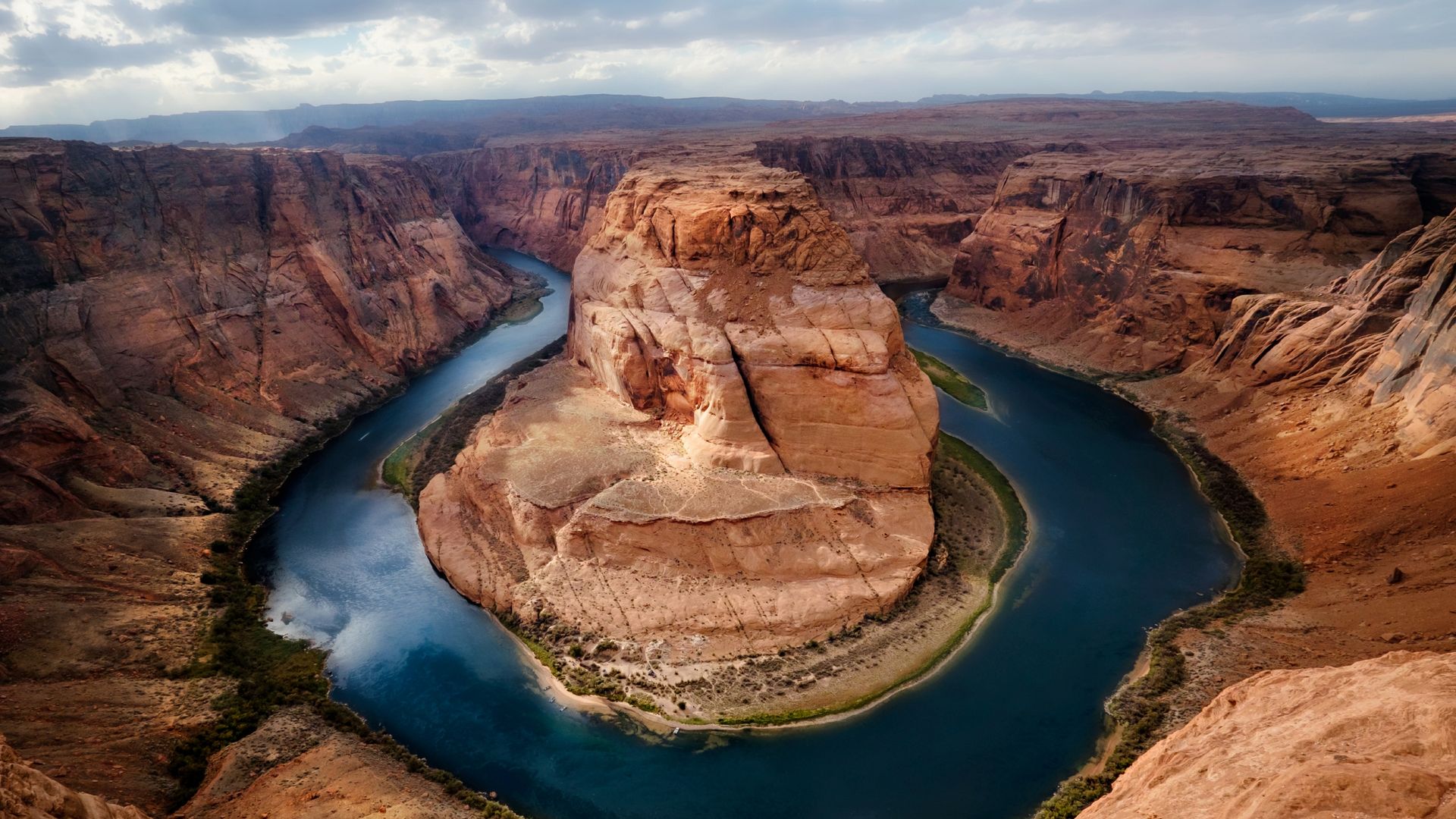
The reservoir is named after John Wesley Powell, an explorer and former director of the U.S. Geological Survey, who mapped out Glen Canyon and other parts of the Colorado River in the late 1860s. Powell was particularly captivated by Glen Canyon, which contained a "labyrinth of overhanging cliffs, hanging gardens, sweeping river bends, and natural arches set amidst a backdrop of colorful buttes and mesas," Earth Observatory representatives wrote.
Powell later described his recollections of the canyon. "Past these towering monuments, past these mounded billows of orange sandstone, past these oak-set glens, past these fern-decked alcoves, past these mural curves, we glide hour after hour, stopping now and then, as our attention is arrested by some new wonder," Powell wrote in his 1875 book "Canyons of the Colorado."
Some of the sights that Powell marveled over still exist, including many smaller canyons that branch off the reservoir and are cast in deep shadow. A similar effect is seen in sections of Utah's Green River, a tributary of the Colorado River that has long perplexed geologists due to its ability to flow "uphill."
From above, one of the canyon's most striking geological features — a large, doughnut-shaped depression known as The Rincon — is visible as a dark ring surrounding a bend along one of the widest sections of the lake. This rusty doughnut, which is up to 3 miles (5 km) across, is a former section of the Colorado River that dried out thousands of years ago when part of the canyon collapsed, enabling water to bypass the rocky loop.
However, many of the other wonders that Powell described have been lost beneath the reservoir's elevated water level. These include a side canyon dubbed the Music Temple, which was shaped in a way that gave it remarkable acoustic properties, according to the Earth Observatory.
During periods of drought, when the reservoir's water levels temporarily drop, other lost geological treasures can be exposed. For example, in 2023, researchers found rare fossils from a mammal-like Jurassic creature lurking beneath the lake's high-water line.
In recent years, some environmental groups have petitioned to drain Lake Powell and return Glen Canyon to its former glory as the "heart of the Colorado River," according to Newsweek. Such a change may help to alleviate pressure on the rest of the river, which has lost a significant amount of water in recent decades. But experts told Newsweek that this is unlikely to happen.
See more Earth from space
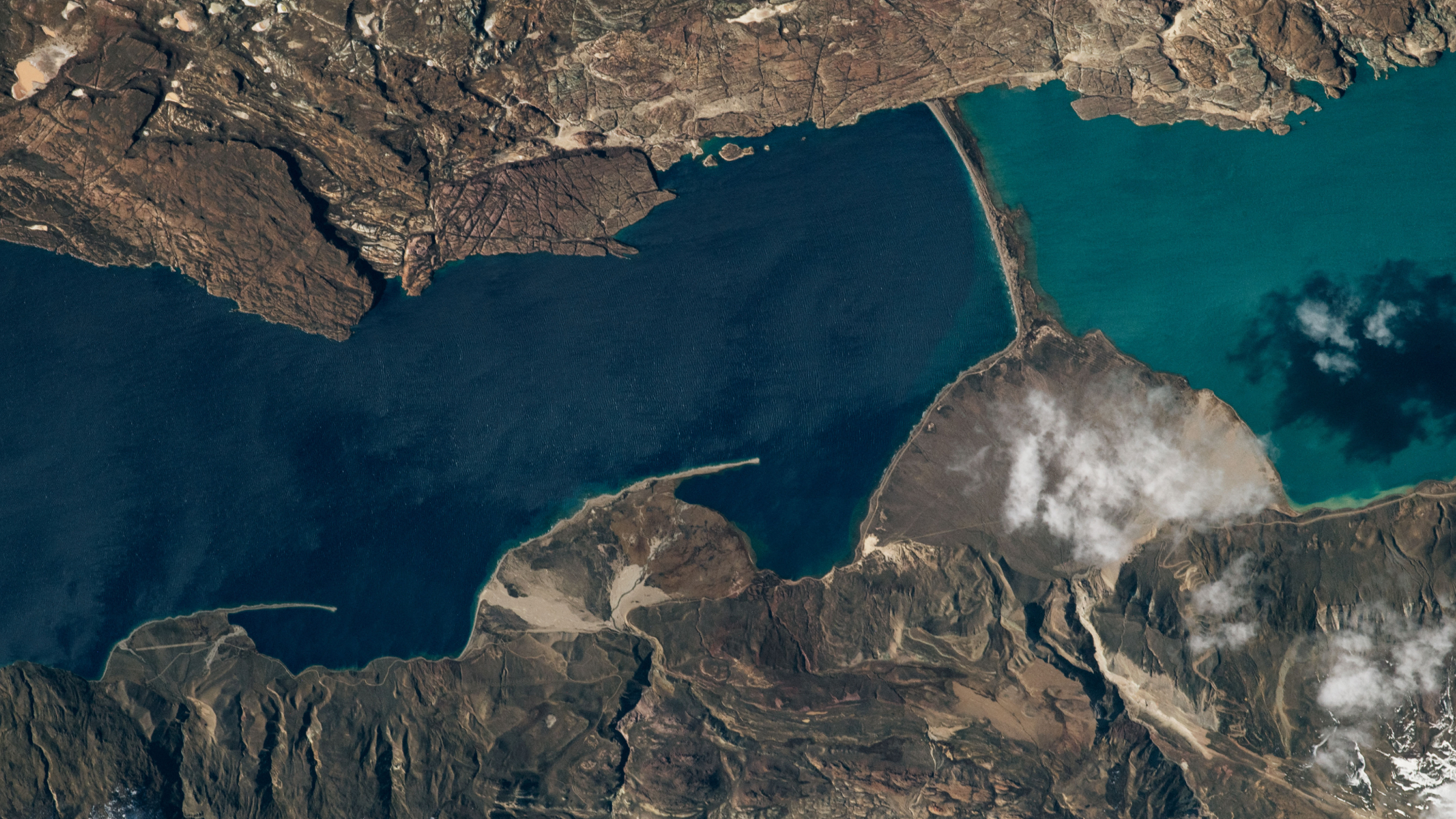
Pair of Patagonian lakes meet
A 2020 astronaut photo shows the unusual point where two contrastingly colored Patagonian lakes meet. The duo was originally a single body of water but was split by a narrow land bridge.
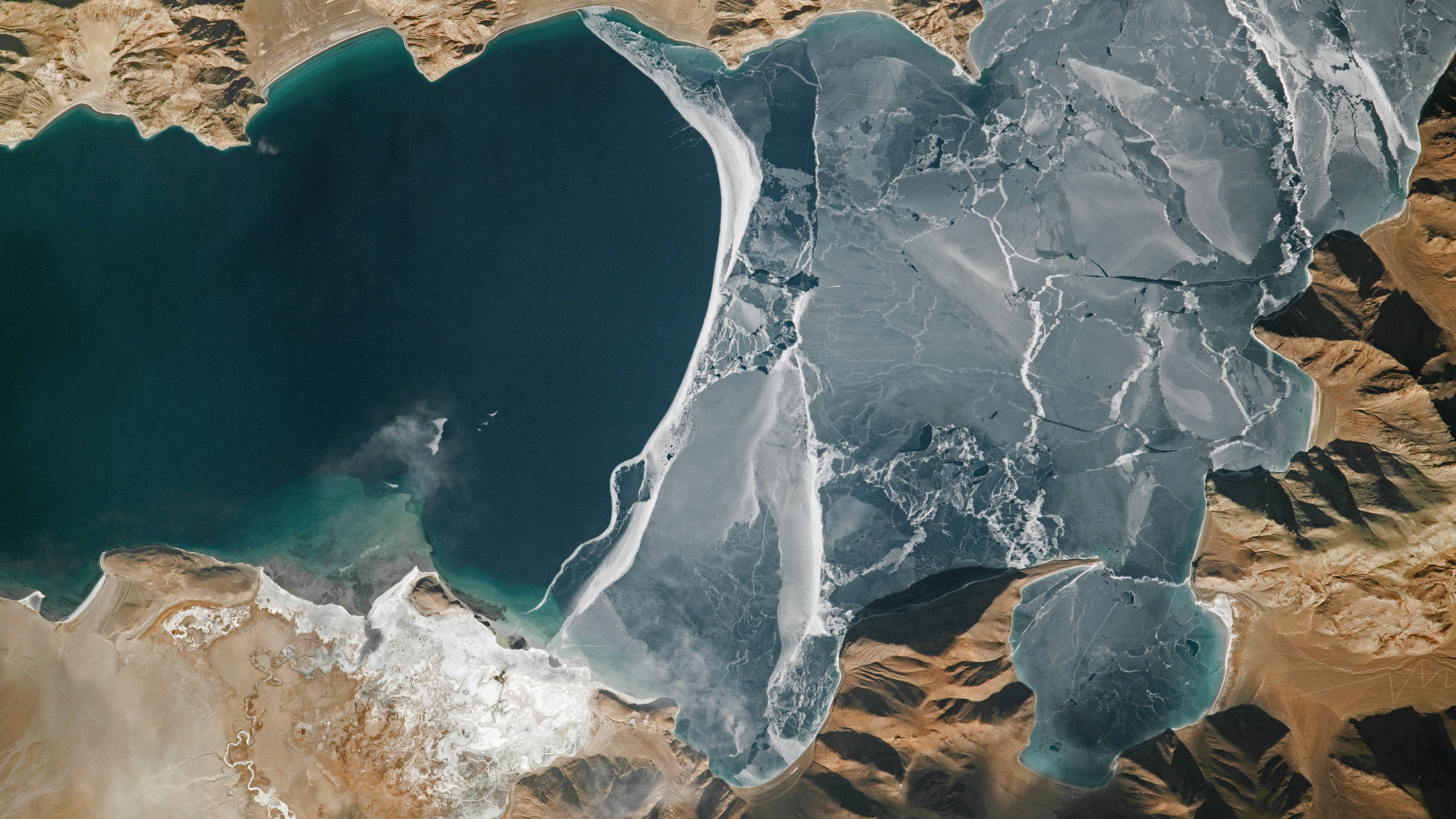
World's highest frozen lake shatters
A 2024 astronaut photo shows the icy surface of Pangong Lake breaking apart in the lofty Tibetan Plateau. The point where the ice meets the water almost perfectly matches a disputed border between China and India.
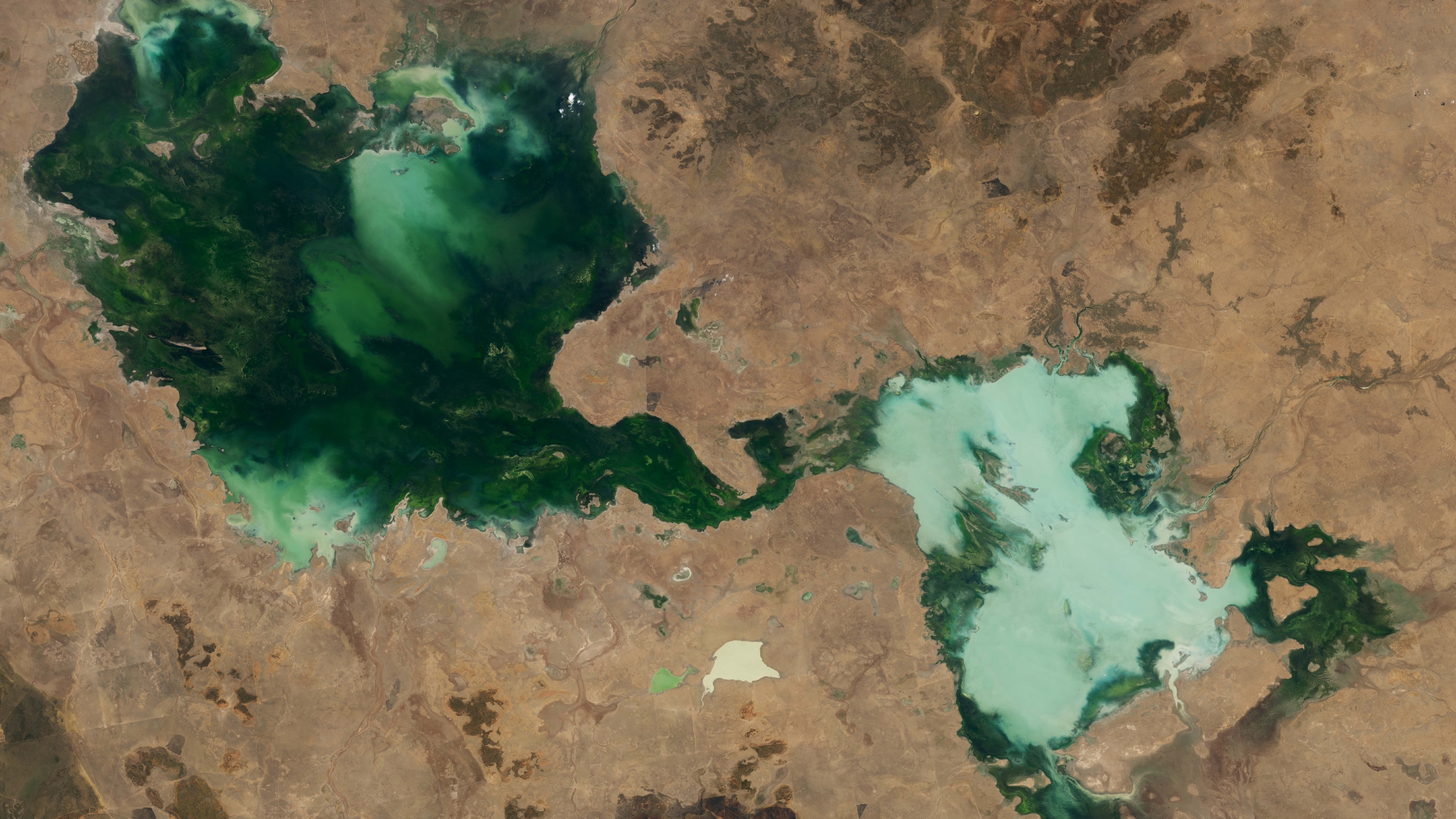
Ghostly lakes merge in Australia
A 2024 satellite photo shows a series of ephemeral lakes that merged into a single emerald structure in Australia's Northern Territory following two years of extreme rainfall.