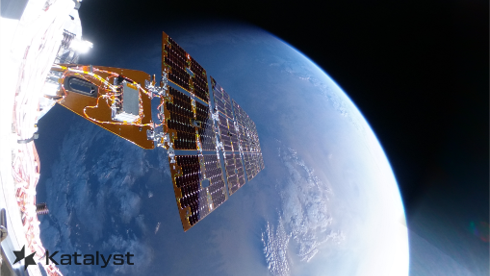
LINK, the satellite sent to boost the orbit of NASA's Swift Observatory, may have had to give up on its mission, but LINK's manufacturer and operator Katalyst Space hasn't completely abandoned the spacecraft to its cosmic demise.
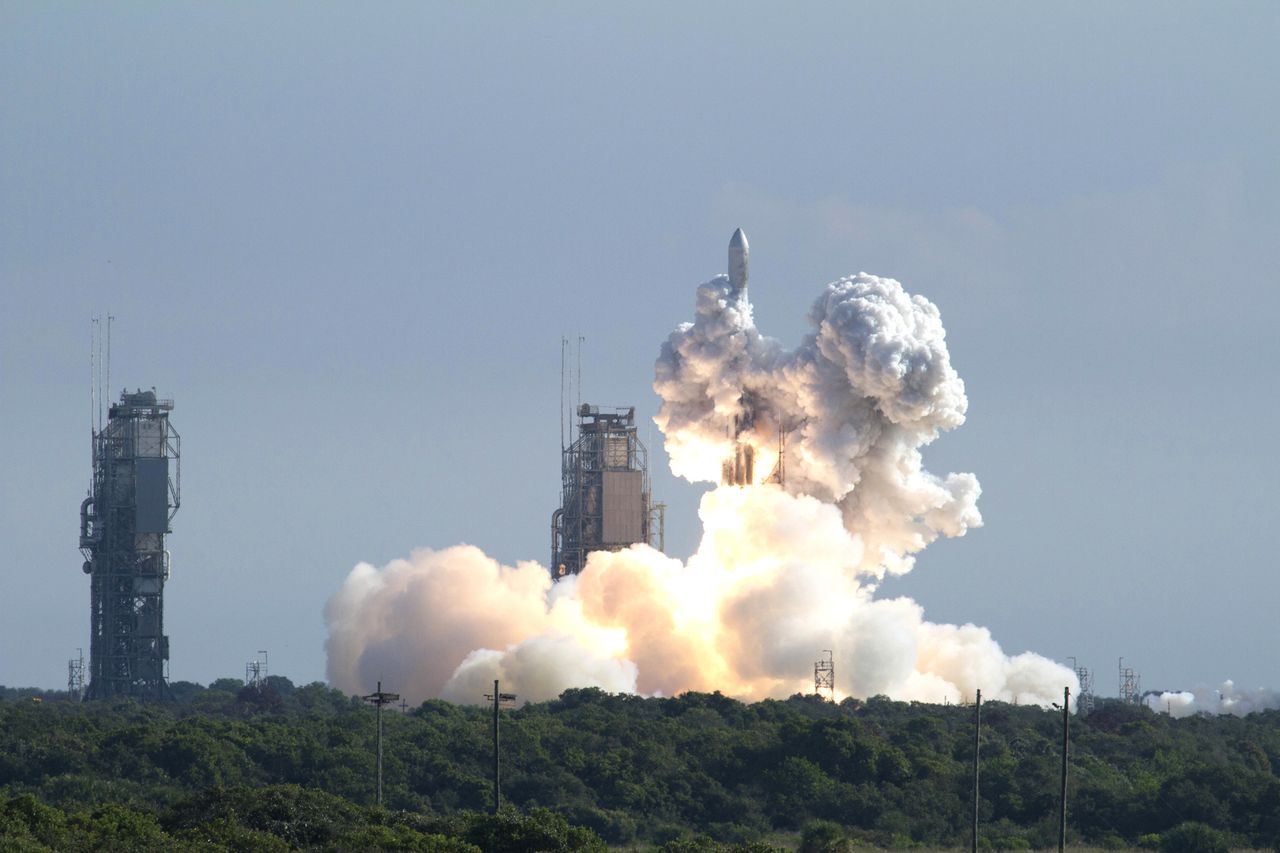
NASA called off LINK's mission to rendezvous with its Neil Gehrels Swift Observatory when the specialized probe encountered a thruster control issue. LINK was delivered to orbit on July 3, aboard an air-launched Northrop Grumman Pegasus XL rocket, but began to spin uncontrollably about three weeks after reaching space. Swift's orbit began decaying faster than expected last year, due to increased solar activity, and LINK was designed to rendezvous with Swift, grapple it, and then raise the observatory to a more stable altitude.
LINK's Swift Boost mission was considered a "Hail Mary" attempt from its onset. NASA's discovery of Swift's swiftly decaying orbit meant the Arizona-based Katalyst had less than a year to design, manufacture and test LINK before needing to launch. Now, with both of their missions on the short-track for destruction, NASA and Katalyst are left both trying to get the most out of their spacecraft with the time each has left.
LINK's failure means Swift is destined to burn up in Earth's atmosphere before the end of the year, and LINK itself is expected to fall to the same fate within just the next few weeks. But the probe's inability to save Swift hasn't stopped Katalyst from getting as much data from LINK as it can. Though a closer rendezvous is no longer in the cards, the spacecraft managed to successfully fire all three of its electric propulsion thrusters and adjust its orbit to fly within 7.5 to 9 miles (12 to 15 kilometers) of Swift. Katalyst was also able to deploy all three of LINK's robotic arms, which would have been used to grapple Swift for its orbital adjustment.
Swift launched in November 2004, and has been studying high-energy phenomena like gamma-ray bursts, supernovas, black-hole ejections and fast radio bursts across the universe for more than 20 years. Despite its impending demise, two of Swift's three science instruments — its X-ray Telescope (XRT) and Ultraviolet/Optical Telescope (UVOT) — were turned back on in late August after being shut down in February to minimize atmospheric drag on the spacecraft in anticipation of LINK's now defunct orbital boost efforts.
With the option for LINK to raise Swift's orbit now off the table, Katalyst and NASA are working to perform whatever technology demonstrations are possible aboard the spacecraft, in the hopes the technology can be used to service other satellites on missions in the future.