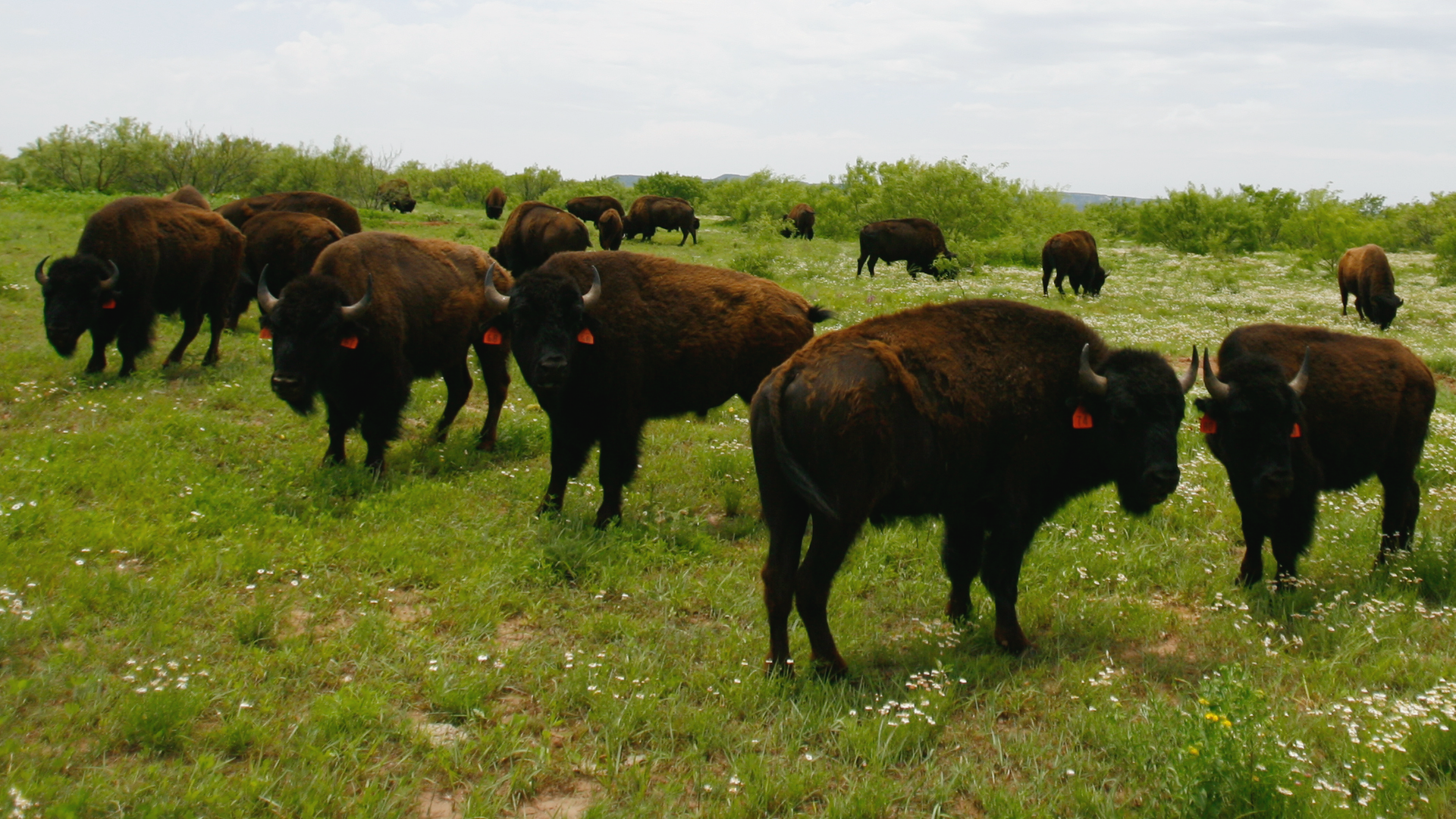
Archaeologists have uncovered an extremely rare example of a "bison jump" in the Texas Panhandle, where a natural geological formation allowed Indigenous people to hunt North America's largest living land mammal for 3,000 years. The discovery confirms that the prehistoric hunting technique — which involved channeling a herd of bison into a stampede off a cliff, akin to "walking the plank" — was not limited to the northern Plains like experts previously thought.
"Bison jumping is an iconic, uniquely North American hunting technique that yielded some of the most productive food-getting events in the history of human hunting," researchers wrote in a study published online Nov. 9 in the journal American Antiquity.
Although jump sites are well known throughout the northern Plains, only one such site had ever been found in the southern Plains. But a second bison jump called Nighthawk has now been identified in Caprock Canyons State Park in the Texas Panhandle, and researchers found that Indigenous people used the Nighthawk bison jump for millennia.
"Returning to the same place over and over again over 3,000 years shows that people had a significant connection to the Nighthawk hunting facility," study first author Gus Costa, an archaeologist at Rice University in Houston, said in a statement.
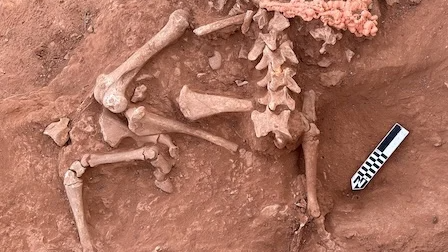
Nighthawk was found when bison remains began eroding from a bone bed (a place where bones naturally accumulate) underneath a roughly 65-foot-tall (20 meters) cliff spur. Archaeologists investigated and found chipped stone tools near the bones, as well as a few arrowheads. Several of the bison bones had cut marks from stone tools consistent with prehistoric butchery practices. These discoveries added up to a possible bison jump.
"The only way bison can arrive at the site is by falling from above, as the site surface is sandwiched between two cliffs," the researchers wrote. Indigenous hunters likely used the cliff's natural spur shape to herd the bison to their deaths. "Instead of a stampede toward a surprise fall, Nighthawk could have operated more like 'walking the plank,'" according to the researchers.
Even more surprising than the discovery of a bison jump site in the southern Plains was the length of time the jump was used.
A series of radiocarbon dates revealed that there were at least seven mass bison kills at Nighthawk over a span of three millennia, between roughly 1550 B.C. and A.D. 1550. One of these events, which the researcher named Kill 3, was responsible for most of the bison bones. That enormously successful hunt most likely took place around A.D. 300 to 400 and would have required an immense labor force and precise coordination.
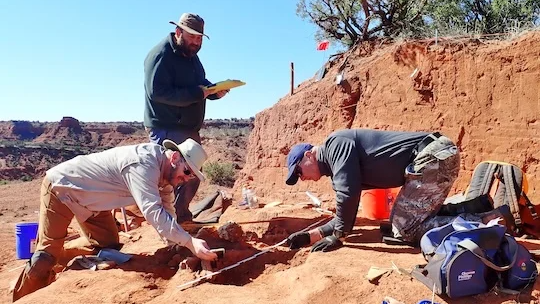
"Bison jumping is a complicated community effort," Costa said. "Large scale bison harvests (like jumps) are exciting because they require a large group of people working together to be successful."
RELATED STORIES- The ancestors of today's Indigenous people arrived in the Americas during the coldest part of the last ice age, study suggests
- Ancient Indigenous people in New Mexico lived through extreme climate change 23,000 years ago, study suggests
- DNA study of nearly 200 Indigenous genomes reveals unknown Asian 'ghost' population contributed to American ancestry
It is not entirely clear what the Indigenous hunters were doing with the bison killed in the hunt. In the northern Plains, archaeologists have long assumed that bison jumps were generally performed in the fall and used to provision the community for winter. Bison in the North were used to make pemmican, a shelf-stable mix of dried meat and rendered fat.
But although pemmican was an extremely useful foodstuff and trade good in the North, it was likely too warm in Texas for bison fat to last more than a few weeks, the researchers wrote. This may mean that the southern Plains bison hunts were more useful for displaying power and building alliances.
All of the kill events at Nighthawk were at least a century apart, with an average of 500 years between each bison jump. That points to an infrequent use of the jump but also a clear memory of its utility.
"The simplest explanation for long-lived jump facilities is that these techniques were passed down over long time spans rather than revived again and again," the researchers wrote.