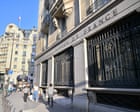
Image source, Sam Read/BBCImage caption,
 Keith Ely remembers the Brunel Centre's heyday but is looking to the future
BySam Readin Bletchley and Northampton- Published1 hour ago
The Brunel Centre was once a thriving retail destination, attracting shoppers from far and wide.
"It was incredible," says town councillor Keith Ely, who remembers its opening in Bletchley, Buckinghamshire, in 1973.
Back then, centre:MK, a large destination shopping centre four miles away in Milton Keynes, did not exist, and the Brunel was quite the draw.
Now, like many other medium-sized shopping centres, it is struggling.
Vacant units and graffiti-daubed shutters dominate, and it has just one store left.
That remaining shop, a Boots Opticians, is set to close later this month ahead of the centre's planned demolition next year.
But Ely, 87, is not upset to see the Brunel make way for flats and a health centre, with only some retail space.
"It is a sad old building, isn't it?" he says. "There is no nostalgia from me."
 Image source, ORLA MOORE/BBCImage caption,
 The Debenhams store in the Grafton Centre in Cambridge closed in 2021
In the Grafton Centre, Cambridge, it is a similar story, with shuttered units, a large empty former Debenhams department store and a permanently closed cinema.
There are long-term plans for a redevelopment to include retail but also a life science centre.
This may work in Cambridge, a global leader in life sciences, but it is not an option in much of the country.
So, in the age of online shopping, what lies ahead for these medium-sized malls?
"There are too many in the UK and many don't have a future," is the stark assessment of Subjit Jassy, a director at Pioneer Group, which owns the centre.
"The old model of retailers expanding to improve turnover has now disappeared because of the internet."
Image gallerySkip image gallery Image source, Milton Keynes Living ArchiveImage caption,
 Before the Brunel Shopping Centre was built in the 1970s, people in Bletchley would travel to Aylesbury or Bedford to shop
 Image source, Milton Keynes Living ArchiveImage caption,
  Image source, Qays Najm/BBCImage caption,
  Image source, Qays Najm/BBCImage caption,
 1 of 4
Previous imageNext imageSlide 1 of 4, This is a grainy 1970s photo showing a large angular black shopping centre and some small newly planted trees. In the foreground is a largely full car park and a nadult pushing a trolley while two children walk alongside. , Before the Brunel Shopping Centre was built in the 1970s, people in Bletchley would travel to Aylesbury or Bedford to shopEnd of image galleryAnalysis by commercial property firm CBRE, external found that while the vacancy rate across UK shopping centres in the second quarter of this year was 16%, it was "significantly lower" at major centres.
Meanwhile, research by estate agents Savills found between April and June 2026 almost 73% of consumer spending in shopping centres was in the biggest sites, with less than 18% in secondary, or medium-sized centres.
 Image source, SAM READ/BBCImage caption,
 Dr Kardi Somerfield says centres that have leisure businesses can "extend the day" and attract customers into the evening
"It is not just that shopping centres have one destiny; they really don't," says Dr Kardi Somerfield, a lecturer in marketing at the University of Northampton.
Some destination shopping centres are running at "almost 100% occupancy", she adds.
Back at the Brunel, Labour's Ed Hume, responsible for housing at Milton Keynes City Council, says: "We do need shops.
"The change here is about making sure we have a town centre that is much more open."
The hope is that more town centre homes will increase the number of people to use local businesses.
Similar plans in Norwich will see the Anglia Square development primarily replaced by housing.
 Image source, WESTON FAVELL SHOPPING CENTREImage caption,
 Characters from TV show The Flintstones were at the opening of the Weston Favell Shopping Centre in 1974
But there are other options rather than just tearing a centre down.
Market Walk in Northampton is to become a leisure and entertainment space.
"Other shopping centres have a really important purpose as a community hub," says Somerfield, outlining another potential use.
This is what management are trying to achieve at another site that opened in the 1970s: Weston Favell, on the eastern edge of Northampton.
Footfall – the number of customers entering the building – has increased every year since the pandemic, says centre manager Kevin Legg.
"We are still relevant today," he says.
"Other shopping centres are trying to emulate and create what we've got."
What they have got is a mix of a large supermarket, a number of big national brands and smaller independent businesses, as well as other community facilities.
Not far from the library inside the centre is a church. It is currently being used by Silhouette Youth Theatre, a charity that aims to make the arts more accessible.
Next year it plans to create a 250-seat theatre inside part of a former Wilko store.
 Image source, BBC/SAM READImage caption,
 Silhouette Youth Theatre currently holds sessions in the Emmanuel Church, inside Weston Favell Shopping Centre
George Grande, voice lead at Silhouette, says being located in a shopping centre means more people can easily arrive by public transport and gives the group more visibility.
"We've had it before where people are like 'Oh, what's this? We don't know what this is.'
"That is how we can get other people to join us."
Do you have a story suggestion? Contact us below.
Get in touch
Your Voice
Contact formContact formFollow East of England news on X, external, Instagram, external and Facebook: BBC Beds, Herts & Bucks, external, BBC Cambridgeshire, external, BBC Essex, external, BBC Norfolk, external, BBC Northamptonshire, external or BBC Suffolk, external.
Related topics
Shopping centre site still sits empty, £10m later
- Published5 February

How town centre regeneration projects are progressing
- Published31 December 2025
Shopping centre to go on market for £10m
- Published24 January