
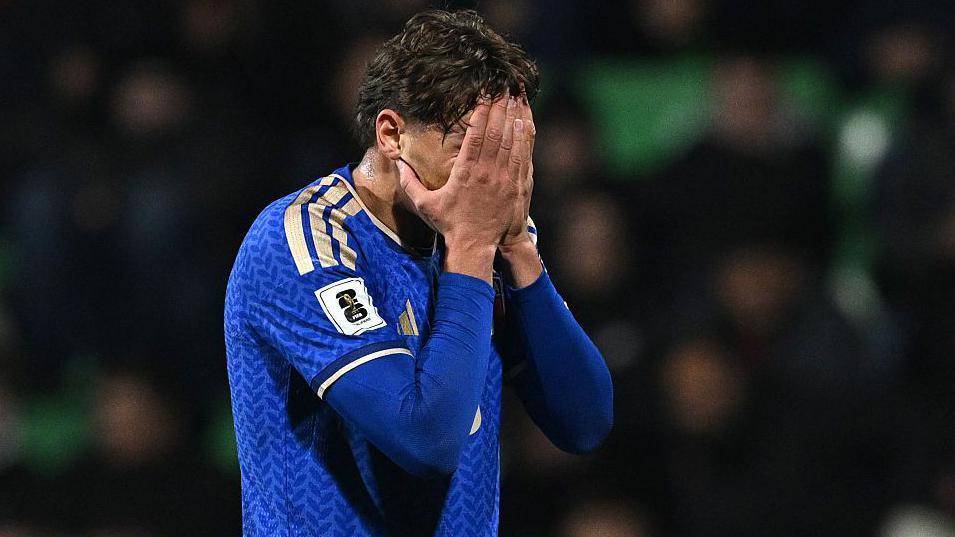
 Image source, Getty ImagesImage caption,
 Italy became the first European team to win the World Cup in 1934
ByKeifer MacDonaldBBC Sport journalist- Published33 minutes ago
When Fabio Cannavaro hoisted the World Cup trophy into the air at the Olympiastadion in July 2006, it was supposed to signal the beginning of a new era for Italian football.
The Azzurri had defeated a star-studded France team - including Zinedine Zidane and Thierry Henry - on penalties in a remarkable final in Berlin, Germany, to become only the second nation to win the World Cup for a fourth time.
But almost two decades on, the triumph is a stark contrast to Italy's current fortunes.
After failing to qualify for Russia 2018 and Qatar 2022, Italy are on the brink of becoming the first former winners to miss out on three consecutive tournaments.
It must be mentioned they did beat England to win the Euros in the midst of that in 2020 but that has proved an outlier.
Italy must win two play-off games, starting with a home semi-final against Northern Ireland on Thursday, to reach this summer's World Cup.
'The qualifying campaign has been torturous'
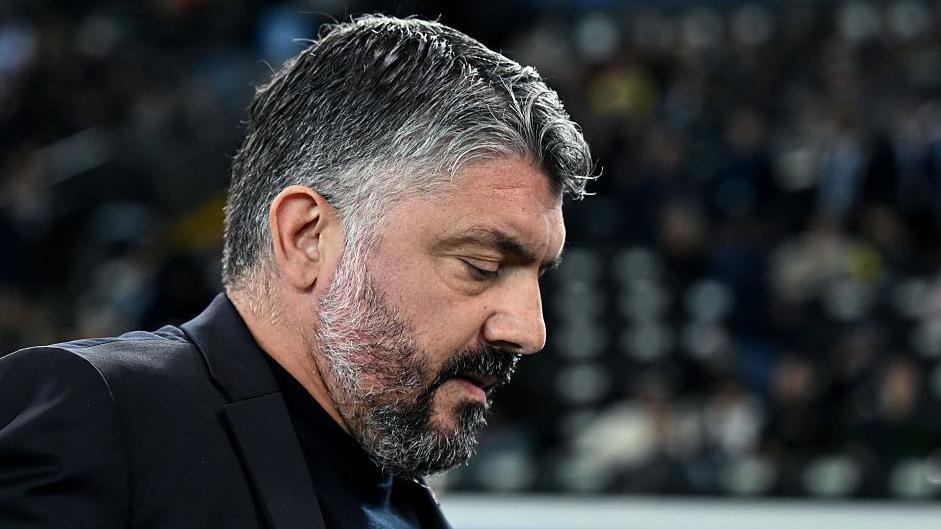 Image source, Getty ImagesImage caption,
 Gattuso managed 10 clubs in 12 years prior to joining the Italian national team in June
To describe Italy's qualifying campaign as anything other than eventful would be quite the understatement.
The campaign was only one match old when Luciano Spalletti was dismissed from his position as manager after a 3-0 defeat by Norway in June.
Although the 66-year-old remained in charge for a further three days - overseeing a win against Moldova - his departure was an early indicator of the challenges the four-time World champions would encounter.
The appointment of former Italy and AC Milan midfielder Gennaro Gattuso as his successor was a surprise, left-field choice.
Italian football writer Emmet Gates believes the former AC Milan, Napoli and Fiorentina manager was only appointed because "no one else wanted the job".
Speaking to BBC Sport, Gates said: "Nothing in his managerial career has shown that he's an elite-level tactician.
"He won the Coppa Italia in his spell at Napoli but compared to his predecessor, he's oceans apart."
Yet despite the questions over his suitability for the role, the 48-year-old oversaw an upturn in results as Italy won five consecutive qualifying games - beating Estonia and Israel home and away before winning in Moldova.
That was until a second, humbling defeat of the campaign - which Gates describes as "torturous" - 4-1 at home to Norway left the 2006 winners second in Group I.
Italy therefore dropped into the play-offs for the third consecutive campaign and will face Northern Ireland in a one-legged semi final in Bergamo on Thursday, with the winner set to visit Wales or Bosnia-Herzegovina next week for a place at this summer's World Cup.
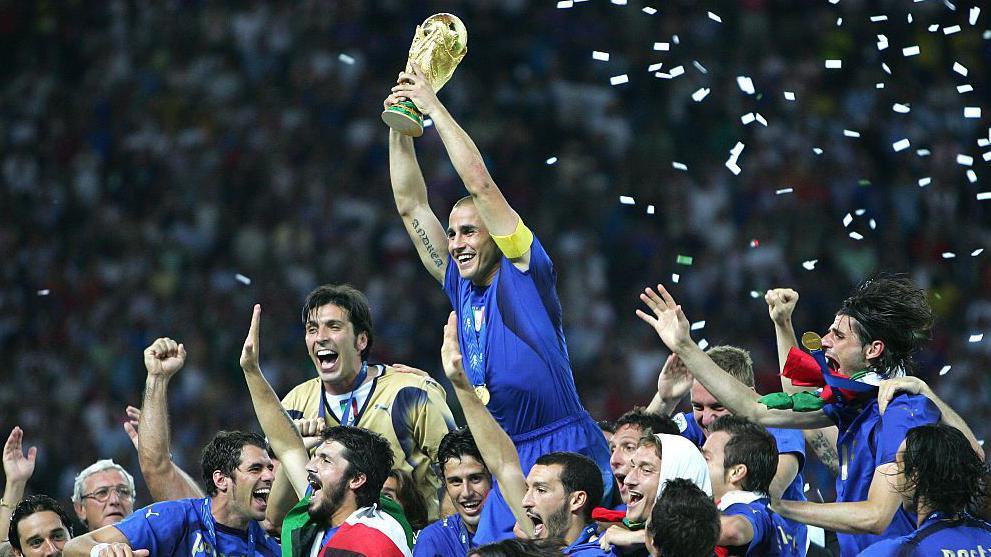 Image source, Getty ImagesImage caption,
 After making his international debut at 23 years old, Cannavaro went on to play for Italy a further 135 times
'Serie A clubs are relying on foreign talent than local ones'
When Italy lined up in the final against France 20 years ago, they did so with what was arguably the greatest team in the country's history.
From Gianluigi Buffon and Cannavaro at the back to Alessandro Del Piero and Francesco Totti in attack, manager Marcello Lippi had an embarrassment of riches at his disposal.
But a fourth triumph in the country's history was anything but an overnight success; it was the product of a development model that no longer exists in Italian football.
The foundations were laid a decade earlier when the under-21s side - coached by Cesare Maldini - won three consecutive European Championships between 1992 and 1996.
The development of Maldini's teams - which included Buffon, Cannavaro, Totti and Del Piero - was aided by a ruling in Serie A that prohibited clubs from having more than three non-European players on the pitch at one time.
It meant by the time the 1994 and 1996 championships rolled around, the quartet had already amassed a wealth of senior experience for clubs such as Parma, Napoli, Roma and Juventus.
But that all changed in 1995 when the Bosman ruling - a case which fought to improve the rights of European players - significantly altered the landscape of football on the continent.
As a result, Italy - and other European nations - had to relax their quota regulations, which led to an influx of overseas players heading to Serie A towards the end of the century.
It came at a cost as homegrown talents in the generations that followed found opportunities in the top flight increasingly hard to come by.
"As the years have gone on, Serie A clubs have relied more on foreign talent than local ones," said Gates.
"You'd think that due to the lack of money in Serie A, clubs would rely on local talent more - but that's not been the case.
"If anything, they're relying more on young foreign talent than Italians."
Where Italian football differs is in its financial struggles, with none of their clubs featuring in the top 10 in Deloitte's list of the world's top revenue-generating clubs.
While the Premier League clubs benefit from ever-increasing TV deals and other European leagues attract heavy investment, Serie A has seen that source of revenue stagnate.
Italian sides have failed to modernise their stadiums, which in turn affects their commercial operations. Revenue gaps have widened between them and leagues like the Premier League, making it harder to sign or keep top players.
Some of the league's top clubs have reported substantial losses in recent years, with many forced to sacrifice investing in the future.
European football expert Julien Laurens told BBC Sport: "The academies in Italy are not producing enough players, or players who are fit to play in their first team. The way they spend their money is not what we are used to from Italian clubs."
Former Italy forward Alessandro del Pierro told CBS: "It is the result of what has happened in Italy in the past years.
"The level of investment is low. Other markets have become much, much bigger than us.
"Problems? Stadiums. We know you have to perform better outside of the pitch [to improve] that. Youth systems as well."
A telling stat is that only eight of the 487 goals in this season's Champions League league phase were scored by Italians.
'Being in the play-offs will bring back horrible memories'
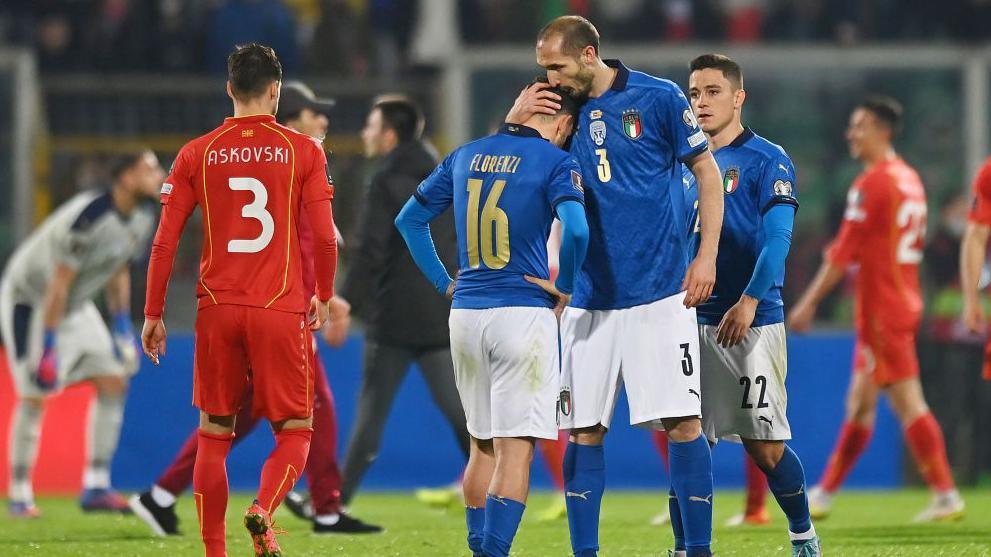 Image source, Getty ImagesImage caption,
 Chiellini consoles Florenzi after Italy's 1-0 defeat to North Macedonia in March 2022
It is not all doom and gloom for Italy, though.
The four-time World champions head into the game against Northern Ireland having won six of their eight qualifying matches.
It is a higher win percentage (75%) then they managed in the 2022 (44%) and 2018 (58%) qualifying campaigns.
Yet that hasn't eased the nerves of a nation that Gates says is still "scarred" from the play-off defeats by Sweden and North Macedonia over the past decade.
"The play-offs will bring back horrible memories," he said. "It's sure to affect the confidence.
"Most Italians share the same opinion: if a nation as football‑mad and historically successful as Italy can't beat Northern Ireland and Wales/Bosnia, then they don't deserve to go to the World Cup in the summer."
If the Azzurri do seal qualification to the 48-team tournament, then they will join Canada, Qatar and Switzerland in Group B.
It would mean their first World Cup match for 11 years and 253 days would be against Canada on 12 June.
It is no wonder the image of Cannavaro holding the trophy aloft at the Olympiastadion now feels like a fever dream to most Italians.
Related topics
Follow your club with BBC Sport
- Published12 March

Listen to the latest Football Daily podcast
Get football news sent straight to your phone
- Published16 August 2025