Elections
Judge clears the way for Postal Service work on Trump's mail-in voting order for now August 26, 20261:15 PM ET
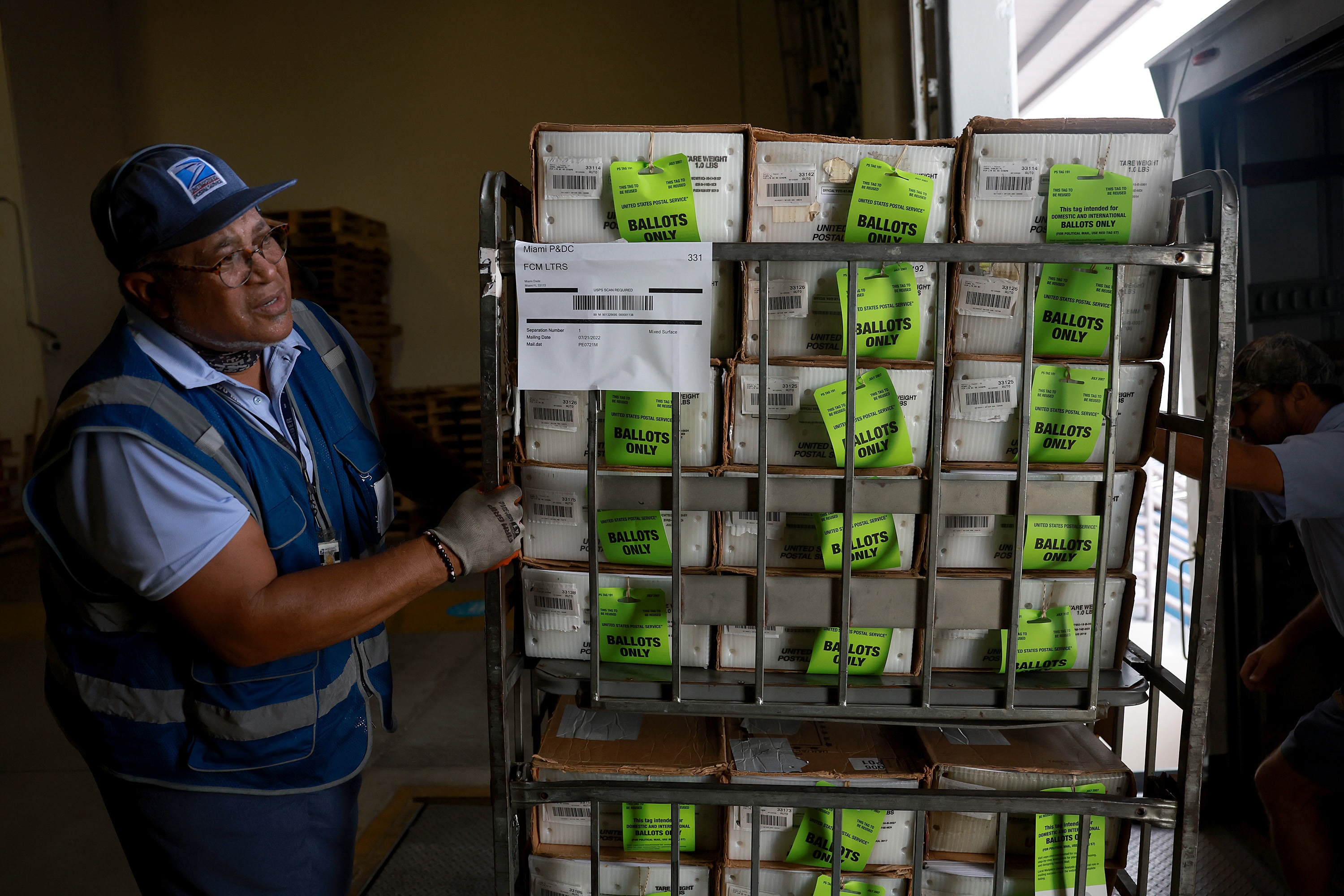
A U.S. Postal Service worker loads mail-in ballots onto a truck in 2022 in Miami. Joe Raedle/Getty Images hide caption
toggle caption Joe Raedle/Getty ImagesA federal judge in Boston has handed the Trump administration another temporary win in the legal fight over the president's executive order to restrict mail-in voting for the midterm election.
U.S. District Judge Indira Talwani on Wednesday canceled a nationwide ruling she had issued that blocked the U.S. Postal Service from working on Trump's directives.
The decision sets up another possible consideration of the executive order by the Supreme Court. The court ruled on a procedural issue, but has not weighed in on whether Trump's order is legal.
In that earlier procedural ruling, the Supreme Court halted a similar June ruling from Talwani that applied only to the 23 mainly Democratic-led states, plus Washington, D.C., that sued over the order.

Elections
Supreme Court gives Trump an interim win on his mail voting order, but hurdles loom
In response to the executive order Trump signed in March, USPS released a final rule for federal ballot mail. It lays out new design requirements for mail-in ballot envelopes, as well as a plan for delivering mail-in ballots only to people on lists of absentee voters that states would have to turn over to the mailing agency.
It remains unclear, however, if and how Trump's directives would ultimately affect voting by mail for the midterms, which is set to start in a matter of weeks.
Trump's order is expected to face more legal hurdles as this lawsuit and other related cases filed by Democrats, voting rights groups and two dozen mainly Democratic-led states proceed.
Edited by Benjamin Swasey

Elections
A federal law bans late voter roll purges. Republicans are pushing to reinterpret it

Politics
Postal Service says its cash crisis is delayed until at least 2031, but problems loom
NPR does not offer or accept money for coverage or interviews. Anyone who makes such an offer or request is not an NPR employee and does not represent NPR.


