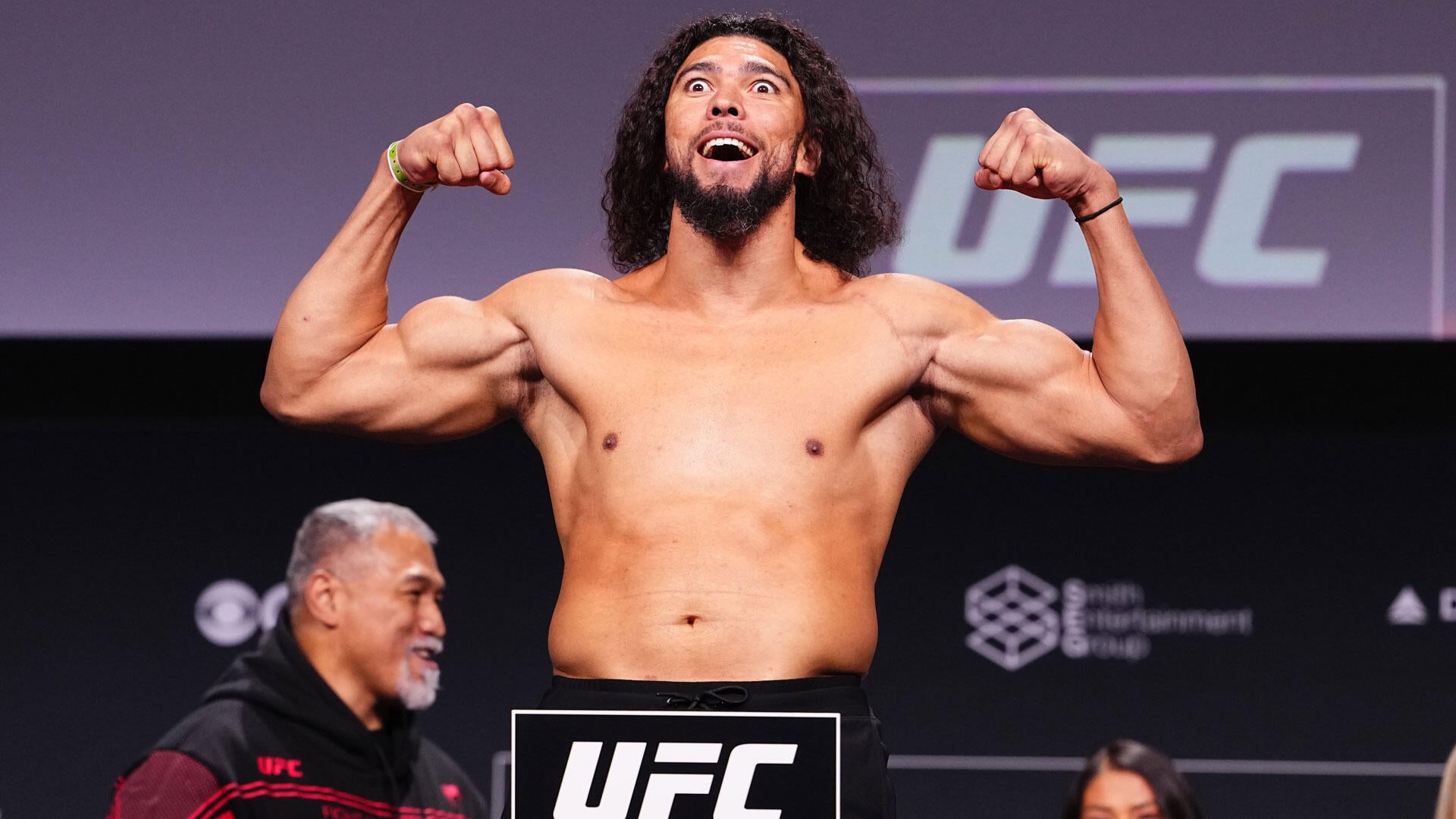
LAS VEGAS -- Johnny Walker's initial rise through the UFC was surreal. A string of highlight-reel knockouts in 2018 and 2019 convinced people that he could become light heavyweight champion, but he never reached those heights. Some seven years later, Walker — older, wiser, and heavier — aims to correct the mistakes that derailed his early potential.
Walker's first year in the UFC was something you had to experience in person. This tall, goofy madman, bearing the same name as an iconic Scotch whisky, knocked people out with elbows, spinning backfists and flying knees. His skyrocketing success was expected to reach new heights at the legendary Madison Square Garden in 2019. Walker opened as a nearly two-to-one favorite against talented, but under-appreciated wrestler Corey Anderson. Instead, Anderson knocked him out in approximately two minutes.
Walker never recovered his early momentum. He had hot-and-cold streaks and failed to adequately polish his unorthodox style for elite competition.
Eventually, Walker decided he'd had enough. Last month, he made his UFC heavyweight debut, closing the door on a complicated light heavyweight chapter. His introduction to the division couldn't have gone much better. Walker knocked out Mick Parkin with a knee in the first round at UFC 332. He looked every bit the dangerous, unpredictable fighter who first captured fans' attention.
Sign up for Paramount+ and watch UFC for no additional fee -- every UFC numbered event and UFC Fight Night is included with your subscription! Plans start as low as $8.99/month or $89.99/year!
The 34-year-old believes he's finally figured out what was missing.
"Consistency and the right team behind you," Walker told CBS Sports ahead of Saturday's main event against Waldo Cortes Acosta. "Nutrition and injury prevention. Be consistent and train year-round. Don't take long holidays and have good people behind you that you believe in. They spent that time working on you with you, and I have the best team now."
Walker primarily trains at Porrada Training Center in Las Vegas under six-time Muay Thai world champion Ray Sefo, alongside top heavyweight contender Alexander Volkov. He's surrounded himself with specialists who can help address the weaknesses that once limited his potential.
"I have the dream team, and it's just been amazing," Walker said. "It makes me a better fighter every day. And I think that's the secret. Pick the right person to be beside you."
Walker looked like a real heavyweight in Salt Lake City. Even after moving into the land of giants, he's still one of the tallest, rangiest athletes in his division. His massive frame raises a question about whether he spent too much of his career fighting at the wrong weight.
Walker can pinpoint when he realized the cut to 205 pounds was doing more harm than good.
"I realized in my fight against Dominick Reyes," Walker said. "I said, 'Bro, I think this is the last one. I was getting a little bit too dizzy, too weak. One month before the fight, I had to drop so much weight that I couldn't even train hard anymore. I felt like this, so I had to stop."
Walker lost a split decision to Reyes in a forgettable performance that bore little resemblance to his unusual chaotic approach. He was noticeably less active than in his previous outing, landing roughly half as many strikes despite spending twice as long in the Octagon. Walker believes the exhausting weight cut had compromised his performance before the fight even began.
"I couldn't really push much in the month leading up to the fight," he said. "Now I can train hard. Heavy and hard, but smart, even one day before the fight, because I have enough calories to maintain my health, recover from injuries, repair my body, and maintain my sanity. I'm not stressed so much. Life is easy on weight, bro."
After knocking out Parkin, Walker called out Marcin Tybura, a former ranked heavyweight who has fallen on hard times. It was a calculated choice. Walker wanted to ease into his new division rather than repeat the mistakes of his first UFC ascent. Taking a main event against Cortes Acosta on nine days' notice is a considerable departure from that plan.
"My plan is not God's plan," Walker said. "So God has better plans than I do. I just accept."
It's fair to wonder whether Walker is slipping into old habits. His initial rise was defined by spectacular risks, and his latest decision could undo the progress he's making. Cortes Acosta is a considerably more dangerous opponent than Parkin, and Walker has barely adjusted to the division.
Walker, however, insists this is different. His coaches didn't try to talk him out of accepting the fight. They were just as keen about the opportunity as he was, sharing the confidence they've developed in his preparation.
"Everybody knows my potential," Walker said. "They know what I'm capable of, and that's a really good opportunity. Waldo Cortes has to worry. Not me. I just have the opportunity. I'm just the new guy here."
Walker might be older and more disciplined, but some things haven't changed. He's still goofy and explosive. And he certainly hasn't lost his edge.
"I'm a carnivore, and the meal fell on the [plate of the] most carnivore guy," Walker said of the short-notice opportunity to fight. "Do you think I'm going to let it go? No, I'm going to eat it."