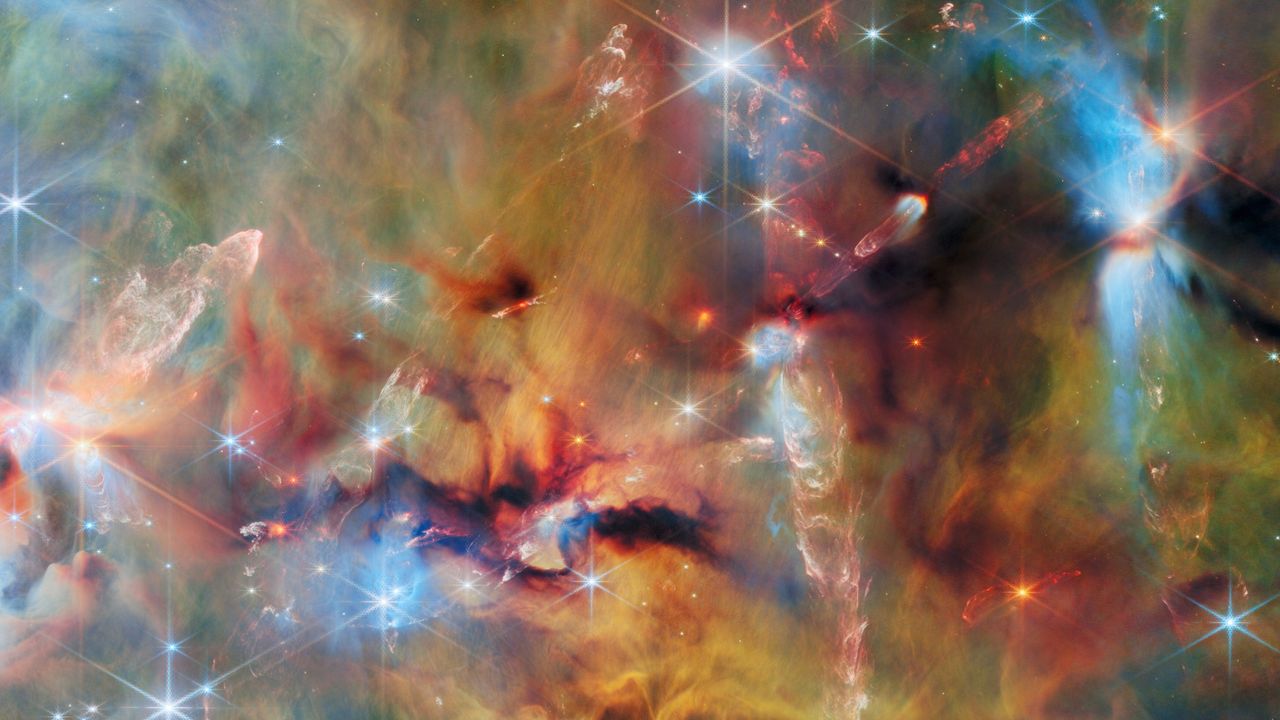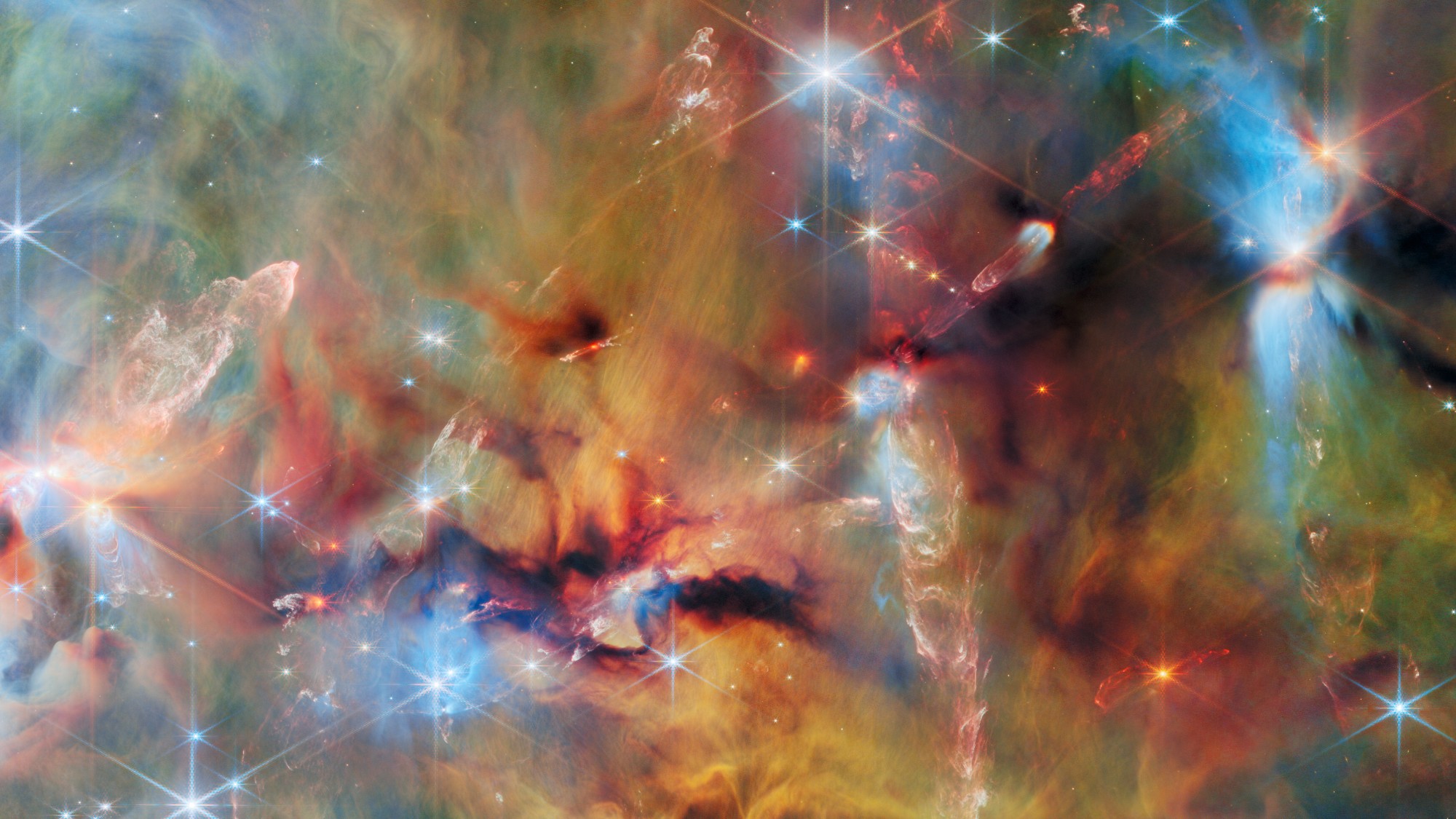
Newborn stars launch powerful jets of gas through cosmic clouds in this new scene captured by the James Webb Space Telescope (Image credit: ESA/Webb, NASA & CSA, T. Megeath, M. Zamani (ESA/Webb) Acknowledgement: M. H. Özsaraç)
Share this article Join the conversation
Follow us Add us as a preferred source on Google Newsletter Subscribe to our newsletter Quick Facts
What it is: OMC-2 molecular cloud
Where it is: 1,280 light-years away in the constellation Orion
When it was shared: June 5, 2026.
Explosive beams of energy crisscross through rainbow-colored space in a scene that evokes a cinematic sci-fi battle. In reality, it’s a scene of birth; in this single image, astronomers have captured every stage of star formation playing out at once.
This new James Webb Space Telescope (JWST) image reveals OMC-2, a beautiful and dense star-forming region within the Orion Molecular Cloud. It places viewers inside a turbulent cosmic nursery, where gas, dust and newborn stars are all in motion.
Just south of the famous Orion Nebula, one of the best-known stellar nurseries in the night sky (located within the three-star asterism known as the Sword of Orion), OMC-2 is a cloud of cold gas and dust where protostars — very young stars still gathering mass — are forming.
Latest Videos From
 Watch full video here:
 The scene is filled with layered clouds of gas and dust glowing in blue, green and yellow. Thick clumps of cold dust appear dark brown to black, blocking light completely and creating dark pockets across the field. Inside some of these clumps, stars may still be forming, hidden from view inside thick cosmic cocoons.
Scattered throughout the clouds are fully-formed stars of different colors and sizes, from small orange points to larger white and blue stars shining through the haze.
But perhaps the most striking feature of the image is the network of pale, glowing streams and wave-like structures cutting through the cloud. These are created by protostar jets as they collide with the surrounding material, carving out bright ridges and shock fronts. The result is an image that looks sculpted, with curved streams of whitish gas marking how young stars shape their environment.
Each jet, ridge and shadow provides clues about the movement of material through the region and helps astronomers trace how stars form and how their energy changes the surrounding cloud. Its colors and textures reveal a complex environment where gravity pulls material together, young stars ignite and energetic outflows reshape the cloud that gave rise to them.
Sign up for the Live Science daily newsletter now
Get the world’s most fascinating discoveries delivered straight to your inbox.
Contact me with news and offers from other Future brandsReceive email from us on behalf of our trusted partners or sponsors
It’s a vivid portrait of cosmic creation made possible by JWST’s infrared vision, which allows it to peer through thick layers of gas and dust that block visible light. By detecting that infrared light, astronomers can see structures and embryonic stars that would otherwise remain secret.
OMC-2 is one of four parts of the Orion Molecular Cloud, a massive filament behind the Orion Nebula. OMC-1 sits immediately behind the nebula, OMC-2 and OMC-3 are to its north and OMC-4 lies to its south.
 'Human minds should not go through this'
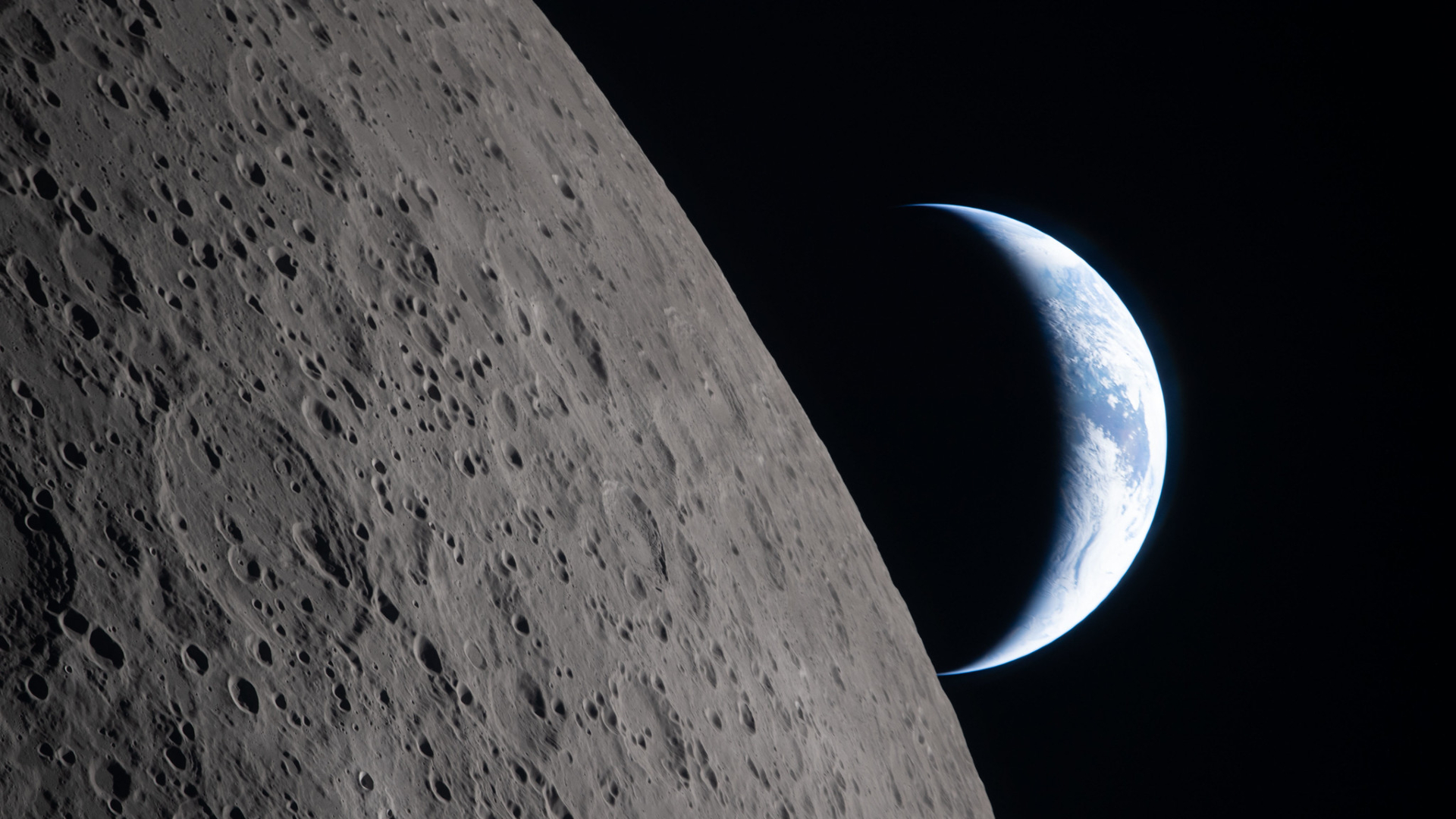
The Artemis II crew recalls the unreal moment when Earth disappeared
 Hidden structure in 1st Vera Rubin image
First-light images from the Vera C. Rubin Observatory reveal a 163,000-light-year stream of stars emanating from a nearby galaxy.
 JWST peeps the 'Eye of God'
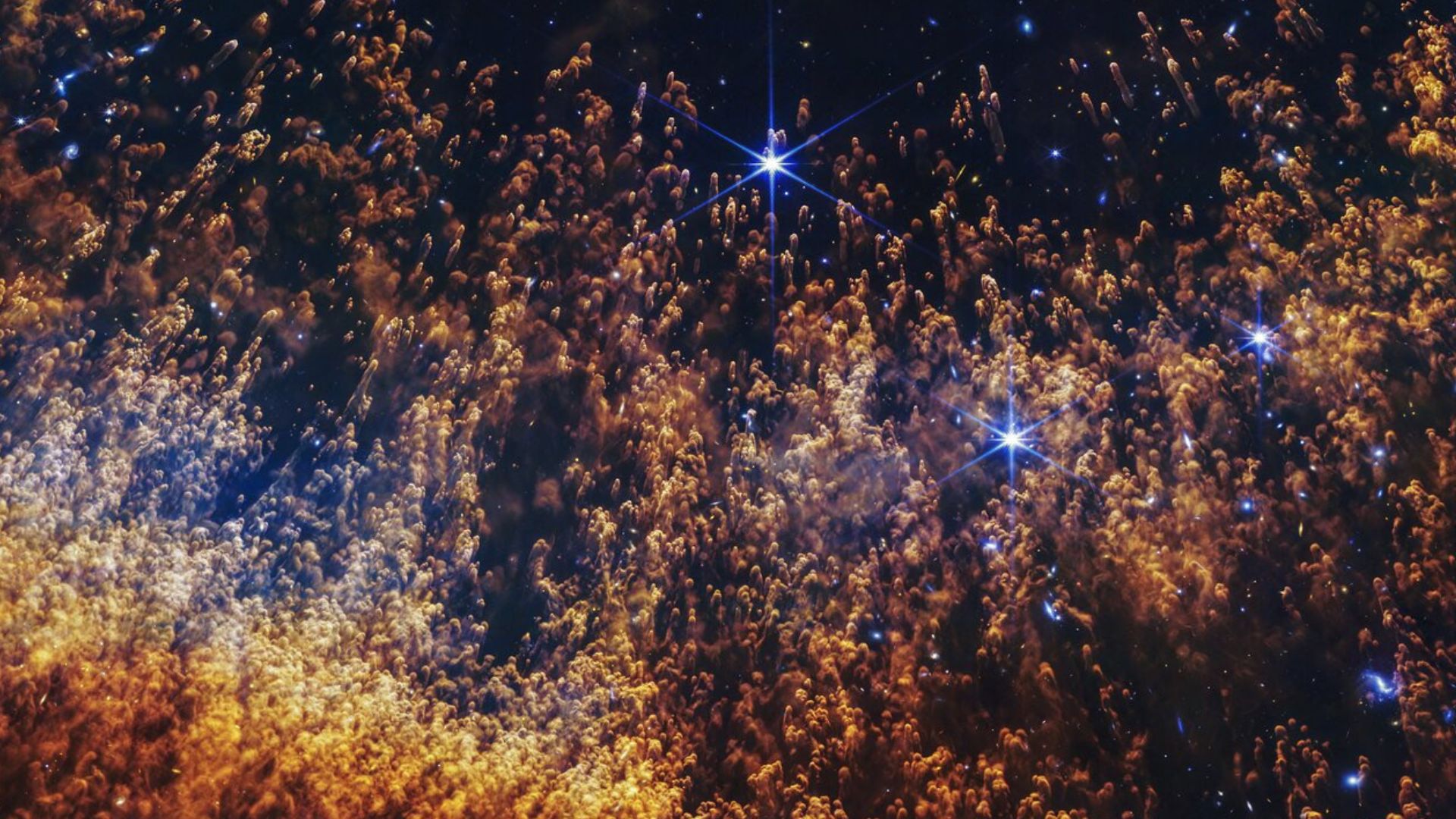
A spectacular James Webb telescope image reveals intricate structures inside the Helix Nebula.
TOPICS
 Jamie Carter
Live Science contributor
Jamie Carter is a Cardiff, U.K.-based freelance science journalist and a regular contributor to Live Science. He is the author of A Stargazing Program For Beginners and co-author of The Eclipse Effect, and leads international stargazing and eclipse-chasing tours. His work appears regularly in Space.com, Forbes, New Scientist, BBC Sky at Night, Sky & Telescope, and other major science and astronomy publications. He is also the editor of WhenIsTheNextEclipse.com.
View More
You must confirm your public display name before commenting
Please logout and then login again, you will then be prompted to enter your display name.
Logout