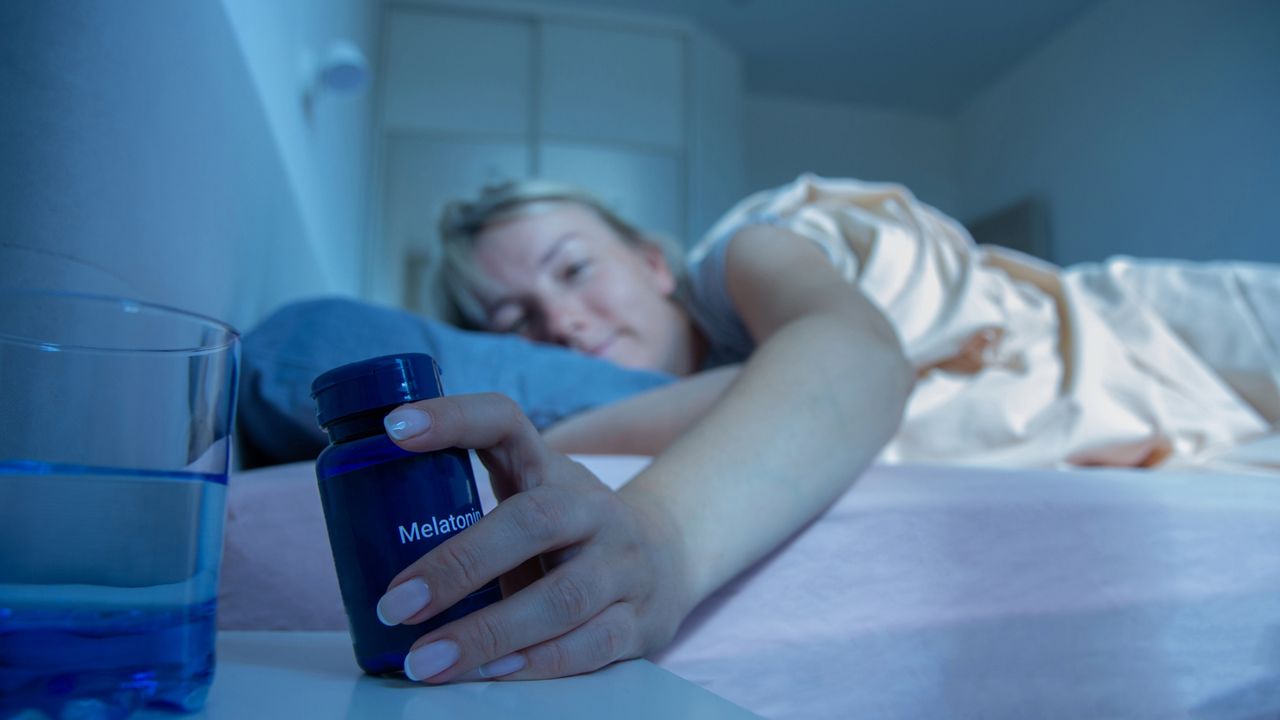
Melatonin pills and gummies are soaring in popularity, but researchers worry about perceived harmlessness and a lack of regulation over the industry. (Image credit: rbkomar via Getty Images)
Share this article Join the conversation
Follow us Add us as a preferred source on Google Newsletter Subscribe to our newsletter
Walk into any U.S. pharmacy, and you'll find a multicolored range of melatonin supplements marketed as sleep aids for adults and children alike.
The body-made hormone melatonin streams through our systems every evening, preparing us for rest. But while melatonin supplements claim to mimic this natural process, experts say bottles stamped with claims like "100% drug free" may be misleading.
Melatonin carries little risk when used correctly, but as a dietary supplement, it skirts the strong governmental regulation that's reserved for pharmaceuticals. This has led to inaccurate dosage labeling, incomplete safety information, and scant research into melatonin's long-term effects on kids, some scientists argue. Researchers worry that, given that many people perceive melatonin as harmless, some are misusing the supplement by taking unnecessarily high doses at improper times of the day.
"It's being promoted like there's absolutely no risk … [People say] 'It's all natural, and it just is a safe sleep aid,'" said Dr. Pieter Cohen, a Harvard Medical School researcher who studies supplements. "And that's where you can get into trouble."
The U.S. Food and Drug Administration (FDA) classifies melatonin as a supplement, while countries like the U.K. and Australia deem it a medication. This designation comes with a level of governmental oversight that U.S. supplements aren't subject to. Given melatonin's soaring popularity, some experts think the United States should follow suit and make melatonin an over-the-counter drug.
But if melatonin is already produced naturally by the body, why would the supplement version be riskier? Live Science spoke with experts to find out.
Supplements aren't well regulated
In the U.S., a 1994 federal law required that supplements be regulated as food, not drugs. The FDA doesn't assess the safety, efficacy or manufacturing quality of supplements before they're marketed but instead intervenes if harmful side effects are reported or if it's made aware of inaccurate labels. This largely leaves the supplement industry to self-regulate.
Sign up for the Live Science daily newsletter now
Get the world’s most fascinating discoveries delivered straight to your inbox.
Contact me with news and offers from other Future brandsReceive email from us on behalf of our trusted partners or sponsors
Cohen's research suggests that actual melatonin concentrations in products may range from 74% to 347% of what's reported on the label. Meanwhile, safety warnings and instructions on the best way to use melatonin aren't required on labels. Still, many popular brands adhere to voluntary melatonin labeling guidelines from the Council for Responsible Nutrition, a supplement trade organization. These guidelines include disclaimers like "may cause drowsiness" and "for occasional or intermittent use only."
Despite such disclaimers, nearly 1 in 5 school-aged children use it regularly as a sleep aid, a trend scientists are concerned by. Long-term safety data is lacking in kids, in part because melatonin hasn't gone through the safety trials required of new drugs. And melatonin isn't patented, so there's no strong incentive for drug companies to invest in safety studies, according to Debra Skene, a neuroendocrinologist at the University of Surrey in England. "There's no money in it," she said.
Many parents inaccurately view melatonin as akin to a "little glass of warm milk," Cohen said. But if parents give children high-dose supplements or multiple doses at once, "you're talking about side effects and getting sick and not helping sleep," he said.
Calls to U.S. poison control centers about melatonin poisoning in young children have shot up with the supplement’s popularity. This has been driven by accidental ingestions in children under 5, and in some cases, kids had serious symptoms, like respiratory failure or seizures. That said, some of those effects may be due to certain melatonin products' inclusion of serotonin, which can be dangerous if consumed in large quantities.
Evidence does suggest that melatonin can help children with attention-deficit/hyperactivity disorder and autism get to sleep, among whom sleep problems are common. But the potential benefits of melatonin for neurotypical kids are less clear.

There's been little research conducted on the safety of long-term melatonin use in children.
(Image credit: Catherine McQueen via Getty Images)
One concern scientists have is that the regular use of melatonin may affect puberty. In various animal species, melatonin helps regulate reproduction, and supplemental melatonin can disrupt these effects. The few human studies that exist haven't shown clear effects on puberty, but there hasn't been an in-depth study tracking hormone levels in the blood, said Helen Burgess, who researches the circadian rhythm at the University of Michigan.
"I'm OK with intermittent short-term use," she said of melatonin supplementation in kids. But given the lack of data, she suggested that parents consult a pediatrician to look for another solution if their child needs melatonin regularly.
The lesser-known effect of melatonin
Supplements supercharge the body's supply of melatonin, said Margarita Dubocovich, who studies melatonin at the University at Buffalo. Supplement dosages generally range from 1 to 10 milligrams (mg), while adults produce about the equivalent of a 0.3-mg pill nightly, she said.
When taken orally, supplements and medications pass through the digestive tract before reaching systemic circulation, meaning the full dose of melatonin won't necessarily make it into the bloodstream. However, the amount that circulates will still be far higher than what's naturally produced in the body, said Skene.
Upping your melatonin dosage doesn't knock you out; the drowsiness triggered by the supplements is generally mild. The supplement also avoids the side effects of conventional sleeping pills: memory loss, gastrointestinal issues and next-day "hangovers."
However, melatonin has a lesser-known effect. Given its role in regulating the circadian rhythm — the 24-hour clock that regulates many bodily systems — it can scramble the body's sense of timing when regularly taken outside your bedtime, such as too early before bed or in the middle of the night.
That's why melatonin can help treat jet lag if taken for multiple days just before or after traveling. But if people take pills as they're tossing and turning throughout the night, this could throw off the circadian rhythm, Dubocovich said. This practice may induce a kind of jet lag (without the perks of international travel). In the short term, that can come with drowsiness during the daytime, irritability, upset stomach, brain fog and insomnia.

Melatonin can affect the body's circadian rhythm, which can contribute to insomnia.
(Image credit: urbazon via Getty Images)
"I think that melatonin could be good if you take it in a controlled manner and the right dose," Dubocovich said, suggesting a few milligrams taken right at bedtime. "But how people are taking it [currently], they are intoxicating themselves."
Not all researchers agree that melatonin-induced jet lag poses a big risk, but taking more than 3 mg in the middle of the night still "isn't a good idea," said Burgess. This dose may linger in the body through the morning, she said, leading to next-day grogginess.
Burgess' research suggests that supplemental melatonin is most effective at shifting the biological clock forward in time, which happens when it's taken in the early evening. Still, she said the impact of melatonin on the circadian rhythm "just does not seem to be really recognized or understood by the public at all."
Should melatonin be a drug?
If melatonin were an over-the-counter medication, it would require clear labels with instructions and accurate dosing. "You should be able to know what dose you're getting, and it shouldn't be sold in whatever dose the manufacturer … decides to pour in on a given day," Cohen said.
Yet, reclassification could disrupt access to a relatively safe sleep aid that many consumers rely on, argued Jeff Ventura, a spokesman for the Council for Responsible Nutrition, the supplement industry trade organization that created the melatonin labeling guidelines. "Moving melatonin into the drug category would require formal FDA drug approval pathways, which could limit consumer access, reduce product variety, and significantly increase costs" for both manufacturers and consumers, he told Live Science in an email.
It's unlikely the supplement will be made an over-the-counter drug anytime soon. Cohen attributes the lack of a serious movement to the supplemental industry lobby, which includes the Council for Responsible Nutrition. "Any move to take such a great money winner like melatonin out of their hands would cause them to fight it tooth and nail," he said.
Related stories
Burgess, who serves on the scientific advisory board for the melatonin brand Natrol, agrees that purity is an issue. However, she said she isn't too concerned about melatonin's availability, given its "pretty benign effects." Still, she suggests going with a big name brand with a US Pharmacopeia (USP) stamp verifying its listed ingredients are accurate; USP is a nongovernmental organization that sets quality standards for medicines, food ingredients, and dietary supplements.
After studying the hormone for 40 years, Dubocovich agrees that melatonin should be regulated as an over-the-counter medication.
"Melatonin can help support a good night’s sleep, especially in small doses that mirror the body’s natural rhythm," Dubocovich said. "But not all melatonin is created equal."
Disclaimer
This article is for informational purposes only and is not meant to offer medical advice.
How much do you know about sleep and dreams? Find out with our sleep quiz!
TOPICS
 Georgia Michelman
Live Science contributor
Georgia Michelman is a freelance science and health journalist based in New York City. She holds a B.S. in physics and history from Yale University and is currently enrolled in NYU's Science, Health, and Environmental Reporting Program. Before going into journalism, she worked across the pond for two years at the U.K.-based Science Media Centre, an independent press office focused on controversial science stories. She has strong interests in writing about physics, astronomy, psychiatry, drugs, and public health.
View More
You must confirm your public display name before commenting
Please logout and then login again, you will then be prompted to enter your display name.
Logout