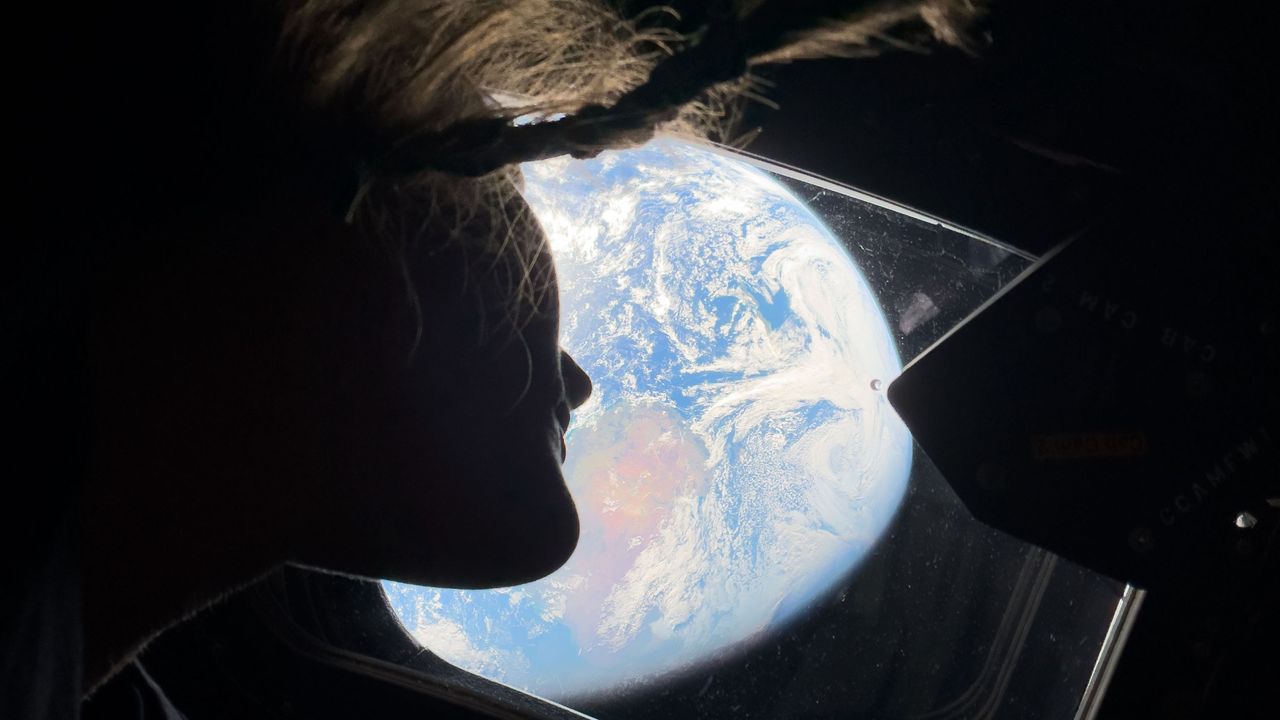
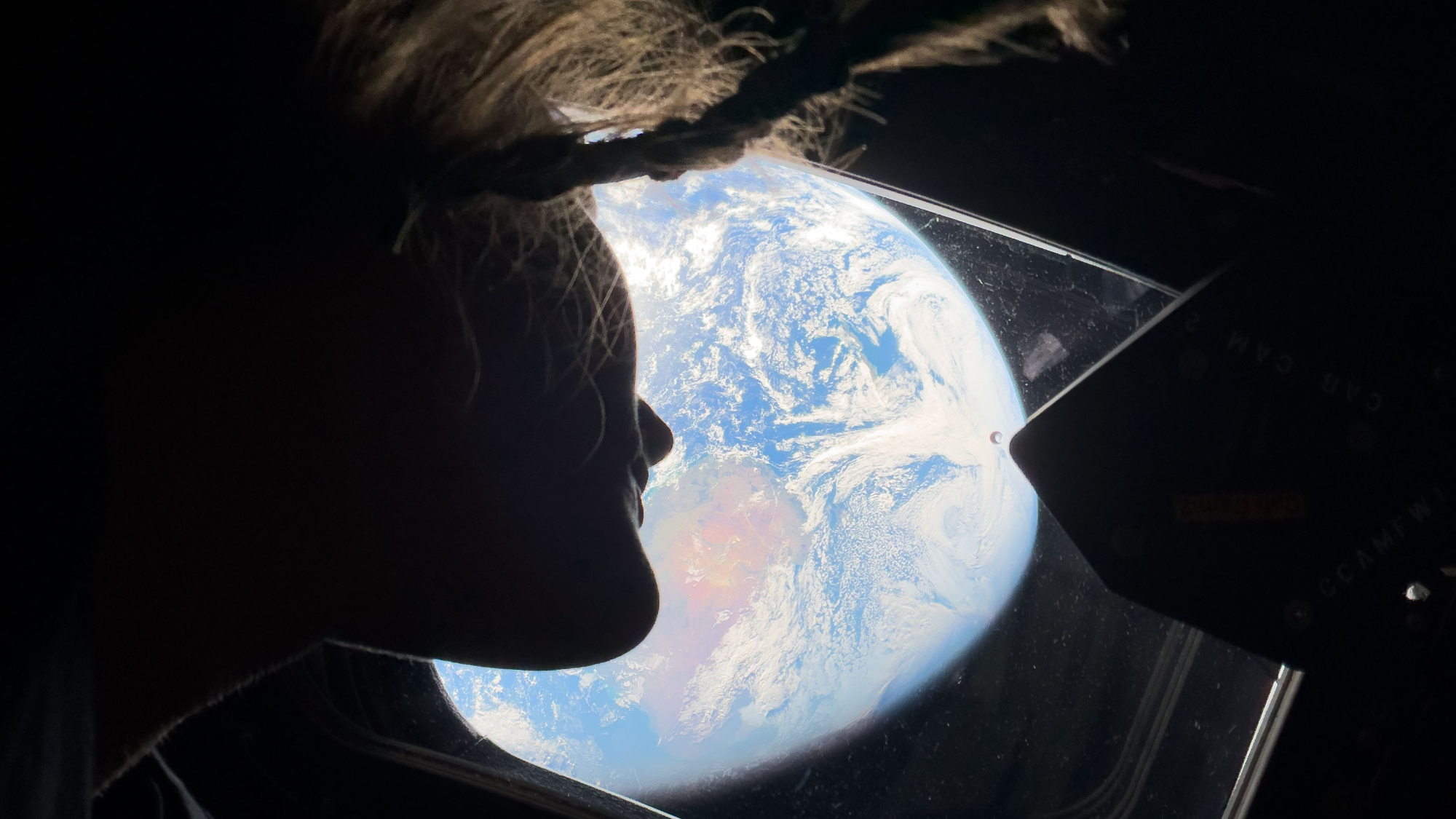
 Artemis 2 astronaut Christina Koch of NASA looks at Earth as her Orion spacecraft heads toward the moon in April 2026. (Image credit: NASA) Share this article 0 Join the conversation Follow us Add us as a preferred source on Google Newsletter Get the Space.com Newsletter
 Breaking space news, the latest updates on rocket launches, skywatching events and more!
Contact me with news and offers from other Future brands Receive email from us on behalf of our trusted partners or sponsors By submitting your information you agree to the Terms & Conditions and Privacy Policy and are aged 16 or over.You are now subscribed
Your newsletter sign-up was successful
Want to add more newsletters?
An account already exists for this email address, please log in. Subscribe to our newsletterTraveling far from her home planet helped Artemis 2 astronaut Christina Koch appreciate it even more.
Koch and her crewmates talked with some of their International Space Station (ISS) counterparts on Tuesday (April 7), a day after Artemis 2's epic flyby of the moon. And the station astronauts had lots of questions for the deep-space explorers.
"We know how fortunate all of us are as humans to come up here and look down at the Earth from above; every astronaut that comes to space remarks on that," Meir said.
She was referring to the "overview effect," the often life-changing shift in perspective that comes from seeing our planet as it truly is — a fragile world that looks very alone in a vast and dark cosmos.
"We really wanted to hear what that felt like, and how different that felt now from your new perspective around the moon," Meir continued.
"I'll start by saying we do miss the ISS," Koch responded. (Wiseman and Glover have also lived aboard the station; Hansen is a spaceflight rookie.) "The views there are awesome, being able to see specific places — being able to see your home, specifically. So y'all's views are absolutely incredible, and I miss them every day, almost."
Get the Space.com NewsletterContact me with news and offers from other Future brandsReceive email from us on behalf of our trusted partners or sponsorsThen she described the difference, as Meir requested.
"The thing that changed for me looking back at Earth was that I found myself noticing not only the beauty of the Earth, but how much blackness there was around it, and how it just made it even more special," Koch said.
"It truly emphasized how alike we are, how the same thing keeps every single person on planet Earth alive," she added. "We evolved on the same planet, we have some shared things about how we love and live that are just universal, and the specialness and preciousness of that really is emphasized when you notice how much else there is around it."
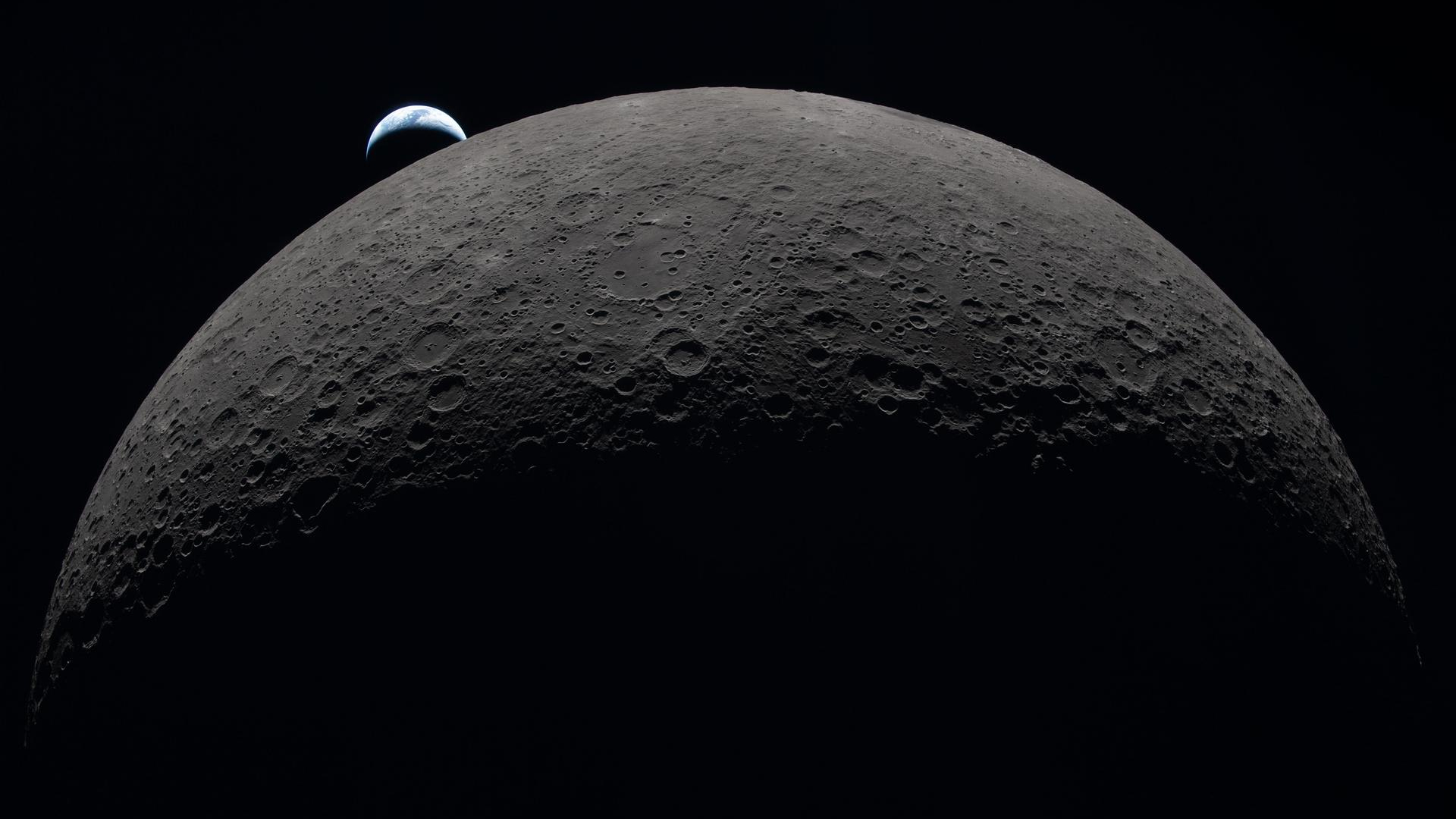
All four Artemis 2 crewmates — Koch, fellow NASA astronauts Reid Wiseman and Victor Glover, and Jeremy Hansen of the Canadian Space Agency — took part in the 15-minute call.
On the ISS, Meir shared the microphone with NASA's Chris Williams and Jack Hathaway, and Sophie Adenot of the European Space Agency. The three cosmonauts currently living on the orbiting lab — Sergey Kud-Sverchkov, Sergei Mikaev and Andrey Fedyaev — did not participate.
Adenot asked the Artemis 2 astronauts what has surprised them during their mission so far.
"I don't mean to give you such a short answer, but I can truly say 'everything,'" Glover replied.
He cited many of the mission's major milestones, from its April 1 liftoff atop a Space Launch System rocket to its maneuvers in Earth orbit to its journey to, and flyby of, the moon.
"This entire journey has been interesting," Glover said.
Artemis 2 — the first crewed mission beyond Earth orbit since Apollo 17 in 1972 — is now headed back to Earth. The four astronauts will get here on Friday (April 10), splashing down that evening off the coast of San Diego.
NASA will then start gearing up for Artemis 3, which will test docking and rendezvous technologies in Earth orbit in 2027. After that will come Artemis 4, which aims to land astronauts near the moon's south pole in late 2028.
 Mike WallSpaceflight and Tech Editor
Michael Wall is the Spaceflight and Tech Editor for Space.com and joined the team in 2010. He primarily covers human and robotic spaceflight, military space, and exoplanets, but has been known to dabble in the space art beat. His book about the search for alien life, "Out There," was published on Nov. 13, 2018. Before becoming a science writer, Michael worked as a herpetologist and wildlife biologist. He has a Ph.D. in evolutionary biology from the University of Sydney, Australia, a bachelor's degree from the University of Arizona, and a graduate certificate in science writing from the University of California, Santa Cruz. To find out what his latest project is, you can follow Michael on Twitter.
View MoreYou must confirm your public display name before commenting
Please logout and then login again, you will then be prompted to enter your display name.
Logout MORE FROM SPACE...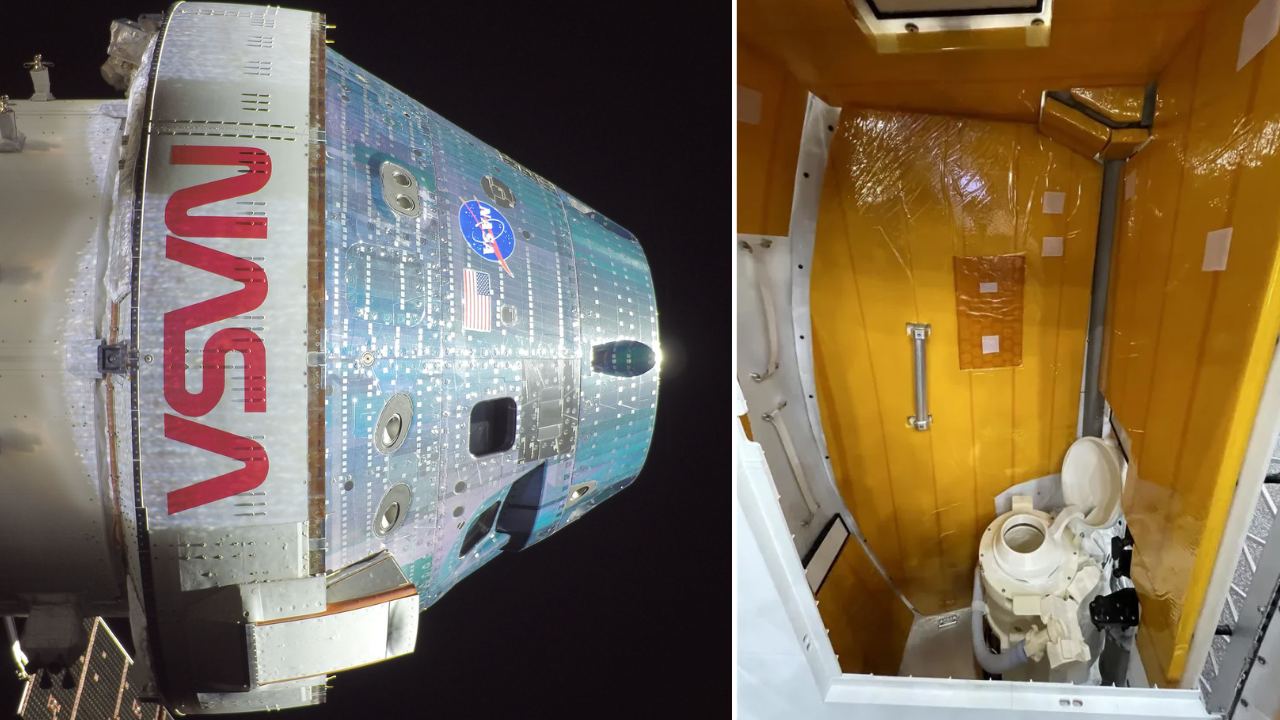 1The Artemis 2 space toilet is actually working fine. But there is another problem
- 2'Project Hail Mary' sound designers used surprising animal sounds to create Rocky's musical alien voice (interview)
- 3Relive Artemis 2's epic moon flyby with these amazing photos
- 4'Maul – Shadow Lord' stars Sam Witwer and Gideon Adlon talk Maul's surprising honesty, becoming a Jedi, and George Lucas' original vision for the character
- 5A satellite just captured images of a tsunami being born. Here's why that's a big deal