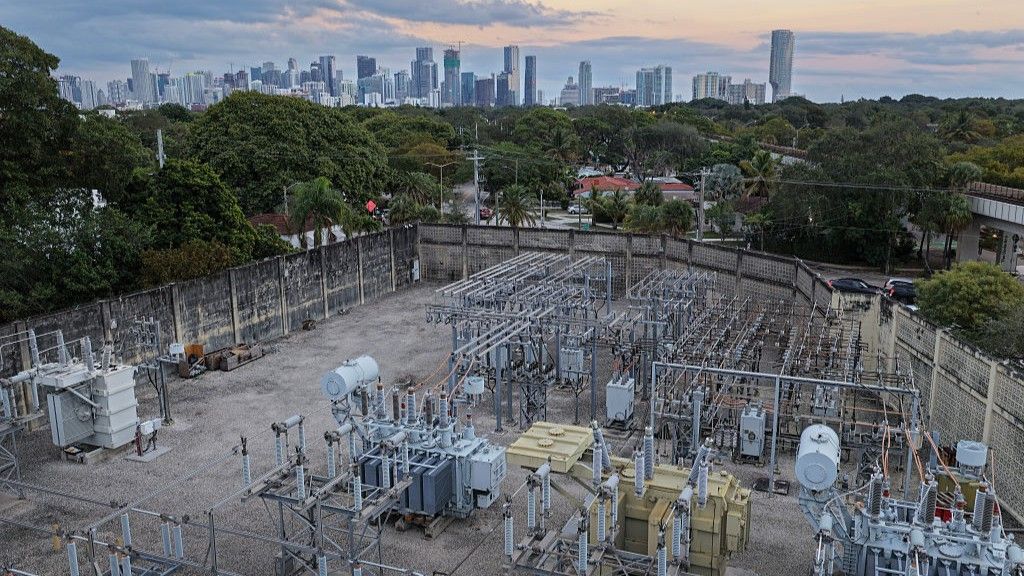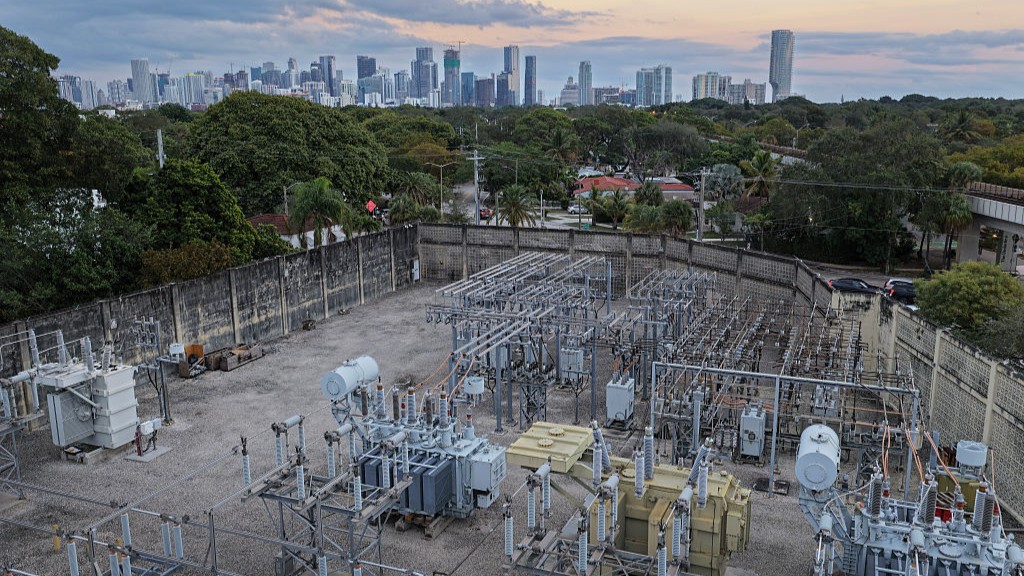
AI is already putting tremendous pressure on the energy grid, and it could get a lot worse over the next few years. (Image credit: Joe Raedle/Getty Images)
Share this article Join the conversation
Follow us Add us as a preferred source on Google Newsletter Subscribe to our newsletter
Energy used to power artificial intelligence (AI) could jump to 3% of global electricity demand by 2030, guzzling as much water as the 1.3 billion people in sub-Saharan Africa consume in one year to meet their domestic water needs.
Those are the conclusions of a recent United Nations report that estimated the land use, water consumption and greenhouse gas emissions associated with AI's breakneck expansion. If the data centers that underpin AI formed a country, they would rank 11th in the world for energy use due to their high infrastructure and electricity needs to train ever more complicated models and satisfy users, the report found.
By 2030, data centers could rise to sixth in the world for energy consumption, which would have a land footprint the size of Connecticut and release emissions comparable to those of the U.K. in 2025, depending on how much renewable energy is in the mix.
The findings highlight how much additional pressure AI and the infrastructure that supports it could put on the environment and the climate within the next few years. But why does AI have such a huge footprint, who is benefiting or being left out from the opportunities linked to AI's growth, and what can be done to limit the damage?
To find out more, we spoke with Kaveh Madani, lead investigator for the U.N. report; director of the United Nations University Institute for Water, Environment and Health; and the recipient of this year's Stockholm Water Prize.
Sascha Pare: What would you say is the main takeaway from the report?
Kaveh Madani: The main takeaway of this report is that although in the general discourse AI is perceived as something virtual, or digital, or up in the clouds, there is [a] massive physicality to AI and the supply chains and infrastructure that back it up. And that's one thing that this report has tried to do: to remind people that behind every prompt, every use, every interaction, there is some level of impact on the environment. This is because from the top of the supply chain, where the extraction of critical minerals happens, to the point of manufacturing the hardware, the construction of the data centers, then the operation of data centers, and then dealing with the e-waste, there are major environmental impacts. If we take all of those into account, then we realize that what's digital is not necessarily free of impact. There is always some footprint associated with it, and we have to remember that.
Sign up for the Live Science daily newsletter now
Get the world’s most fascinating discoveries delivered straight to your inbox.
Contact me with news and offers from other Future brandsReceive email from us on behalf of our trusted partners or sponsors
SP: Why does AI have such massive land and water footprints, specifically?
KM: The report outlines the carbon, water and land footprints of AI's energy use. All along the supply chain, from the extraction of critical minerals to the point of disposing and dealing with the electronic waste, we have actions and interventions that require water, require land, and are associated with carbon emissions. So, if you think about, for example, the extraction of critical minerals, we know that during the process, a lot of water is being used and a lot of water is being polluted and poisoned. We published a report in April about the water injustice implications of the critical minerals, showing exactly what is happening where we have the extraction of critical minerals.
You have to decide if you want to continue using your water for agriculture or if you want to put it into data centers.
Kaveh Madani
But let's not forget that the [new] report is focused on AI's energy use, and then tries to argue that the energy production process itself requires also a lot of water and land. If you are using hydropower to provide energy to your data center, you're using a lot of land and a lot of water. This applies to all sorts of energy sources, regardless of being clean or not, or if you consider them renewable or not — they all require water and land. On top of this, of course, you need to build data centers on land, but also you need water for cooling. That's why, throughout the supply chain, throughout the life cycle of AI, we have a lot of water and land use, in addition to carbon emissions.
SP: The report is packed with jaw-dropping statistics about how big AI's environmental footprint could get by 2030. But how significant are the impacts?
KM: First of all, it is very hard to estimate exactly how much energy AI is currently using, but we know that roughly 20% of the current load of data centers can be attributed to AI. We are expecting that to be 40% within a few years. And by then, the data centers that back AI's operations are expected to have an energy demand that is about 3% of the total energy demand of the world. This is equivalent to being the sixth-most-energy-intensive country in the world. The water demand of that is also huge; the water footprint associated with that is enough to satisfy the domestic water needs of 1.3 billion people in sub-Saharan Africa.
SP: Can the environment and communities cope with the projected levels of energy and water consumption needed for AI?
KM: There would be places in the world where big decisions must be made, meaning that you have to decide if you want to continue using your water for agriculture or if you want to put it into data centers. Those would be decisions for the communities — and if the communities are not involved, then the most vulnerable, the poor, will be dealing with the consequences.
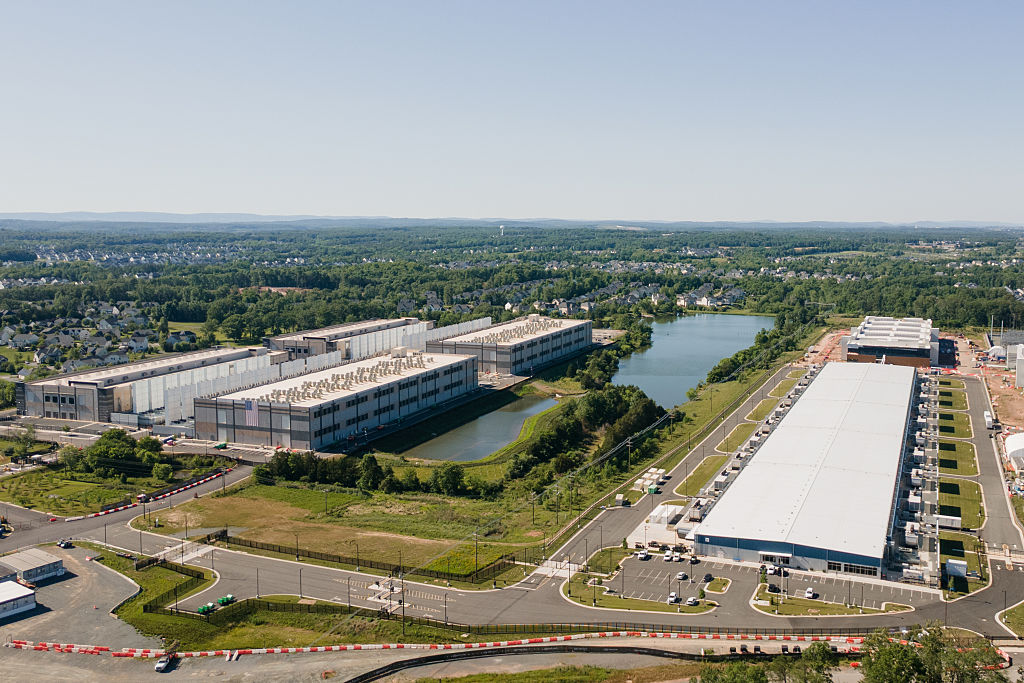
A Microsoft Azure data center in Aldie, Virginia.
(Image credit: Lexi Critchett/Bloomberg via Getty Images)
At the same time, we know that the world's electricity consumption keeps increasing. That's a major problem, because although we are trying to add more and more renewables to the energy supply systems, the renewables cannot keep up with the increasing electricity demand. This means that not only can we not retire the old systems, but we might also need to use more fossil energy to satisfy this growing demand. And of course, that means more pressure on the fragile environment.
We know some of the data centers are being placed in locations that are already dry or suffering from what we refer to as "water bankruptcy," based on the report we published in January. These are major issues. More pressure on the environment [puts] more pressure on humans, and this recipe means [we could have] a kind of reinforcing degradation loop that would jeopardize both nature and human society.
SP: Who is benefiting the most from AI's expansion, and who is being excluded?
KM: AI expansion is benefiting humanity as a whole. It has changed our lifestyle; it has provided a lot of opportunities and improvements. But at the same time, it has some consequences. The issue that we see right now is that the richer communities and countries of the world are the ones that are benefiting from it the most, and within those communities and countries, it's the rich who are also profiting more from the expansion. If you look at the investment landscape of AI, you can see that there is a lot of push from a number of strong players and private investors. And they don't bear the costs when it comes to pollution, water bankruptcy, land degradation and so on.
If you think about the emissions, they are contributing to global warming, and everybody would suffer from it. Even the countries that don't have AI infrastructure are affected: If you think about where the critical minerals come from, you see a lot of poor communities, poor countries and poor regions in Africa, South America, parts of Asia, where people don't have basic infrastructure — they don't even have clean drinking water and energy infrastructure. They don't benefit from this expansion and the profits and utilities it provides. It's the most vulnerable communities and the poor economies that are going to suffer the consequences, while the other ones will benefit more.
SP: How did you estimate AI's growth by 2030, and how likely is it that your numbers will come true, given the fears that AI is a bubble that's about to catastrophically burst?
KM: We were looking at the data centers, and we still think that our projections are conservative. There is a lot of push from the private sector to further growth. Countries are also seeing investment in AI and data centers as an investment in security, sovereignty and other matters, so there's also a competition there. Some of the investments — some of the decisions about expanding AI — are not necessarily based on comprehensive assessments. Investments remain a bid to stay in the race, and that means more and more push. So we think that what we have projected is probably very conservative.
SP: China is scaling up its energy capacity together with data center buildout, and it is putting data centers in the ocean to try to solve the hardware cooling issue. What do you make of this strategy, and should other countries learn from it?
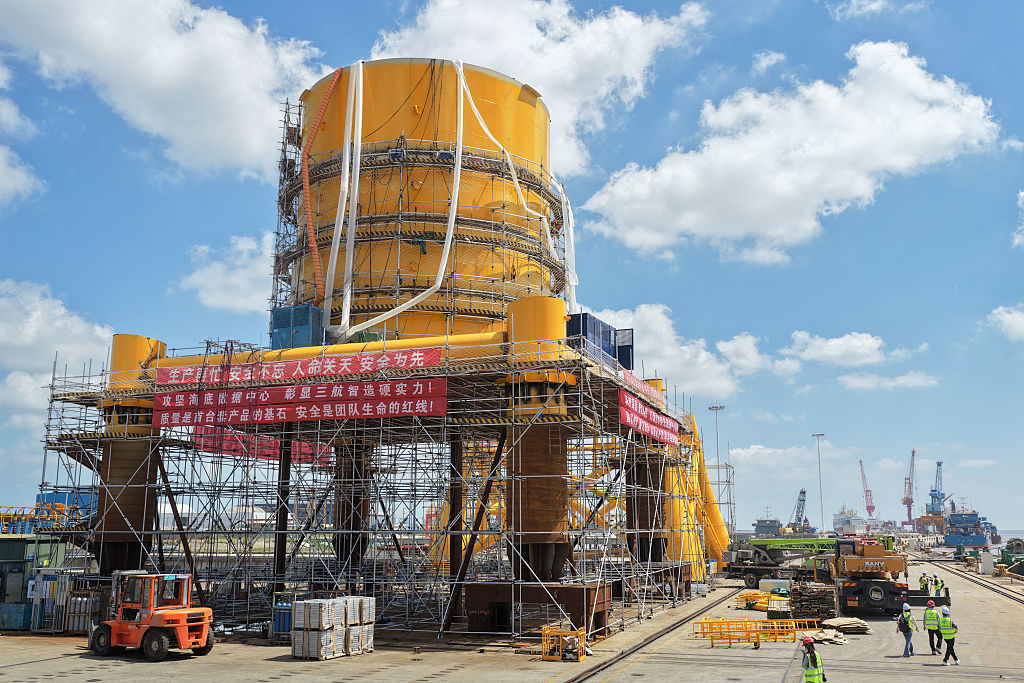
Chinese companies are testing underwater data centers to solve cooling demands. Here, we see a data center under construction at a shipyard in Nantong, in China's eastern Jingsu province.
(Image credit: CN-STR / AFP via Getty Images)
KM: China's more centralized decision-making system provides advantages, but I think we need to be careful about generalizing the information of one or two projects highlighted by the media to the overall strategy.
We know that China has been expanding its renewable energy production capacity, and that's definitely a good thing. We have to make sure that the additional load of AI would not mean more fossil energy and would not compromise the decarbonization process. But at the same time, we should note that just scaling up renewables is not sufficient if you're thinking about decarbonization. We need a massive addition of renewables if we're going to reverse climate change, and we are not seeing strong enough signs of that around the world. So that's something that we have to be worried about.
That has been the challenge created for the world because of the expansion of AI. When it comes to putting things under the ocean, I think we do not yet have enough information and enough experience to judge if those things come with less environmental impact. What we hide would not be impact-free; there are also other impacts to worry about.
SP: What are some other solutions to the pressures AI is putting on the environment and people? How should we approach the rapid expansion to ensure it is fair?
KM: We offer a framework based on a number of principles about making the AI governance system more fair and transparent and sustainable. So, those are the principles suggested, and they bring responsibility to all stakeholders, including the developers and service providers — those who provide the technology and have responsibilities of ensuring that their systems are more transparent and efficient.
RELATED STORIES
Then, we have the governments that have the responsibility of ensuring that information becomes available, that footprints are properly monitored and disclosed and regulated. They can use a range of incentives, mechanisms or penalties to ensure that footprints are reduced across the supply chain — and I insist on that — from the mines to the landfill. So, that can be done; pollution taxes can be charged and so on. [Governments should ensure] that those who have to deal with the consequences also benefit from the profits and the opportunities that data centers bring to their communities. Decisions must be made based on resource availability and the environmental consequences taken into account.
Users also can do a better job of making smarter choices by using AI more responsibly and only when it's absolutely necessary. When using AI, choose the right models, and be mindful of what is happening behind the scenes. Is it really necessary to generate another image? Is it really necessary to generate a video? Is it necessary to use the model in the "thinking mode"? Together, all the stakeholders can make a difference, and users can also call for more transparency and force governments to take action to force the service providers to provide more information and be more transparent.
Editor's note: This interview has been condensed and lightly edited for clarity.
TOPICS
 Sascha Pare
Staff writer
Sascha is a U.K.-based staff writer at Live Science. She holds a bachelor’s degree in biology from the University of Southampton in England and a master’s degree in science communication from Imperial College London. Her work has appeared in The Guardian and the health website Zoe. Besides writing, she enjoys playing tennis, bread-making and browsing second-hand shops for hidden gems.
View More
You must confirm your public display name before commenting
Please logout and then login again, you will then be prompted to enter your display name.
Logout