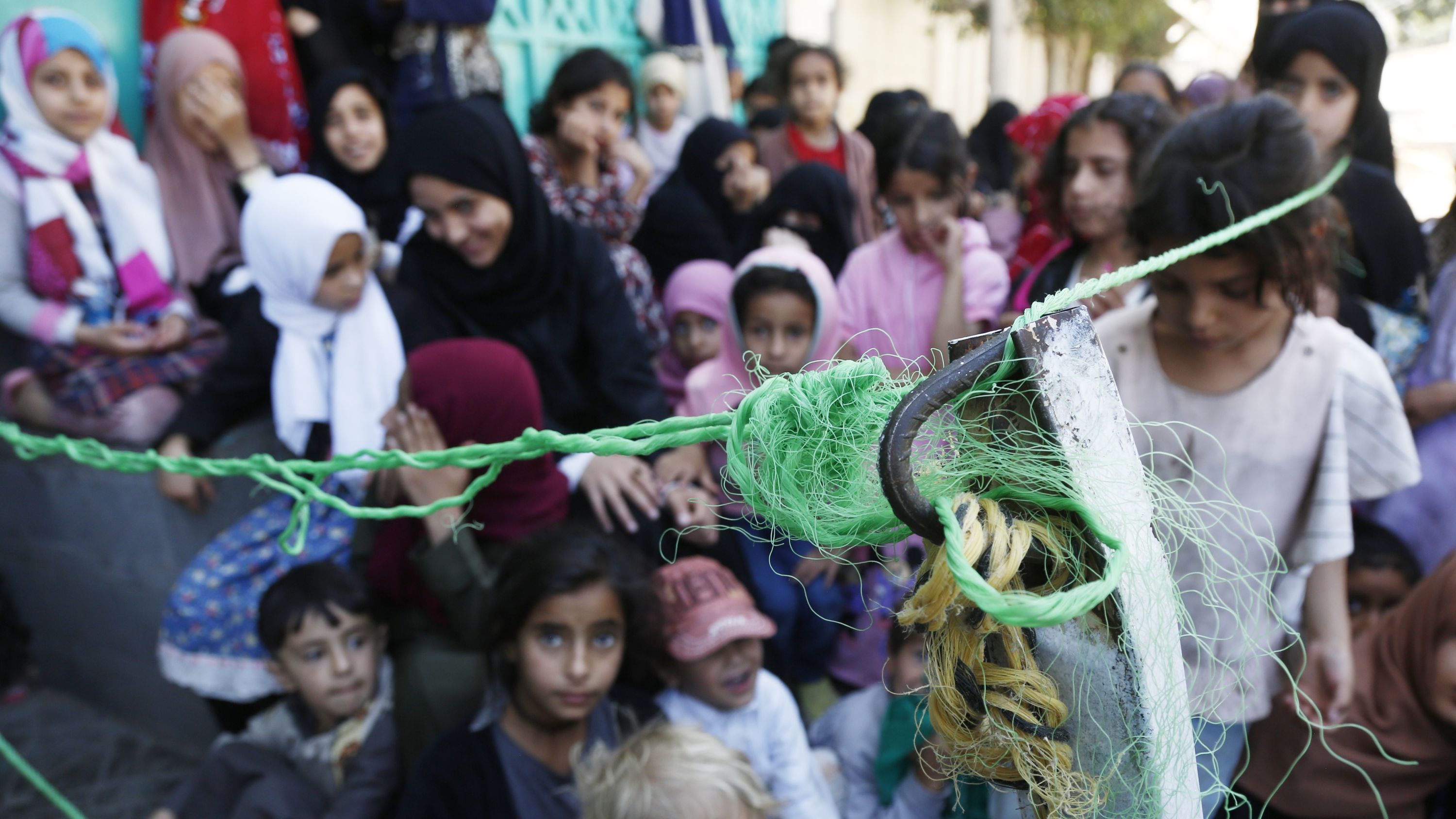
 The U.N. has warned millions more people will be pushed into food insecurity if the war in Iran continues, with the biggest increases in Asia. (Image credit: Mohammed Hamoud /Getty Images) Share this article 0 Join the conversation Follow us Add us as a preferred source on Google Newsletter Get the Live Science Newsletter
 Get the world’s most fascinating discoveries delivered straight to your inbox.
Become a Member in Seconds
Unlock instant access to exclusive member features.
Contact me with news and offers from other Future brands Receive email from us on behalf of our trusted partners or sponsors By submitting your information you agree to the Terms & Conditions and Privacy Policy and are aged 16 or over.You are now subscribed
Your newsletter sign-up was successful
Want to add more newsletters?
Join the club
Get full access to premium articles, exclusive features and a growing list of member rewards.
Explore An account already exists for this email address, please log in. Subscribe to our newsletterThe war in Iran could push an additional 45 million people into acute hunger in just three months, causing record levels of global food insecurity, according to a new analysis from the United Nations World Food Programme (WFP).
The analysis found that if the conflict continues to the middle of the year and oil prices remain above $100 per barrel, an estimated 363 million people would be food insecure — 45 million higher than the current 318 million people.
Article continues belowThe WFP calculated the impact of the conflict on global hunger by calculating the number of people who cannot afford a diet that provides 2,100 calories per day. It then modeled how a sustained oil price shock — lasting to June — would affect global food prices. Analysts calculated the impact based on each country's dependence on imported food and energy and the number of people who would no longer be able to afford an energy-sufficient diet.
Sign up for the Live Science daily newsletter nowContact me with news and offers from other Future brandsReceive email from us on behalf of our trusted partners or sponsorsThe region with the biggest increase in food insecurity, they found, was Asia, where an estimated 9.1 million people would be pushed into food insecurity — a rise of 24%.
related stories—Climate change is spoiling food faster, making hundreds of millions of people sick around the world
Food insecurity resulting from the war would affect about 17.7 million people in eastern and southern Africa, 2.2 million in Latin America and the Caribbean, 5.2 million in the Middle East and North Africa, and 10.4 million in central Africa.
That would mean an additional 45 million people across the globe meet the definition for food insecurity, bringing the total to 363 million.
"This would take global hunger levels to an all-time record, and it's a terrible, terrible prospect," Skau said.
 Hannah OsborneEditor
Hannah Osborne is the planet Earth and animals editor at Live Science. Prior to Live Science, she worked for several years at Newsweek as the science editor. Before this she was science editor at International Business Times U.K. Hannah holds a master's in journalism from Goldsmith's, University of London.
View MoreYou must confirm your public display name before commenting
Please logout and then login again, you will then be prompted to enter your display name.
Logout LATEST ARTICLES 1Drought paradox study reveals plants around Colorado River turn to groundwater when it gets too hot and dry, reducing flow into the already strained basin
- 2Rare 'daytime fireball' meteor creates powerful sonic boom as 7-ton space rock explodes above eastern US
- 3New AI image generator runs using 10 times fewer steps than today's best models — and it's coming to smartphones and laptops
- 4Enjoy 'Born to be Wild' and all your favorite nature documentaries on your travels with this best-ever ExpressVPN deal
- 57 best deep-sky targets to observe this galaxy season