
 Suzanne Morgan, whose mother, Mari, contracted Hepatitis C after receiving a routine blood transfusion. Photograph: Francesca Jones/The GuardianSuzanne Morgan, whose mother, Mari, contracted Hepatitis C after receiving a routine blood transfusion. Photograph: Francesca Jones/The GuardianInfected blood victims and their relatives are left struggling to claim compensation
Claimants are asked to dig out decades-old medical records to prove they qualify despite inquiry’s recommendations
Suzanne Morgan will never forget the day her mother died. It was nine months after she had gone into hospital with gallstones, where she received a routine blood transfusion.
“She went downhill rapidly,” Morgan recalled. Her mother haemorrhaged in her liver, and the next day she was dead.
The family were astonished to be told that she had Hepatitis C, and doubly shocked to learn that they couldn’t see her because her body was sealed due to contagion risk, leading them to suspect she was HIV positive.
Morgan, who was pregnant at the time, said: “I went into full-blown miscarriage. I was in total shock. I was hysterical.”
That was 35 years ago, and the family now know Morgan’s mother died because she was given infected blood. Yet Morgan has found herself forced to “keep reliving” the horror through the infected blood compensation scheme. Like many other victims of the scandal and their families, she has been asked to dig out decades-old medical records to prove she qualifies, despite the public inquiry’s recommendations that eligibility be determined “on the balance of probability”.
 Suzanne Morgan with her mother, Mari, who died after being given infected blood. Photograph: Family handout
“I have been everywhere to try and get medical notes of any sort. I cannot get them,” said Morgan.
Infected blood campaigners who spoke to the Guardian shared their fury that thousands like Morgan face being locked out of the Infected Blood Compensation Authority (IBCA) payment scheme due to its stringent approach.
Rachel Halford, the chief executive of the Hepatitis C Trust, said this was “placing an intolerable burden on people who have already endured decades of injustice”.
Victims and bereaved families had been asked to prove “even the most basic of things”, such as whether they lived with their deceased spouses or siblings, she added. Some have had to show old school records, tenancy agreements, utility bills or family photos.
“People feel they are being treated as potential fraudsters rather than victims of one of the greatest scandals in our history,” said Halford, adding that there have been complaints of unfairness after different compensation awards for people with similar experiences.
Halford said the community hoped that Andy Burnham, who has long campaigned for victims of the infected blood scandal to receive justice, would offer his support. “As prime minister, we need him to live up to that reputation and the promises he has made,” she Halford.
Yet Rosie McKearney, a policy specialist at the Hepatitis C Trust, said the community was “shocked” that Burnham had moved responsibility for the scandal from a cabinet-level secretary of state to a junior minister.
Research from the Haemophilia Society suggests that two years since the IBCA’s inception just 15% of projected compensation claims have been dealt with. In a letter sent to the IBCA’s chief executive, David Foley, the campaigners said they were “concerned and angry at the lack of progress”, especially its “unreasonable and sometimes impossible bureaucratic demands”.
The Haemophilia Society is calling for regulatory change to shift the burden of evidence from applicants to the state, meaning that all applicants with a bleeding disorder would be entitled to compensation unless proved otherwise.
Kate Burt, its chief executive, said that the current system was “putting haemophilia treatment centres under intolerable pressure”, with staff “asked to sift through patients’ medical notes to find evidence”, knowing that errors could cost the applicant thousands of pounds.
“This is highly technical work, relying on expert knowledge to find fragments of crucial information, yet centres are expected to fund this themselves,” she said, adding that one consultant told her they work unpaid on Saturdays to answer the IBCA’s inquiries.
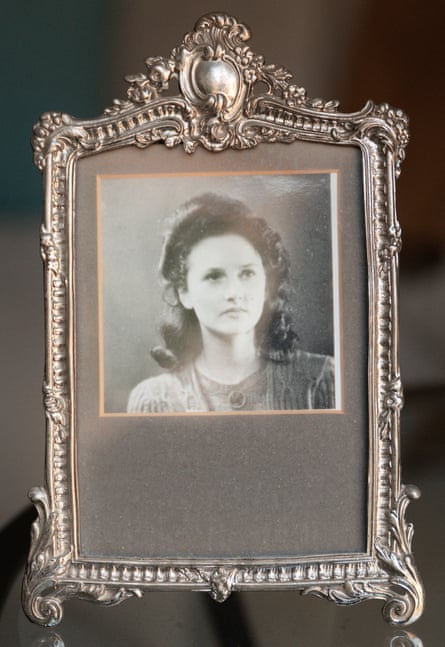 Suzanne’s mother, Mari, as a young woman. Photograph: Francesca Jones/The Guardian
Charlotte Evans, a lawyer at Leigh Day who is representing several victims and their families in their IBCA applications, said “the balance of probabilities” was the standard of proof for medical negligence claims.
She said it represented a comparatively lower threshold, which considers a risky procedure that took place at the same time as infected blood was used as indicative that a blood product had been administered.
Instead of assessing all the available evidence to build up a picture of what most likely happened, applicants are being asked to prove beyond reasonable doubt that they received a specific blood product.
“The scheme is supposed to provide a simpler process,” she said, adding that although the government and the IBCA had an obligation to ensure taxpayers’ money was properly spent, “the question is whether those obligations, and IBCA’s understanding of the same, go beyond what the regulations actually require”.
The reasons for this disconnect remained unclear, she said. “It may be that certain individuals [assessing claims] haven’t been given the appropriate guidance or training.”
Lynne Kelly, the chair of Haemophilia Wales, observed a “tick box” approach from the claims managers she had met. “The Cabinet Office is completely controlling the Infected Blood Compensation Authority scheme. It’s meant to be an independent, arm’s length body,” she said, adding that she believed the eligibility criteria was intended to “minimise the amount of compensation paid out”.
For Zena Whittaker, that extra compensation would both give closure and a comfortable retirement, enabling her to stop worrying about putting the heating on.
She is still haunted by the memory of asking a doctor how much longer her son Andrew had to live. He replied: “We don’t know, because it depends whether the Hep C takes him first, or the Aids.”
As a haemophiliac, Andrew received multiple blood transfusions, making it more likely than not that he also had hepatitis C. Yet medical records were destroyed when his hospital merged with another.
“It’s just coming up to the anniversary [of his death], which makes everything raw,” Whittaker said. “It’s 31 years since he died and it brought it all back again.”
Luke O’Shea is also struggling with a bureaucratic nightmare. He was given an infected clotting product as a three-year-old, but because he was not given a liver biopsy due to the risk of bleeding for haemophiliacs, he is unable to prove how bad his liver damage was, resulting in a shortfall in compensation he estimates at up to £1m.
“I wasn’t told I had hepatitis C until I was 15. So just as life was beginning to open up, I was suddenly told what had already been done to it,” he said. “My infection is my life, and it’s unrecognised in every way.”
A spokesperson for the IBCA said: “Missing or destroyed records will not prevent someone from making a claim. We will determine what is most likely from all available evidence.
“Our claim managers work with the person claiming to help them gather information from a range of sources to support their claim. We consider all evidence: medical records, witness testimony, and other family records can all be used to support a claim.
“Every compensation claim is unique, with individual circumstances, so they cannot be compared.”
A government spokesperson said: “The government has listened and learned through constant engagement with the community to make changes to the compensation scheme to ensure the community receive the compensation they deserve.
“The government will continue to be held accountable for its work in the usual ways across both Houses of Parliament.”
Explore more on these topicsShareReuse this content