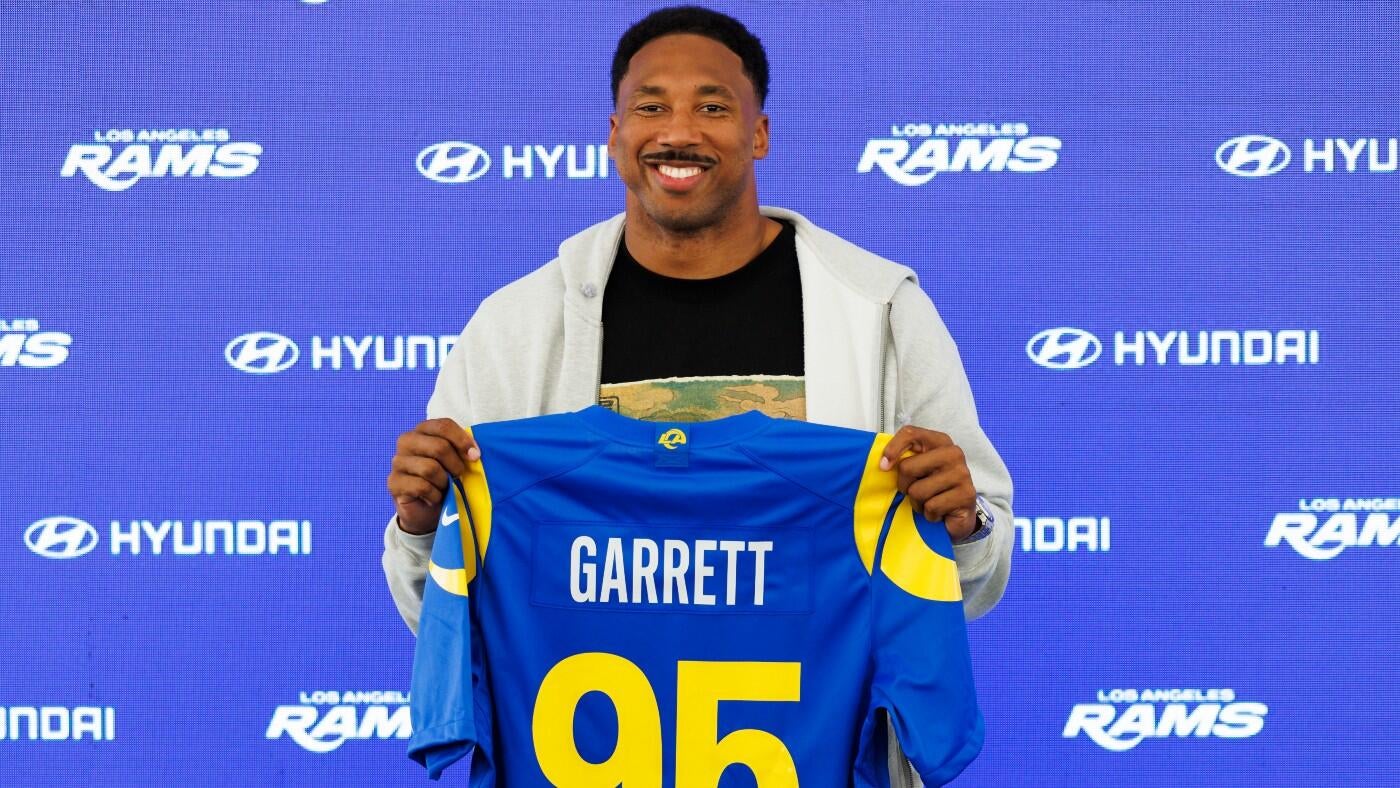
In a league-altering post-June 1 move, all-world edge rusher Myles Garrett is a Los Angeles Ram.
I keep reading that phrase, and it still feels odd to say, but for the Rams it makes a lot of sense.
By trading away star EDGE Jared Verse, a 2027 first-round pick, a 2028 second-round pick and a 2029 third-round pick, the Rams have pushed all their chips in once again on a field-tilting player who will drastically expand the options defensive coordinator Chris Shula has at his disposal.
The Rams finally found their new closer
Let me get this out of the way before we get started: The Rams' defense in 2025 was a good unit. They finished tied for seventh in defensive EPA per play and fourth in pressure rate, and Shula guided a well-coached, well-executing defense.
But the Rams didn't make the Super Bowl the last two seasons because they couldn't get a stop when they needed one. All of the simulated pressures and creeper looks Shula threw at offenses were effective, but when they needed someone to go get a bucket (create an explosive defensive play), they couldn't come up with one. By trading for Garrett, they add a built-in havoc creator, a player who can be the engine of a defense and make life easier for everyone else on the field.
Yes, Verse is very good and only 25, compared to Garrett approaching that infamous age-30 threshold. But Garrett has stayed relatively healthy for most of his career and is coming off a record-setting 23-sack season. If Garrett helps the Rams win another Super Bowl, the trade will look like a win for Los Angeles, even if the Browns come away with Verse and a first-round pick. Not to say "F them picks," but Garrett is arguably the best football player in the world, and acquiring him gives the Rams an overwhelming presence on defense, one who changes how they'll operate.
If you want a specific numerical reason why this trade happened, it's 31. That's how many quick pressures (pressures in under three seconds) Garrett had in 2025, fifth-most in the NFL, according to NFL Pro. Verse and fellow pass rusher Byron Young combined for 34 quick pressures last season.
One of Garrett's special traits is that he can win instantly with speed around the corner. While the combination of Verse, Young and defensive tackles Kobie Turner and Braden Fiske formed a strong unit, they all won in similar ways: converting speed to power and collapsing the pocket. That gave Shula plenty of fun pieces to build his pass-rush games around, but nobody up front consistently generated instant wins.
This showed up in the Rams' sack conversion rate, or their ability to turn pressures into negative plays. Although Los Angeles generated plenty of pressure, it converted just 18% of those pressures into sacks, ranking 21st in the NFL, according to TruMedia. In addition, its Havoc Rate (the percentage of plays ending in a TFL, PD, INT, forced fumble or sack) was 15.7%, good for 24th in the NFL. The leader in both categories? The Browns, who were led by Garrett.
How Garrett changes the math
With Garrett in the fold, Shula now has a player he can use to dictate pass protections and manipulate offensive linemen through both personnel and scheme. In a story by The Athletic's Jourdan Rodrigue, Rams coaches joked that their best cornerback was Aaron Donald because of how quickly he generated pressure and how much it benefited the secondary.
Enter Garrett, who not only leads the NFL in quick pressures over the past five years but also faced the most chip blocks of any player in 2025. Garrett dictates what offenses do when he's on the field because one set of eyes and hands isn't enough. This plays directly into Shula's hands with all of the pass-rush games the Rams run because Garrett creates opportunities for everyone else on the defensive line, or Shula can simply play matchup ball with his best pass rusher.
It's similar to having a superstar in basketball whose gravity creates clean looks for supporting players because of his ability to win on his own.
Building a more aggressive defense
If you combine the Garrett trade with the additions of Chiefs cornerbacks Trent McDuffie and Jaylen Watson, another clear sign is that the Rams want to play a more aggressive style of defense. Watson is a tall, long corner who thrives in press coverage, while McDuffie can win in multiple ways because of his vision and ability to break on the ball. Add Garrett to the equation, and you have a recipe for quarterbacks getting the ball out quickly before the pass rush closes in.
According to TruMedia, opponents averaged a time to throw of 2.77 seconds with Garrett on the field in Cleveland, tied with the Steelers for the quickest mark in the NFL. The Rams finished at 2.84 seconds, good for seventh in the league but still needing another boost. Garrett forces offenses to play into the defense's hands, limiting explosive plays while allowing teammates to rally and tackle underneath.
Combine that with Watson's and McDuffie's ability to play press coverage and tackle, along with Shula's defensive acumen, and the Rams have a potentially devastating defensive philosophy on paper.
Overall, I think this trade is very similar to the one the Packers made for Micah Parsons last season. Sure, Green Bay was good defensively before Parsons, but it needed someone who could win instantly and emphatically. Parsons' gravity changed how offenses attacked the Packers. With Parsons on the field, Green Bay's defensive EPA per play was 0.01, according to TruMedia, which would have tied the Buffalo Bills for 13th in the NFL. Without him, that number dropped to -0.16, which would have ranked 30th.
Garrett, like Parsons, is a math-changer for any NFL defense, and with the Rams he'll change their defensive identity as well.
Add CBS Sports on Google Join the Conversation comments