National
In a time of rising costs, one Thanksgiving commodity is cheaper: cannabis November 25, 20265:00 AM ET
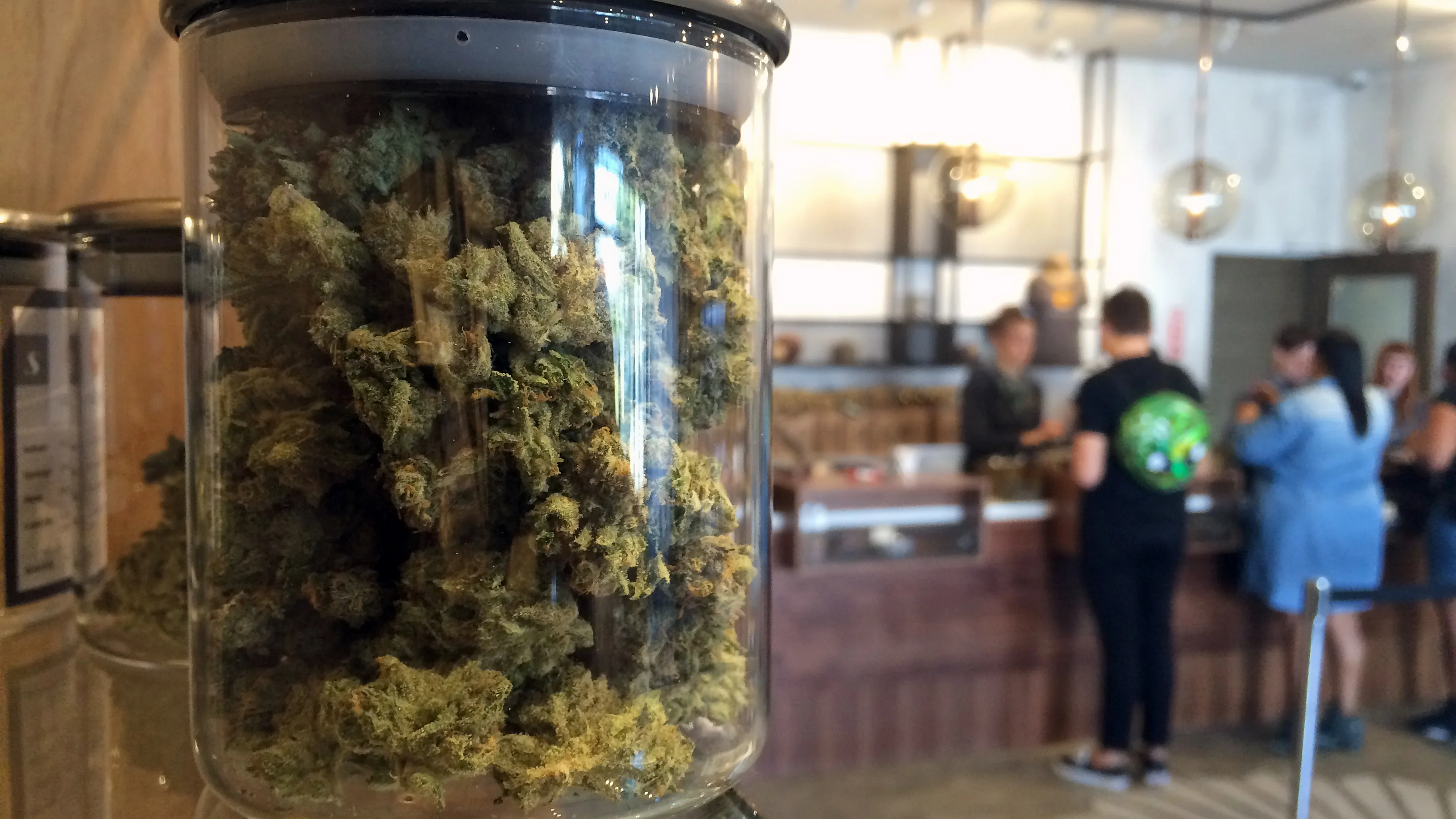
Customers buy products at the Harvest Medical Marijuana Dispensary in San Francisco in 2016. Haven Daley/AP hide caption
toggle caption i Haven Daley/APThis Thanksgiving season, Americans are paying more for almost everything: travel costs have soared, and the price of food has risen. Bringing wine to the family dinner? That costs more, too.
But there's one thing consumers buy at high rates that will actually get cheaper this time of year: marijuana.
Known in the industry as "Green Week" or "Green Wednesday," the days ahead of Thanksgiving have come to rival famed stoner holiday 4/20 as the day cannabis dispensaries see the most sales — and highest foot traffic — of the year.
In most dispensaries around the country, that means steep discounts, doorbuster specials and exclusive products. It's a good deal for customers, who line up in long queues as they await their turn with the so-called budtenders behind the counter.
Cannabis in the U.S. is a $30 billion industry with legal marketplaces in 24 states and the nation's capital, according to Whitney Economics, a firm that specializes in economic research and consulting on the business of cannabis. But in recent years, the deep discounts that have drawn in customers — and kept them coming back for weeks like this one — have squeezed retailers and resulted in a revenue decline in the legal market.
As the week began at The Forest, a dispensary in Baltimore, shoppers were stocking up for the holiday week.
A pack of gummies to bring to Friendsgiving in lieu of alcohol. A sparkling THC-infused beverage for those canna-curious in-laws. Or a holiday staple: some pre-rolls to share on an evening walk.

The Indicator from Planet Money
How Hemp-THC businesses are bracing for a near total ban
On bright screens posted around the store, discount offers flashed: 25% off edibles, read one; 30% off for medical patients, read another. An extra $5 off for bringing in cans of food for the store's holiday drive.
Kelley Vinton, 36, is a regular at The Forest. She's a medical marijuana user and usually sticks to a strict weekly budget, she said. But on Monday, she threw in a few little extras — for the "cousin walk," Vinton said.
"You know, you take a little breaky-poo with your cousins, and we live in the country, so we just walk, usually before dinner," Vinton said. "We smoke a joint, and we get nice and high, and get some munchies and get ready for dinner."
The federal government still classifies recreational marijuana as a Schedule I drug, meaning it is considered to have "high potential for abuse," according to the Drug Enforcement Administration. But medical cannabis was reclassified this year to Schedule III, a category shared by drugs like Tylenol with codeine and anabolic steroids.
In 2025, Whitney Economics found, revenue was down across the industry thanks to an oversupply of plant product and declining prices, driven by the discount culture of cannabis retailers.

National
Hemp and marijuana are the same species. So why all the different laws?
It was the first year since 2014 — when Colorado and Washington became the first states to legalize cannabis sales for recreational use — that the industry saw a dip, according to an analysis by Whitney Economics.
"It's forced a race to the bottom," said Beau Whitney, the founder and chief economist at Whitney Economics. "What this is resulting in is great prices for the consumer, they're spending less and getting the same or more, so that's good for them on an affordability perspective. But it's hurting operators."
Though the industry has seen a slight rebound this year — an increase of about 5% in sales for the same period last year, Whitney's team found — forecasts for the end of 2026 and the outlook for 2027 remain relatively modest.
The biggest reason for this, Whitney said, is customer behavior.
Through the beginning of the 2020s, Whitney said, consumers would typically come into a dispensary with a set amount to spend. Their cannabis budget. If they got a discount, Whitney said, they'd add additional products into their carts to hit their budget.
But that began to change in 2024, as inflation rose and the cost of essentials, like gas, ballooned.
"Behavior changed literally overnight," Whitney said. "What they're doing is they're taking the discounts — and there's a lot of them now — and they're using that money to buy gas and buy groceries. So they're adjusting the amount that they purchase based on what's going on in their own personal economy."
The discount model, he said, has also forced prices down. With legal retailers competing for a pool of customers that has not seen rapid growth in years, discounts help draw people into stores. But they've also created a culture where customers expect them, several cannabis store owners said.

Treatments
Can weed help you drink less? Scientists study how well 'California sober' works
It's why doing well on a week like this one, as customers flood in for Green Wednesday deals, is essential for shop owners like The Forest's Christina Betancourt Johnson.
On Monday, the Baltimore store was stocked — with edibles and pre-rolls and other cannabis products, but also stacks of snacks for customers waiting in longer-than-usual lines, branded giveaways and samples of gummies to try (no weed in those).
A steady flow of customers wandered in. Some for their usual supplies, others for a little holiday shopping.
Employee Thomas Bourne loaded a vape into a paper bag for one of the dispensary's regular customers. That seemed a little light for the holiday, he observed, teasingly.
"Gotta come back for your cousin walk essentials, man," Bourne said. "'Tis the week."
The customer smiled, nodding. He'd be back.
NPR does not offer or accept money for coverage or interviews. Anyone who makes such an offer or request is not an NPR employee and does not represent NPR.