Getting around space, as it turns out, is kind of a big deal.
On Tuesday, Impulse Space, a company dedicated to improving space mobility, announced it has raised $500 million in Series D funding. Since it was founded five years ago by SpaceX veteran Tom Mueller, the company has now raised more than $1 billion.
“Timing is everything,” Mueller said in an interview about the new round of funding. By this, he means the company has found its way into a lot of markets.
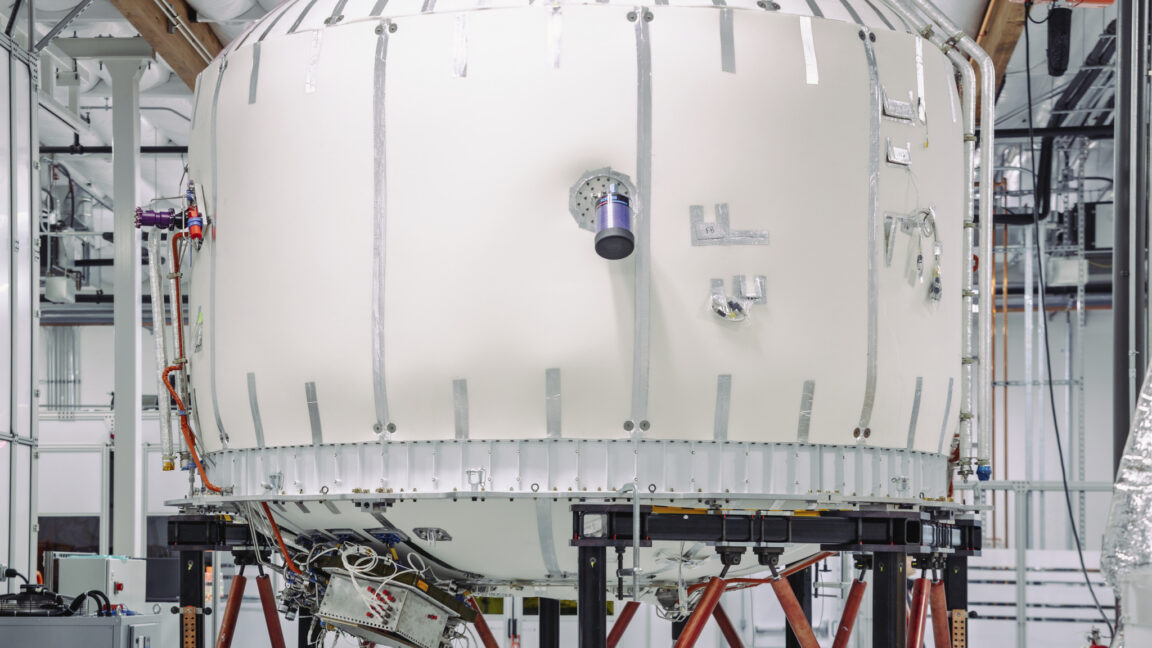
Since 2001, the company has already flown three missions with a small spacecraft, Mira, which was first launched in 2023 with a novel propulsion system powered by non-toxic propellants, nitrous oxide and ethane. It has customers lined up. After Impulse announced its much larger “Helios” kick stage, demand was higher than anticipated from commercial customers. The US Space Force has become increasingly interested in satellite mobility, and now Impulse Space also believes it can provide landing services in the “1-ton-class” to NASA for its new Moon Base initiative.
Mobility is key
Company officials said they were not necessarily looking for new funding, but investors wanted them to capitalize on these emerging opportunities by growing to meet demand.
“It’s all happening now,” said Eric Romo, the company’s president and chief operating officer. “And I think that’s going to continue, and the market’s going to continue to find exciting new things. No one was talking about data centers in space a year ago, right? And so who knows what we’re talking about this time next year.”
The company is not the only firm in the United States that has recently been founded, or emerged from stealth, dedicated to improving mobility in space, especially transferring from low-Earth orbit to geostationary orbit, or moving within those orbits. The Space Force budget has grown significantly in recent years, and one of its mandates is countering spying and potentially hostile acts by Russian and Chinese spacecraft in these orbits. To that end, mobility is key.
However, Impulse is one of the most successful of these companies, having the leadership of an industry legend like Mueller and his penchant for propulsion design, as well as the baseline of success with its Mira missions. This is why the company has been able to fundraise with relative ease.
Growing up, going fast
Impulse Space has grown rapidly, and the Redondo Beach, California-based company now has more than 500 employees and 200 openings. The funding will support additional hiring and accelerate the development of new vehicles and services.
NASA’s lunar ambitions offer an opportunity to show off the value of efficient in-space propulsion. An existing commercial lander, such as Firefly Blue Ghost, launches as a primary customer on a Falcon 9 rocket. It has the capacity to land 100–200 kg on the lunar surface.
Impulse is developing its own lander, which will be boosted to the Moon by Helios—essentially a kick stage designed to fly on top of a two-stage Falcon 9 rocket.
Next stop, the Moon?
“If you put a Helios on top of that same Falcon 9, and an optimized lander around it, you can get more like one or two tons,” Romo said. “So you’re totally 10x-ing the amount of mass that you get off the same launch vehicle. Launch vehicles are a pretty expensive part of the whole thing, so you’re not quite 10x-ing a reduction in the cost of mass to the Moon, but it’s in that ballpark, and that’s where we think the sweet spot is.”
This capability of sending 1 to 2 tons to the lunar surface falls within “Phase 2” of NASA’s Moon Base plans, which call for the delivery of larger rovers and other infrastructure to support human habitation there beginning in 2029.
Impulse Space expects to debut the Helios spacecraft next year as part of a rideshare mission called “Caravan” to take smaller spacecraft directly to geostationary orbit. The company says this mission is fully booked, but it plans to offer future Caravan opportunities in 2028.
 Eric Berger Senior Space Editor Eric Berger Senior Space Editor Eric Berger is the senior space editor at Ars Technica, covering everything from astronomy to private space to NASA policy, and author of two books: Liftoff, about the rise of SpaceX; and Reentry, on the development of the Falcon 9 rocket and Dragon. A certified meteorologist, Eric lives in Houston. 12 Comments