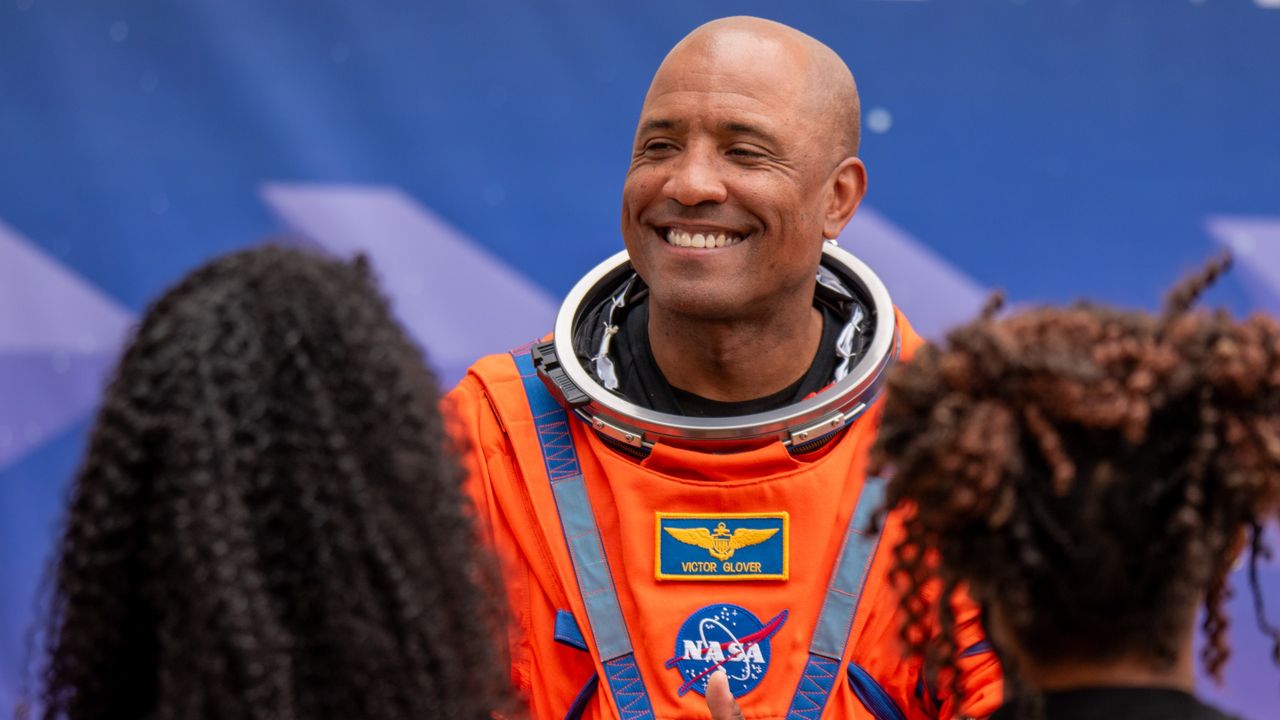
NASA astronaut Victor Glover is now "astronaut emeritus." He's hanging up his spacesuit for a position he hopes can guide the future engineering and science leaders of tomorrow.
Glover, who served as pilot on NASA's Artemis II mission that flew around the moon in April, officially began his new role as executive advisor to Jeff Armstrong, president of the California Polytechnic State University (Cal Poly),on Sept. 1, and is stepping away from the majority of his duties at the space agency.
NASA announced on Sept. 9 that Glover, as well as Artemis II commander Reid Wiseman, are transitioning to emeritus status beginning this month, but are not retiring from the agency outright. Even astronauts who do fully retire from NASA are still retained "in the system," Glover told Space.com, "but I actually get to have a badge that is a little bit different. I can come back. I have a NASA email address. I still work closely with the agency. I'm considered a special government employee."
"It allows me to have just a slightly more robust and meaningful relationship with NASA," Glover said — but "more robust" won't necessarily equate to the same daily commitment. His role at Cal Poly will be full-time, according to the university, but he's not exactly going to be putting in typical work hours there either.
"We're still figuring it out," he said. "It's not going to be nine to five. I'm not a faculty member. I don't have a class I have to teach or a board that I oversee. It'll be where the school needs me the most and where I can highlight what great work they're already doing."
Glover's connection to Cal Poly runs deep. He's a Cal Poly alum who graduated with an engineering degree in 1999. A two-sport athlete, he wrestled for the university and played on its football team. And it's where he met his wife, Dionna, who also graduated from Cal Poly. The two have since raised four daughters, all of whom have either graduated or are currently attending their parents' alma mater. With Glover's multifaceted connection to the university, Cal Poly sees his potential contributions as equally diverse.
The university says that Glover, in his position as executive advisor, will work with the gamut of university leadership, including the president, provost and college deans. He will help "identify, develop and accelerate strategic initiatives, partnerships and philanthropy aimed at expanding the university's leadership in engineering, applied computing, aerospace, aviation, maritime, artificial intelligence, cybersecurity, autonomous systems and national defense," according to Cal Poly's statement.
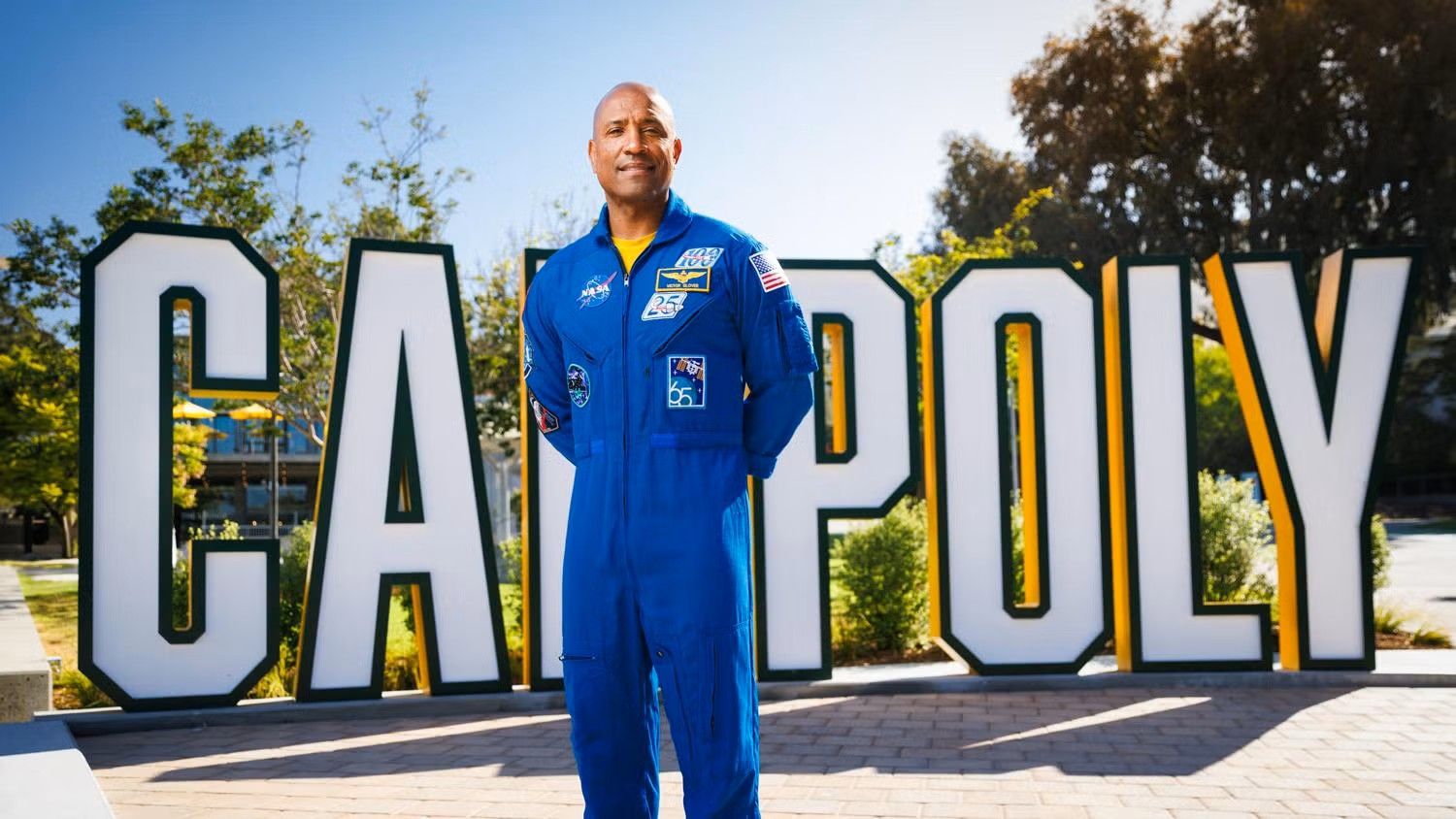
How that will manifest into Glover's actual contributions is still being figured out. "There's just so much potential," he said, adding that he wants to serve in an additive role for Cal Poly where he can "get in and help, and do the most good."
Cal Poly has been undergoing a period of significant change and expansion over the past several years. This fall, for the first time ever, the university transitioned from a quarter system to a semester-based one. It also recently completed its integration with the former California State University Maritime Academy, whose Vallejo campus is now Cal Poly's Solano Campus and home to the Cal Poly Maritime Academy.
"They're hitting on all cylinders in so many areas," Glover said. "There's so many areas where Cal Poly is doing amazing things, and each of those things by themselves have been a big deal."
The university operates on a "Learn by Doing" philosophy, which emphasizes hands-on, real-world experience alongside classroom instruction. Glover credits his professional successes to this system, and his experiences over a decade at NASA have reinforced his belief in that kind of educational approach.
"Putting energy and time into building trust is just as important, or more important, as building technology, and so I think there's a lot of areas where my NASA experience will also feed back into Learn by Doing," Glover said. "I think everything I did at NASA has a place here."
"At NASA we do some pretty challenging things, pretty risky things, but we have a really strong scientific and technical understanding of what we're doing," Glover said. "That kind of risk-informed decision making is an important part of what we do here [at Cal Poly], whether it's professional development or helping these students to become the next generation of leaders."
Glover cited Charles Lindbergh's book "We," and its perspective on learning to fly a plane, as an example for Learn by Doing's effectiveness. "You teach yourself to fly," Glover said. "An instructor is really there to keep you from having ultimate mistakes. But you teach yourself to fly. It's something that you have to work out yourself. And I think that this school really understands that … We want to make sure that these students can critically think and analyze, but we also want to make sure that they can do the work with their hands."
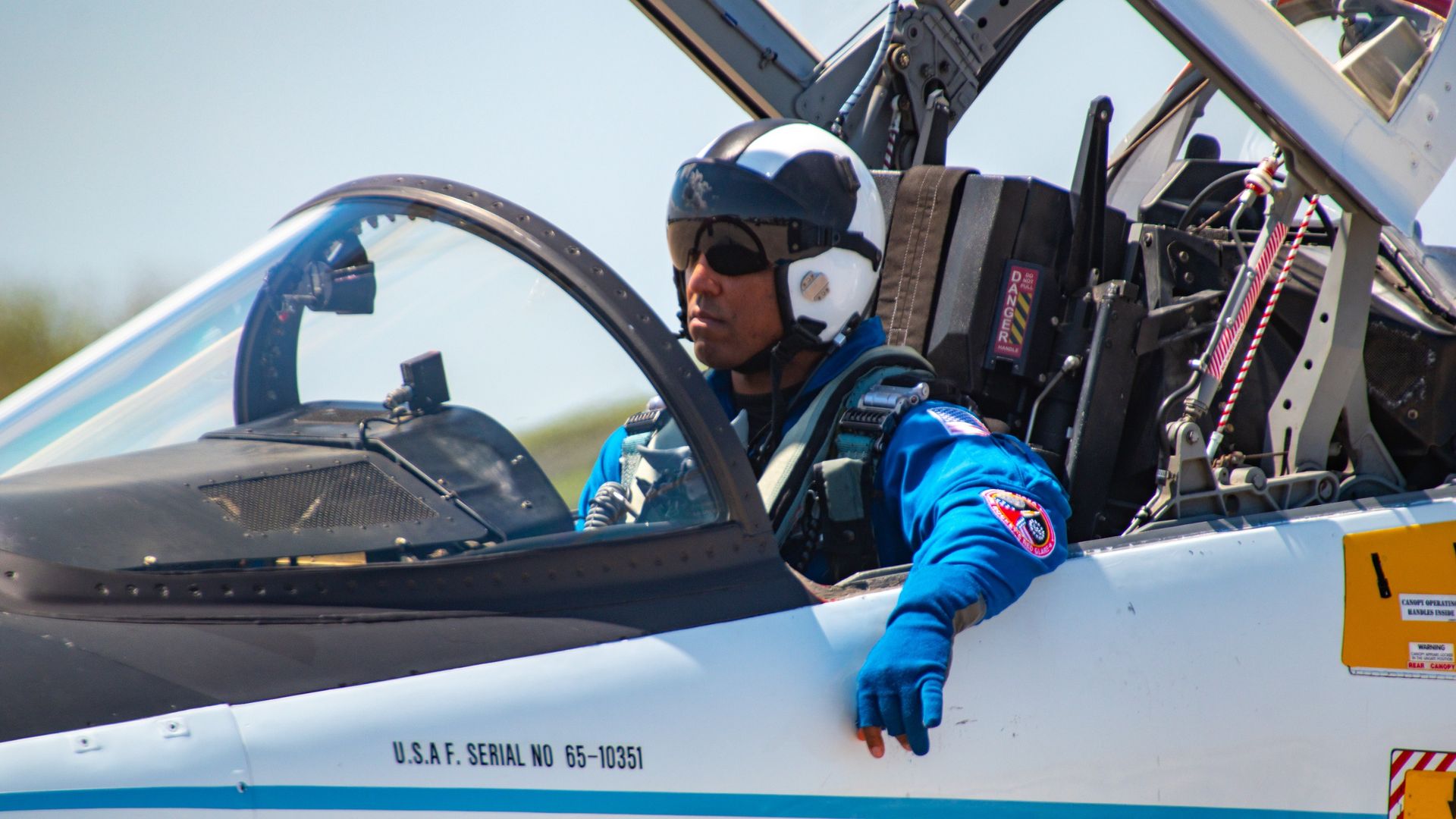
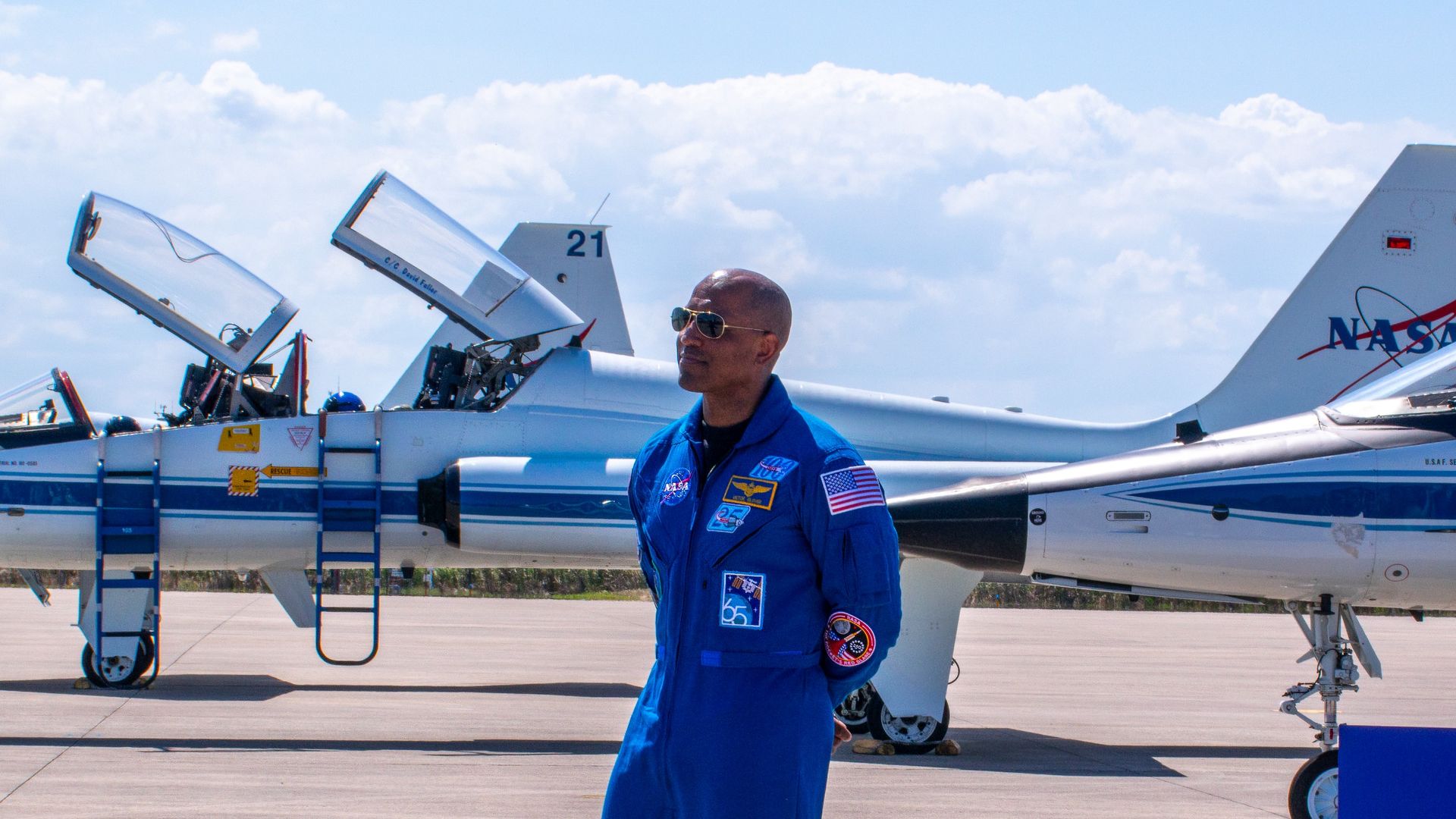
Flying is something with which Glover has an extensive familiarity. Before he joined NASA in 2013, he was a U.S. Navy aviator and test pilot with 4,000 flight hours in more than 40 aircraft who flew 24 combat missions, though he is now best known for piloting NASA's Orion spacecraft around the moon on Artemis II.
Glover launched aboard Orion on NASA's Space Launch System (SLS) rocket on April 1 with three crewmates — Wiseman, NASA astronaut Christina Koch and Canadian Space Agency astronaut Jeremy Hansen. The quartet spent approximately 10 days aboard the Orion capsule and flew a course around the moon's far side. Their mission was the first to fly a crew to lunar space since Apollo 17 in 1972, and it captured the attention of millions across the world as the astronauts sent back views of the moon unlike any humanity had ever seen.
Artemis II was the first crewed mission in NASA's Artemis program, which has the ultimate goal of establishing a permanent base on the lunar surface. The next time Orion launches, on Artemis III, the spacecraft's crew will be tasked with testing out docking hardware with the program's lunar lander vehicles in Earth orbit. NASA is targeting mid-2027 for that mission. If it's successful, Artemis IV will follow in 2028 as the program's first lunar landing attempt, with subsequent missions with more crew and cargo to incrementally assemble an outpost on the surface of the moon in the 2030s.
As the only people to fly aboard Orion in space so far, the Artemis II crew's experience and insight into the spacecraft, and how future Artremis astronauts can best train to fly it, are invaluable to NASA — hence Glover and Wiseman's emeritus status.
Hansen, who trained at NASA's Johnson Space Center (JSC) and lived in Houston since his induction as a CSA astronaut in 2009, announced in July that he's stepping back from active astronaut duty beginning this month and moving back to Canada. On Sept. 8, the day before NASA made the announcement about Glover and Wiseman, Hansen posted a video on X stating that his Artemis II duties officially concluded on Sept. 2.
The mission continues! pic.twitter.com/2R6Dwb63bSSeptember 8, 2026
That leaves Koch as the only Artemis II crew member on an active astronaut roster, but Glover and Wiseman, as emeritus flyers, aren't out of the agency entirely. "With our experience flying Orion in space, the agency knows that we can still make a meaningful contribution to Artemis and human spaceflight in general, without having to be there full time," Glover said. "We can still support our colleagues and their families and the mission while we go off and pursue other other opportunities."
Supporting other astronauts on NASA's roster, and the teams that run the missions, are the parts of the job that Glover enjoyed the most. "[The emeritus status] allows us to still support our colleagues, which is the best part of being an astronaut. It's not flying in space," Glover said.
"I told [NASA leadership], ‘Nothing has really changed,'" Glover said. "If they call me and say, ‘Hey, we need this,' they can count on me to be there because they are so fantastic. I will always be there to carry the water for them when they need it."
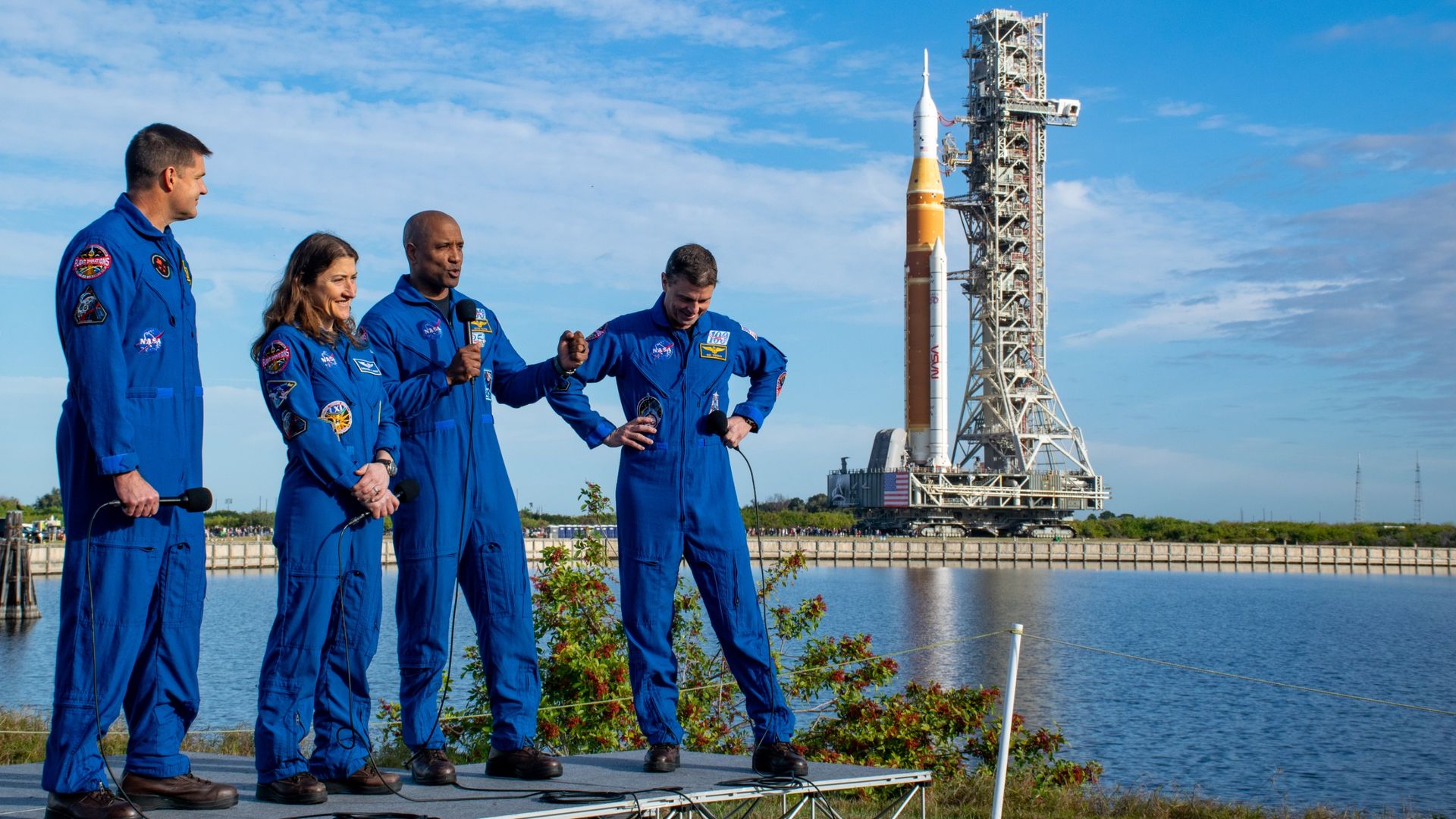
Though he'll still be helping astronauts prepare for future missions every now and then, Glover said his own spaceflight days are behind him. Glover had flown to space once before, prior to Artemis II, as pilot of SpaceX's Crew-1 mission to the International Space Station (ISS). Glover spent 168 days in orbit on that stint, serving as flight engineer for Expeditions 64 and 65, and completed four spacewalks.
"I didn't make this move planning to go back to space," Glover said. "I was pretty satisfied after my first space mission, so I don't have this hole in my heart that needs to be filled by going to space again."
A few NASA astronauts who've left and moved on to the private sector have ended up going back to space, like Peggy Whitson, who retired from NASA in 2018 before joining Axiom Space and later commanding the company's Ax-2 and Ax-4 private astronaut missions to the ISS. But Glover doesn't see a move like that in his future.
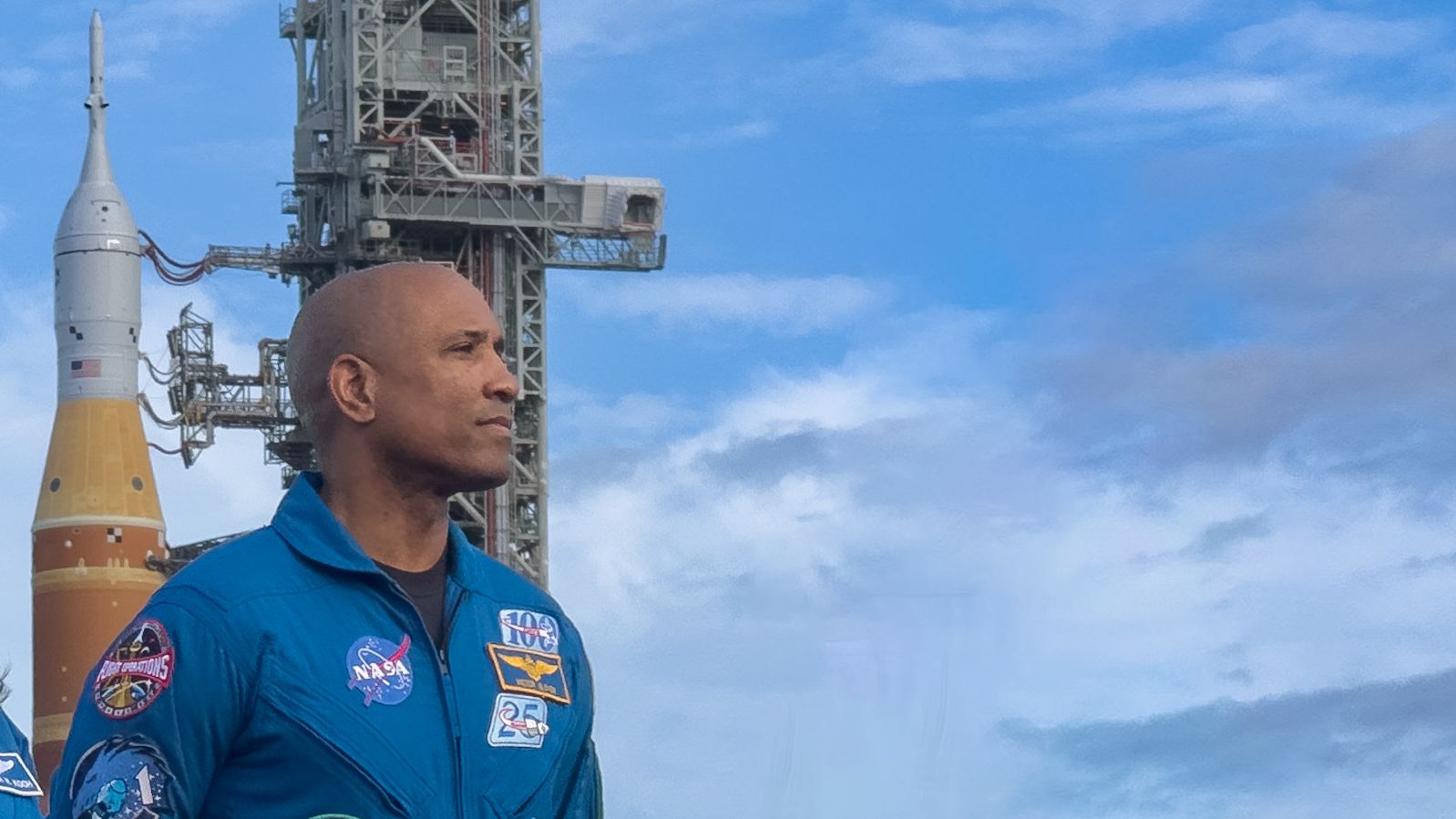
"If I wanted to go to space, I would have stayed at NASA. It's the gold standard," Glover said. "I love our corporate partners and what they're doing. There's some really amazing things, including what Jared Isaacman himself has done … But I would have stayed at NASA full time as an active astronaut if I was trying to go back to space."
Isaacman was sworn in as NASA administrator in December 2025. His spaceflight experience came before that: In September 2021, he commanded SpaceX's Inspiration4 mission, the first all-civilian orbital spaceflight, and later performed the first commercial spacewalk during the private Polaris Dawn mission in September 2024.
In fact, Glover said it was harder walking away from his career flying fighter jets than it was to walk away from the opportunity to maybe one day fly in space again. Harder still might be leaving behind the place he's called home for more than a decade, but ultimately he said it was an easy choice. He's lived in Houston and worked at JSC since his selection into NASA's astronaut class in 2013, but expects he and his family will make the permanent move to the West Coast, to be closer to Cal Poly.
"One of the reasons why this was just such an easy decision to make is that both NASA and Cal Poly … and everybody understands that we need time to get used to this new reality, and they're all giving us a lot of grace and space as we just kind of figure out what the right rhythm, what the right ops tempo is," Glover said. He thinks he and the family will make the move sometime after the New Year.
In the meantime, though you may not see him quite as much on NASA's social media channels, he has made a few appearances in posts on his daughter Maya's TikTok profile. In posts celebrating his return from the moon and recent career shift, Glover can be seen performing dance routines with his family — but don't bother refreshing your feed to load more any time soon.
"Don't expect to see a whole lot more of that, because I would do anything for my kids, but you know, well, I guess almost anything for my kids," Glover said jokingly. When asked which was harder to train for, between piloting Orion and the dance moves, he said, "Oh, clearly the dance moves."
@mayalorinnn ♬ original sound - maya :)