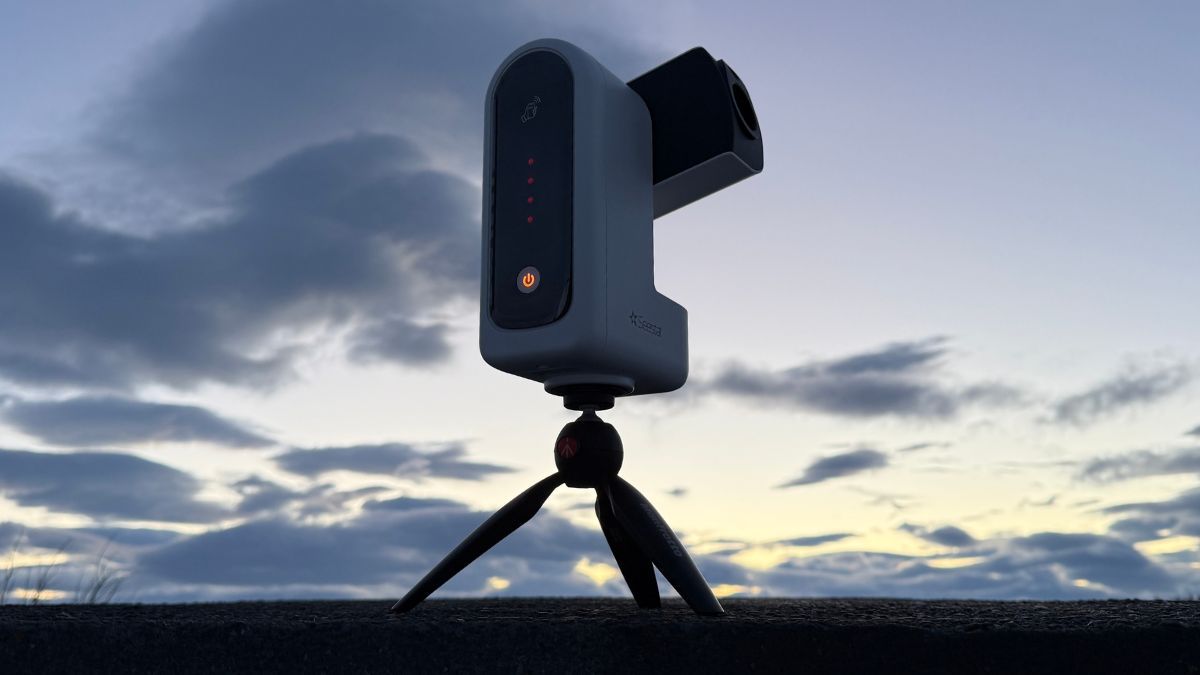
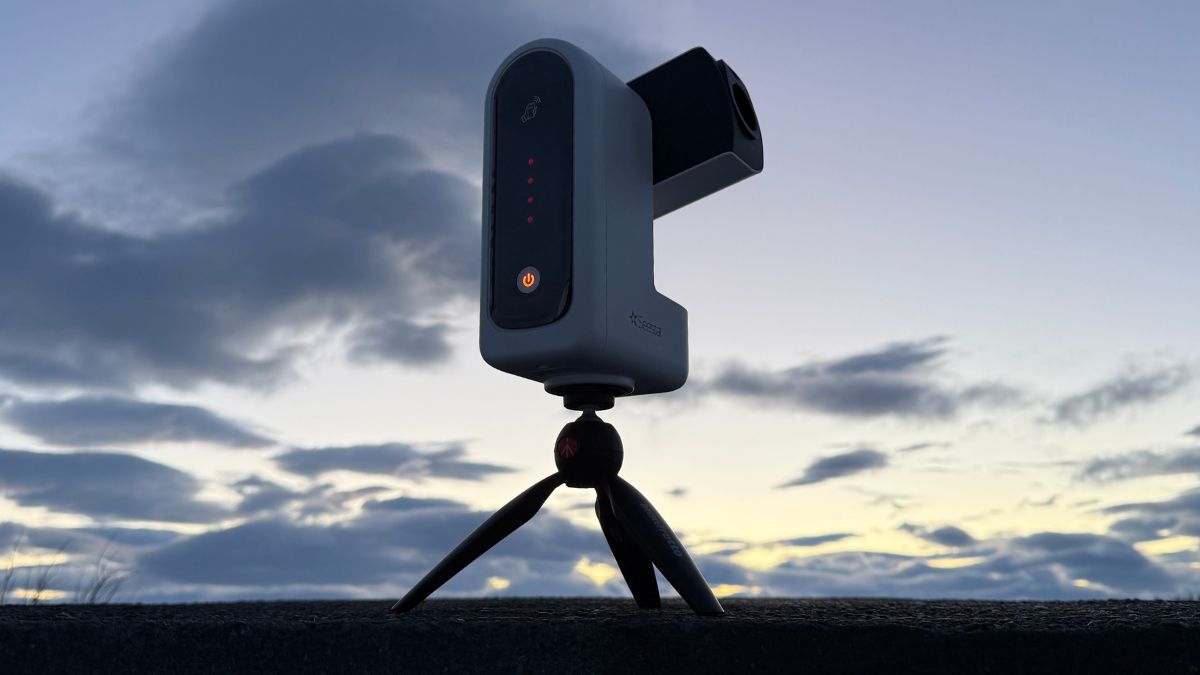
 A Seestar S30 Pro, one of a slew of new tiny smart telescopes (Image credit: Jamie Carter) Jump To:
 - When to use a smart telescope
- How and when I use a smart telescope
- Stargazer's corner: June 5-11, 2026
- Constellation of the week: Hercules (Keystone)
When I go in search of dark skies, I like to travel light. Backpack light. With a full-frame camera, a tripod and some binoculars on my back, I can get everything I want from the night sky, save for the close-up views that only a telescope could bring. A telescope is such a burden when traveling. It's heavy and delicate, making any trip feel like a driving tour where you're never more than a few feet from your vehicle. No thanks — astrotourism for me is about exploring.
I stuck to my "no telescope" rule for years, right up until a trip to New Brunswick's dark-sky corridor a few years ago, when I packed a small Seestar smart telescope I had been asked to test. Almost as an afterthought, I wedged it into my camera bag instead of a lens I didn't use that much. It was tiny. Would I use it? Maybe.
I set it running outside a cabin on the Fundy Coast and forgot about it for half an hour while I took some wide-angle photos of the beautifully clear night sky. When I checked up on it — something you can do just by looking at an app on a smartphone — I could see the Whirlpool Galaxy clearer than ever before. That was the moment my old rule broke. In the smart telescope era, traveling light doesn't have to mean leaving a telescope behind.
At its core, a smart telescope is still an optical telescope — collecting light with a mirror or lens — but instead of sending that light to your eye, it focuses it onto a digital sensor. There's no eyepiece. In some ways, they're miniaturized versions of big, professional telescopes like Hubble and Webb, capturing digital images rather than sending light directly to your eye. Once powered on, the telescope points itself by taking a quick image of the sky and matching star patterns against an internal database — a process called plate-solving. After that, you just select a target in the app, and the telescope slews to it automatically. Then it begins taking lots of short exposures, stacking them in real time so the image slowly improves. That gradual build-up is something beginners often miss: the first few seconds rarely look like much. Leave it running for ten or twenty minutes, and structure starts to appear. What you see is a live image on your phone or tablet that you can easily share. For some, the ability to instantly share images is the killer feature.
The Whirlpool Galaxy captured with the Seestar S30 Pro. (Image credit: Jamie Carter)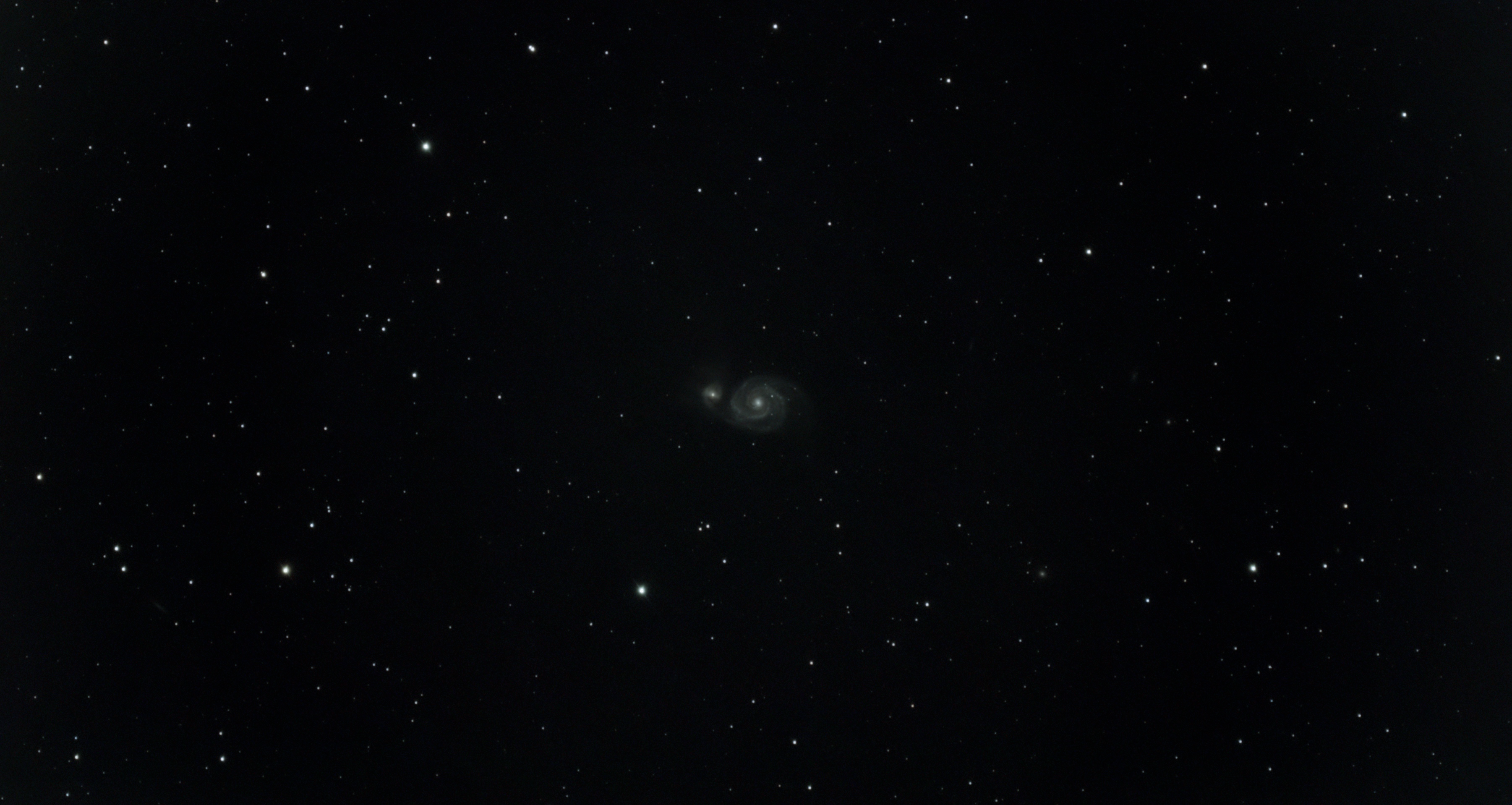
People keep telling me that some amateur astronomers and astrophotographers hate smart telescopes with a passion. They hate the fact that your eyes are not seeing photons from another galaxy, just pixels on a screen. They miss the eyepiece. I don't disagree with any of that — nothing beats looking at a distant object with your own eyes through a large, expensive and very heavy telescope — but for astrotourism, a smart telescope easily wins out. Besides, everything looks clearer and more colorful through a smart telescope compared to a purely optical telescope.
Related: Best smart telescopes 2026: Observe stars, galaxies and nebulas with ease
A few months after I returned from New Brunswick, I headed down to a star party in Florida. I couldn't quite believe how many large Dobsonian telescopes were in the same field (one had a 70-inch aperture), but even more surprising was what I could see perched below almost every single one — a pint-sized smart telescope quietly collecting shots of distant nebulas, galaxies and globular clusters that go straight to a smartphone. Where are the so-called purists who hate smart telescopes? I'm yet to actually meet one.
When to use a smart telescope
A Seestar S30 Pro packed in a camera bag. (Image credit: Jamie Carter)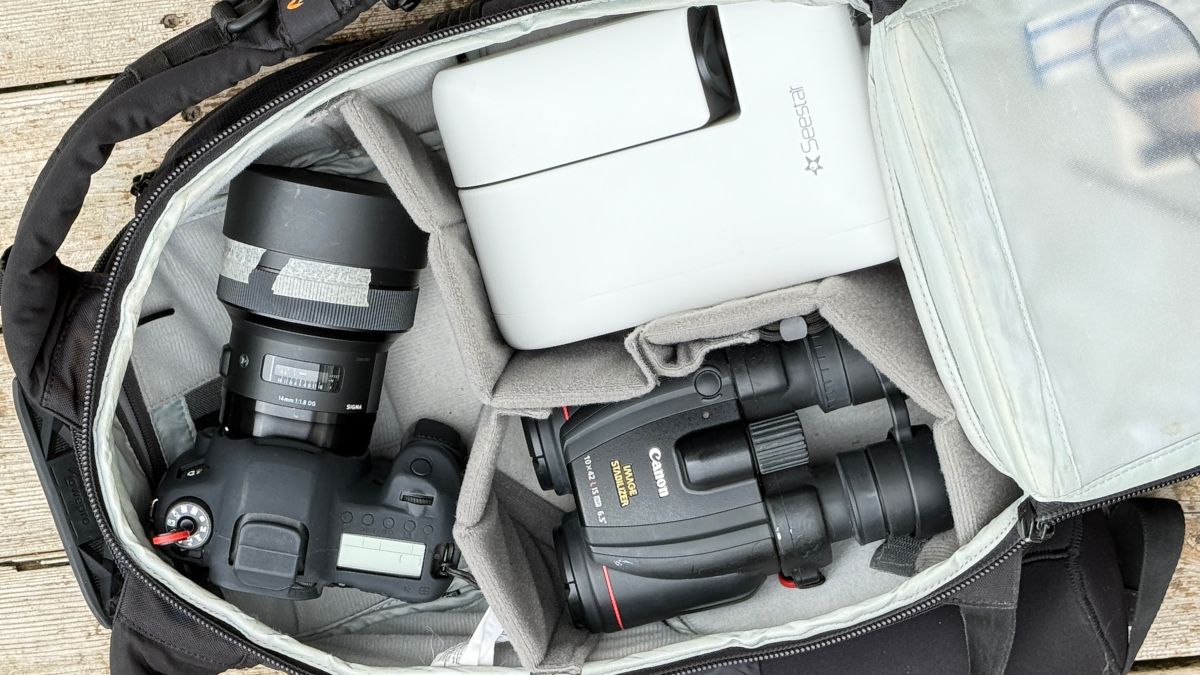
The Northern Hemisphere's late-spring sky is a good place to point a smart telescope. Around this time of year, the last properly dark nights are still hanging on before summer twilight starts to interfere. After sunset, give it a couple of hours for the sky to darken fully, then have your smart telescope slew to the south to find the region astronomers call the "realm of galaxies." This is where constellations like Leo, Virgo and Coma Berenices host dozens of faint galaxies — most invisible to the naked eye and small optical-only telescopes, even in excellent conditions. That's where a smart telescope adds to an astrotourism arsenal.
If you're observing before midnight, you'll catch these galaxies while they're still reasonably high in the sky. Later on, they drift west and become harder to image cleanly.
How I use a smart telescope
The Great Global Cluster in Hercules (M13) captured via a Seestar S30 Pro. (Image credit: Jamie Carter)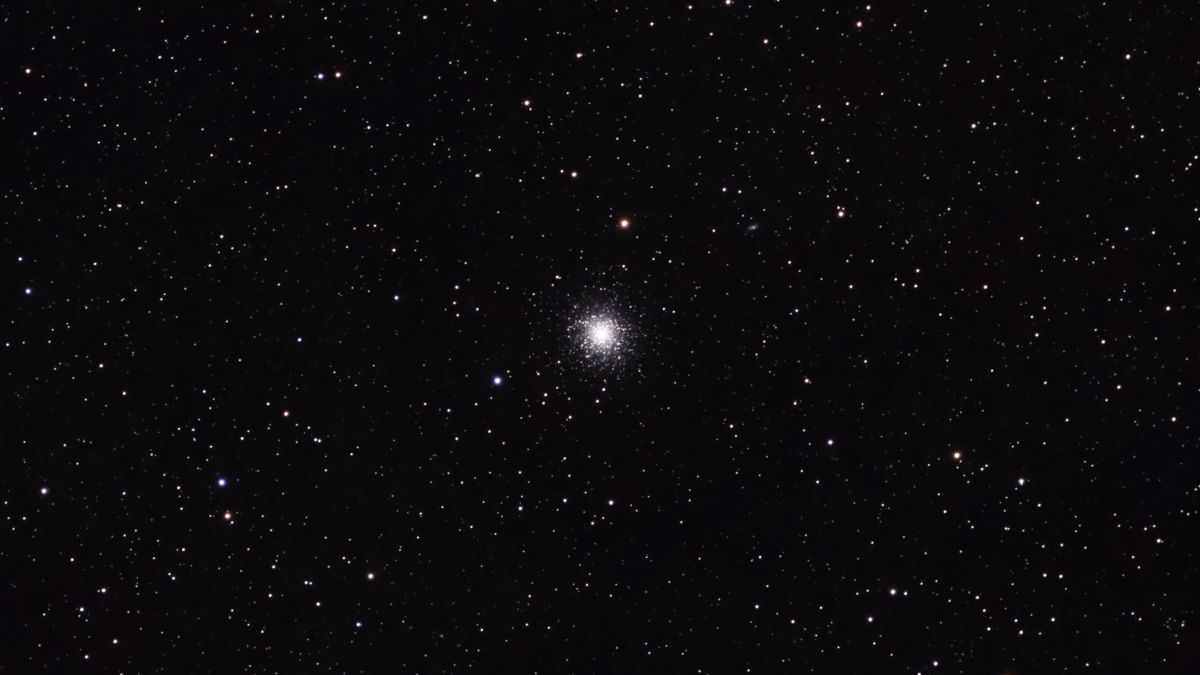
My own approach has become almost ridiculously low-effort. I set up the telescope just after dusk, making sure it has a clear view of the sky. Alignment takes a few minutes, and then I pick two or three targets for the night and leave it to work through them, prioritizing nebulas, which are notoriously difficult to image from my light-polluted home. The trick is simply to give each object enough time. Ten minutes is a glimpse, thirty minutes starts to feel like a nice image, and an hour or three is when you begin to get something stunning.
I also love using a smart telescope to capture images of the sun and moon. Anytime I read about large sunspot groups, I fetch my smart telescope. It's also constantly charging by day in the days after the new moon, when our natural satellite hangs like a crescent after sunset.
Stargazer's corner: June 5-11, 2026
See Jupiter and Venus in a close conjunction from 45 minutes after sunset on June 9-11. (Image credit: Stellarium)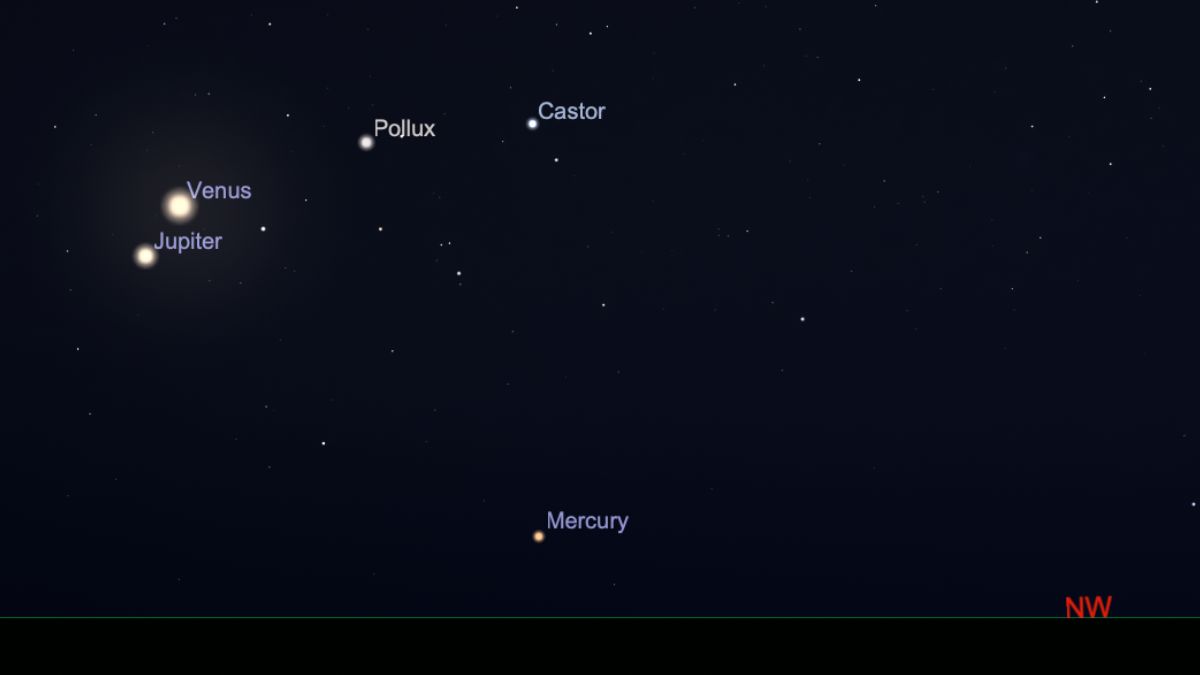
Get ready for one of the most eye-catching planetary displays of the year. In the first half of the week, look low to the west-northwest about 30-45 minutes after sunset to see Venus and Jupiter drawing together in the twilight. Start looking this weekend, and you'll see the two already close, beneath the two bright stars of the constellation Gemini, Castor and Pollux. However, the three nights to definitely catch the pair of planets are Monday, June 8, through Wednesday, June 10, when they'll appear to pass each other very closely, getting to within 1.5 degrees on Tuesday, June 9. Look below the pair, and you may see Mercury, briefly visible in the west-northwest, if your horizon is clear.
Constellation of the week: Hercules (Keystone)
The constellation Hercules. (Image credit: E. Slawik/NOIRLab/NSF/AURA/M. Zamani, blurred background added in Canva Pro.)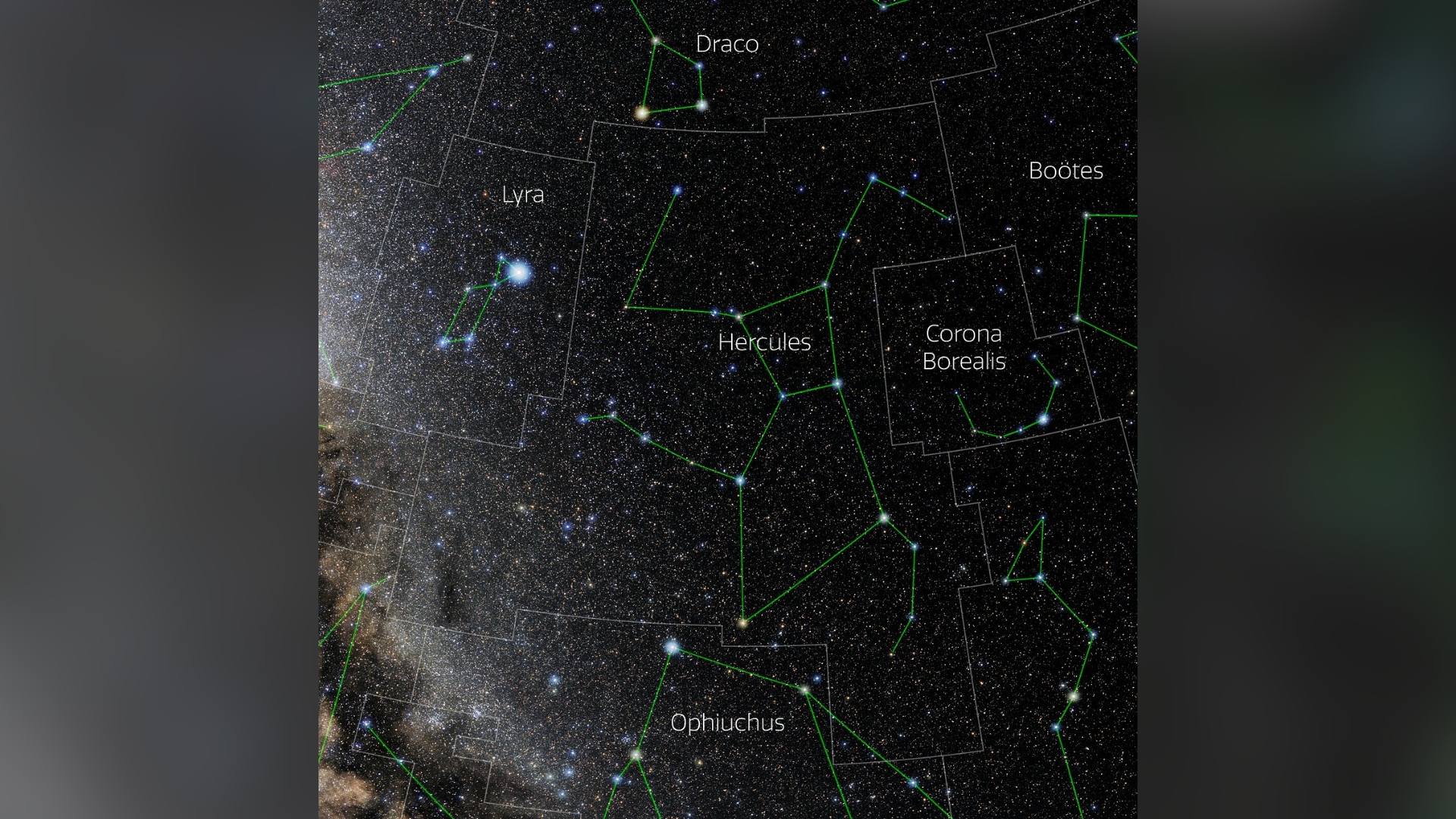
Hercules is impossible to find. At least, that's what it feels like when you search for it the first time — it's all arms and legs. So ignore the full outline and focus instead on the Keystone — a neat, four-star rectangle high in the southeastern sky on June evenings. Once you see that shape, the rest of Hercules becomes easier to place around it. Look between bright stars Vega and Arcturus, and you'll slowly figure it out.
View MoreYou must confirm your public display name before commenting
Please logout and then login again, you will then be prompted to enter your display name.
Logout Jamie CarterContributing Writer
Jamie is an experienced science and travel journalist, stargazer and eclipse chaser who writes about exploring the night sky, solar and lunar eclipses, the Northern Lights, moon-gazing, astro-travel, astronomy and space exploration. He is the editor of WhenIsTheNextEclipse.com, author of A Stargazing Program For Beginners, co-author of The Eclipse Effect, and a senior contributor at Forbes.