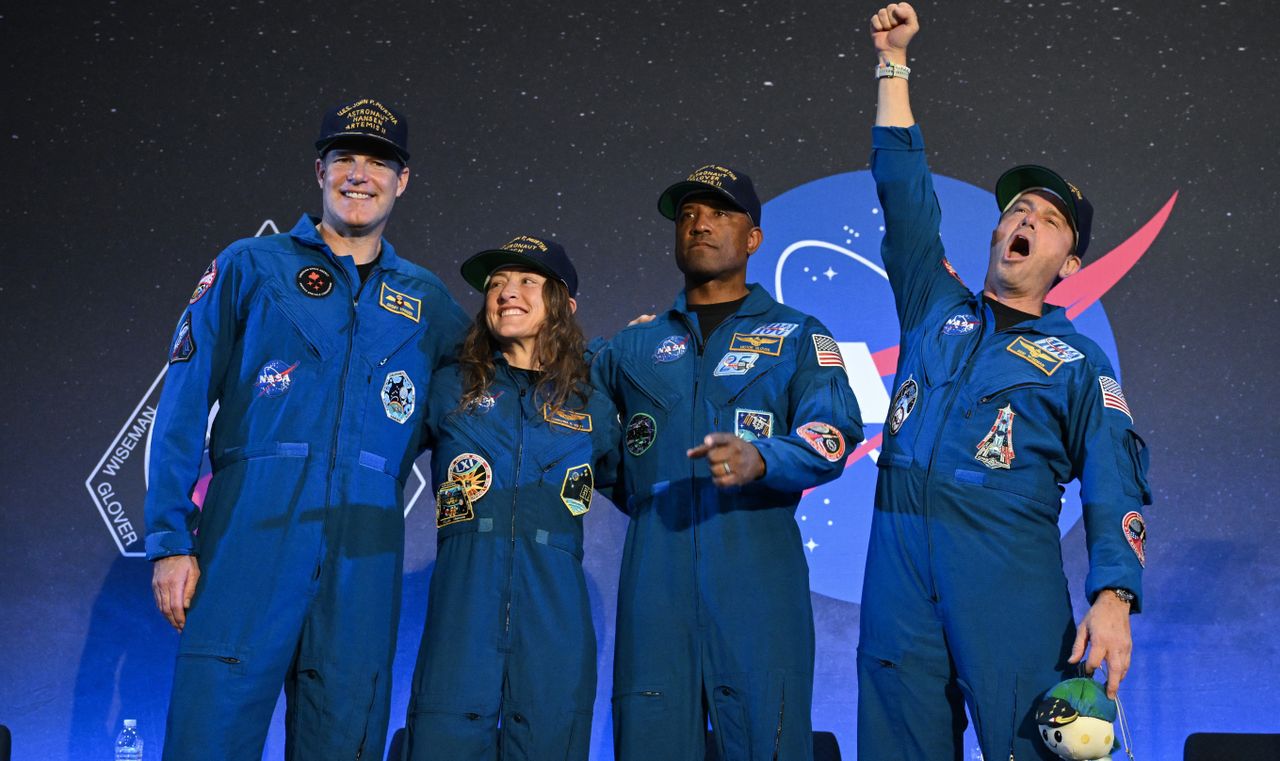
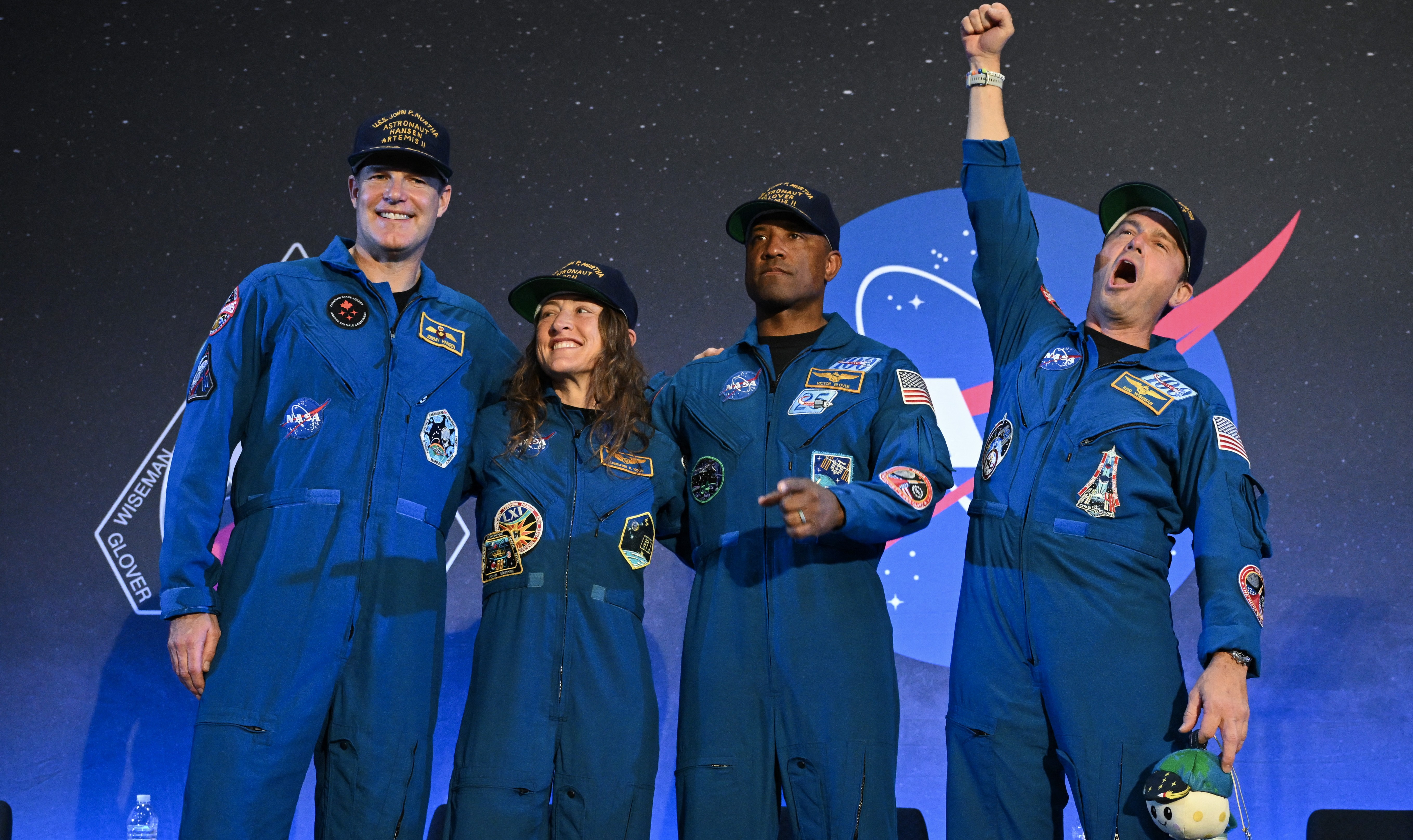
 The Artemis II crew. From left to right: Mission specialists Jeremy Hansen and Christina Koch, pilot Victor Glover, commander Reid Wiseman, and in his hand, the mission mascot and zero-gravity indicator Rise. (Image credit: Ronaldo Schemidt/AFP via Getty Images) Share this article 0 Join the conversation Follow us Add us as a preferred source on Google Newsletter Sign up for the Live Science daily newsletter now
 Get the world’s most fascinating discoveries delivered straight to your inbox.
Become a Member in Seconds
Unlock instant access to exclusive member features.
Contact me with news and offers from other Future brands Receive email from us on behalf of our trusted partners or sponsors By submitting your information you agree to the Terms & Conditions and Privacy Policy and are aged 16 or over.You are now subscribed
Your newsletter sign-up was successful
Want to add more newsletters?
Join the club
Get full access to premium articles, exclusive features and a growing list of member rewards.
Explore An account already exists for this email address, please log in. Subscribe to our newsletterThe crew of NASA's Artemis II mission have made their first public comments following their record-breaking test mission to the far side of the moon and dramatic more than 24,000 mph (38,600 km/h) reentry.
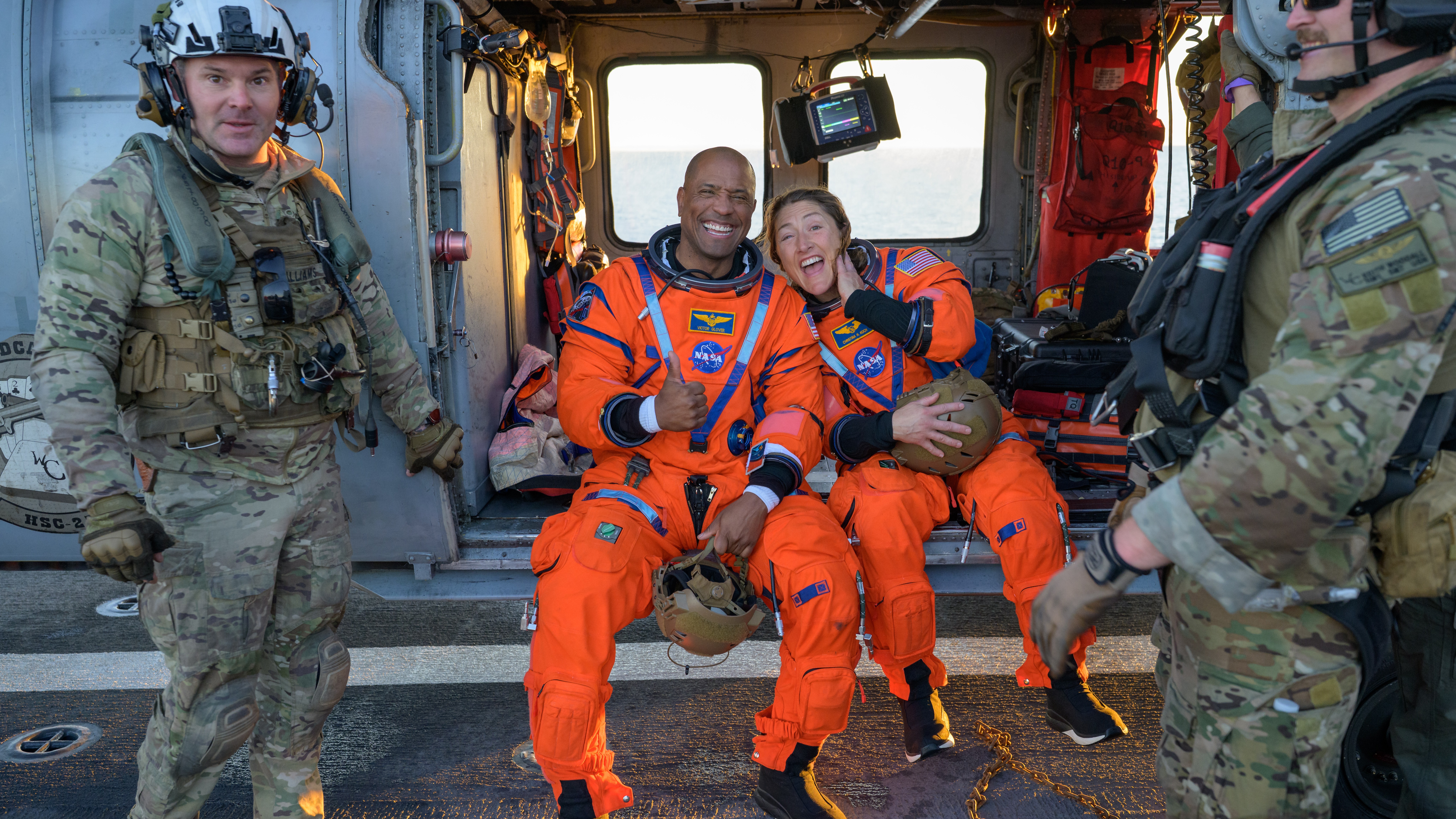
The four-person crew — commander Reid Wiseman, pilot Victor Glover and mission specialist Christina Koch of NASA and mission specialist Jeremy Hansen of the Canadian Space Agency — splashed down in the Pacific Ocean off San Diego at 8:07 p.m. EDT (12:07 a.m. GMT) on April 10.
"I have not processed what we just did"
The Artemis II mission sent humans farther from Earth than ever before, reaching 252,760 miles (406,777 kilometers) from our home planet — more than 4,100 miles (6,600 km) farther than the record set by Apollo 13 in 1970. The Orion spacecraft took just seven hours to swing around the far side of the moon on April 6, when the crew laid eyes upon never-before-seen regions of our lunar neighbor.
The mission clearly had a profound impact on the crew. Wiseman said he had "absolutely no idea what to say," while Glover added, "I have not processed what we just did, and I'm afraid to start even trying." The crewmates hugged multiple times throughout the conference, with Hansen even joking that "this is the furthest I've been away from Reid in a long time."
During his welcoming address, NASA Administrator Jared Isaacman noted the immense impact their mission has had on people here on Earth. "Thank you for showing us the moon again," he said. "Thank you for showing us planet Earth again."
Indeed, the Artemis II crew snapped many breathtaking images during their journey — the first trip to the moon since 1972. Among them is a photo of Earth framing the silhouette of Koch (the first woman to leave low Earth orbit and visit the moon) peering at Earth through one of the Orion spacecraft's main cabin windows. The photograph already has 2.1 million likes on Instagram, highlighting her profound impact on inspiring young women and girls in STEM.
Sign up for the Live Science daily newsletter nowContact me with news and offers from other Future brandsReceive email from us on behalf of our trusted partners or sponsors 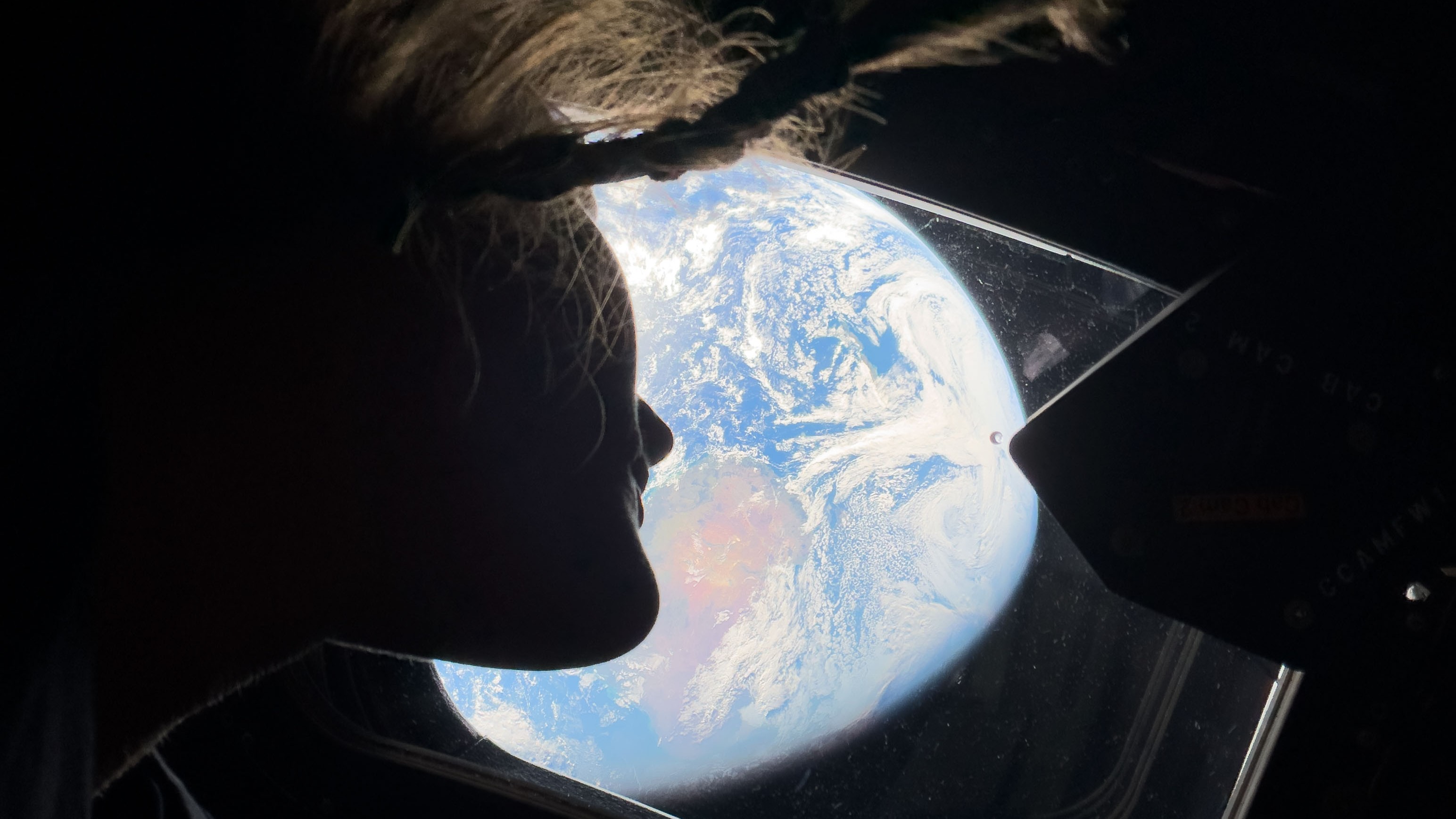
But when looking back on the mission, Koch said she wasn't necessarily struck just by Earth.
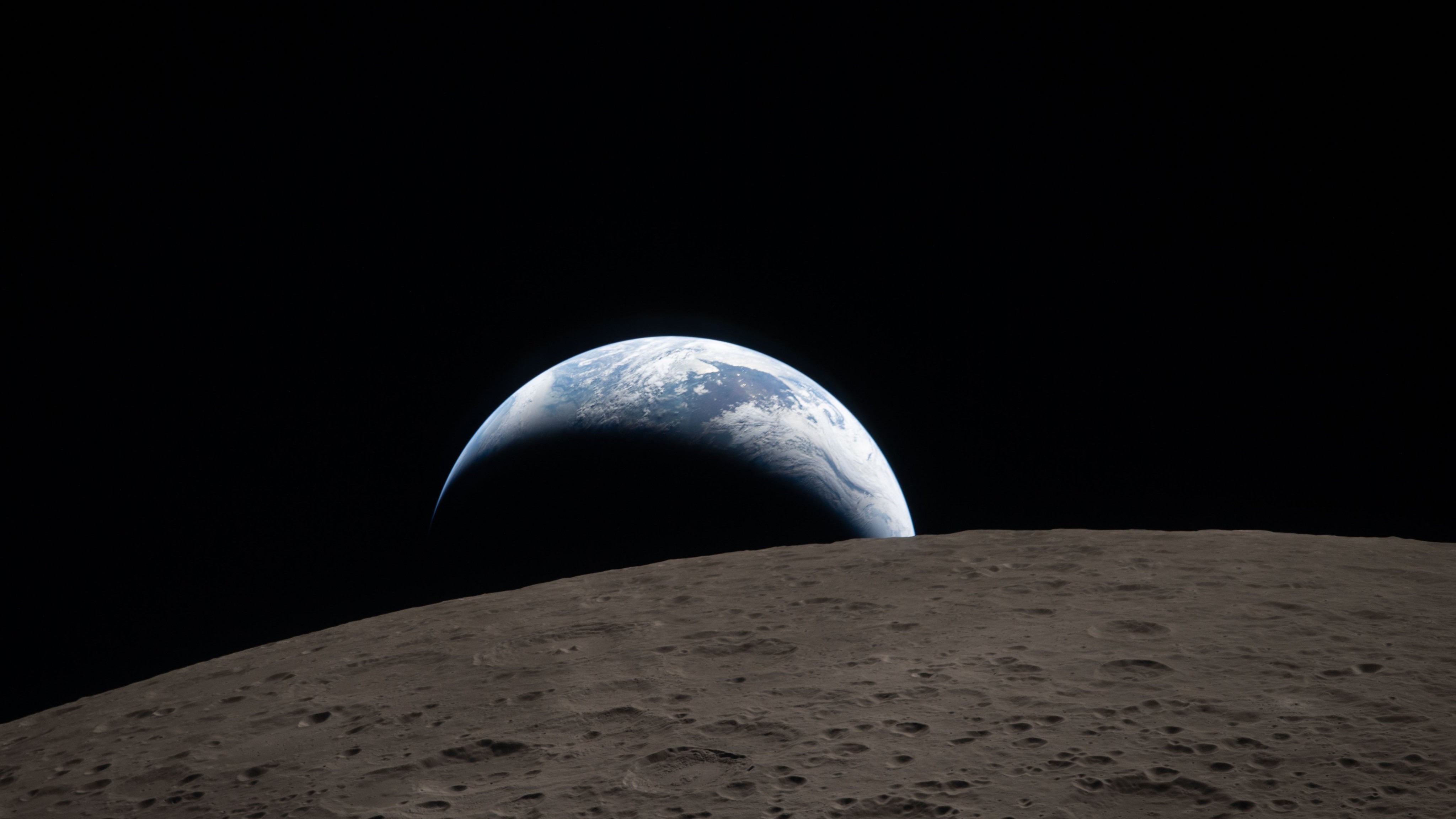
"It was all the blackness around it," she said at the news conference. "Earth was just this lifeboat hanging undisturbingly in the universe."
"Can I get a hug?"
Koch recounted how her 10-day journey started and ended with simple human moments. "Ten days ago, this journey started with our mission manager, Sean Duval, knocking on my door in crew corridors and whispering, 'Christina, we're going for launch. Get up,' she recalled. "And it ended last night, when my nurse on the ship put me to bed and said, 'Ma'am, can I get a hug?'"
Hansen noted how, beyond all the scientific knowledge to be gained, the mission's biggest take-home message for the crew is a new perspective of our shared humanity and home planet.
RELATED STORIES- 'Human minds shouldn't have to go through' this: Artemis II crew recalls unreal moment when Earth disappeared — Space photo of the week
- 'So much magic': Artemis II shares first images from the far side of the moon, including new 'Earthset' and total eclipse in space
- 'This generation's moment': How the Artemis missions will reframe humanity's relationship with the moon
Wisemen agreed, saying "it's a special thing to be a human, and it's a special thing to be on planet Earth."
Isaacman said NASA is already preparing Artemis III, which is expected to launch in 2027 and will test the Orion spacecraft's ability to work with several potential lunar landers in Earth orbit. Then, the Artemis IV and V missions will target two landings on the moon's surface in 2028.
"Artemis II was the opening act in America's return to the moon," Isaacman added. "As we stand here this evening, the mobile launcher is preparing to go back to the VAB [Vehicle Assembly Building], Artemis III will start being assembled, and the next crew will begin preparing to play their part as we return to the lunar surface, we build a base and we never give up the moon again."
TOPICS Sophie BerdugoStaff writer
Sophie is a U.K.-based staff writer at Live Science. She covers a wide range of topics, having previously reported on research spanning from bonobo communication to the first water in the universe. Her work has also appeared in outlets including New Scientist, The Observer and BBC Wildlife, and she was shortlisted for the Association of British Science Writers' 2025 "Newcomer of the Year" award for her freelance work at New Scientist. Before becoming a science journalist, she completed a doctorate in evolutionary anthropology from the University of Oxford, where she spent four years looking at why some chimps are better at using tools than others.
View MoreYou must confirm your public display name before commenting
Please logout and then login again, you will then be prompted to enter your display name.
Logout LATEST ARTICLES 1Sperm quality is at its peak in the summer, study finds
- 2Scientists are trying to build a vaccine that works against almost any respiratory pathogen — here's how close they are.
- 3Idol of Pomos: A 5,000-year-old fertility figurine from Cyprus that wears a miniature version of herself on a necklace
- 4Human ancestors butchered and ate elephants 1.8 million years ago, helping to fuel their large brains
- 5Ancient Egyptian stone monument depicting a Roman emperor as a pharaoh discovered in Luxor