The Hubble Space Telescope has captured a striking image of an irregular dwarf galaxy.
And while this galaxy might be faint and far away, it certainly takes the spotlight in this spectacular new image.
What is it?
23 million light-years away from Earth lies the irregular dwarf galaxy ESO 490-017. Being a dwarf galaxy, it's only about 12,000 light-years across. The use of "only" here might sound strange. After all, one light-year is 5.88 trillion miles (9.46 trillion km). However, while 12,000 light-years is ... a lot ... our own Milky Way galaxy is at least 100,000 light-years across.
Latest Videos FromView moreWatch full video here:
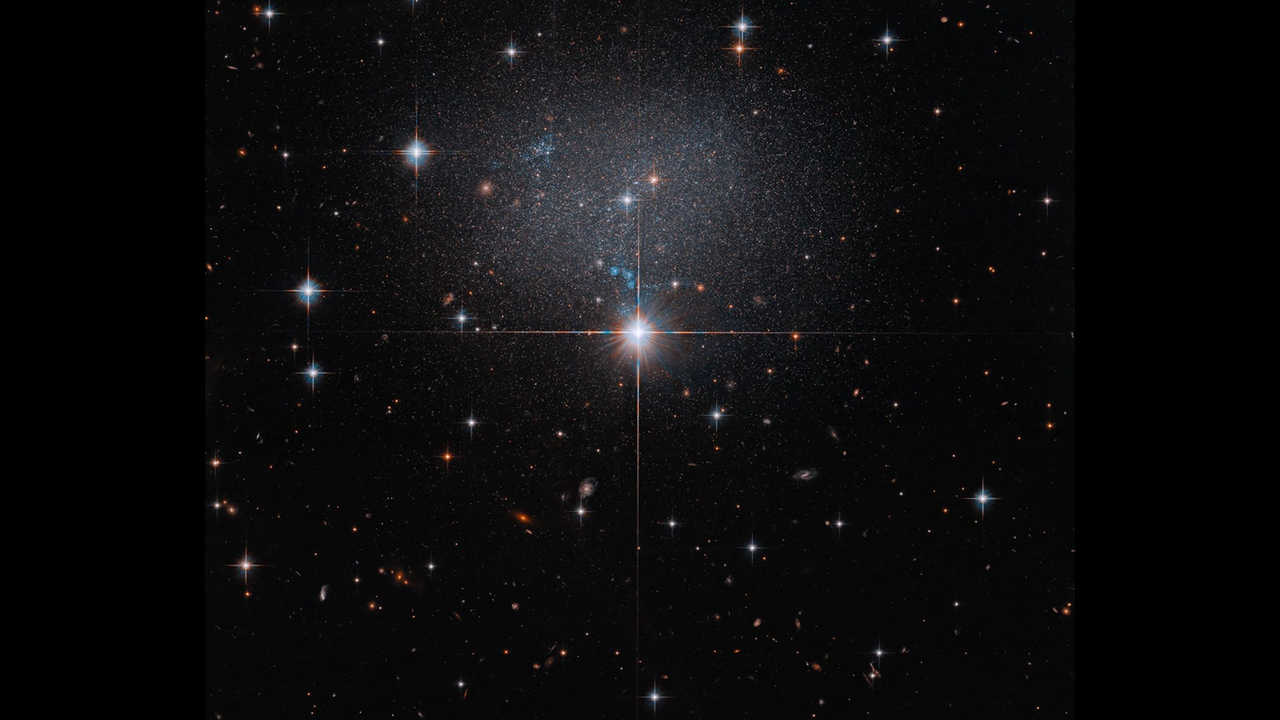
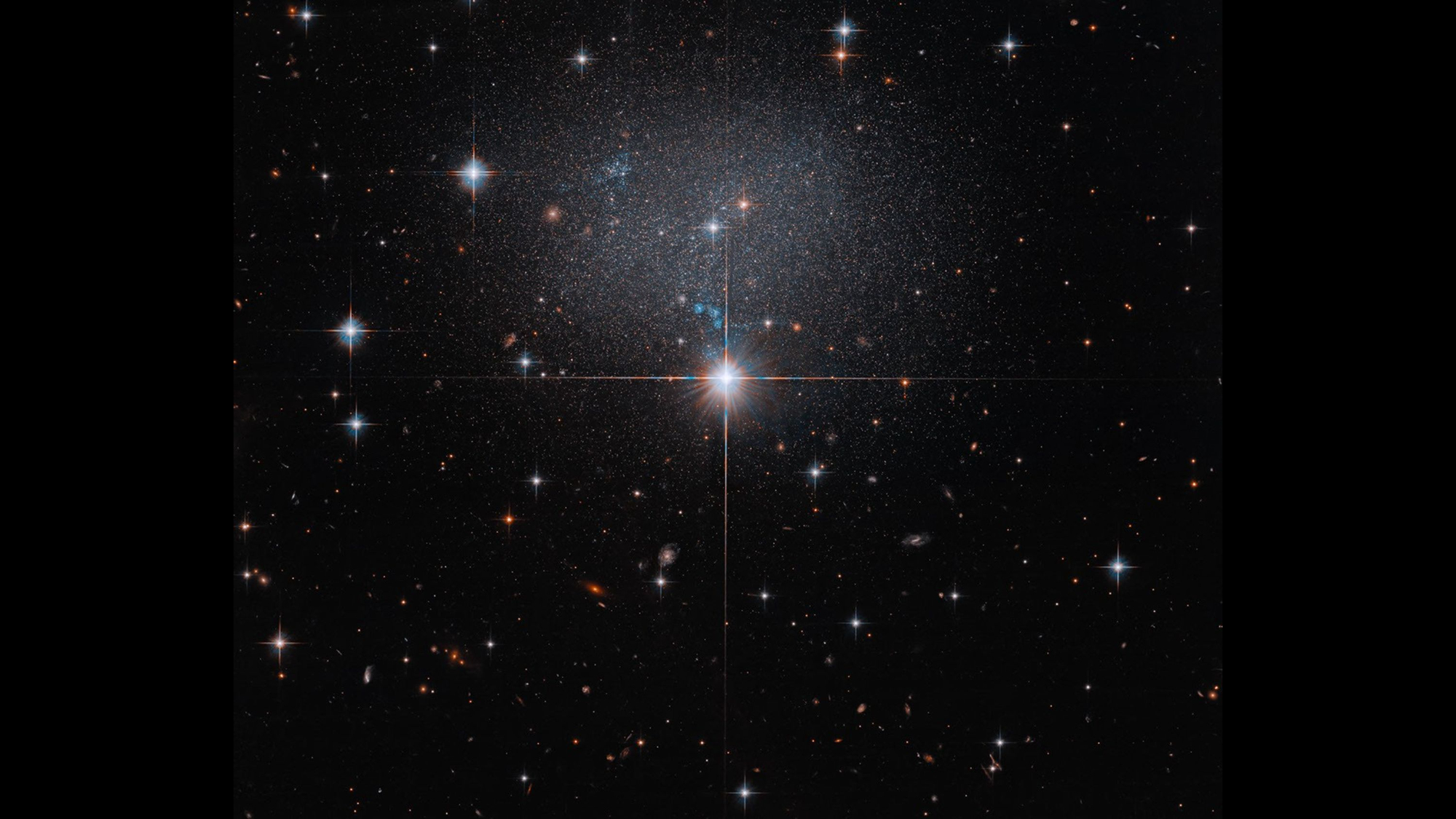
In this image from the Hubble Space Telescope, we can see the faint galaxy speckled with stars with a spectacular bright star at the photo's center.
The galaxy has low surface brightness, so the stars in the image's background appear faint and almost hazy. This makes the foreground stars stand out even more, with beaming diffraction spikes emanating outward.
Hidden in the background of this photo is more than just fuzzy stars, however. The red, orange, and even beige spots in the cosmic backdrop of this image aren't just colorful stellar bodies, but rather other galaxies scattered throughout space.
The primary galaxy imaged is found in the constellation Canis Major, which contains Sirius, the brightest star in the night sky.
Why is it incredible?
This image was captured as part of a Hubble observing program studying galaxies and galaxy clusters as well as how they move throughout the universe. While you might think of galaxies as these stoic, far-reaching cosmic structures, they're really constantly on the move.
This image is just one piece of a larger collection of data that scientists have captured with Hubble to better understand the "cosmic flow" of galaxies and other massive structures in the universe.
This image also shows off Hubble's power. While this galaxy is very far away and fairly faint, the portrait captures it clearly, highlighting the galaxy, its stars, and even other galaxies all in one fantastic view.
View MoreYou must confirm your public display name before commenting
Please logout and then login again, you will then be prompted to enter your display name.
Logout Chelsea GohdContent Manager
Chelsea Gohd served as a Senior Writer for Space.com from 2018 to 2022 before returning in 2026, covering everything from climate change to planetary science and human spaceflight in both articles and on-camera in videos. With a M.S. in Biology, Chelsea has written and worked for institutions including NASA JPL, the American Museum of Natural History, Scientific American, Discover Magazine Blog, Astronomy Magazine, and Live Science. When not writing, editing or filming something space-y, Gohd is writing music and performing as Foxanne, even launching a song to space in 2021 with Inspiration4. You can follow her online @chelsea.gohd and @foxanne.music