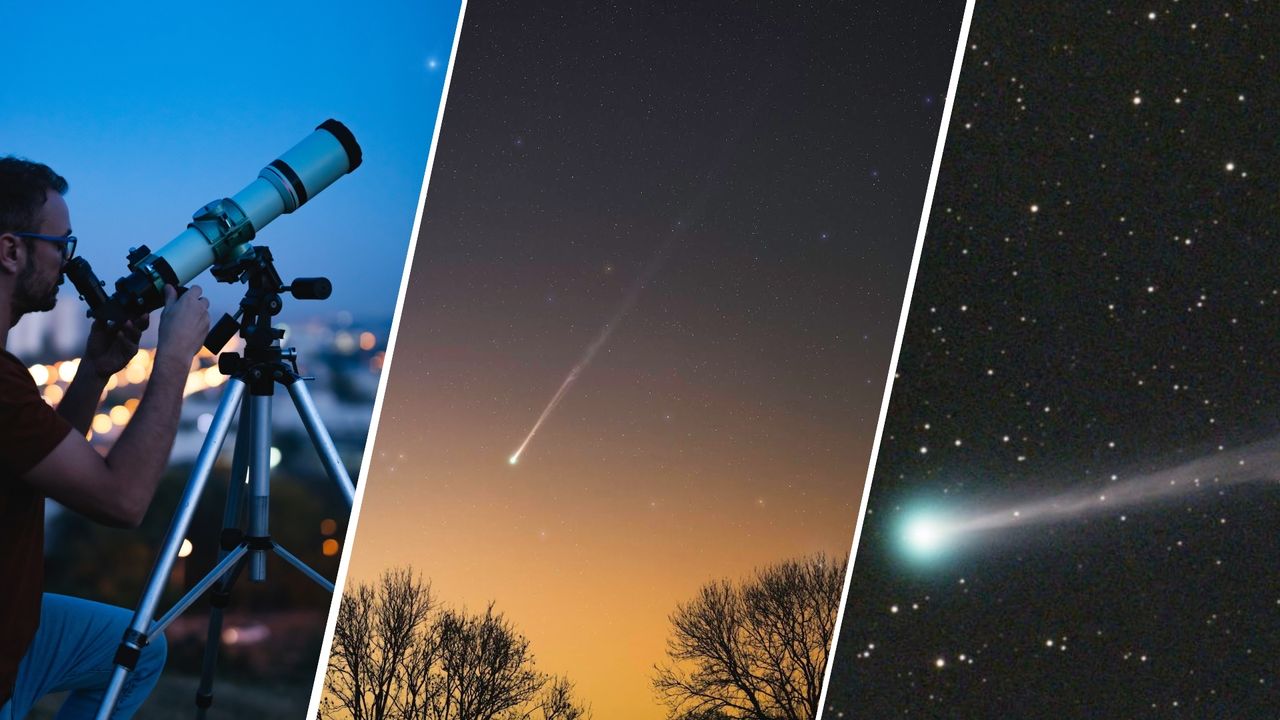
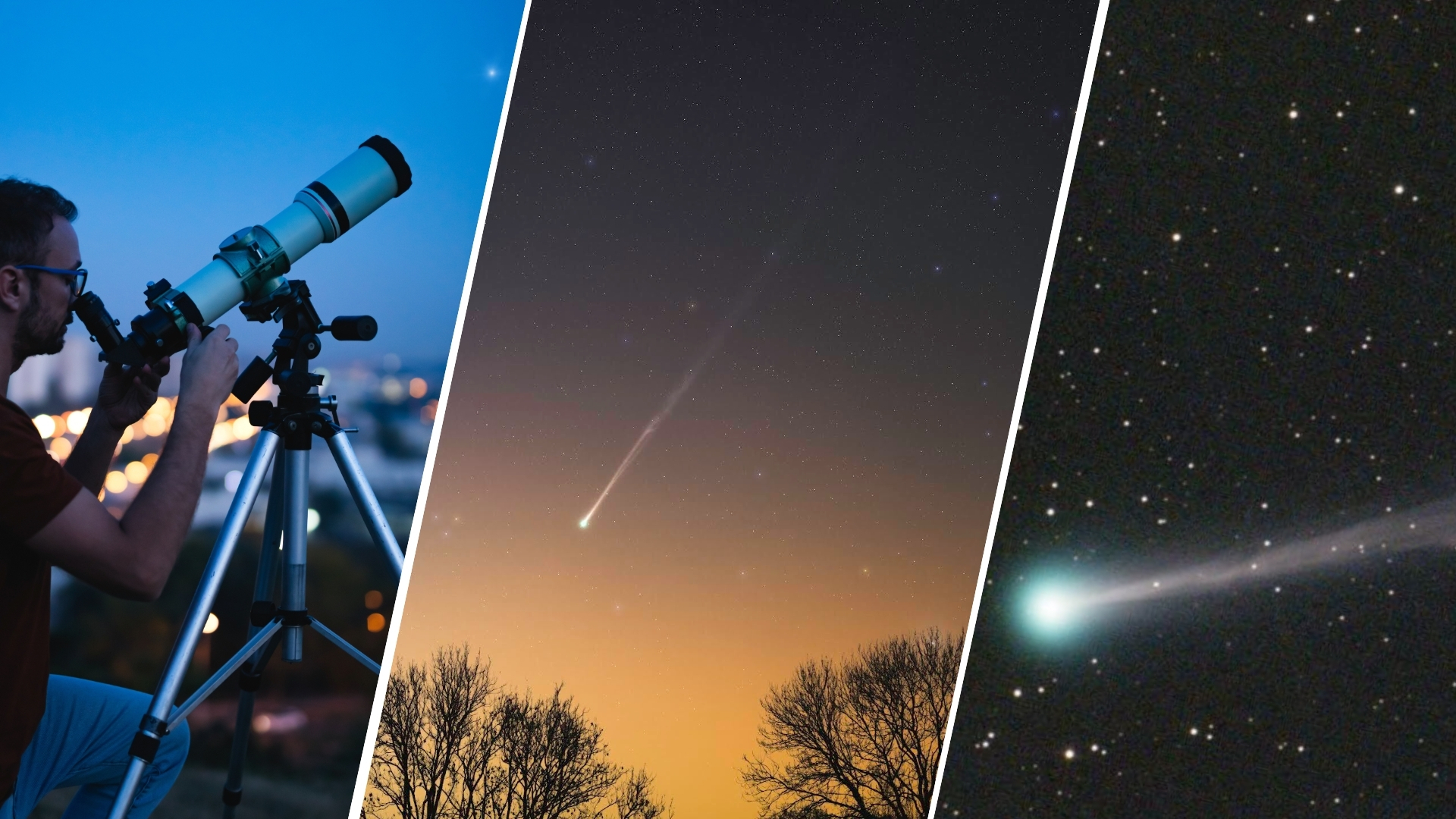
 (Image credit: left: Canva Pro, Center: Josh Dury, Right: Dimitrios Katevainis, CC BY-SA 4.0)) Share this article 0 Join the conversation Follow us Add us as a preferred source on Google Newsletter Get the Space.com Newsletter
 Breaking space news, the latest updates on rocket launches, skywatching events and more!
Contact me with news and offers from other Future brands Receive email from us on behalf of our trusted partners or sponsors By submitting your information you agree to the Terms & Conditions and Privacy Policy and are aged 16 or over.You are now subscribed
Your newsletter sign-up was successful
Want to add more newsletters?
An account already exists for this email address, please log in. Subscribe to our newsletterHead away from city lights in the predawn hours of April 17 for your best chance to see the naked eye comet C/2025 R3 (PanSTARRS) shining low on the eastern horizon, before it disappears from the Northern Hemisphere night sky for good!
Canon EOS R7 camera 
The Canon EOS R7 is the best camera for beginners hoping to capture shooting stars. Read our full Canon EOS R7 review.
The icy wanderer has already reached an estimated magnitude of +4.7 based on observations logged in the Comet Observation Database, which makes it bright enough to be seen as a small blur of light to the unaided eye from a dark sky location. Magnitude is the value used by astronomers to measure the brightness of objects in the night sky, the lower the number, the brighter the object! The human eye has the ability to see objects as dim as magnitude +6.5 under ideal dark sky conditions.
Use a pair of 10X50 binoculars to spot C/2025 R3's glowing nucleus, or long-exposure photography to capture striking details in Comet PanSTARRS' tail as it's buffeted by the solar wind.
Comet PanSTARRS is expected to brighten further in the run-up to its perihelion passage on the night of April 19, when it makes its closest approach to the sun.
Where to find Comet PanSTARRS in the eastern predawn sky on April 17. (Image credit: Created by Anthony Wood in Canva.)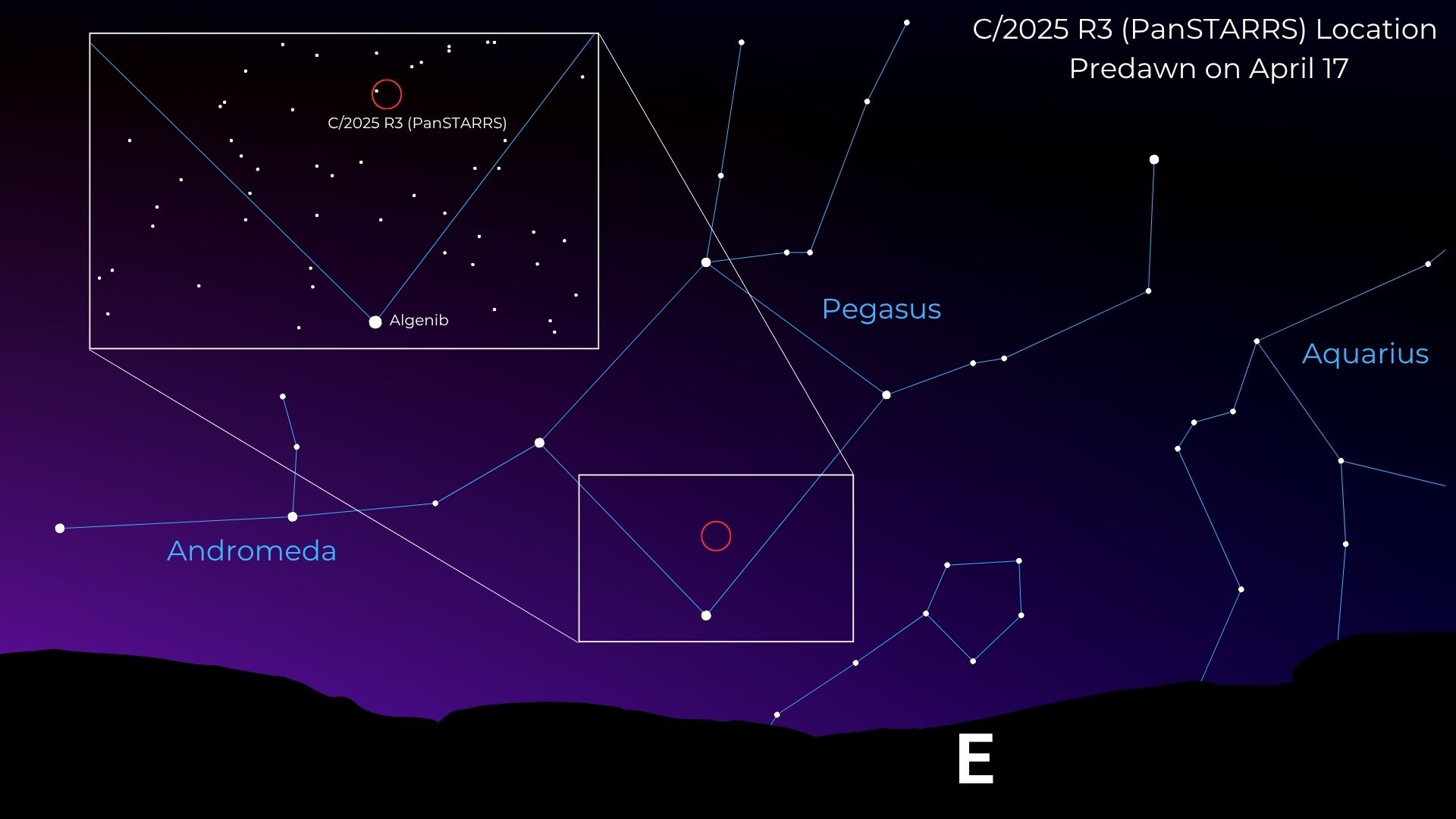
Unfortunately, each passing moment will also see it draw closer to the overwhelming glare of our parent star.
Where and when to look
The early morning hours of April 17 should give you the shot at spotting Comet PanSTARRS before it slips from our sight for good. Try to find a spot with a clear view of the eastern horizon and be in position 90 minutes before sunrise.
Get the Space.com NewsletterContact me with news and offers from other Future brandsReceive email from us on behalf of our trusted partners or sponsorsFirst, locate the four bright stars of the "Great Square of Pegasus" rising low in the eastern sky. Comet PanSTARRS is visible in the patch of sky five degrees above the lowest of the four stars, Algenib — roughly the width of your three middle fingers held at arm's length against the sky.
Following its perihelion passage, Comet PanSTARRS will transition from the Northern to the Southern Hemisphere night sky, tracing a path through the constellations of Pisces, Cetus, Eridanus and Orion as it travels away from the sun, never to be seen again in our lifetimes.
Editor's Note: If you capture a photo of comet C/2025 R3 (PanSTARRS) and want to share it with Space.com's readers, then please send your photo(s), comments, name and location to [email protected].
 Anthony WoodSkywatching Writer
Anthony Wood joined Space.com in April 2025 after contributing articles to outlets including IGN, New Atlas and Gizmodo. He has a passion for the night sky, science, Hideo Kojima, and human space exploration, and can’t wait for the day when astronauts once again set foot on the moon.
View MoreYou must confirm your public display name before commenting
Please logout and then login again, you will then be prompted to enter your display name.
Logout MORE FROM SPACE... 1Max Space unveils new expandable space habitat for the moon and beyond: 'We need real estate that is scalable'
- 2A new Earthrise: An Apollo historian experiences Artemis 2
- 3SpaceX fires up next-gen 'Version 3' Starship ahead of landmark May test flight (photos)
- 4How do supergiant exoplanets form? James Webb Space Telescope finds a clue
- 5Space combat was 'critical to mission success' in US war in Iran, Space Force chief says


