A month into the regular season, which new signings have already proven they were worth the contract?
 By Mike Axisa Apr 27, 2026 at 11:23 am ET • 12 min read
  Imagn Images
 We are officially one month into the new baseball season and we've learned a bunch already. The National League is pretty top-heavy. The American League is mediocre throughout. Healthy Yordan Alvarez can still punish baseballs. Mason Miller is still the most dominant reliever in the game. Front offices are still happy to scapegoat the manager when the roster is weak. The game is the same as it always was, really.
One month is a small piece of the season, though it is enough time to know which teams are getting the most bang from their offseason free-agent signings and which teams are still waiting to get what they paid for. With that in mind, let's dig into the free-agent class and see who's doing what. We'll focus on players who changed teams in the offseason because those moves are always the most intriguing.
Worth every penny
It feels like a million bucks when your favorite team signs a free agent who immediately comes in and makes a difference. It doesn't happen as often as we would like, but when it does, it's amazing. Here are the free-agent signings that already look like a home run.

Luis Arraez, Giants: Arraez is doing Arraez things offensively, which means taking a .324/.355/.382 line into Sunday's game. More surprising is his defense at second base. He's at plus-2 defensive runs saved and plus-4 outs above average. That's after being well into the negatives prior to 2026. Defensive stats are not exactly super reliable in a one-month sample, but Arraez has passed the eye test too. He looks pretty good in the field. Getting this kind of production out of Arraez on a one-year, $12 million contract is a big win for a Giants team that is starting to play a bit better.

Dylan Cease, Blue Jays: Thanks in part to a new changeup, Cease has struck out 39.6% of the batters he's faced this season, far and away the highest mark among starters. He's also sporting a 2.10 ERA and a career-best 54.9% ground ball rate. The near-2.00 ERA (probably) won't last forever because eventually Cease will give up a home run (zero homers in 25 ⅔ innings so far), but when you give a pitcher seven years and $210 million, this is exactly what you want to see one month into Year 1. He's been tremendous. So too has submarining setup man Tyler Rogers, who signed a three-year, $37 million contract and has been lights-out for Toronto.

Munetaka Murakami, White Sox: Concerns about Murakami's swing-and-miss tendencies and issues with velocity are still valid. They just haven't mattered. He took a .242/.381/.589 line and an MLB-leading 11 home runs into Sunday. That came with a too-high 33.1% strikeout rate and not much production against 95+ mph heaters, but if you make a mistake, Murakami will hit it a mile. The ChiSox gave him two years and $34 million in my favorite signing of the offseason. Rolling the dice with a relatively cheap two-year contract on a 26-year-old slugger with this much power is the kind of move rebuilding teams should make more often. You can't just sit around and wait for the prospects to work out, you know?

Ryan O'Hearn, Pirates: The Pirates had baseball's worst offense a year ago and they knocked it out of the park with the Brandon Lowe trade and O'Hearn signing. O'Hearn inked a modest two-year, $29 million deal, and he took a .333/.419/.511 batting line and four home runs into Sunday's action. That .419 on-base percentage is top 10 among qualified hitters. The only real negative is that the Pirates have had to play O'Hearn in right field a bunch, where his defense is subpar. That's not on him though. That's on the team for building a roster in which putting O'Hearn in right field is the smart move. Also, shoutout to lefty Gregory Soto. He's been terrific for the Pirates in the late innings after signing a one-year contract worth $7.75 million.

Michael Soroka, Diamondbacks: The D-backs signed three starting pitchers in the offseason and Soroka (one year, $7.5 million) has so far outpitched Zac Gallen (one year, $22.025 million) and Merrill Kelly (one year, $20 million). A new cutter and reshaped changeup have Soroka sitting on a 2.60 ERA with strong under-the-hood numbers (2.72 FIP) through five starts. One year and $7.5 million is nothing for a free-agent starter these days. Soroka's contract is close to paying for itself and we're still in April.

Robert Suarez, Braves: Closers not named Mason Miller are crumbling all around baseball this year. Meanwhile, the first-place Braves are riding high after re-signing Raisel Iglesias (currently injured) and bringing in Suarez to be his setup man. Suarez has stepped in as closer during Iglesias' absence and is running a sub-1.00 ERA with more than a strikeout an inning. Atlanta gave him three years and $45 million and that's not cheap for a high-end reliever, but Suarez has provided the desired impact in the late innings. He's been an important part of the team's run to the top of the NL East standings.

Framber Valdez, Tigers: It wasn't until the days leading up to spring training that the Tigers signed Valdez to a three-year, $115 million contract that includes an opt out after the second year. One month into the season, he owns a 3.41 ERA with sturdy under-the-hood numbers (3.82 FIP) and has gone at least six innings in four of his six starts. It has been a typical Framber Valdez season, basically. He and two-time reigning Cy Young winner Tarik Skubal give Detroit one of the league's better 1-2 punches.
Could be better, could be worse
Changing teams isn't easy. New city, new coaches, new teammates, new routine, the whole nine. It can sometimes take players time to settle in, even the most experienced veterans. Here are the free agents who are still finding their bearings with their new club.

Alex Bregman, Cubs: Going into Sunday, Bregman was hitting .259/.333/.384 with three home runs and a 15.9% strikeout rate that was a) much better than the 22.2% league average, and b) the highest of Bregman's career. The bat has been fine, the defense better than that. Bregman has long been lauded for his clubhouse skills and things seem to be going well on that front too, given Chicago's recent 10-game winning streak. The Cubs were probably expecting a little more offense than this when they signed him to a five-year deal worth $175 million, but it's still early, and it's not like Bregman has been bad. He just hasn't had an extended hot streak yet.

Edwin Díaz and Kyle Tucker, Dodgers: Díaz started the season with four saves in four chances and one run allowed in his first five appearances. Then his elbow began to act up and he surrendered three runs in each of his next two outings. Díaz had surgery to remove loose bodies from his elbow last week and will be sidelined until sometime after the All-Star break. As for Tucker, he's in the same boat as Bregman as a league average-ish bat (.235/.319/.363 and three homers going into Sunday) with strong defense. The Dodgers gave Díaz a three-year, $69 million contract and Tucker a four-year, $240 million contract. Perhaps these two should be knocked down into the next tier. Díaz and Tucker have both had their moments, though, and it's not like L.A.'s season hinges on these two being elite players.
Kazuma Okamoto, Blue Jays: It's funny, Okamoto was seen as the safer bet and more likely to make an immediate impact than Murakami given his contact skills, but Murakami has been mashing since Day 1 and Okamoto is just now settling in. He has three home runs in his last six games and took a .237/.324/.419 slash line into Sunday, albeit with a strikeout rate north of 30%. The eye test likes Okamoto's third base defense more than the stats. Toronto signed the soon-to-be 30 year old to a four-year deal worth $60 million and they're likely happy with what they've seen so far. An adjustment period was to be expected.
Starting to have second doubts
It's one thing to start the season with a poor April. It happens to even the very best players sometimes. It's another thing to have a poor April that comes with red flags under the hood in Year 1 of a free-agent contract. That ain't great. Here are a few free-agent signings the teams may not regret yet, but are already closer to it than they'd like.

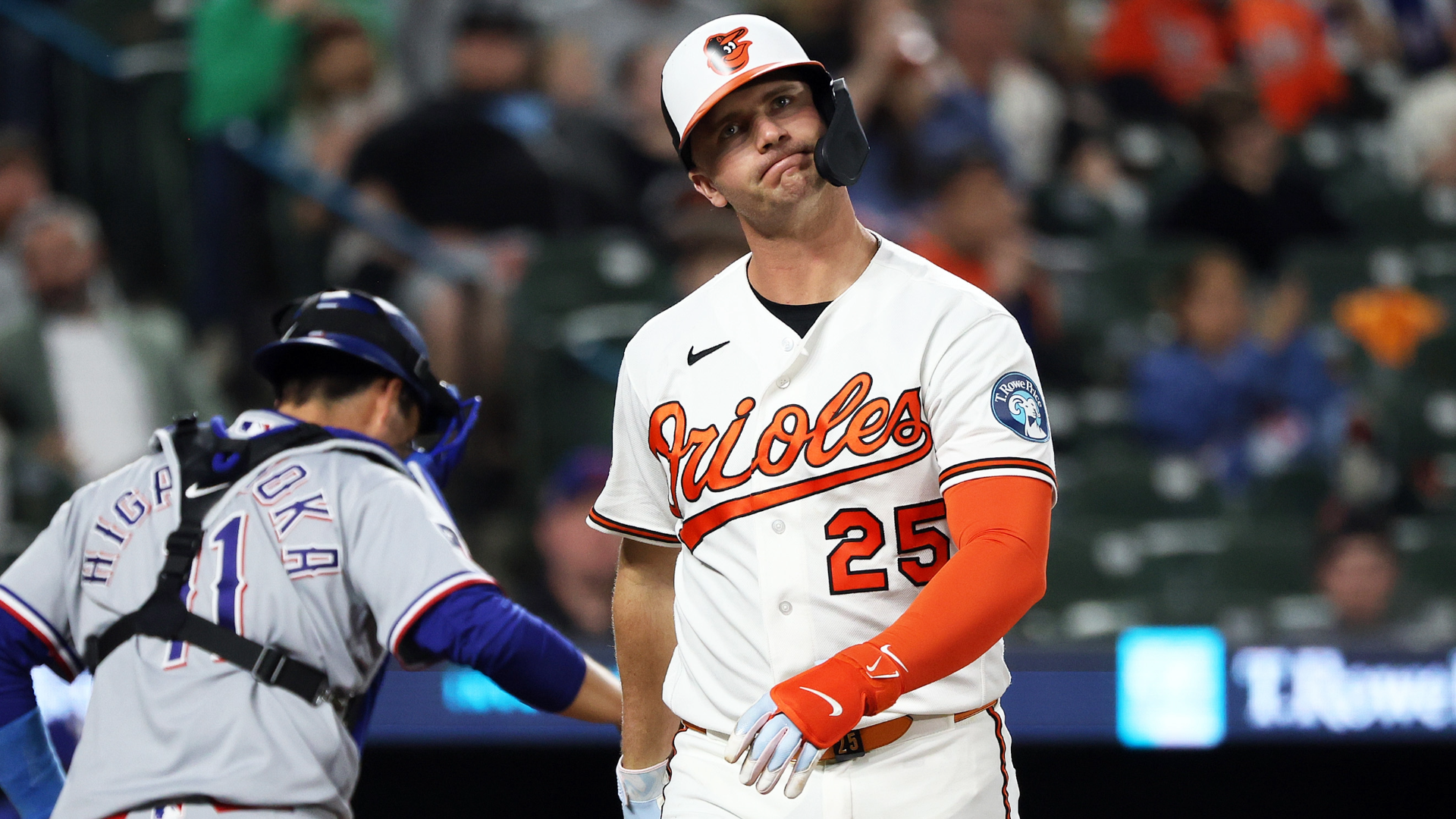
Pete Alonso, Orioles: For a bat-only player, Alonso's .204/.311/.350 line going into Sunday just isn't good enough for an O's team that has hovered around .500. More worrisome is the 26.9% strikeout rate and 7.0% barrel rate, numbers that are much worse than the league averages and Alonso's career norms. He's not hitting for power because he's not hitting the ball hard in the air (that's what barrel rate tells us). Alonso is 31 and the red flags began to pop up two years ago. We're seeing more of them now. I don't think you can call any long-term contract a dud after one month, but the Orioles gave Alonso five years and $155 million, and I would guess they're starting to feel a wee bit nervous given some of the under-the-hood stuff.

Tatsuya Imai, Astros: One good start and two stinkers have Imai sitting on a 7.27 ERA with 11 walks in 8 ⅔ innings. He's currently on the injured list with what the Astros called "arm fatigue," and Imai admitted he's had trouble adjusting to life away from the field in his first year stateside. He'll make a minor-league rehab start this week and there is plenty of season remaining for him to change the narrative, but things have started about as poorly as possible for the first player the Astros ever signed directly from Japan. Imai is working on a three-year contract worth $54 million. He has opt outs after every season.

Ranger Suárez, Red Sox: Despite his pedigree and postseason track record (1.48 ERA in 42 ⅔ innings), Suárez didn't find a team willing to meet his asking price until late January. He's had some good starts and some bad starts, giving him a 4.00 ERA through five starts and 27 innings. More concerning is that, while never a hard-thrower, Suárez came out of the gate sitting more 90 mph than 92 mph with his sinker. He's picked up some steam with each start, so perhaps you can chalk the missing velocity up to a weird spring training around the World Baseball Classic. Still, giving five years and $130 million to a pitch-to-contact lefty with below-average velocity was a risky move, and the Red Sox have already seen some of the downside.
Buyer's remorse
The stinkers. It happens. Not every free agent works out and sometimes it's apparent right away. The best thing the team can do is learn from the mistake and, if possible, move on from the player. Here are the free-agent signings that look like Ls.
Marcell Ozuna, Pirates: The Pirates nailed the Brandon Lowe trade and Ryan O'Hearn signing. The Ozuna signing (one year and $12 million) has been a colossal dud. He took a .165/.237/.259 line into Sunday's game and that was with a recent three-game stretch in which he went deep twice and had a three-hit game. Now 35, Ozuna's been trending down for a few years and he's a DH who doesn't H. For a team that doesn't spend money often, blowing $12 million on Ozuna really hurts. The Pirates would be better off with Jake Mangum's glove in the outfield and either O'Hearn or Bryan Reynolds at DH.

Eugenio Suárez, Reds: Currently on the injured list with an oblique strain, Suárez had a tremendous first half with the D-backs last season, then basically stopped hitting after being traded to the Mariners at the deadline. He hit .189/.255/.428 with Seattle and is at .231/.300/.363 this year. For a player who's spent most of his time at DH and isn't a good defender when he plays third, that's a disaster performance. The good news is the Reds gave Suárez, 34, a one-year contract, so there won't be any long-term pain. The bad news is his $15 million salary eats up close to 12% of their 2026 payroll.

Various Mets: Devin Williams (three years, $51 million) has been a disaster in the closer's role. Luke Weaver (two years, $22 million) has been shaky as the setup man with a strikeout rate that has cratered. Luis García (one year, $1.75 million) has already been released. Bo Bichette (three years, $126 million with two opt outs) is kinda sorta maybe starting to settle in, but he took a .231/.270/.312 line into Sunday's doubleheader, and that is objectively terrible. Opting out after 2026 is not a given. Force me to pick one player, and it would be Jorge Polanco, who hit .179/.246/.286 before a wrist injury sent him to the injured list. He also nursed an Achilles injury much of April and looked like a fish out of water at first base. The Mets gave him two years and $40 million over the winter. Yikes, Mets. Just yikes.
Best bargains
Every team loves a good free agent bargain. Even the teams that can afford big-money long-term contracts. Quality cheap signings are often the difference in a division race or postseason series. Here are a few players providing an outsized impact after signing for a relative pittance.

Jakob Junis, Rangers: The bullpen-needy Rangers gave Junis one year and $4 million in late January and he has been a do-it-all guy in the late innings, recording three saves and four holds already. You'd like a late-inning reliever to miss more bats than Junis has, though he has been among the league's very best at limiting hard contact. Relievers are as unpredictable as it gets in this game. Getting even one good month out of a $4 million veteran is a nice outcome for Texas.

Gary Sánchez, Brewers: Signed to a one-year, $1.75 million contract to be the backup catcher and occasionally DH against lefties, injuries to Jackson Chourio and Andrew Vaughn upped Sánchez's playing time, and he entered play Sunday with a .236/.391/.582 slash line and five home runs. He also has one of the highest walk rates in baseball. The Brewers even gave Sánchez a few starts at first base just to get his bat in the lineup. You can't do much better than this on a $1.75 million contract for a bench player.
Leody Taveras, Orioles: Taveras signed his one-year, $2.1 million contract with the O's on Nov. 6, making him one of the first signings of the offseason. Baltimore didn't want to wait around and Taveras has rewarded them with a .288/.400/.441 line going into Sunday's action. He's also taken over as the starting center fielder. As an added bonus, the Orioles will be able to keep Taveras as an arbitration-eligible player in 2027 because he signed as a minor-league free agent, not as a regular free agent with the requisite six years of service time. This bargain one-year contract would be a two-year win for the O's.
Join the Conversation comments