
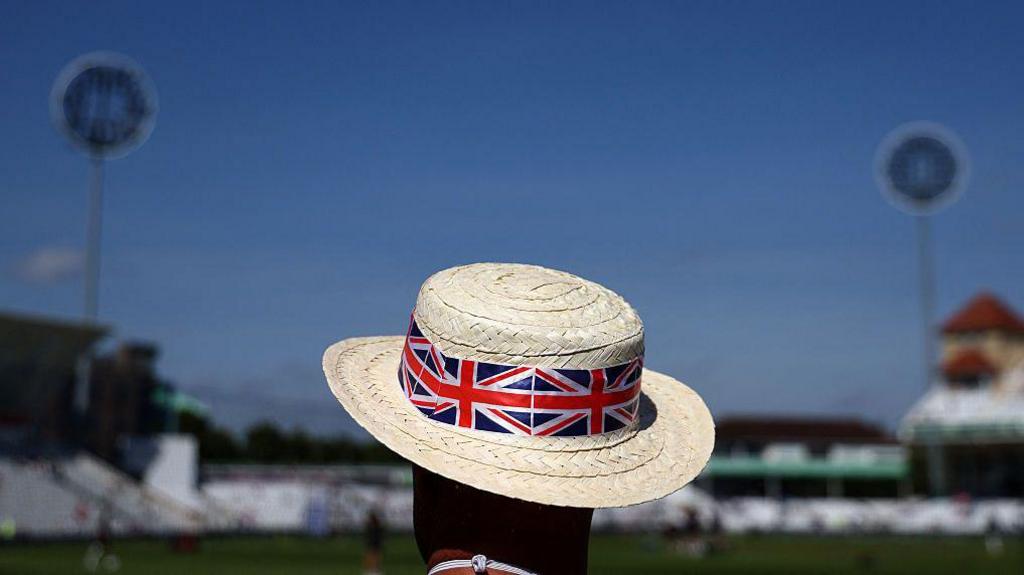
 Image source, Getty ImagesImage caption,
 England's third Test against New Zealand at Trent Bridge will be played in the sweltering heat
ByDaniel AustinBBC Sport Senior Journalist- Published1 hour ago
An unprecedented heatwave is beginning in the UK, with the June temperature record almost certainly set to be broken over the next few days.
The current record high of 35.6C, set in 1976, is set to be surpassed as meteorologists forecast temperatures as high as 38C and 39C in some parts of the country.
The Met Office has issued a rare red warning for extreme heat for sections of England and Wales from 09:00 BST on Wednesday until 21:00 on Thursday.
The red warning area includes London, Cardiff, the south west and south east, the Midlands, and the east of England.
The Met Office uses a red warning - the most severe level of alert - in instances where the weather is considered extreme enough to potentially lead to serious illness or danger to life, as well as substantial travel disruption.
The North West, North East, and Yorkshire are subject to an amber warning.
So how could the heat impact players and fans at sports events this week?
Tennis' extreme heat rules to be tested
There are two major tennis events taking place this week - qualifying for the main draw at Wimbledon, and the Eastbourne Open.
The ATP, which manages the men's tour, introduced an extreme heat rule from the 2026 season which allows players to take a 10-minute cooling break during best-of-three-sets singles matches.
The new rule is based on the Wet Bulb Globe Temperature (WBGT), which measures heat stress in direct sunlight. It involves observing temperature, humidity, wind speed, sun angle, and cloud cover.
If the WBGT reaches 30.1C or higher during the first two sets of a best-of-three match, either player can request a break of 10 minutes to cool off.
Under the supervision of ATP medical staff, players can hydrate, change clothing, shower and receive coaching.
Play will be suspended if the WBGT exceeds 32.2C.
The WTA, which runs the women's calendar, has enforced an extreme heat rule for more than 30 years.
The new rules were introduced following an incident at the Shanghai Masters in October, where temperatures were as high as 34C and humidity at 80% in the daytime. While undergoing treatment, Danish player Holger Rune asked an official: "Do you want a player to die on court?"
The Lawn Tennis Association has been reminding fans attending both events to stay hydrated and wear hats and sun cream.
Key safety messages are communicated via big screens and speaker announcements, while refillable water bottle stations are provided and water is being handed out to those waiting in queues.
The rotations of key outdoors staff, including ball crew, have also been increased.
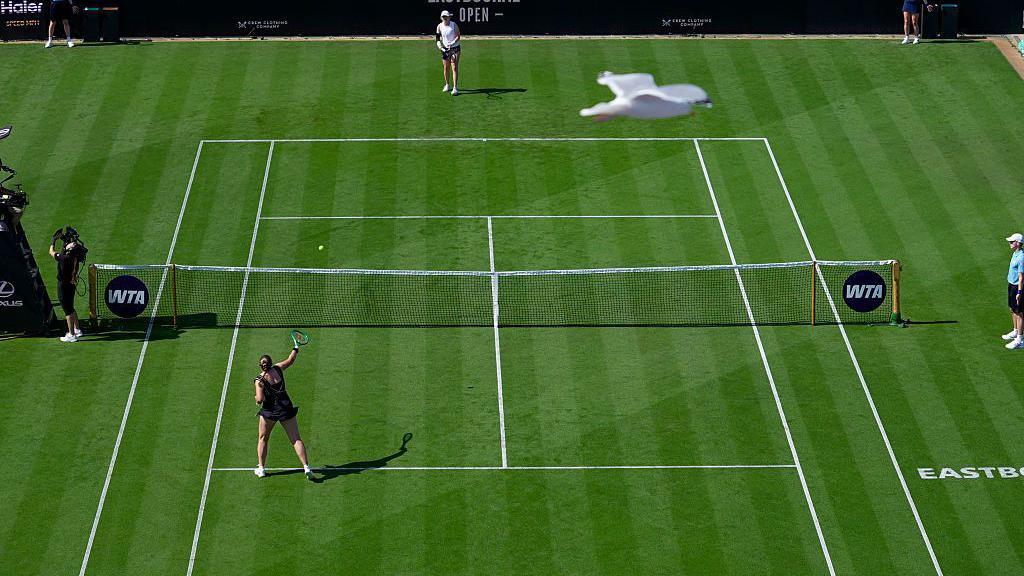 Image source, Getty ImagesImage caption,
 Eastbourne's coastal location means its temperatures are set to be cooler than at Wimbledon
Cricket crowds reduced due to heat
The women's T20 World Cup continues this week, while the England men's team will face New Zealand in the third Test at Trent Bridge from Thursday.
Scotland and Ireland are in T20 World Cup action in two separate matches at Gloucestershire Cricket in Bristol on Tuesday, while England face West Indies at Lord's on Wednesday.
Capacity crowds of more than 5,000 were expected for the Scotland and Wales fixtures, but the heat has had a significant impact, with school closures caused by the weather meaning more than 2,000 children will no longer attend the matches.
There is an expectation that attendance will be further reduced due to some ticket purchasers deciding to stay home because of the heat.
The flag ceremonies at the start of matches have also been shortened due to safety concerns and the involvement of under-18s.
Player safety is assessed by staff including a designated safety officer.
There is no blanket rule which dictates a temperature at which cricket matches should be abandoned, but the England and Wales Cricket Board (ECB) mandates extra drinks breaks for players during extreme heat, and matches could potentially be curtailed if the temperature is deemed to a pose a risk to health.
The Marylebone Cricket Club (MCC) laws of cricket allow umpires to suspend play if weather makes play dangerous or unreasonable under regulation 2.7.1.
The ECB told BBC Sport: “The ICC and the ECB have extreme heat guidance in place for venues and teams. Each situation is dealt with on a case-by-case basis.
“The management of a game is dependent on joint work between the safety officer, match officials, medical teams and the events team.
“Extra guidance is being shared with spectators to ensure they can enjoy the games safely.”
In recreational cricket, the ECB suggests shortening matches and providing shaded cool-down areas for players.
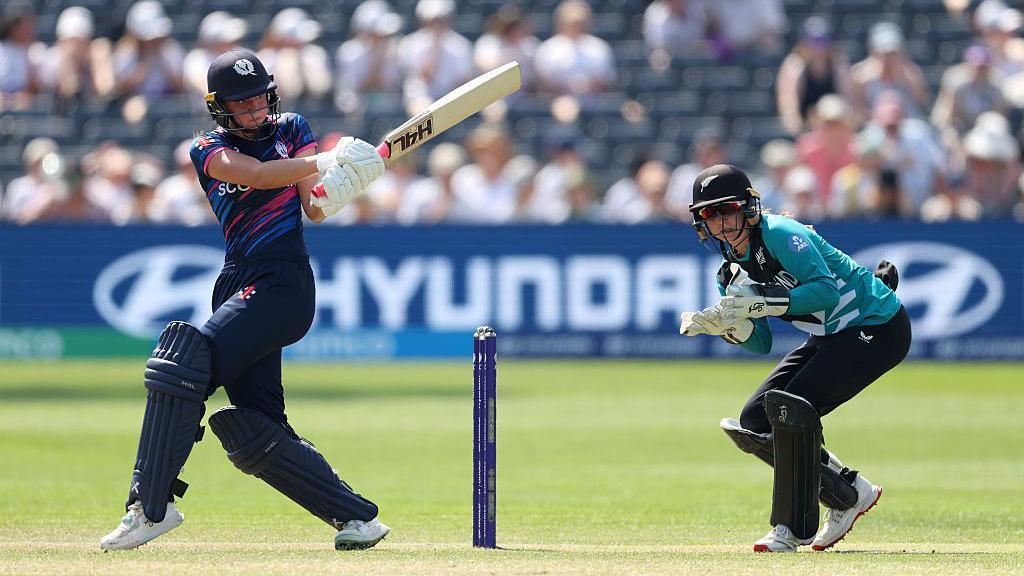 Image source, Getty ImagesImage caption,
 Temperatures in Bristol, where Scotland and Ireland are in T20 World Cup action in their respective matches on Tuesday, could reach the mid-30s
Horse racing already called off
Four horse racing meetings have already been called off - in Worcester, Salisbury, Kempton and Ffos Las - due to the governing body's blanket protocols.
The British Horseracing Authority's hot weather policy states that where racecourses fall within a red warning zone, the fixture will be abandoned.
The rules also state horses must not be transported from or through areas where red warnings are in place.
The first three courses are all located within the red zone, while Ffos Las would have required horses to be moved through it.
Will extreme heat continue to impact sport?
Extreme weather events including heatwaves and flooding have become more common in the UK because of climate change.
As global temperatures continue to rise, the efficient running of sports events and the health and safety of players and spectators will continue to be affected.
"It's now increasingly clear that climate change is having a massive impact on sports," says Dr Alan Dangour, director of climate and health at the Wellcome Trust.
"It's not just the sportsmen and women, it's the officials, it's the fans, they are all at significant risk from climate change when they attend events and sit in the baking sun.
"Extreme weather events are really jeopardising our ability to deliver sport at elite level but also at grassroots level.
"It's really important that this starts becoming part of our conscience, that we recognise that climate change is affecting the way sports people can perform and affecting our ability to enjoy sport."