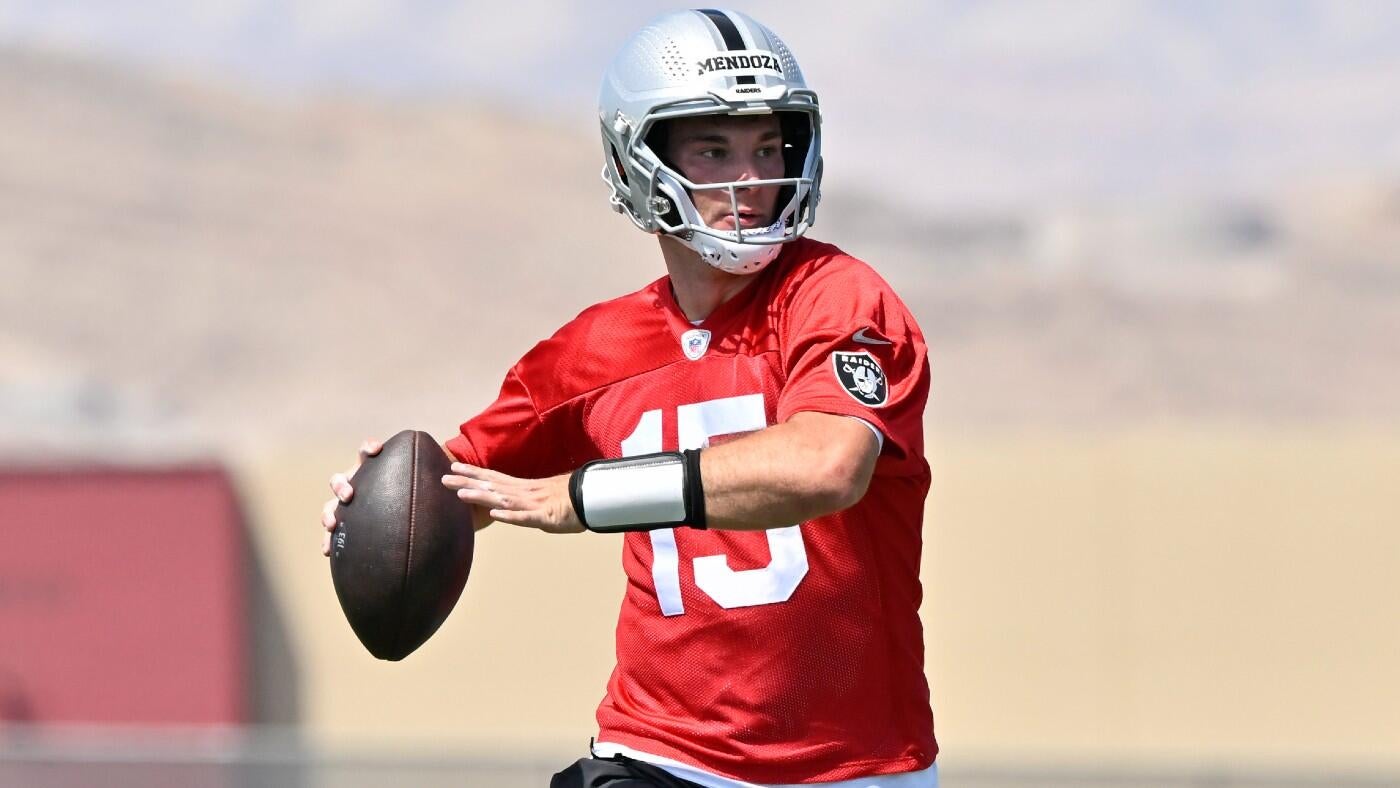
Quarterback projections are usually wrong for one simple reason: We spend too much time talking about the quarterback and not enough time talking about everything around him.
Every spring, evaluators obsess over arm strength, athleticism, release mechanics and highlight-reel throws. Then September arrives, and we're reminded that rookie quarterbacks don't enter the NFL in a vacuum. They enter ecosystems. Some inherit stable organizations, proven play-callers and ascending offensive lines. Others walk into rebuilding projects where every dropback feels like an exercise in survival.
The data back that up.
To see which factors actually mattered most, I ran a model using college and rookie quarterback data from 2015-2025. The goal wasn't to predict the future; quarterback evaluation is too messy for that. The goal was to identify the traits and circumstances that best correlate with early NFL success.
Five variables consistently emerged: collegiate starts, time to throw, pressure rate, screen-game dependency and first-down rate. Collegiate starts matter because experience matters. Time to throw and pressure rate help reveal whether a quarterback has a feel for the pocket or is creating some of his own problems. Screen rate and first-down rate help separate easy production from meaningful production.
Put them together, and you get a pretty good sense of how a quarterback is likely to respond when the picture changes after the snap and he has to solve the problem himself.
One of the clearest themes in the data was something that sounds obvious until you see it appear over and over again: Quarterbacks drafted first often inherit the hardest jobs. Quarterbacks selected near the top of the draft historically take more sacks and are asked to shoulder more responsibility than quarterbacks selected later. The reason isn't complicated. The worst teams pick first. Draft capital buys opportunity, but it often comes attached to weaker rosters, shakier protection and coaching staffs under pressure to win immediately.
That's important because these five quarterbacks enter the league under dramatically different circumstances.
Fernando Mendoza was the No. 1 overall pick and is expected to become the face of the Raiders franchise. Carson Beck landed in Arizona, where the Cardinals invested significant resources in rebuilding the offense around him. Drew Allar joins one of the league's most stable organizations. Cade Klubnik enters a Jets team still searching for answers. Ty Simpson walks into perhaps the ideal developmental situation behind Matthew Stafford and Sean McVay.
Their talent levels are different. Their developmental timelines are different. And their environments are very different. Which raises a simple question:
What does the best-, worst- and most likely version of each rookie season look like?
One theme kept showing up in the data. First-down rate emerged as the strongest predictor. Experience mattered. Pocket management mattered. But once these quarterbacks reached the NFL, the biggest variable often became the environment around them. Put differently, talent helps get quarterbacks drafted. Environment often determines how quickly they develop.
How reliable is this model?
Before projecting rookie numbers for the 2026 quarterback class, I wanted to know whether the model was actually identifying signal or simply fitting noise.
To test that, I removed Cam Ward, Jaxson Dart and Tyler Shough -- the 2025 rookie quarterbacks who played significant snaps in their first NFL seasons -- from the training data. I then reran the model to see how its estimates compared to the real-world results: the actual numbers Ward, Dart and Shough produced as rookies.
The results were encouraging.
Testing the model without the 2025 rookie QBs
QBCompletion % (Predicted / Actual)Pass Yards (Predicted / Actual)Pass TDs (Predicted / Actual)INTs (Predicted / Actual)Sacks (Predicted / Actual)Cam Ward
61.8% / 59.8%
3,437 / 3,169
16.5 / 15
12 / 7
43 / 55
Jaxson Dart
63.2% / 63.7%
2,667 / 2,272
14.5 / 15
9 / 5
34 / 35
Tyler Shough
60.9% / 61.7%
2,914 / 2,756
15.2 / 14
11 / 12
39 / 42
The model appears to do a good job identifying realistic ranges of outcomes and the factors most likely to push a quarterback toward the high or low end of those ranges.
So let's get to it.
Fernando Mendoza: The burden of being No. 1

 Fernando Mendoza LV • QB • #15 Heisman Trophy winner who led Indiana to a 16–0 record and CFP National Championship View Profile
 If this were based solely on college performance, Fernando Mendoza would be the easy favorite -- and it's not hard to understand why. His 37.6% first-down rate ranked in the 91st percentile despite facing pressure on more than 32% of his dropbacks. Unlike many modern quarterbacks, he wasn't propped up by a screen-heavy offense. Just 23.1% of his throws came behind the line of scrimmage.
That's why Mendoza enters the NFL with arguably the cleanest analytical profile in the class. The problem is that he landed behind one of the weakest offensive lines in the league.
Las Vegas ranked near the bottom of the league in pass protection in 2024 and somehow got worse in 2025. Sack rate ballooned from 7.3% to 11.1%, the worst mark among the teams discussed here. Pressure rate climbed from 35.8% to 40.5%, while the running game remained one of the least efficient units in football.
That's a problem because Mendoza wins from the pocket. He's not going to erase protection issues with athleticism (though he's certainly not a bad athlete). His game is built on anticipation, timing and a willingness to stand in against pressure.
Klint Kubiak's offense can manufacture opportunities through motion and play-action. But even the best scheme eventually requires functional protection. That's what makes Mendoza such a difficult projection. The most NFL-ready quarterback landed in the least QB-friendly environment.
And unlike Beck, Allar, Klubnik or Simpson, he probably won't have the luxury of sitting and learning. If Mendoza is going to succeed early, he'll likely have to do it while overcoming many of the same structural issues that have made life difficult for young passers before him.
Range of outcomes for Fernando Mendoza's rookie season
StatWorst CaseMedian CaseBest CaseCompletion %
58.6%
61.4%
65.2%
Yards/Attempt
6.0
6.6
7.6
Passing yards
2,780
3,360
3,920
Passing touchdowns
13
17
21
Interceptions
17
14
10
Sacks taken
54
48
37
Passer rating
72.4
82.1
91.8
Rush yards
120
165
210
The numbers tell the story. Mendoza may have the strongest analytical profile in the class, but his most likely outcome lands much closer to the middle of the distribution than the ceiling. That's not a reflection of talent. It's a reflection of where he landed. The model repeatedly penalized quarterbacks entering poor pass-protection situations, and no rookie faces a steeper challenge than Mendoza.
That said, this projection is also one of the most sensitive to environmental changes. The Raiders spent the offseason trying to address the offensive line, signing one of the top free agents available in Tyler Linderbaum and drafting Trey Zuhn III, who brings versatility across the interior. If those additions help stabilize the protection and Las Vegas moves closer to league average up front, Mendoza's outlook changes considerably. More than any rookie quarterback, his projection may depend on whether everything around him improves as much as he does.
Fernando Mendoza watch: Predicting when Raiders will start No. 1 overall pick; QB's Rookie of the Year odds Garrett Podell
Carson Beck: The safest QB in the class?

 Carson Beck ARI • QB • #19 2025: Led ACC in passer efficiency rating (157.0), completion percentage (72.4%) and completions (338) View Profile
 If you're looking for the safest quarterback in this class, it just might be Carson Beck. The question is whether "safe" also means limited. The numbers explain why the model liked him so much: He started 43 games, got the ball out faster than anyone in this class and moved the chains at an elite level. His 38.6% first-down rate ranked in the 95th percentile among draft-eligible quarterbacks from 2015-2026.
He played efficient football, protected the ball and consistently kept his offense on schedule. But he also entered the NFL after playing behind one of the cleanest pockets of any quarterback in the data. Beck's profile has always been built around avoiding pressure rather than overcoming it, and the challenge for Arizona isn't helping him play faster -- it's determining how much of his collegiate success carries over when things aren't quite so clean.
The biggest change since his time at Georgia is that Beck isn't entering the NFL carrying the expectations that come with being a top-five pick. And that means Arizona can afford to be patient.
That's important because Beck faced pressure on just 19.1% of his collegiate dropbacks, the lowest figure among these quarterbacks, and more than 32% of his throws came on screens. The problem is that Arizona's offensive line regressed dramatically in 2025. Sack rate jumped from 5.2% in 2024 to 8.3%, while pressure rate allowed climbed from 29.4% to 39.3%.
The good news for Beck is that the Cardinals spent much of the offseason trying to fix it. They selected Jeremiyah Love third overall, drafted interior offensive lineman Chase Bisontis in Round 2 and signed veterans Isaac Seumalo, Elijah Wilkinson and Matt Pryor. Those moves directly address several of the weaknesses that surfaced during a disappointing 2025 season.
And then there's the new coach. Mike LaFleur comes from the Shanahan-McVay tree, where quarterbacks are often given answers before the snap and asked to make quick decisions after it. That's exactly how Beck won at Georgia.
Range of outcomes for Carson Beck's rookie season
StatWorst CaseMedian CaseBest CaseCompletion %
59.2%
63.7%
66.8%
Yards/attempt
6.2
6.9
7.5
Passing yards
2,980
3,520
4,050
Passing touchdowns
12
18
23
Interceptions
15
12
9
Sacks taken
46
39
31
Passer rating
74.8
85.8
95.2
Rush yards
85
120
165
Beck's projection looks exactly like what you'd expect from arguably the safest quarterback in the class. The model consistently rewarded his experience, quick processing and ability to stay on schedule. Even if the ceiling isn't what it is for Mendoza – or even Allar (more on that in a second), Beck may have the highest floor.
NFL Offensive Rookie of the Year odds: Cardinals third-round QB Carson Beck a big early mover Matt Severance
Drew Allar: The biggest winner of the draft?

 Drew Allar PIT • QB • #16 Penn State record-holder in completion percentage (63.2%) View Profile
 Drew Allar may have landed in the best possible place to maximize his abilities.
In reality, the Steelers would love for Allar to spend most of 2026 learning, developing and adjusting to NFL speed. But let's assume circumstances force him onto the field. If that happens, he'll step into one of the most quarterback-friendly situations in the league for a rookie.
The Steelers made one of the biggest jumps in pass protection from 2024 to 2025. Sack rate allowed dropped from 8.9% to 5.3%, while pressure rate allowed fell from 38.6% to 25.0%. Pittsburgh also added tackle Max Iheanachor and receiver Germie Bernard in the first two rounds of the draft. Neither rookie should be expected to transform the offense immediately -- offensive tackle and wide receiver can face steep learning curves -- but both additions reinforce the organization's commitment to improving around the quarterback.
The bigger story, though, remains Mike McCarthy.
Few coaches have more experience developing quarterbacks with high-end traits. McCarthy has spent years working with passers who could create outside structure without descending into chaos. That's important because Allar's profile may be one of the most complicated in this class.
The statistical profile is easy to like. Normally, a 2.84-second time to throw would raise concerns, but paired with Allar's 37.9% first-down rate (one of the best marks in the class), things become less clear. The data suggest he wasn't simply holding the ball because he couldn't process what he was seeing. More often than not, he was looking to create bigger plays down the field.
But here's the big one: Looking back at my notes on Allar from 2024 and 2025, the tape, shall we say, tells a more nuanced story.
Again and again, Allar showed flashes of a quarterback capable of making high-level throws. He can drive the ball outside the numbers, layer throws over linebackers and attack tight windows with anticipation. At his best, he looks every bit like a future NFL starter.
But those flashes were often followed by stretches where, if the pocket got noisy, the footwork became frenetic and the decision-making sped up. Several games featured the same pattern: impressive anticipation throws early, followed by hurried decisions and declining accuracy once pressure mounted. When things started moving quickly around him, his mechanics unraveled.
So while the traits are obvious -- we all spent a lot of time talking about them last summer -- consistency was the issue. It's also one reason I'd be careful about assuming Pittsburgh's protection numbers automatically carry over to Allar.
The Steelers made major strides in pass protection from 2024 to 2025, but Aaron Rodgers deserves a significant share of the credit. One of the most important lessons from modern football analytics is that sacks and pressures are often as much a quarterback stat as an offensive-line stat. Rodgers has spent two decades making life easier on the players blocking for him.
In 2025, Pittsburgh's passing game was built around getting the ball out quickly and letting receivers create after the catch. The Steelers averaged just 3.4 air yards per completion, the lowest mark in the league, which meant pass rushers often had only a couple of seconds to win their reps. Rodgers also remains one of the best passers of his generation at identifying pressure before the snap, setting protections and avoiding negative plays once the ball is snapped.
This is important context for Allar. His tape makes it clear that he doesn't consistently respond to pressure the way Rodgers does -- though it's worth remembering that the Rodgers who played at Cal looked a lot different than the current version set to be a first-ballot Hall of Famer.
So Allar remains a work in progress. When the pocket gets muddy, his footwork can become frenetic and his decision-making can suffer. Pittsburgh can offer a better environment than most young quarterbacks might walk into, but some of the protection numbers that look so encouraging on paper were also a byproduct of having one of the smartest and most experienced quarterbacks in NFL history under center.
And that's the balancing act with Allar. The Steelers can help him, but he's going to have to figure out a lot of this on his own.
Range of outcomes for Drew Allar's rookie season
StatWorst CaseMedian CaseBest CaseCompletion %
56.8%
60.9%
64.8%
Yards/attempt
5.7
6.7
7.8
Passing yards
2,500
3,150
3,750
Passing touchdowns
10
16
22
Interceptions
18
13
8
Sacks taken
53
44
32
Passer rating
69.8
80.7
94.5
Rush yards
180
225
275
If the Steelers get the version of Allar that trusts his eyes, plays on time and takes the easy completions, this could end up looking like one of the best QB-team fits in the class. If the old habits show up, the learning curve could be steeper than the raw offensive-line numbers suggest, and we'll be talking about why he was overdrafted in Round 3.
However, other than Ty Simpson, no rookie quarterback benefits more from his landing spot than Allar. The arm talent, athleticism and flashes of high-end quarterback play are all there. The question has never been whether he can make NFL throws. It's whether he can stay calm when the pocket gets muddy, play with confidence when the picture changes after the snap and maintain the same level of execution in the fourth quarter that he shows in the first.
That's why Pittsburgh matters so much -- a strong offensive line, McCarthy's QB-friendly system and the patience that comes with being a third-rounder give Allar something many talented quarterbacks never receive: time.
Time to clean up the footwork, to learn to trust the reads, to turn flashes into consistency. If he's forced to play in 2026, the environment should help raise the floor. Long term, however, his ceiling could be as high as anyone's in this class.
Ben Roethlisberger questions Steelers' training plan for QB Drew Allar: 'Makes me nervous' Brad Crawford
Ty Simpson: The perfect developmental environment

 Ty Simpson LAR • QB • #15 2025: 3,567 passing yards (fourth-most in Alabama history) View Profile
 If you're building the ideal environment to develop a quarterback, it would look a lot like what Ty Simpson walked into in Los Angeles. Unlike Mendoza, who will likely be asked to play immediately, Simpson enters the league behind Matthew Stafford -- and that changes everything.
The Rams can spend an entire season refining his footwork, speeding up his processing and teaching him Sean McVay's offense before he's ever asked to take meaningful snaps. Historically, that's about as good as it gets. But for our purposes here, let's assume Simpson eventually has to play in 2026.
In 2025, Los Angeles fielded the strongest offensive line among the five teams we're talking about, and McVay is one of the league's best offensive minds. Beck is the safest. Mendoza owns the cleanest analytical profile. Allar may have landed in the best combination of coaching, protection and organizational stability. But Simpson was the QB I kept coming back to because almost every reason to be skeptical came with an equally compelling reason for optimism.
He's the least experienced quarterback in the class, but he's also entering one of the best developmental environments in football. There simply aren't many QBs who arrive in the NFL with so little starting experience and so much infrastructure around them.
On one hand, the historical profile is concerning. Simpson started just 15 college games. First-round QBs with that little starting experience typically haven't worked out -- see Mitch Trubisky, Anthony Richardson and Dwayne Haskins (Cam Newton also falls into this category, though he started in junior college before transferring to Auburn) -- mostly because they haven't seen enough football.
On the other hand ... Simpson isn't a typical one-year starter.
He's the son of a coach. He spent three seasons in Alabama's QB room before finally taking over in 2025, learning behind Bryce Young and Jalen Milroe while operating inside one of college football's most demanding programs. When he finally got his opportunity, he threw for 3,567 yards, 28 touchdowns and just five interceptions while showing the anticipation, ball placement and decision-making that convinced the Rams to make him the No. 13 overall pick.
But Los Angeles was never betting on experience; the organization knew that, with Stafford set to play another season (and possibly more), Simpson had time.
Range of outcomes for Ty Simpson rookie season
StatWorst CaseMedian CaseBest CaseCompletion %
54.8%
59.9%
63.4%
Yards/attempt
5.6
6.8
7.7
Passing yards
2,340
3,050
3,520
Passing touchdowns
9
15
18
Interceptions
21
15
9
Sacks taken
61
46
35
Passer rating
63.5
78.4
90.6
Rush yards
320
390
460
The simulation reinforces why Simpson may have the widest range of outcomes in the class. No quarterback has a wider distribution. His limited collegiate experience drags the floor lower than anyone else's in the class, while time behind Stafford and the opportunity to learn from McVay raise the ceiling considerably.
The result is a projection that spans nearly every possible outcome -- from overwhelmed rookie to future franchise quarterback.
Rams had 'secret meeting' with Ty Simpson: How the NFL Draft's most shocking pick came together John Breech
Cade Klubnik: Can the Jets build enough around him?
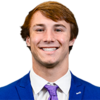
 Cade Klubnik NYJ • QB • #10 Fourth Clemson QB to surpass 11,000 yards of total offense View Profile
 Cade Klubnik is the quarterback the model never fully bought into, largely because the production never quite matched the expectations. Klubnik started 40 games, ranking in the 85th percentile in experience. Yet despite all those reps, he produced a first-down rate of just 32.6%, well below Beck, Mendoza and Allar.
But the Jets didn't draft Klubnik expecting him to save the franchise in 2026 -- you don't do that with fourth-round picks. The expectation is development.
Still, we're assuming here that he eventually finds his way onto the field next season. And if he does, the biggest question won't be out-of-structure playmaking ability or athleticism. It'll be whether the concerns raised by his college tape were developmental issues ... or indicators of larger limitations.
The Jets attempted to improve the offense around him by selecting Kenyon Sadiq and Omar Cooper Jr. in Round 1. New offensive coordinator Frank Reich's influence will also be critical. At his best, Reich creates quarterback-friendly systems built around timing, play-action and layered reads.
Range of outcomes for Cade Klubnik's rookie season
StatWorst CaseMedian CaseBest CaseCompletion %
56.5%
60.2%
63.7%
Yards/attempt
5.8
6.3
7.0
Passing yards
2,520
3,010
3,650
Passing touchdowns
10
14
19
Interceptions
20
16
11
Sacks taken
59
49
39
Passer rating
66.8
76.5
87.4
Rush yards
190
240
285
The simulation reinforces what the model has been saying all along. The Jets improved the supporting cast. Reich provides a quarterback-friendly offensive structure. But the projections repeatedly arrive at the same conclusion: The questions raised by Klubnik's collegiate profile don't disappear simply because the environment improves.
More than any quarterback we're talking about here, his projection depends on proving the model wrong.
What does it all mean?
The biggest takeaway: Environment alters projections.
Mendoza entered with the strongest profile but arguably the toughest situation. Beck paired the safest profile with an organization actively rebuilding the offense around him. Allar landed in the healthiest combination of coaching, protection and patience -- and he may need all three. Simpson inherited the best developmental environment in the class. Klubnik enters with the most unanswered questions.
In the simplest terms:
- Beck needs structure.
- Mendoza needs protection.
- Allar needs patience.
- Klubnik needs answers.
- Simpson needs time.
And that's really the lesson of this class. Quarterback development isn't linear. The strongest profile doesn't always produce the best rookie season. The most talented player doesn't always become the best pro. Sometimes the difference between success and failure is as simple as an extra half-second of protection, a veteran mentor in the QB room or a coach willing to build around what a young passer already does well.
Talent gets quarterbacks drafted. What happens next is usually about everything else.
Add CBS Sports on Google Join the Conversation comments