 Image source, Getty ImagesImage caption,
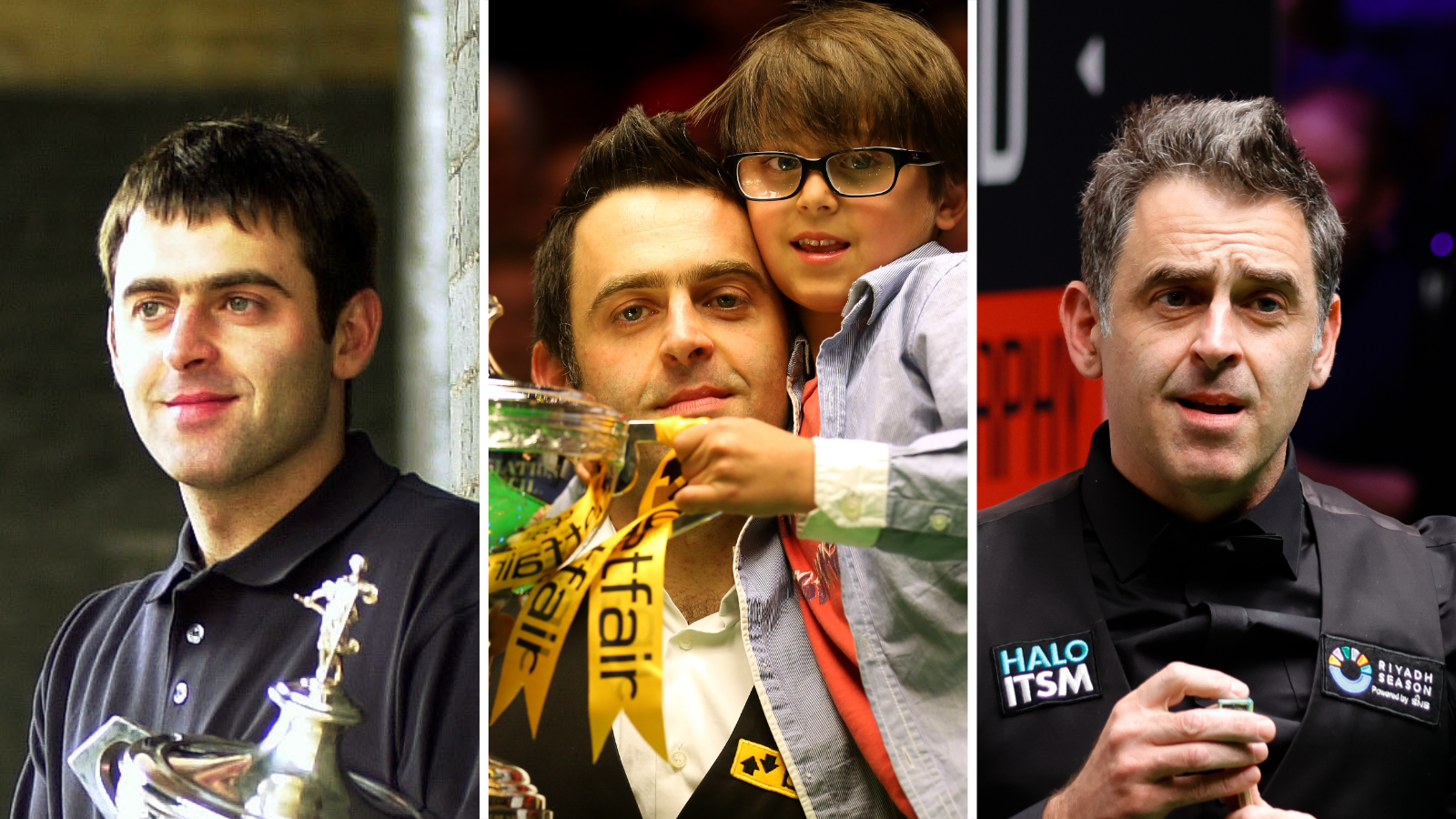
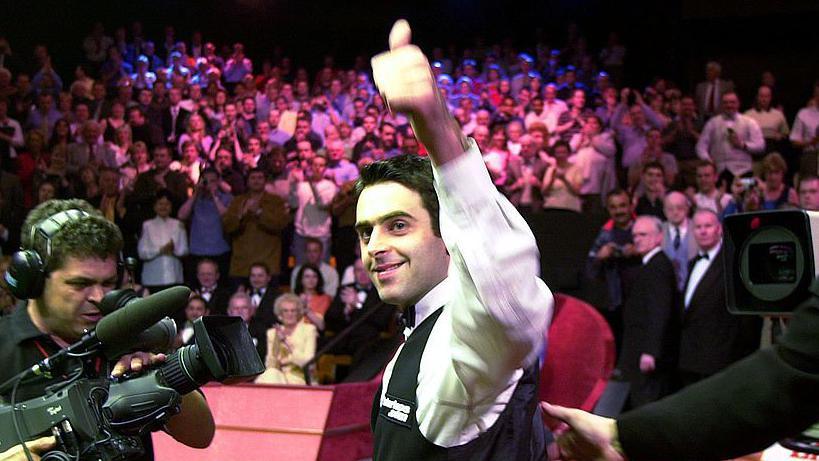
 Ronnie O'Sullivan won his first World Championship title in 2001, after finding the Crucible a tough nut to crack in the early years of his career
ByJohn SkilbeckBBC Sport senior journalist- Published25 minutes ago
Down go the lights inside Sheffield's Crucible Theatre, an overhead galaxy replaced by darkness.
Heavyweight auditorium doors thud closed. A handshake between the protagonists disguises hell-bent hunger to degrade each other as far as non-contact sport allows.
The world beyond this claustrophobic den of tension and turmoil becomes irrelevant. Phones are switched off, senses flick to high alert.
New energy fills the air: anxious, anticipative. Crowd commotion hits a heavy metal high and drops steeply to silence.
All that matters in this moment is one of life's most edifying trivialities: snooker.
The gunshot clack that follows is resin on resin, the cue ball rippling off the pack of reds, signalling the start of a stage show without a script.
Rinse and repeat for 17 days. The marathon of the mind has begun.
Never take a result for granted at the Crucible; high stakes can discombobulate the very best.
"It has its own fingerprint as a snooker venue," says six-time world champion Steve Davis.
"I've had moments in there when it's been the most wonderful place. There were other times when I wanted the whole place to swallow me up because it was the worst place ever."
Davis was humbled 10-1 on day one by Tony Knowles in 1982, his first year as defending champion. He was turned white as a sheet by Dennis Taylor in the 1985 black-ball final, then turned over by a Yorkshireman when Bradford's Joe Johnson triumphed a year later.
Fortunately for him, Davis also has rip-roaring memories of triumph at the theatre that this year is staging the World Snooker Championship for a 50th time.
Most don't.
Twenty-four men have lifted the trophy in Sheffield; hundreds have left empty-handed.
The Crucible and all that it entails chews up players, scars them. All the greats have been through the wringer. But what is it that makes the 980-seat venue so special?
How did a venue once considered a "dropout's hangout" become snooker's ultimate stage?
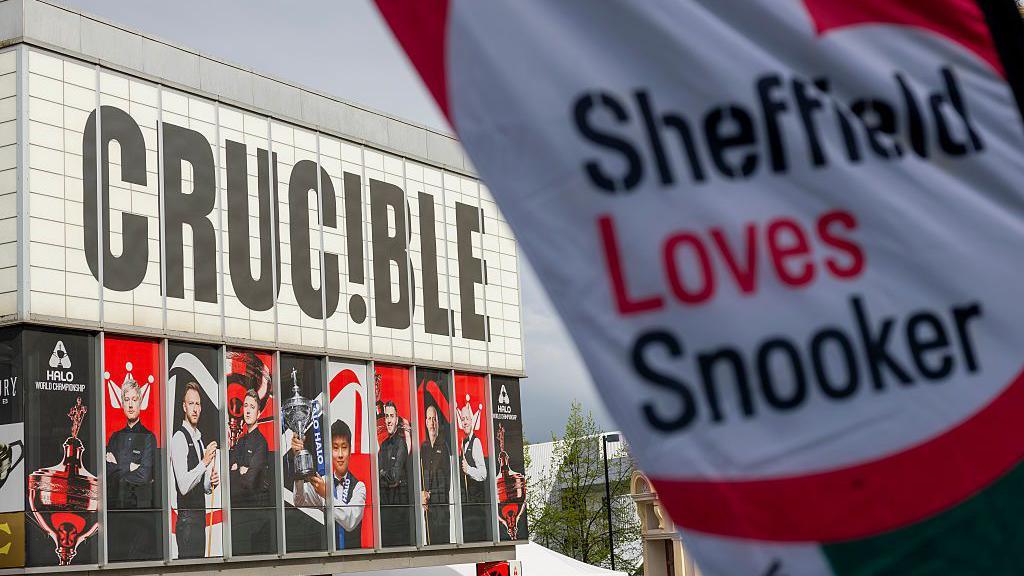 Image source, Getty ImagesImage caption,
 Sheffield's Crucible Theatre has staged snooker's World Championship since 1977
"It's the history, the quirkiness, the layout of the arena, how close the spectators are. It's everything," says Crucible MC Rob Walker, a coiled spring each April.
"In 2018, Mark Williams shared a packet of Minstrels with somebody in the front row; he didn't have to outstretch his arm, that's how close they are.
"The players tell you there's nowhere harder to win. That arena doesn't look very big, but I can assure you that when there is a bum on every seat and the whole place is silent, and you are the one about to play - or in my case, speak - it's huge."
Intimidating?
"It can be," says Walker. "You unequivocally feel it more there than anywhere else. It does strange things to you, that arena."
'Unthinkable' it should move anywhere else
"Over my dead body," said Barry Hearn, then the chairman of World Snooker, amid suspicions some years ago that under his leadership the tournament might leave Sheffield.
Hearn, usually a money-making obsessive, has emotional ties to the Crucible stretching back decades.
He bounded across the theatre floor in 1981 to hug new champion Davis, who he managed. The next year, fuelled by that success, Hearn launched the promotions company that would become Matchroom, whose latest accounts showed annual turnover of £225m.
Hearn has forensic knowledge of the monetary value of sport. The possibility snooker could have made a quick killing by taking its premier event abroad, perhaps to China or Saudi Arabia, was clear. Hearn knew it, Sheffield knew it, the government knew it. All parties also knew what they could lose with such a move.
A deal with Sheffield took years to execute.
With bargaining chips galore, Hearn - no longer formally in charge but still a huge influence on snooker - hailed a people-pleasing agreement in March, when not only was a contract signed to keep the World Championship in Sheffield until 2045, but crucially a 500-seat expansion of the theatre was promised.
"The Crucible's going to become even more famous and we haven't lost our history, which is so important," Hearn said. "My life changed in 1981 when Steve Davis won the World Championship. It's unthinkable for us to play the World Championship anywhere else than this great venue."
Sheffield's economy is boosted by £4.5m each year by the event, with a media value - exposure through free publicity - worth over £3m on top. No wonder Sheffield City Council pays the World Snooker Tour a hefty staging fee, and not the other way round.
Many leading Chinese players live in Sheffield, while a string of top-tier academies have opened up. This is not simply a 17-day snooker city.
To play this video you need to enable JavaScript in your browser.
This video can not be played
Media caption,Barry Hearn on the Crucible's 'cemented future'
Snooker's accidental home
The man widely credited with bringing snooker to the Crucible is Mike Watterson, a sports promoter who later became chairman of Derby County football club.
But it was Watterson's wife, Carole, who pitched the idea after watching a play there in 1976, five years after the theatre opened its doors.
"She said that the Crucible would be perfect for snooker," said Watterson, who died in March 2019.
"Back then it was a dropout's hangout, an embarrassment to the city. You'd go in and find dropouts lounging in there - beatniks, we used to call them. It was always getting slated by the city and the people."
What made it credible as a snooker venue was the size and shape of the stage, surrounded on three sides by the audience.
Mike enquired and was told it was 34ft wide. Not wide enough.
On closer inspection, it was 36ft. Those two feet made the difference between the World Championship remaining a perpetual roadshow and putting down roots in the Steel City from 1977 to the present day.
Two snooker tables can sit parallel, separated by a dividing wall, with just enough space for the players to roam and fully stretch out on all their shots.
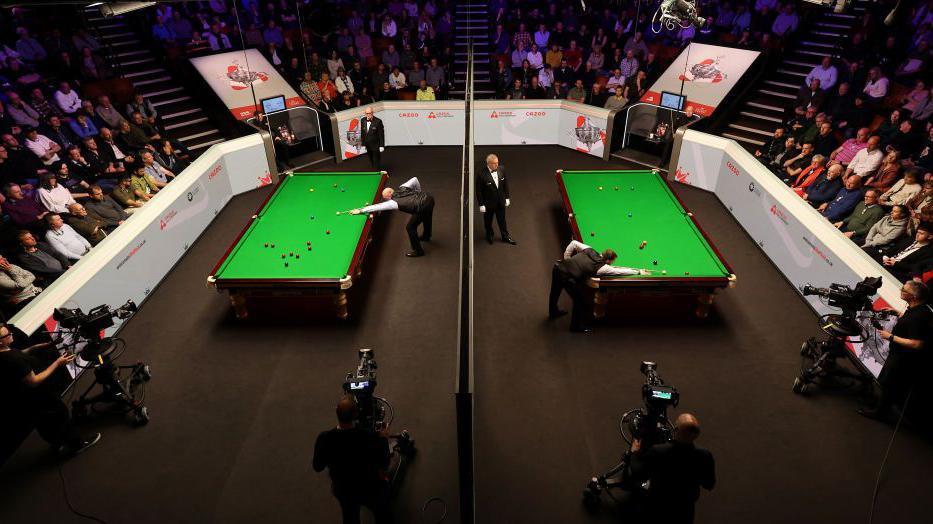 Image source, Getty ImagesImage caption,
 The Crucible's stage is large enough - just - to house two tables, before it switches to a one-table set-up from the semi-finals
In the decade before its Sheffield arrival, the final had been played in towns and cities spread as far apart as Bolton, Birmingham, Sydney and Melbourne.
Sheffield had its turn - then it got a second year, and a third.
"You never can tell if something's going to work," Watterson said a decade ago. "I don't think I imagined at all the tournament would be in Sheffield for so long."
Australia's Neil Robertson, the 2010 world champion, points to limited player facilities, with just two practice tables "not really ideal".
But Robertson welcomed the long-term plans as "amazing news", assuming players aren't an afterthought when rebuilding begins.
"The thing that hopefully never changes is the walk down the stairs into the arena," Robertson said. "It just hits you, with all the amazing players who have walked down there over the years.
"It's the only venue where we've been playing for decades. You can't ignore the history attached to it."
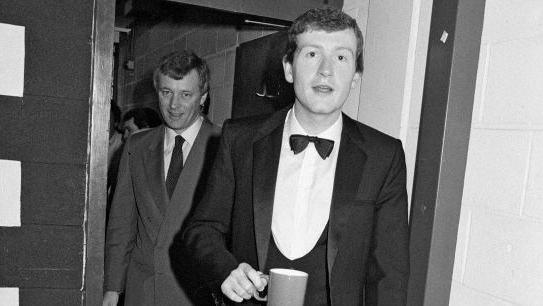 Image source, Getty ImagesImage caption,
 Steve Davis and Barry Hearn at the 1985 World Championship, where Davis was to lose the most famous final in snooker history to Dennis Taylor
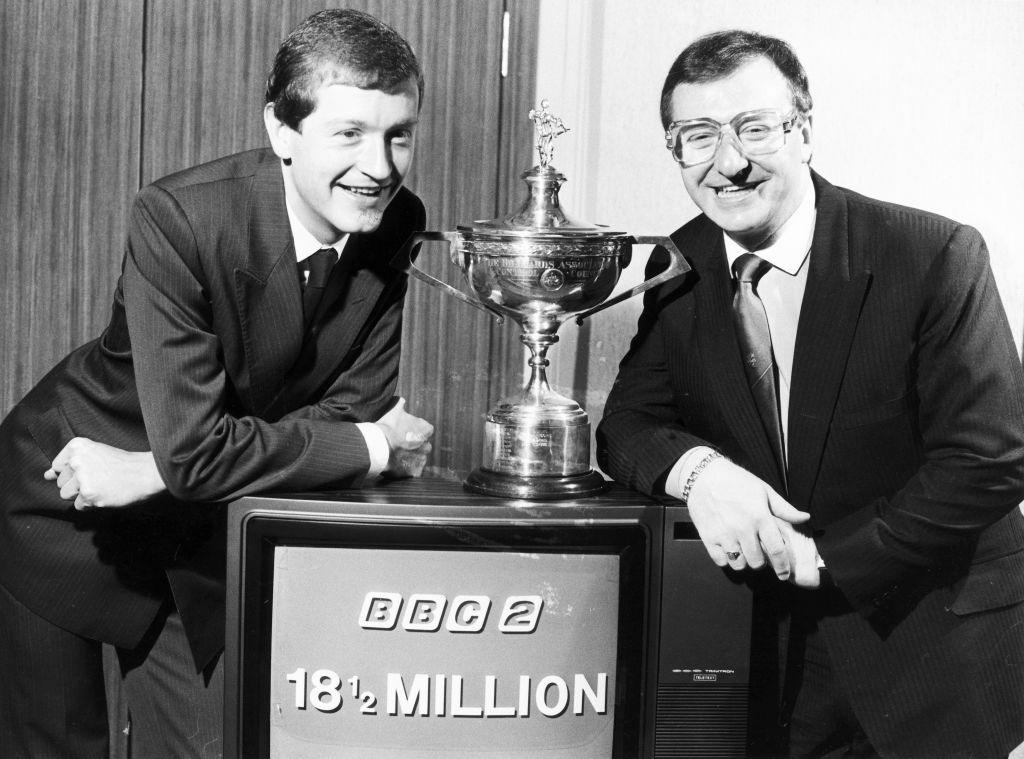 Image source, Getty ImagesImage caption,
 The match between Davis and Taylor drew a record audience for BBC Two
And this is the nub of it: history.
Alex Higgins and baby daughter Lauren in 1982. Dennis Taylor wagging his finger in '85. Ronnie O'Sullivan's five-minute maximum. White the exasperated nearly man. The dominant Davis and Stephen Hendry decades.
Rob Maul covers snooker for the Sun and Shane McDermott has been a mainstay of the media room for the Mirror.
As Maul says: "You can't ignore the history. It's a pilgrimage I've done since 2018 and I feel honoured to do it, but there are people in that building who have done it for decades and decades and decades.
"That's the unique thing about snooker: they've kept the Hendrys in the sport, and they're still working. John Parrott's commentating. And that legacy is something you don't throw away lightly.
"When you walk around the city, you see Steve Davis, and Jimmy White will come by if he's working. And so much has changed in other sports, but snooker's fundamentally the same game that these legends were playing."
McDermott says: "You see the same faces year on year, people who have been coming every year since 1977. Sadly some of them are coming less and less because of age.
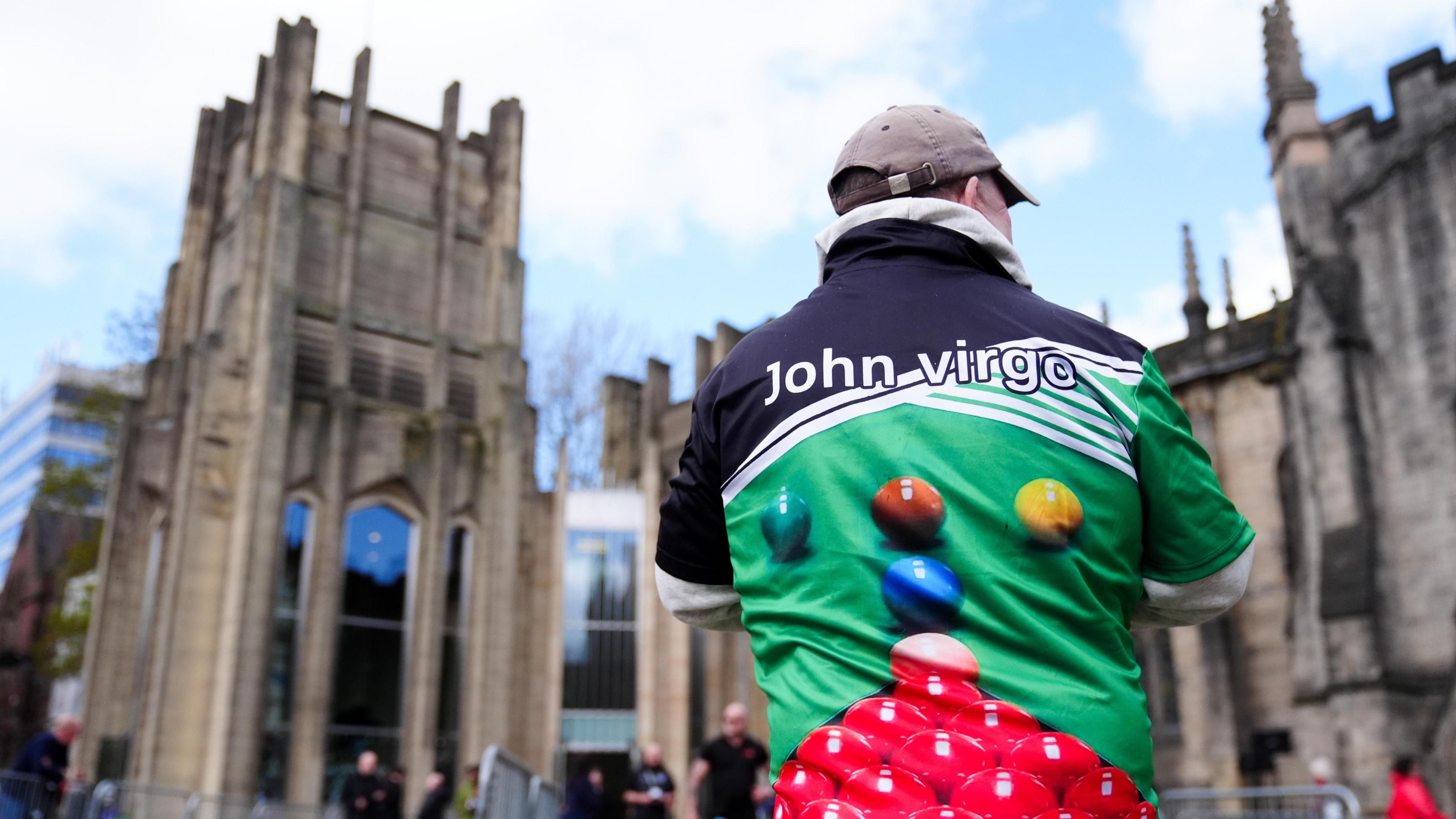
"I can remember after matches perhaps nipping out of the press room for a minute and bumping into John Virgo as he left the commentary box. You'd have a little nod and say hello. That's one thing everyone will miss this year."
Faces in the crowd, faces in the commentary box, faces at the table. Here one year, gone the next.
In recent times, snooker has lost Virgo, Ray Reardon, Willie Thorne and Terry Griffiths, among others. Broadcaster and journalist Clive Everton and Bafta-nominated former BBC snooker executive producer Nick Hunter have left us too.
The booming voice and laughter of Thorne, the gentle humour of Griffiths, the wisdom of Everton, the dry wit of Virgo.
They were part of the fixtures and fittings.
And in their own particular ways, they each played a telling role in the Crucible becoming what it was never built to be: snooker's home.
Related topics
Snooker world turns out to remember John Virgo
- Published3 days ago
'Paul was fun': Remembering snooker's lost great 20 years on
- Published2 January
Memorable O'Sullivan moments as snooker great turns 50
- Published5 December 2025