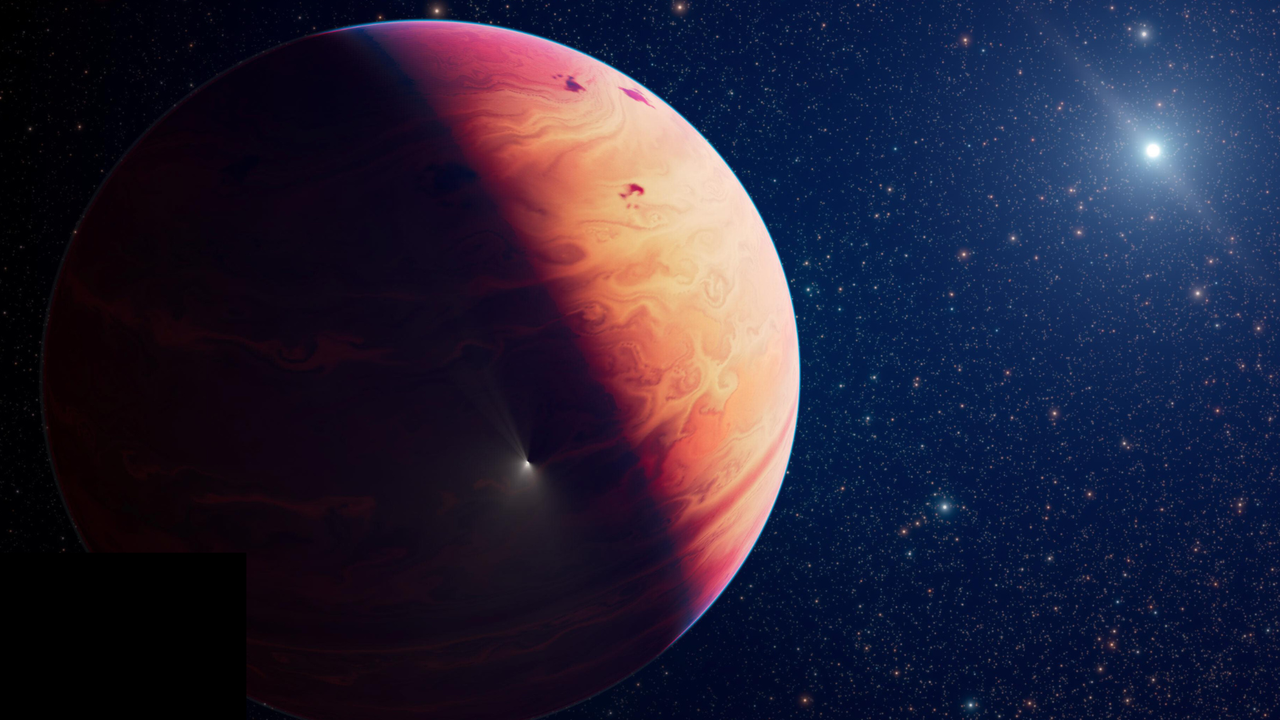
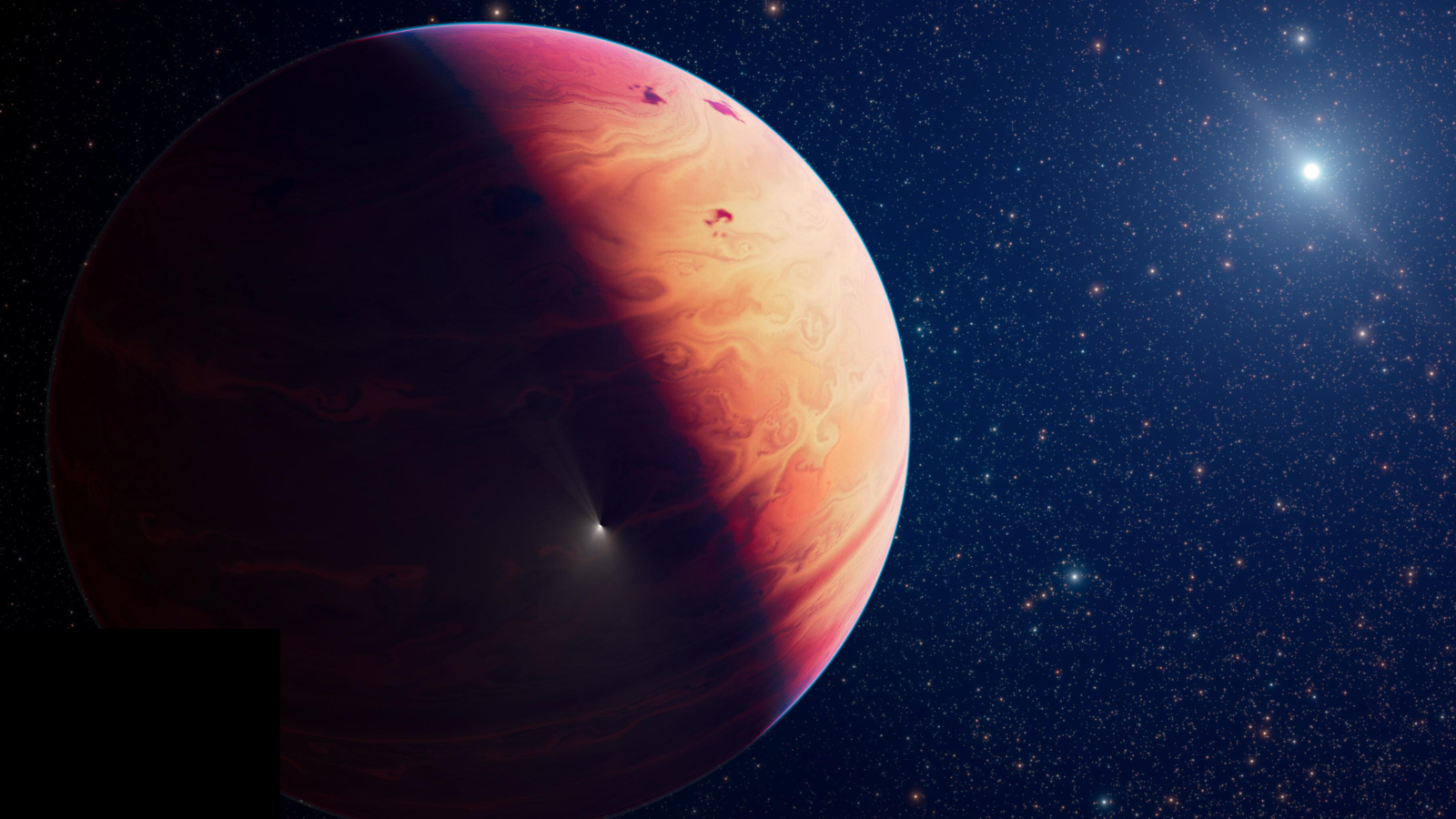
 An illustration of the exoplanet 29 Cygni b. (Image credit: NASA, ESA, CSA, J. Olmsted (STScI)) Share this article 0 Join the conversation Follow us Add us as a preferred source on Google Newsletter Get the Space.com Newsletter
 Breaking space news, the latest updates on rocket launches, skywatching events and more!
Contact me with news and offers from other Future brands Receive email from us on behalf of our trusted partners or sponsors By submitting your information you agree to the Terms & Conditions and Privacy Policy and are aged 16 or over.You are now subscribed
Your newsletter sign-up was successful
Want to add more newsletters?
An account already exists for this email address, please log in. Subscribe to our newsletterUsing the James Webb Space Telescope (JWST), astronomers have investigated an alien planet that could help define the line dividing planets and stars.
The curious exoplanet is 29 Cygni b, a gas giant with around 15 times the mass of Jupiter that lies 133 light-years away from Earth.
Such giants are thought to form instead via a top-down process — the direct collapse of dense patches of gas and dust in the protoplanetary disks that swirl around infant stars. That's the same way that stars themselves form, from dense patches in much larger clouds of interstellar gas and dust.
Now, JWST has collected multiple lines of evidence that suggest there is a way that huge planets such as 29 Cygni b could form via bottom-up processes, just like their more diminutive counterparts.
29 Cygni b sits on the dividing line of formation processes. Though its large mass suggests a top-down process, its wide orbit — an average distance from its star of 1.5 billion miles (2.4 billion kilometers), similar to that of Uranus in our own solar system — hints at a bottom-up formation mechanism.
The team directly imaged 29 Cygni b using JWST's Near-Infrared Camera (NIRCam), as part of a program that will image four exoplanets, all of which orbit their stars within around 9.3 billion miles (15 billion km) and have masses between one and 15 times that of Jupiter. The planets are all also relatively young and are still hot from their formation, with temperatures ranging from 990 to 1,830 degrees Fahrenheit (530 to 1,000 degrees Celsius), meaning they should all have similar atmospheric chemistry, too.
Get the Space.com NewsletterContact me with news and offers from other Future brandsReceive email from us on behalf of our trusted partners or sponsors 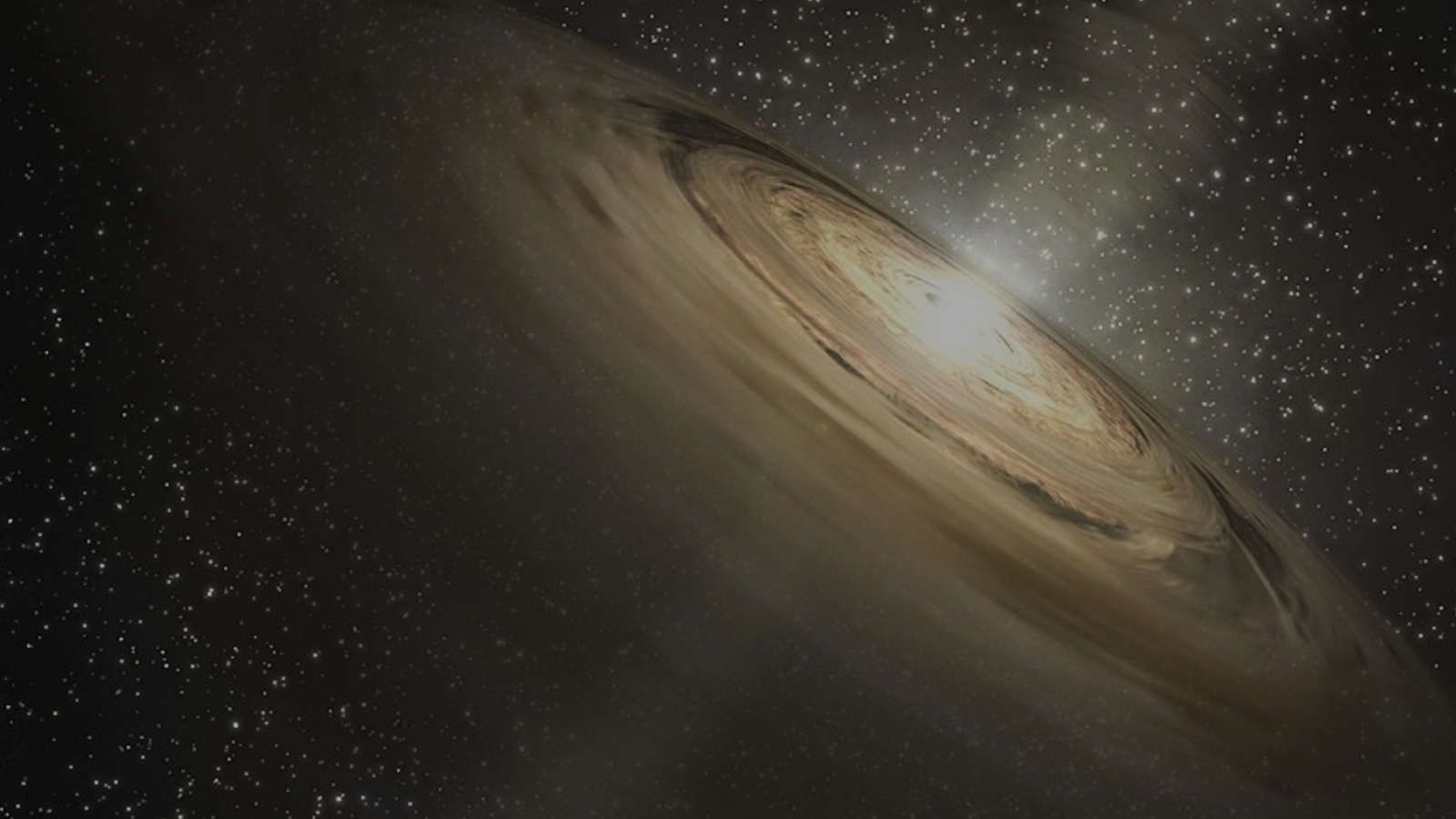
The researchers hunted for light being absorbed by carbon dioxide and carbon monoxide, which allowed them to measure the proportions of elements heavier than helium, which astronomers call "metals," in 29 Cygni b's atmosphere.
This revealed that, not only is the exoplanet around 150 times richer in metals than Earth, but it is also much more metal-rich than its parent star. This indicates that, as it was forming, the gas giant gathered a wealth of metal-enriched clumps of material from its natal protoplanetary disk.
The team also determined that the orientation of 29 Cygni b's orbit is aligned with the rotation of its parent star, which indicates it did indeed form within a protoplanetary disk.
As the program continues to investigate similar planets, it will discover if other such worlds also greedily grabbed metal-rich matter during their formation. This could finally help scientists understand how the most massive planets in the Milky Way were born, be it like stars or like smaller planets.
The team's research was published on Tuesday (April 14) in the Astrophysical Journal Letters.
 Robert LeaSenior Writer
Robert Lea is a science journalist in the U.K. whose articles have been published in Physics World, New Scientist, Astronomy Magazine, All About Space, Newsweek and ZME Science. He also writes about science communication for Elsevier and the European Journal of Physics. Rob holds a bachelor of science degree in physics and astronomy from the U.K.’s Open University. Follow him on Twitter @sciencef1rst.
View MoreYou must confirm your public display name before commenting
Please logout and then login again, you will then be prompted to enter your display name.
Logout MORE FROM SPACE... 1Space combat was 'critical to mission success' in US war in Iran, Space Force chief says
- 2The 7 best sci-fi movie soundtracks of all time
- 3NASA astronauts joke around with an optical illusion on the ISS | Space photo of the day for April 15, 2026
- 4Fly higher and longer for less with $120 off this sub-9-ounce Potensic Atom 2 drone
- 5A dark energy tool just created the most comprehensive 3D map of our universe ever: 'This is a major paradigm shift'


