
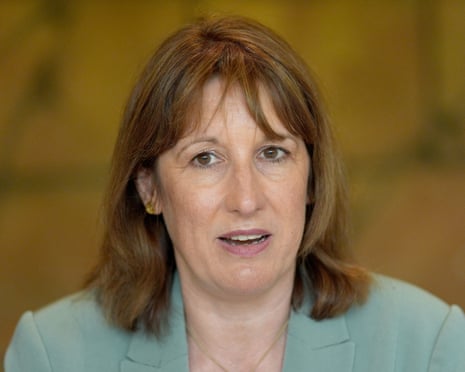
 The chancellor, Rachel Reeves, announced major changes to the regime in last year’s budget. Photograph: WPA/Getty ImagesThe chancellor, Rachel Reeves, announced major changes to the regime in last year’s budget. Photograph: WPA/Getty ImagesHMRC announces 22% tax on cash interest held in stocks and shares Isas
Treasury also promises new first-time buyer Isa with no upper age limit reflecting ‘age at which a first home is bought is rising’
Isa reforms announced on Tuesday promise a new first-time buyer account with no upper age limit, and a tax on interest on cash savings held in a stocks and shares wrapper.
Savers and investors can currently hold up to £20,000 a year in Isas, which offer the chance to earn returns which are not subject to tax.
In last year’s budget, the chancellor, Rachel Reeves, announced major changes to the regime, including the end of the Lifetime Isa, aimed at people saving for a first home or retirement, and a lower cap on cash Isa savings for everyone aged under 65.
More details of the changes were announced on Tuesday, as the government launched a consultation on a new first-time buyer Isa and published rules to prevent savers using stocks and shares Isas to hoard cash.
The consultation from the Treasury suggests that the first-time buyer Isa will be available to anyone aged over 18, in contrast to the lifetime Isa (Lisa) which had an upper age limit of 40 for new savers. The Treasury said this recognised “that the age at which a first home is bought is rising”.
Rachel Reeves’s tax shake-up: time to plan ahead, from Isas to self-assessmentRead moreThe new Isa will still offer a government bonus of 25% of the sum saved, but this will be paid only when a property is bought instead of every year, and there will no longer be a 25% penalty if the money is withdrawn for another reason.
This penalty had attracted criticism for taking some of the saver’s original cash, as had the price cap of £450,000 on the property that could be bought.
The consultation asks providers to comment on the current limit, but points to a recent report that said the £450,000 cap “ensures that the support goes to people who need it most”.
Separately, HM Revenue and Customs outlined plans to ensure that stocks and shares Isas would not be used by savers trying to bypass new limits on cash Isas.
From April 2027, under-65s will only be able to put up to £12,000 a year in a cash Isa, in a change designed to encourage people to invest in stocks and shares.
Previously, stocks and shares Isa providers have allowed customers to hold money in cash alongside investments, and interest has been tax free. Under rules announced on Tuesday, all of that interest will be taxed at 22%.
Investors will also be restricted to holding less than 100% of their stocks and shares Isa in money market funds – these are low-risk investments that offer similar returns to cash.
Rachael Griffin, tax and financial planning expert at Quilter, said the proposed first-time buyer Isa “marks a clear step towards creating a savings product that better reflects the realities facing aspiring homeowners, but there are issues still to be ironed out”.
She highlighted the £450,000 price cap, which has not changed since the Lisa was launched in 2017, despite rising house prices. “Unfortunately, this does not appear to have been addressed within the new product as yet, and [the Treasury] even goes as far as suggesting that the existing cap is suitable.”
While the Building Societies Association welcomed the rules on stocks and shares Isas, others said that it brought in new layers of complexity which could discourage people from using the accounts.
Rachel Vahey, AJ Bell’s head of public policy, said: “Rather than minimise friction between saving and investing, these reforms reduce flexibility, entrench the divide between cash and investment accounts and introduce tax charges and complex age-related allowances.
“Riddled with unintended consequences, the reforms do little to encourage new investors. Faced with increasingly complex Isa rules, many would-be investors will stick with what they know: cash.”
Explore more on these topicsShareReuse this content