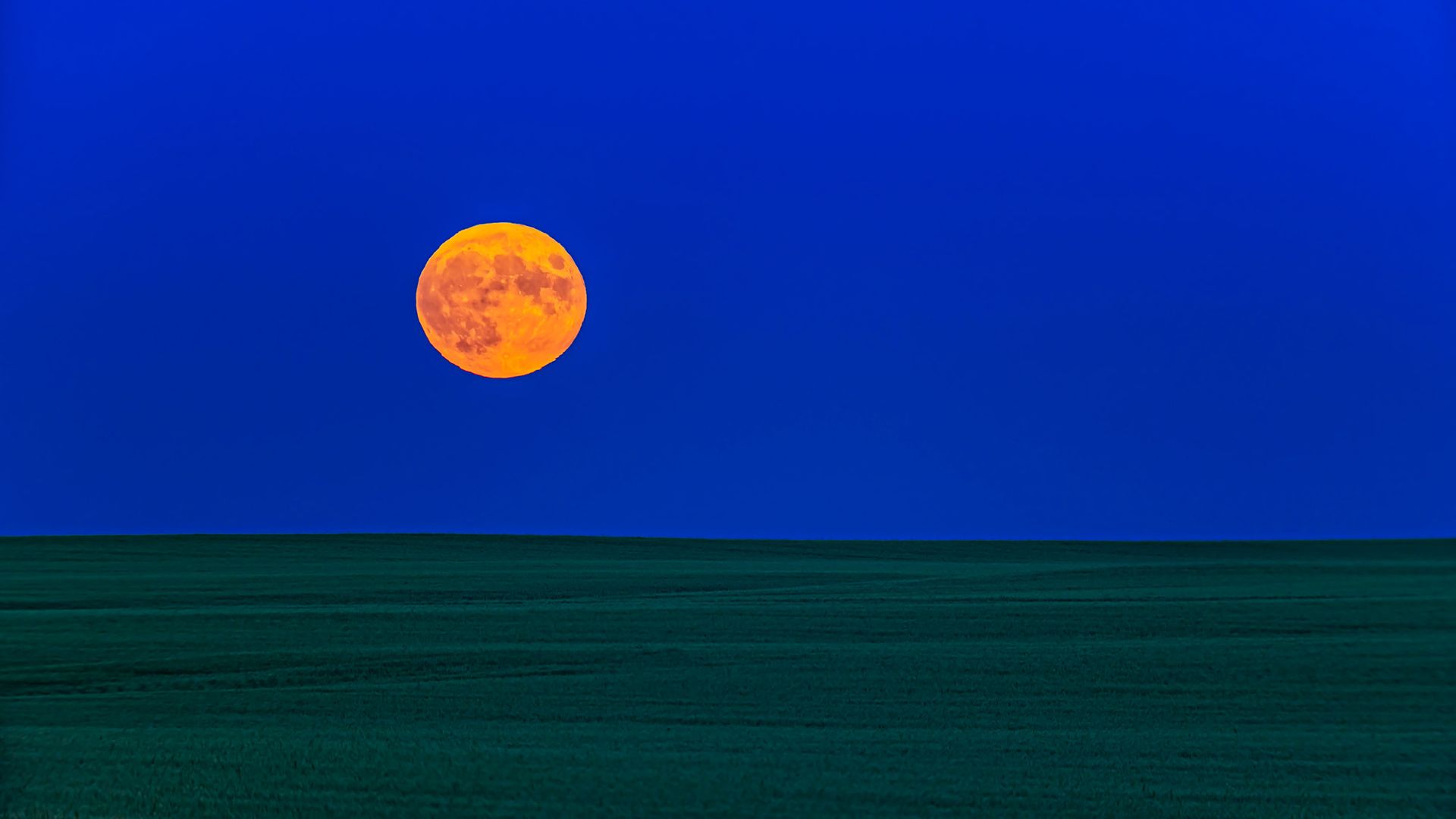
One of the most famous full moons of the year will climb into the eastern sky on Saturday, Sept. 26. This year, the Harvest Moon will make its appearance with Saturn shining nearby — and you'll have another chance to see it rise on Sunday, Sept. 27, too.
Officially full at 12:49 p.m. EDT on Saturday, the full moon will be best seen rising in the eastern sky later that day, at the time of moonrise where you are. It will appear in the constellation Pisces.
This month's full moon earns the Harvest Moon nickname because it's the full moon closest to the September equinox, which fell on Tuesday (Sept. 22). This year, it coincides with the Mid-Autumn Festival — also called the Moon Festival — which is held in Chinese and Vietnamese communities on the day of the Harvest Moon, according to Timeanddate.com. However, the Harvest Moon's significance goes beyond traditional nicknames, because the moon behaves a bit differently around this point in the calendar.
Typically, moonrise occurs roughly 50 minutes later from one day to the next. Around the Northern Hemisphere's autumnal equinox, however, the moon's path meets the eastern horizon at a relatively shallow angle. That geometry reduces the day-to-day shift in moonrise times, resulting in a string of evenings with bright moonlight arriving soon after the sun goes down. Before electric lighting and modern farm machinery, those brighter early evenings provided useful extra illumination during the autumn harvest.
That's not the case anymore, but skywatchers nevertheless have more than one night when the full lunar disk emerges above the eastern horizon into a sky still filled with twilight. Across North America, the moon will rise only about 25 minutes later on Sunday, Sept. 27 than on the previous evening.
Related stories- The moon may have formed in just 5 hours, new simulations suggest
- Does the moon look the same from everywhere on Earth?
- Daytime moon: Why can we sometimes see the moon in broad daylight?
Saturn will add another reason to watch. The ringed planet will appear close to the Harvest Moon, rising just beneath it as seen from North America and is easily bright enough to see without a telescope. However, a backyard telescope or stargazing binoculars can give you an even crisper view of both Saturn and the moon. To get the best chance of catching the moon as it appears, find an observing spot with an unobstructed view to the eastern horizon.
The next full moon, known as the Hunter's Moon, will occur on Friday, Oct. 25 or Saturday, Oct. 26, depending on your time zone. It will also be a supermoon, making it appear larger and brighter than average.
How much do you know about the moon? Test your lunar smarts with our moon quiz!