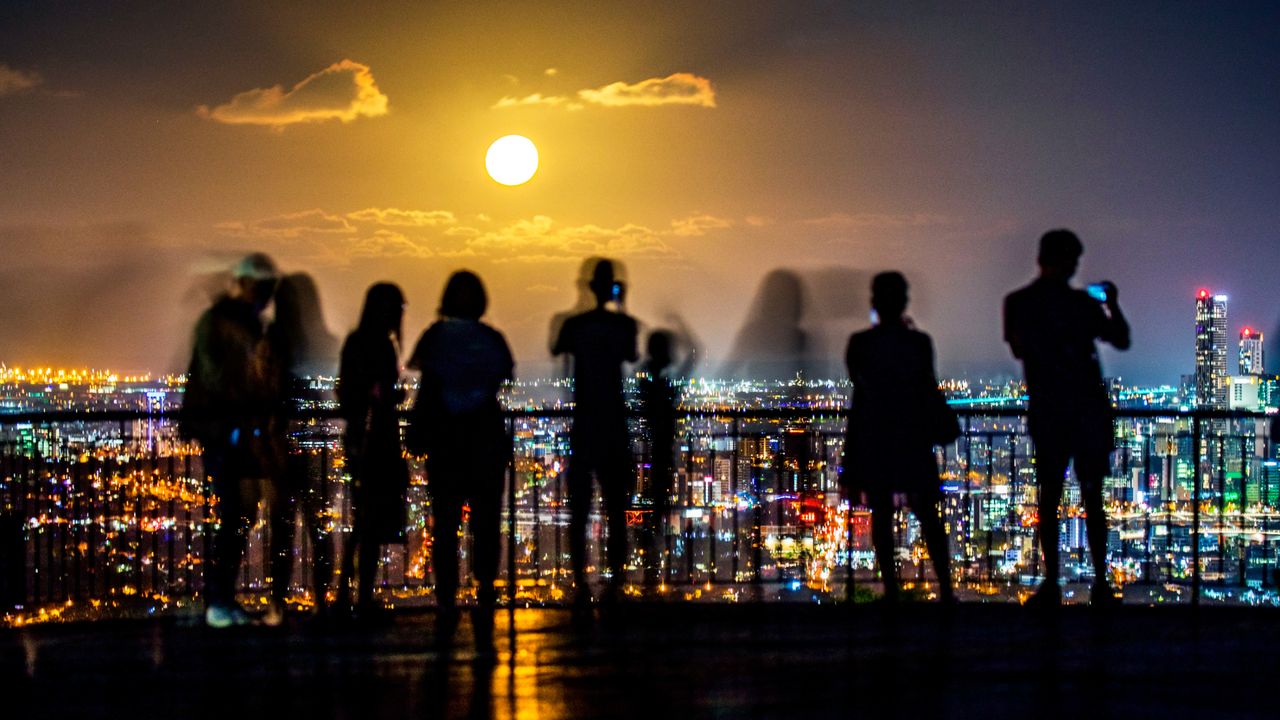
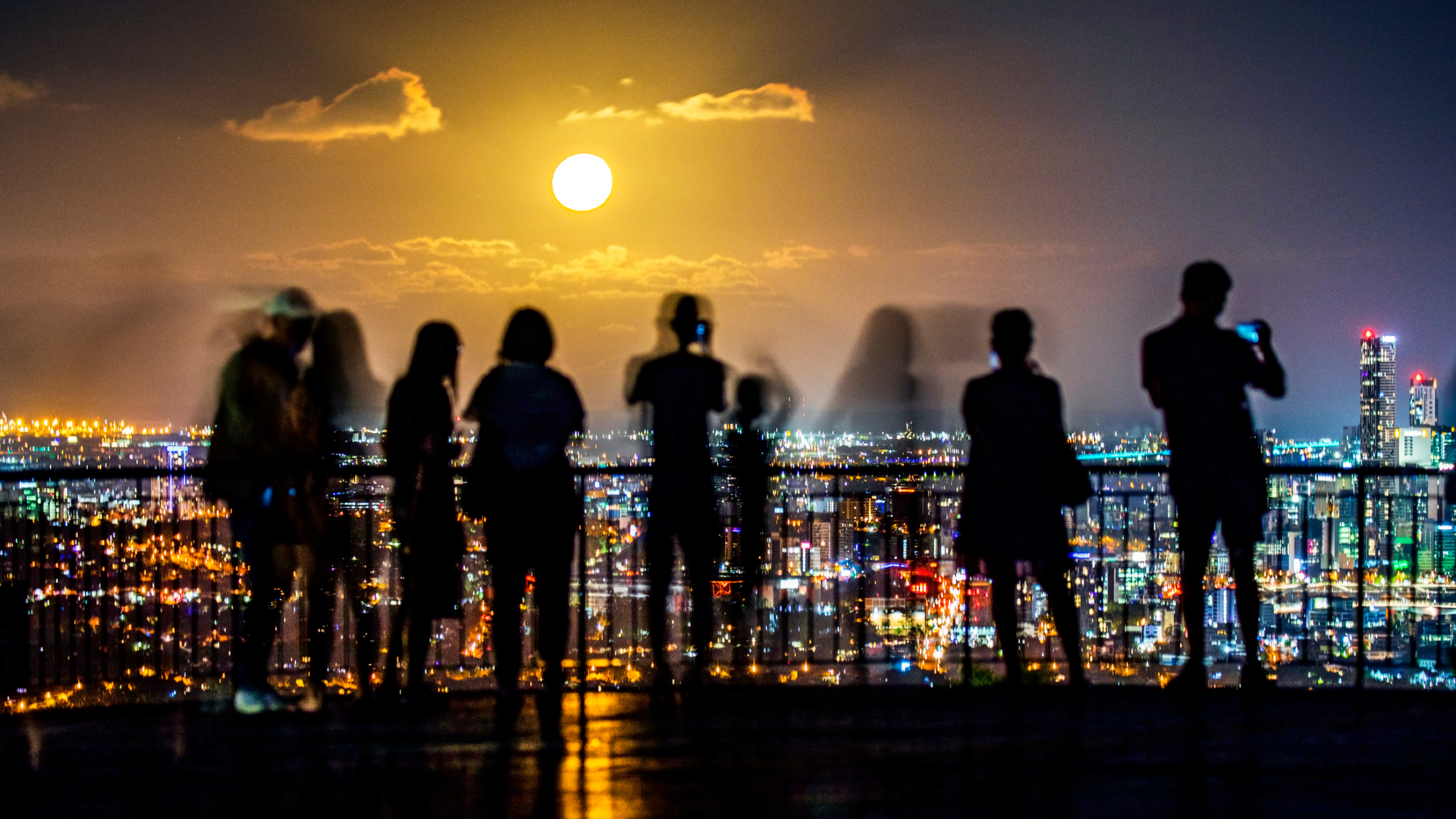
 The rising full Flower Moon will be visible from across the world. (Image credit: Andrew Merry via Getty Images) Share this article 0 Join the conversation Add us as a preferred source on Google Newsletter Subscribe to our newsletter
 May's first full moon, known as the Flower Moon, will be 100% illuminated at 1:24 p.m. EDT Friday (May 1). Although that moment occurs during daylight hours for North America, the moon will appear full at night on Thursday, Friday and Saturday.
As always, the most striking time to watch the full moon will be as it rises in the east. This month, that happens during dusk on May Day — which marks the halfway point between March's spring equinox and June's summer solstice in the Northern Hemisphere — when it rises shortly after sunset.
This Flower Moon is this year's first micromoon, meaning it occurs when the moon is near apogee — its farthest point from Earth in its slightly elliptical orbit. The moon will be about 250,000 miles (402,000 kilometers) from Earth — around 5% farther away than average. As a result, it will appear slightly smaller and dimmer than usual. The difference is subtle, but it contrasts with the larger, brighter supermoons seen when the moon is closer to Earth. This year's supermoon season begins in November, with a particularly large supermoon on tap for Christmas Eve.
Despite appearing relatively small, the Flower Moon will still look large when viewed on the horizon. This effect is due to the "moon illusion," a trick of the mind that makes our natural satellite appear larger when it's viewed next to foreground objects like buildings or trees. As it rises, the Flower Moon will also appear orange due to Rayleigh scattering.
The Flower Moon gets its name from the flowers that bloom in the Northern Hemisphere in May, according to Time and Date, with Native Americans also calling it the Budding Moon, Egg Laying Moon and Planting Moon. Other names include the Mothers' Moon, Bright Moon, Hare Moon and Grass Moon. The Center for Native American Studies states that the Anishinaabe people of the Great Lakes region called the full moon Nimebine Giizis, or Sucker Moon.
The second full moon of the month will occur on May 31. Known as a Blue Moon, it makes May 2026 a rare two-full-moon month. According to NASA, only 6% of full moons are Blue Moons, which can occur only in the last two or three days of the month. May's Blue Moon will also be a micromoon, being the most distant — and, therefore, the smallest — full moon of the year.
Although you can easily see the full moon with the naked eye, a good backyard telescope or pair of stargazing binoculars can help you spot famous landmarks, including Apollo landing sites and craters. A decent camera will also let you take stunning photos of Earth's natural satellite.
Sign up for the Live Science daily newsletter nowContact me with news and offers from other Future brandsReceive email from us on behalf of our trusted partners or sponsorsHow much do you know about the moon? Test your lunar smarts with our moon quiz!
 Jamie CarterLive Science contributor
Jamie Carter is a Cardiff, U.K.-based freelance science journalist and a regular contributor to Live Science. He is the author of A Stargazing Program For Beginners and co-author of The Eclipse Effect, and leads international stargazing and eclipse-chasing tours. His work appears regularly in Space.com, Forbes, New Scientist, BBC Sky at Night, Sky & Telescope, and other major science and astronomy publications. He is also the editor of WhenIsTheNextEclipse.com.
View MoreYou must confirm your public display name before commenting
Please logout and then login again, you will then be prompted to enter your display name.
Logout