
 Getty Images
The price of petrol and diesel has stopped rising after 43 days of increases, according to the latest figures from motoring organisation the RAC.
The temporary ceasefire in the Gulf has brought the price of crude oil down from its recent peaks, and with it the cost of fuel on wholesale markets.
However, prices still remain sharply higher than before the war started. Petrol is now selling for just over 158p a litre on average, up from 133p in late February, while diesel has risen from 142p a litre to 192p, the RAC said.
The motoring group said prices could start to come down over the next couple of weeks.
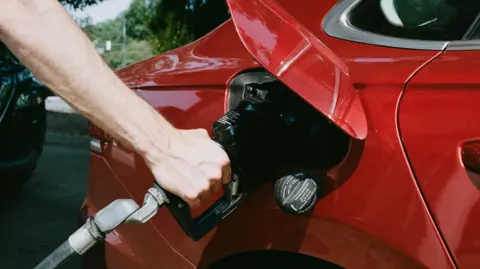
The recent increases means the cost of filling up a family car with petrol has risen by £14, while a tank of diesel costs £27 more.
Diesel has gone up more than petrol because it is harder to refine. The UK has to import around half of what it uses from abroad, and demand is very high globally.
"Wholesale fuel costs are now significantly lower than they were at the start of the month, so forecourt prices should begin to come down" said the RAC's head of policy, Simon Williams.
"As things stand, we'd expect petrol and diesel to drop by several pence a litre in the next week or so," he added.
"It will be very interesting to see if this plays out as the data indicates. We hope it does as drivers could do with some relief at the pumps."
In the past, the motor fuels sector has been accused of putting up prices quickly when the cost of oil rises, but only reducing them slowly when it falls back.
In late 2022, the Competition and Markets Authority said it had found some evidence of so-called "rocket and feather" pricing.
Since then, the CMA has carried out regular monitoring of forecourt prices, and said last month this scrutiny would be intensified in response to surging energy costs.