
 Getty Images
It's hot, everyone's grumbling and nobody in your house can sleep - which means summer has officially arrived. Temperatures are set to soar above 30C (86F) in parts of the UK over the next few days.
Whether you are staying at home or planning a holiday abroad, battling the heat can be hard - especially for babies and young children. Their bodies heat up more quickly than adults' and they sweat less, making it more difficult for them to cool down.
So here are some hacks to keep your kids cool and safe - this summer and beyond.
1. Boost water intake through food
Getting kids to drink water can be a thankless task - they would often rather do anything else.
But the answer could be in foods that contain lots of water.
From 12 months old, try frozen lollies made from plain water or very diluted fruit juice.
For older kids, ramp up fruit intake - particularly juicy fruit, such as watermelon and oranges.
Eating salad, ice cream, jelly and soup are all good sources of water too.
Babies who breastfeed should get all the water they need from breast milk and don not need any extra, the NHS says - but they may want to feed more than normal.
If feeding your baby formula, you can give them a little cooled boiled water as well as their usual feeds.
2. Do not rely on once-a-day sunscreen
Once-a-day sunscreens overpromise and rarely last as long as they claim to, experts warn.
And even if sunscreen is described as "water repellent" or "water resistant", it should still be reapplied after swimming. Towel drying and sweat may have rubbed it off.
Look for two things when buying your sunscreen: the sun protection factor or SPF, ranging from 2 to 50+, and the star rating on the bottle.
The advice is to smother your child with at least SPF 30 and four stars, about 30 minutes before you go outside. Then reapply every two hours while avoiding the hottest part of the day.
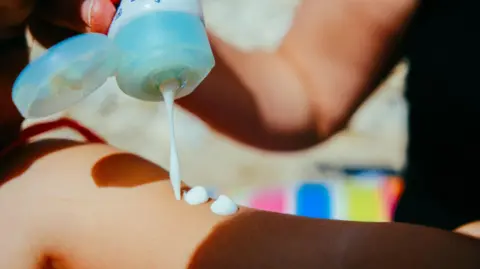 Getty ImagesThe advice for sunscreen is to use at least SPF 30 and four stars, and to reapply every two hours
Do not forget the tops of their feet, round the ears, their neck and all over the shoulders – which can often get burned.
Remember sunscreen is not recommended for babies under six months, because their skin is sensitive. They should be kept out of direct sunlight completely.
Everyone's skin needs protecting, no matter the colour. But some can be more vulnerable than others. Families with pale skin, freckles or a history of skin cancer should be extra careful.
How much sunscreen do you need to protect your skin?
3. Stay in the shade
Keeping children out of the sun altogether between 11:00 and 15:00 is the easiest way to keep them safe.
If you do go out in the heat, use a parasol or sunshade.
But do not be tempted to cover a pram or pushchair with a muslin cloth or blanket - even if it's in the shade - because it can stop airflow and get too hot.
If children are desperate to go to the park or paddle at the beach, wait until it's cooler in the evening.
4. Wear loose-fitting clothes
The more skin that is covered, the better the protection - but make sure clothes are loose-fitting.
And not all clothes provide equal protection from the sun. Dark colours are better than light colours, while some materials, such as denim and shiny polyesters, are thick and therefore useful barriers.
Going anywhere near water with children means UV protective swimwear is a must. Look out for fabrics that are best at blocking radiation from the sun, labelled "UPF 50". Long-sleeved tops with high necks protect a child's arms, back and shoulders.
Sunhats for small heads are vital. Wide-brimmed hats are better than caps or small bucket hats. And legionnaire-style hats are ideal because they protect the back of the neck. Do not forget wraparound sunglasses too, to protect eyes against UV rays.
What are UV levels and how can you protect yourself?
5. Set bedrooms up the right way
There's nothing worse than putting a child to sleep in a stuffy bedroom when you're already sweating.
Avoid that by keeping bedrooms cool during the day - closing blinds or curtains and using an electric fan to move the air around. But do not direct it at a child's body because that can dehydrate them.
A cool bath before bedtime might bring their temperature down, and help yours too.
In bed, keep layers to a minimum and leave the door and window slightly open to encourage a breeze.
Six ways to keep your home and yourself cool in hot weather

Get our flagship newsletter with all the headlines you need to start the day. Sign up here.
UK heatwavesHealthChildrenFamily & Education