Everyone but the commissioner seems to want to end this rule
 By Sam Quinn Mar 26, 2026 at 2:12 pm ET • 13 min read
  Imagn Images
 Let's take a look at the NBA's top 20 scorers for a moment. Of those 20 players, five (Giannis Antetokounmpo, Stephen Curry, Joel Embiid, Lauri Markkanen and Michael Porter Jr.) have already missed so many games that they cannot reach 65 games played this season. Another three, Anthony Edwards, Tyrese Maxey and Cade Cunningham, are currently sidelined with injuries that could keep them below 65 when the dust settles. Nikola Jokić can miss just two more games. Victor Wembanyama and Kawhi Leonard can miss three.
That means there are plausible scenarios in the coming weeks that could rule more than half of the NBA's top 20 scorers out of awards eligibility due to the NBA's controversial 65-game awards minimum. The rule has come under intense scrutiny this season, first when it appeared Jokić may be ineligible to compete for the MVP award, and more recently, when late injuries put Cunningham, Edwards and Maxey at risk.
When Cunningham went down, the NBA Players Association released a statement calling for the rule to be "abolished or reformed." His agent, Jeff Schwartz, called for an exception to be made for Cunningham, telling ESPN that "if he falls just short of an arbitrary games-played threshold due to legitimate injury, it should not disqualify him from recognition he has clearly earned over the course of the season."
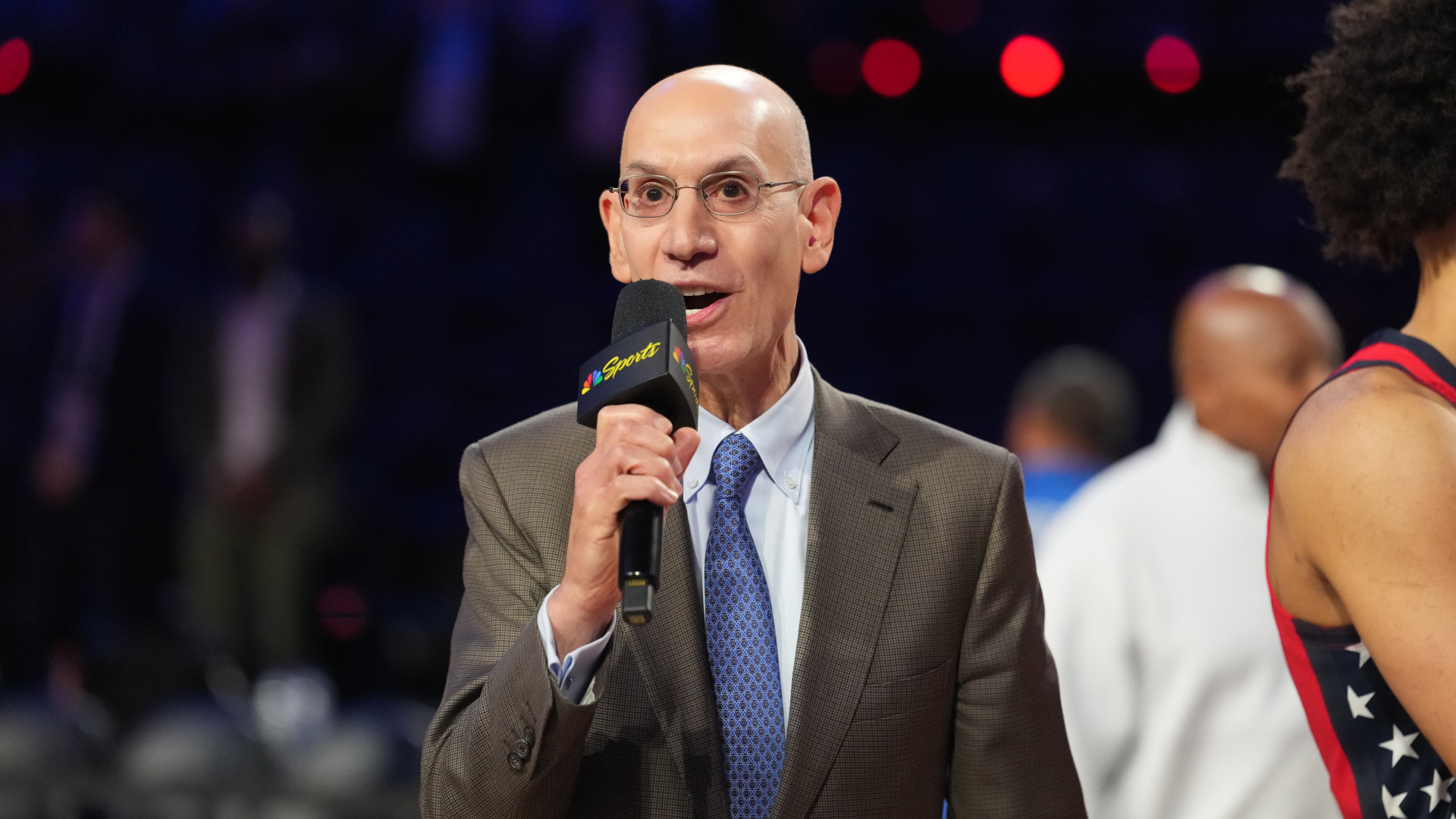
Yet NBA commissioner Adam Silver stood behind the rule on Wednesday. "I'm not ready to stand here saying I don't think it's working," Silver said. "I think it is working." The NBPA clearly disagrees. According to The Athletic's Mike Vorkunov, the NBPA is working on a proposal to change the 65-game rule. Based solely on the outcry throughout the season, they will likely have the fans in their corner.
So what could such a change look like? I have five ideas.
1. Eliminate it entirely
Silver says the rule is working, but who exactly is it working for? Clearly not the players.
The NBPA would not release a statement like this lightly. They collectively bargained for the rule, though that is hardly an indication of support as much as something the players were willing to concede in the process of striking a much bigger deal. In practice, load management is much more of a team issue than a player issue. Teams employ large medical staffs that determine how best to use and protect a player. It's not as though most players just show up to the office and declare they don't want to play on a given day, or if that is the case, it's not getting widely reported. Based on the calls for a rule change all season, it doesn't seem like it's working for the fans either.
Is it working for teams? That's a bit harder to parse, especially since it's unlikely any owner or general manager would talk about it on the record. But I would again argue that the answer is no, and I'd point to Tyrese Haliburton as an example of why. Haliburton himself has acknowledged that he rushed back from a 2024 hamstring injury to try to ensure he would be eligible for a Rose Rule rookie max extension, and his statistical production dropped off significantly after doing so. Does that sound like a good outcome for Indiana?
NBPA says 65-game rule must be 'abolished or reformed,' citing Cade Cunningham's possible awards ineligibility James Herbert
Over time, there's another negative outcome teams will have to watch out for. Remember, All-NBA slots are fixed. There are 15 of them every year, whether there are 15 worthy choices or not. We covered 11 of the top 20 scorers potentially not being eligible this year. That doesn't mean those are 11 of the top 20 players, but there's a simple math to this. For every top 15 player who is ineligible, we have to go one slot further down the list. In a good year, that might mean the 17th-best player in the NBA is chosen. In a bad year, it might be the 24th-best player. This is problematic because, as we covered with Haliburton, All-NBA selections affect eligibility for Rose Rule and supermax contracts, which increase the maximum amount a player can earn. If the wrong player makes it in the wrong year, it could create real contract negotiation and team-building headaches for that team. This hasn't happened yet. It's only a matter of time until it does.
Has it worked in addressing some sort of consistent injustice in the history books? I would again argue that the answer is no. There's only been one MVP who played fewer than 65 games in an 82-game season. All-NBA is slightly more vulnerable, but for a good reason. Between 2013 and 2023, there were 18 players to make an All-NBA team having played fewer than 65 games. The average age of that group was around 30. The all-league players who played in fewer than 65 games were generally older players who really should play fewer games to preserve their longevity. Take LeBron James. He made three All-NBA Teams in that window while playing fewer than 65 games in an 82-game season. Does the NBA really want to argue that LeBron James wasn't worthy of making All-NBA? Would it prefer he play more games while not at 100%, thereby risking the longevity that has kept him in the league and thriving through his age-41 season? I imagine they prefer things as they naturally happened.
So if it's not working for players, teams or fans, who is it working for? I would argue that the primary beneficiary would be the league's television partners. The NBA instituted the 65-game rule before the 2023-24 season, conveniently right as it was negotiating a new national media rights deal that concluded with a massive contract from Disney, Amazon and Comcast. One concern those companies might have had in negotiating that contract was the availability of star players. If you're going to pay billions of dollars to air a sporting event, you probably want the best players participating in that event. Right before the 2023-24 season, the NBA also introduced its player participation policy, which dings teams for, among other things, holding players out of nationally televised games.
In arguing in favor of the rule and the player participation policy on Wednesday, Silver said that "there's not nearly as much discussion around load management as there was, in part because the teams and the players have responded. You see them on the floor now." So if the goal was to reduce load management, I suppose you can say that it worked, but that the primary beneficiaries here weren't the players, teams or fans. Besides, load management isn't a problem in other sports. Football is much more physical than basketball. So is hockey. Their players don't need to be cajoled into playing more games. If basketball players do, I would argue that says more about structural problems within the sport and the league than about the athletes. I've been adamant for years that the problem is the bloated 82-game schedule, though that is sadly unlikely to change despite recent pleas from Steve Kerr.
So while the rule may be "working" for certain parties, I don't think it's working for everyone, or, frankly, the people that matter most. As so often happens in the NBA, the league attempted to address a problem and in the process created several new ones. There may be less load management today, but I would still categorize player availability as a significant issue in the NBA (which might be addressed by, you know, playing fewer games, but I digress). The price for making those minor gains is a system that pressures players into playing hurt, that fans and players seem to dislike, that risks honoring unworthy players, and creates the potential for contractual headaches for its teams. The cure, in this case, is worse than the disease.
One last note before we move on: this system places a very strange set of handcuffs on awards voters. The NBA has clearly deemed its hand-picked awards voters trustworthy because it allows awards to determine how much money a player can make. Yet at the same time, it does not trust its voters enough to determine a player's worthiness when they have missed a certain number of games. So which is it? Can voters be trusted to pick deserving winners or not? Because if the answer is yes, they should be able to determine for themselves whether a player's on-court excellence is enough to overcome any potential absences, and if the answer is no, awards should not be directly tied to player salaries.
2. Align it with the stat leader minimum (58 games)
The 65-game rule may be new, but the concept of minimum playing time standards for end-of-season honors is not. To qualify for the scoring, rebounds, assists, steals, blocks or minutes titles, a player must have played in 70% of his team's games. That's 58 games in a standard season. It's a common-sense measure. You wouldn't want a player to score 50 on opening night, tear his ACL in the fourth quarter, and then be forever immortalized as that season's scoring champion. It has never drawn any meaningful dissent.
So why isn't this number aligned with the awards minimum? The cynical answer here, the one that Silver himself addressed, is that this rule exists primarily to deter load management rather than actually pick proper winners. And because players care more about honors that are directly tied to their salary (like MVP, Defensive Player of the Year and All-NBA), they are likelier to play when they otherwise wouldn't to earn those honors than they would for something like the scoring title.
If we're going to change the threshold for eligibility, alignment here makes sense. If a player is worthy of the scoring title at 58 games, he is worthy of consideration for anything else. Does it seem right that a season's scoring champion might not be eligible to make an All-NBA team? I don't think so.
As Schwartz noted in his defense of Cunningham, 65 is an entirely arbitrary number. It's not tied to anything. It's roughly 79% of the NBA schedule. If they wanted a round percentage, they would have made the line 66, suggesting that a player needs to play in 80% of his team's games to deserve a trophy. At least then it would be clean. So if the number is going to be arbitrary, at least make sure all of the arbitrary numbers line up.
3. Base eligibility on minutes rather than games played
Maxey leads the NBA in minutes. He plays 38.3 of them per game. Even if he doesn't take the floor again this season, he will likely conclude the season having played more basketball than someone who makes an All-NBA team. Wembanyama, for instance, would have to play 639 minutes in San Antonio's last seven games to catch Maxey. This isn't going to happen because, well, math. It would take more than 13 complete games to play 639 minutes, and Wembanyama doesn't have that many left available for him. When you factor in bench time and possible rest once San Antonio's seeding is assured, the gap is almost certainly going to be several hundred minutes, even if Maxey doesn't play another game.
Yet there is a world in which Wembanyama is eligible for all-league consideration and Maxey is not. Does this seem fair? Of course it doesn't. Maxey played more basketball. If we're aiming for justice, the total amount of basketball played should be the meaningful measure. If we're aiming for happy media partners, well, that's when games played start to mean more. TV viewers are likelier to sit through a star player's bench minutes than tune in to a game the star player isn't participating in. But to a team trying to win games, those extra minutes Maxey plays every night are enormously valuable.
NBA's 65-game rule: Where Cade Cunningham, Kawhi Leonard, other award candidates stand James Herbert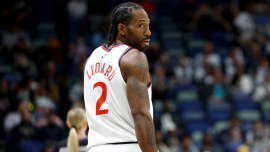
The tricky part of making a minutes-based threshold comes in measuring the players on the best teams. Shai Gilgeous-Alexander has played in 61 games this season... but only 40 fourth quarters. The Thunder beat teams so badly that Gilgeous-Alexander often sits out the end of games, which artificially deflates his minutes total. This would have been a frequent issue for Stephen Curry at his peak as well.
If the NBA were to adopt a minutes-based system, it would have to distinguish between minutes missed due to injuries, minutes missed due to coaching decisions, and minutes missed because games were no longer competitive. If it didn't, you'd have players playing unnecessary minutes in blowouts purely for the sake of winning awards, which we don't want from the perspective of sportsmanship or injury risk.
That's a solvable problem; it would just make the formula a bit more complicated than the existing one.
4. Differentiate between long absences and short absences
Cunningham missed just seven of Detroit's first 68 games. Only one of those absences was an isolated absence as part of a back-to-back, so it's not as though he was load-managing frequently. And then he suffered a collapsed lung diving for a loose ball, which is about as far from a load management-related injury as a player can get. If the rule exists, as Silver implied, primarily to curb load management, punishing Cunningham makes no sense. He is exactly the sort of star the NBA purportedly wants.
The specifics would be difficult to determine, but broadly, the NBA could set one minimum number of games for players whose longest absence was a certain number of games, and another minimum number of games for players whose longest absence was higher. We could call it the Cunningham provision. If he misses the rest of the regular season, he will have sat out Detroit's final 14 games. So maybe a player whose longest absence was, say, 14 or more games would be eligible for awards at 60 total games instead of 65.
The danger here would be players trying to force themselves back from more serious injuries with extended absences because earning an end-of-season honor would be slightly more attainable under the right circumstances. Of course, players are pushing to return prematurely now anyway, as Haliburton did, so this would only change the circumstances under which they would do so. That's still a meaningful deterrent, but perhaps there's an appropriate middle ground, or at least looser guidelines for exceptions.
5. Scale it depending on the award
We can broadly agree on the following: winning MVP is more impressive than being named First-Team All-NBA, First-Team All-NBA is more impressive than Second-Team All-NBA, and Second-Team All-NBA is more impressive than Third-Team All-NBA. The bar for each should be higher than the last. So why isn't it?
If you think of MVP as a purely quantitative exercise, it seems unlikely that the player who generated the most value in the entire sport played in only 65 games in a given season if another superstar played in, for example, 80, since 80 is around 23% greater than 65%. Logically, to be more valuable, the 65-game player would need to have provided 23% more value in the games that he played than the 80-game player. At the superstar level, that's a pretty tall order.
Yet there are no firm guidelines for MVP beyond the 65-game rule, and I would argue that a specific threshold actually does more harm than good when factoring playing time into calculating value. By having a defined threshold, voters are effectively given permission by the NBA to ignore differences in availability once that threshold is reached. If the best player played only 65 games, those 17 absences must not matter because the NBA is allowing me to vote for him. It makes it easier for voters to ignore availability on a sliding scale. Either someone played enough, or he didn't.
So what if the NBA introduced different minimums for different awards? Maybe a player needs 70 games to win MVP, 65 to be chosen First-Team All-NBA, 60 to be chosen Second-Team All-NBA and 55 to be chosen Third-Team All-NBA. This addresses a lot of the actual problems with the 65-game rule. It makes it less likely that players will rush back from serious injuries because they'll suddenly have more room to still sneak into one of the less prestigious categories and still retain supermax eligibility.
It also makes it harder for truly undeserving players to be chosen, as a First-Team-caliber player could still make the cut as a Second- or Third-Team choice. That makes it harder for the wrong players to gain supermax eligibility. It also probably more accurately reflects the season we watched. A player can still be a defining component of a season at 55 games. It's just unlikely he was one of the five best players from that season. Worth remembering, but perhaps not honoring at the same level.
We'd have to figure out where exactly Defensive Player of the Year fits here. It's certainly less impressive than MVP, but where would it fit among the All-NBAs? I'd say it's at around the level of a Second-Team selection, but opinions will vary.
Join the Conversation comments